Across the Northern Hemisphere, several regions saw some of the hottest temperatures on record this week, according to information compiled by the Washington Post. Apart from the U.S. and Canada, these temperatures were not the result of one single heat wave, but rather several different weather systems.
Our thought bubble, from Axios Science Editor Andrew Freedman: "July is typically Earth’s hottest month, so heat records falling now is not unexpected. But so many rare milestones being set or tied worldwide does point to the influence of a warming world, given that the link between heat waves and climate change is robust, according to scientific studies."
Tesla CEO Elon Musk "appears to have asked" Tesla engineers to let the company's Model 3 autos leave the California factory without receiving a previously required type of brake testing, according to Business Insider.
Why it matters: Musk and Tesla were racing to meet a Q2 production goal of 5,000 Model 3 electric sedans a week by the end of June. The company has been taking aggressive measures to meet the target.
Dozens of wildfires are burning across the West, from California to Colorado, with thousands of firefighters toiling away in hot, dry weather, trying to prevent the blazes from burning down homes and businesses.
Why it matters: These fires are coming early in the wildfire season, which is potentially a bad sign for how the rest of the summer and fall may proceed, before winter rains and snow presumably return. In other words, the horrific wildfire season of 2017, which was the worst in California history, could be nearly equaled or exceeded this year.
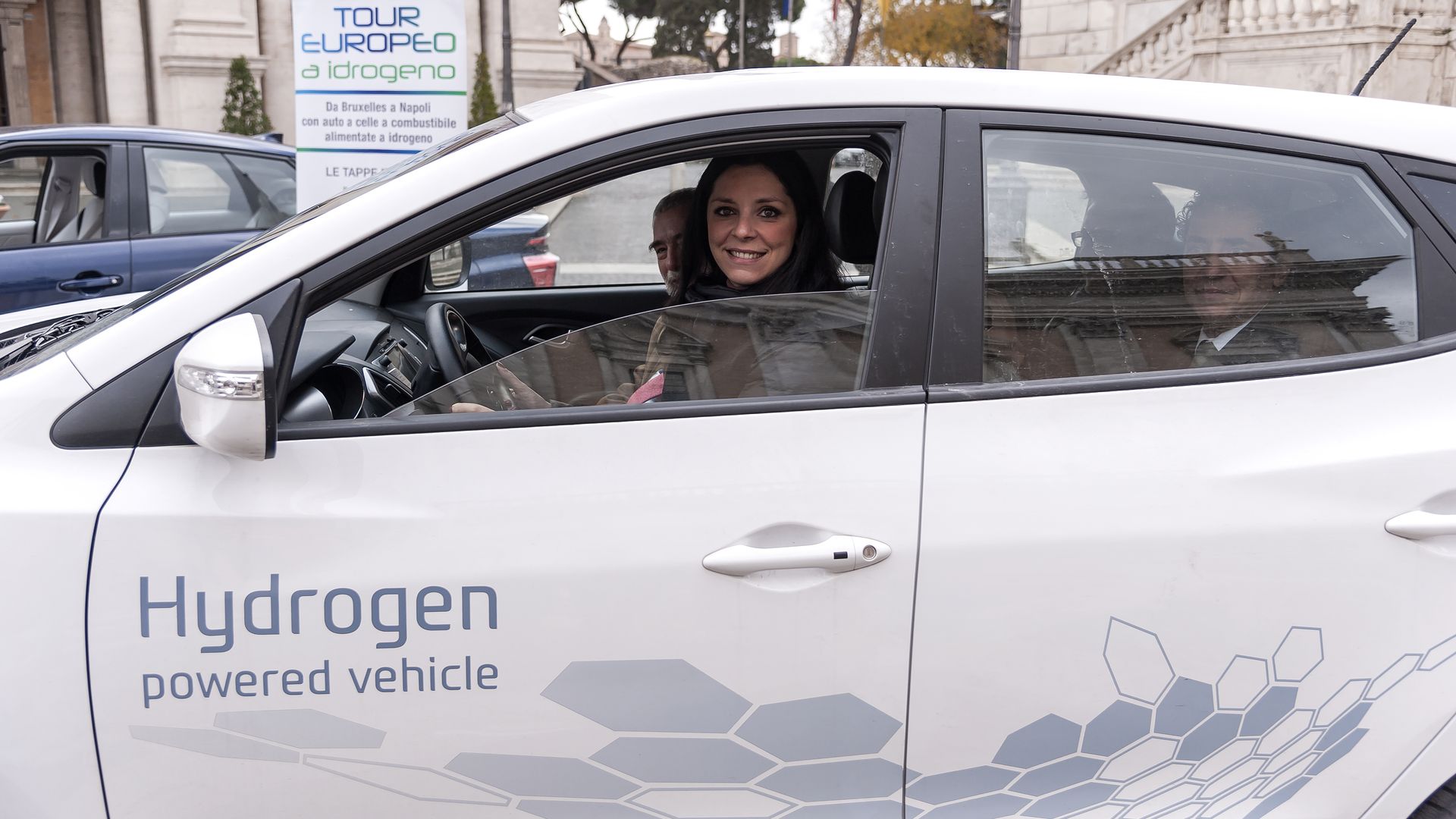
In the past decade, costs of fuel cells have fallen by 60% and costs of electrolyzers — a crucial component in hydrogen-fuel production — by 80%, according to a report released last month by the Department of Energy's Fuel Cell Technology Office (FCTO). The report affirms that, despite significant hurdles, hydrogen and fuel cells will play a growing role in the decade to come.
Why it matters: The potential for fuel cells and hydrogen energy includes increasing the efficiency of national power generation, providing low-carbon energy sources for light- and heavy-duty transportation, and reducing the carbon intensity of industrial facilities such as refineries and steel mills. These are functions that are difficult to decarbonize with only electric-based renewables (e.g., wind and solar) and together account for nearly 80% of U.S. greenhouse gas emissions.