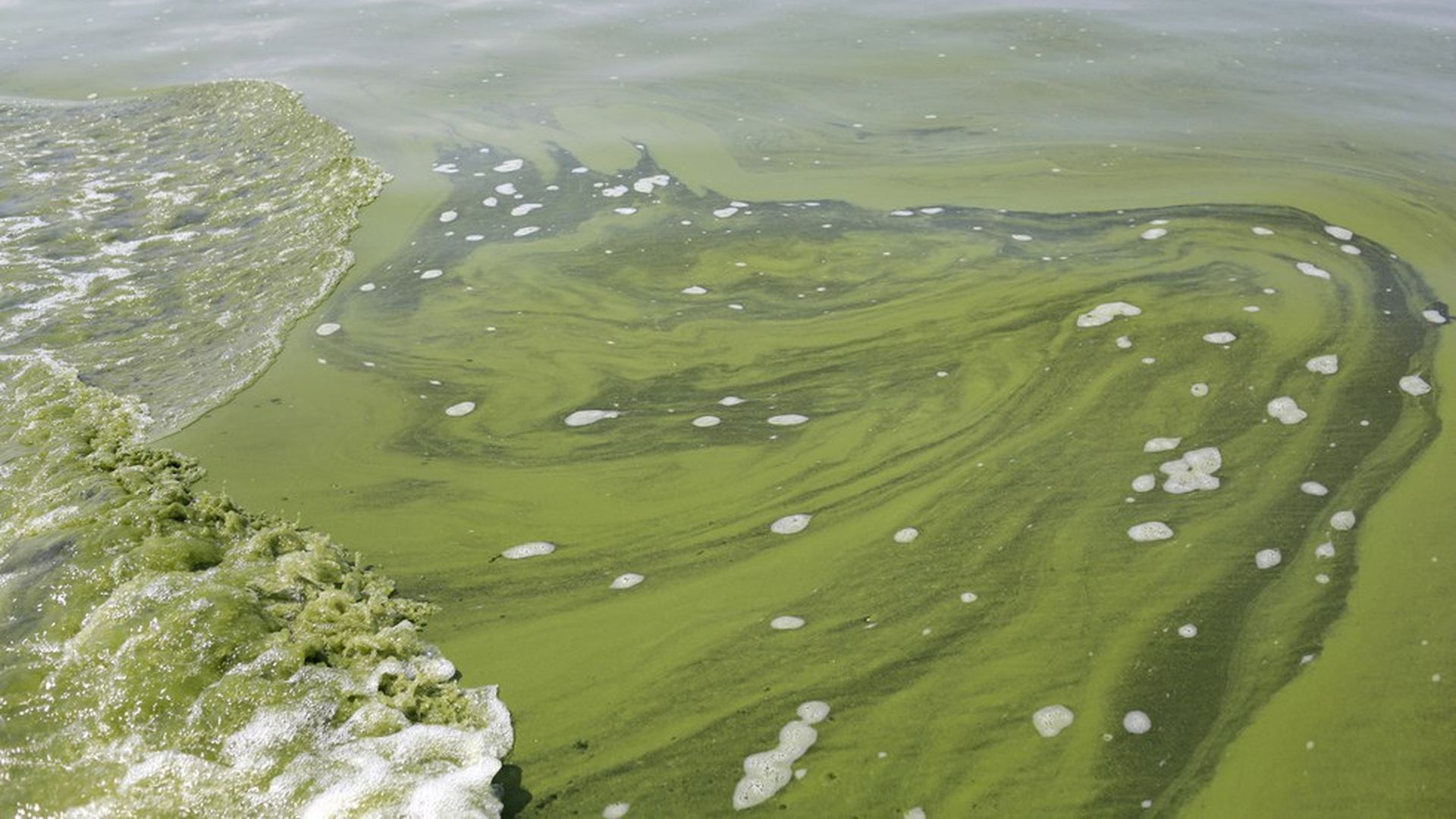
As the climate changes, dead zones in lakes and oceans could increase in size, while toxic algal blooms and "red tides" could become commonplace, according to a new study. The paper, published Thursday in the journal Science, suggests increased rainfall will cause more nitrogen from fertilized fields to enter waterways around the world.
What they found: All told, the total nitrogen runoff is expected to increase by 19% for the continental US, and other regions around the world are vulnerable as well.The impacts of this increase are predicted to be especially strong in the Northeast and Midwest U.S., India, China, and Southeast Asia.
Why it matters: "When we think about water sustainability, it's not just enough to think about the quantity of water. It's also the quality of water," Anna Michalak, an earth scientist at the Carnegie Institution for Science, in Stanford, California, and an author on the study, tells Axios. Nitrogen runoff can destroy lakes and cause toxic algal blooms that close beaches, kill animals and shut down fisheries, causing massive economic damage.
House and Senate leaders struck a deal late Wednesday night that would ramp up sanctions against Russia for its meddling in the 2016 election (in a package that also heightened sanctions on Iran and North Korea) while also limiting President Trump's power to nix them.
Where Europe comes in: European allies are concerned that the sanctions against Russia would inadvertently be damaging to their economies as well.
The Trump administration is slapping sanctions on 13 "current and former Venezuelan officials associated with the Nicolas Maduro regime" in Venezuela who have been involved with corruption, human rights abuses, or those who are degrading order in Venezuela, senior administration officials told reporters Wednesday.
If carried out, this would fall under an already existing executive order.
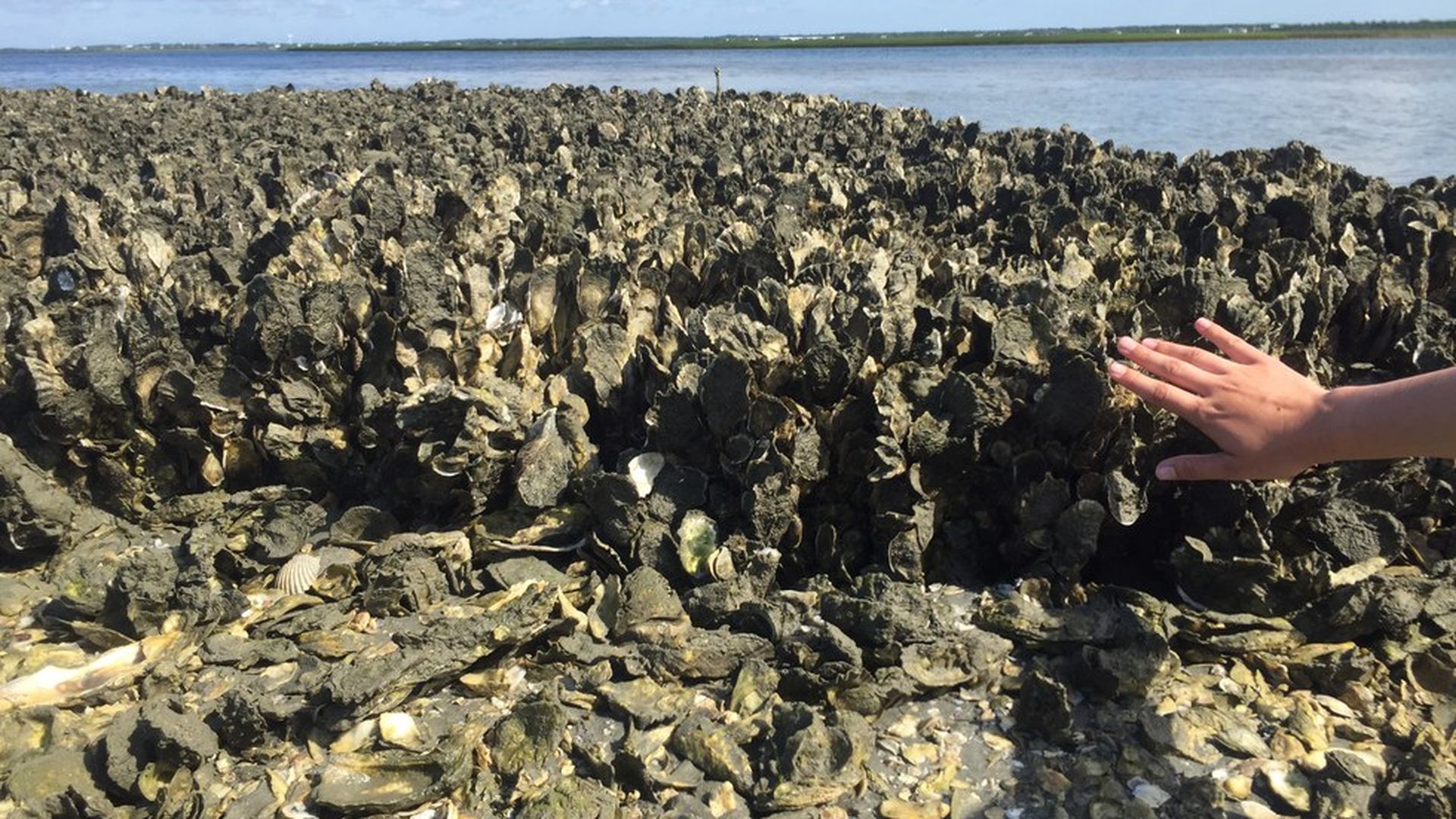
Harmful fishing practices and high sediment pollution are disturbing the world's oyster reefs, and these disturbances could significantly impact levels of carbon dioxide in our atmosphere, according to a new study. Researchers at the University of North Carolina at Chapel Hill studied the carbon buried in 22 different reefs and found that, when disrupted, the reefs become sources of atmospheric carbon dioxide.
Why it matters: Higher levels of CO2 in the atmosphere can accelerate the effects of climate change, and oyster reefs may have a role in that process.
The U.K. will ban the sale of new gasoline- and diesel-driven vehicles starting in 2040 toward a goal of removing them from British roads a decade later and shifting the country to fully electric cars, per the Financial Times.
The prohibition, to be announced today, is driven by environmental policy — to bring down U.K. emissions within EU pollution standards. But, coming two weeks after France announced a similar ban, its impact could be much broader.
Why this matters: Previously, the Netherlands and India, too, said they were banning the sale of new gasoline- and diesel-powered vehicles by 2025 and 2030, respectively. Saying and doing are different things. But taken together, the bans put serious weight behind bullish forecasts for electric car penetration, and could lead oil companies, carmakers, petro-states and geostrategists to recalibrate policies that forecast a much slower penetration of electric cars into the market.