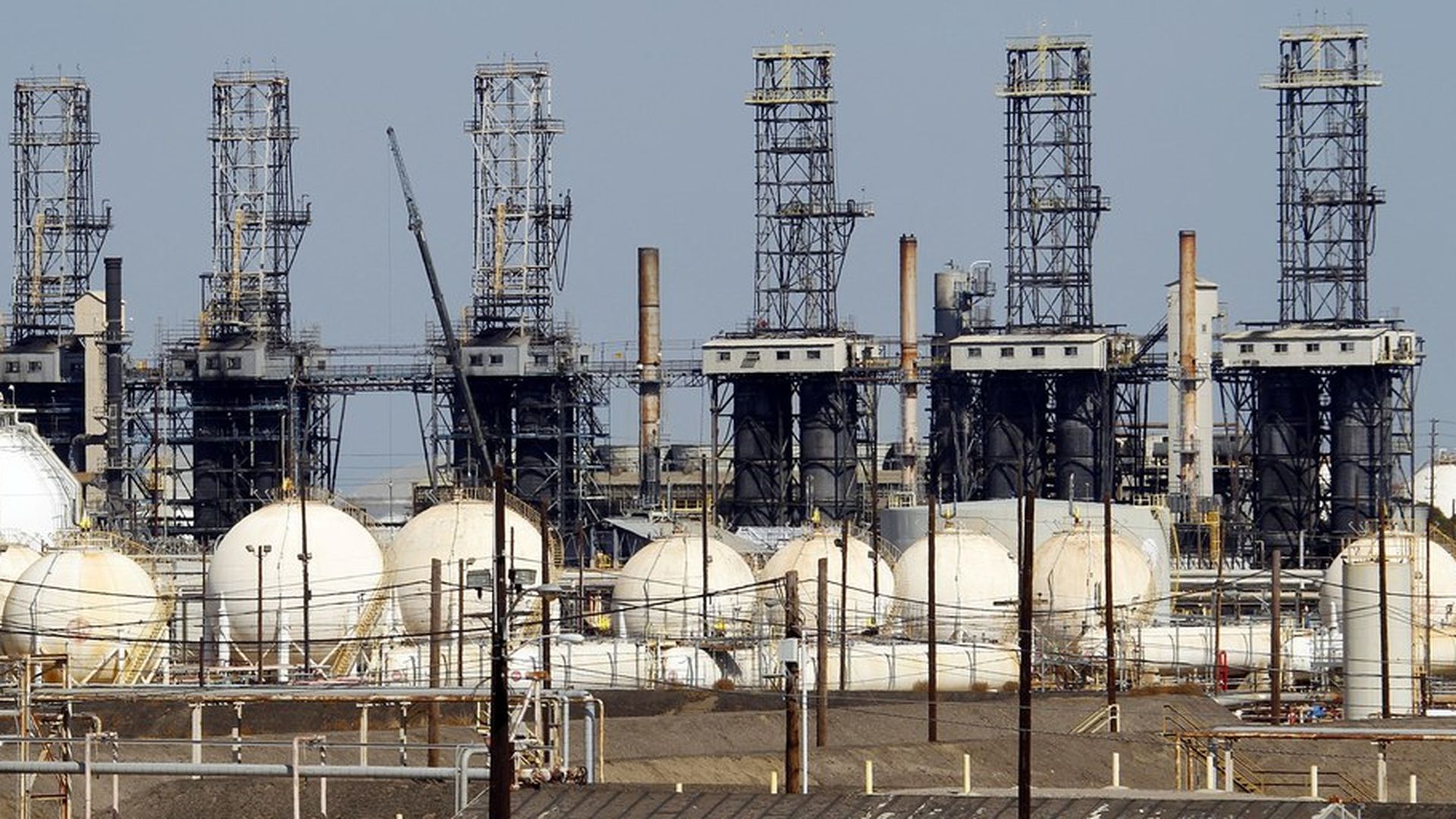
A collaboration between Craig Venter's Synthetic Genomics and ExxonMobil has yielded "a breakthrough" in efforts to create biofuels from algae. Researchers report they have engineered a strain of algae that can produce twice as much fat — essentially oil — but can still grow at its normal rate.
Why it matters: For decades, scientists have tried to produce oil from fast-growing algae to replace or supplement fossil fuels. One challenge that this study appears to have overcome using genetic engineering has been that algae require a lot of nutrients to grow quickly but produce more fat when they are starved of the same nutrients. That tradeoff limits how much biofuel can be made overall.
Poll by Associated Press and NORC Center for Public Affairs Research: "Less than one-third of Americans support President Donald Trump's decision to withdraw from the Paris climate accord, a new poll shows, and just 18 percent of respondents agree with his claim that pulling out of the international agreement to reduce carbon emissions will help the U.S. economy."
The great divide: "Seventy-eight percent of Democrats think withdrawing from the Paris agreement will hurt the national economy. Among Republicans, just 24 percent think it will hurt, 40 percent think it will have no impact and 34 percent think it will help."
Independents split: "Twenty-five percent support the withdrawal, 36 percent are opposed and 37 percent don't feel strongly one way or the other."
"The poll shows about two-thirds of Americans think that climate change is happening, while only about 1 in 10 think it's not."
A strange bedfellows coalition, including four of the world's biggest oil and natural gas producers, environmental groups and political leaders, are announcing a unified push urging Congress to enact a carbon tax to address climate change on Wednesday.
Why it matters: The support of major oil and natural gas companies — Exxon Mobil Corp., Royal Dutch Shell, Total and BP — will be needed to get Republicans to back a policy that remains politically toxic. The coalition represents the most diverse set of interests pushing Washington on climate policy in a decade.
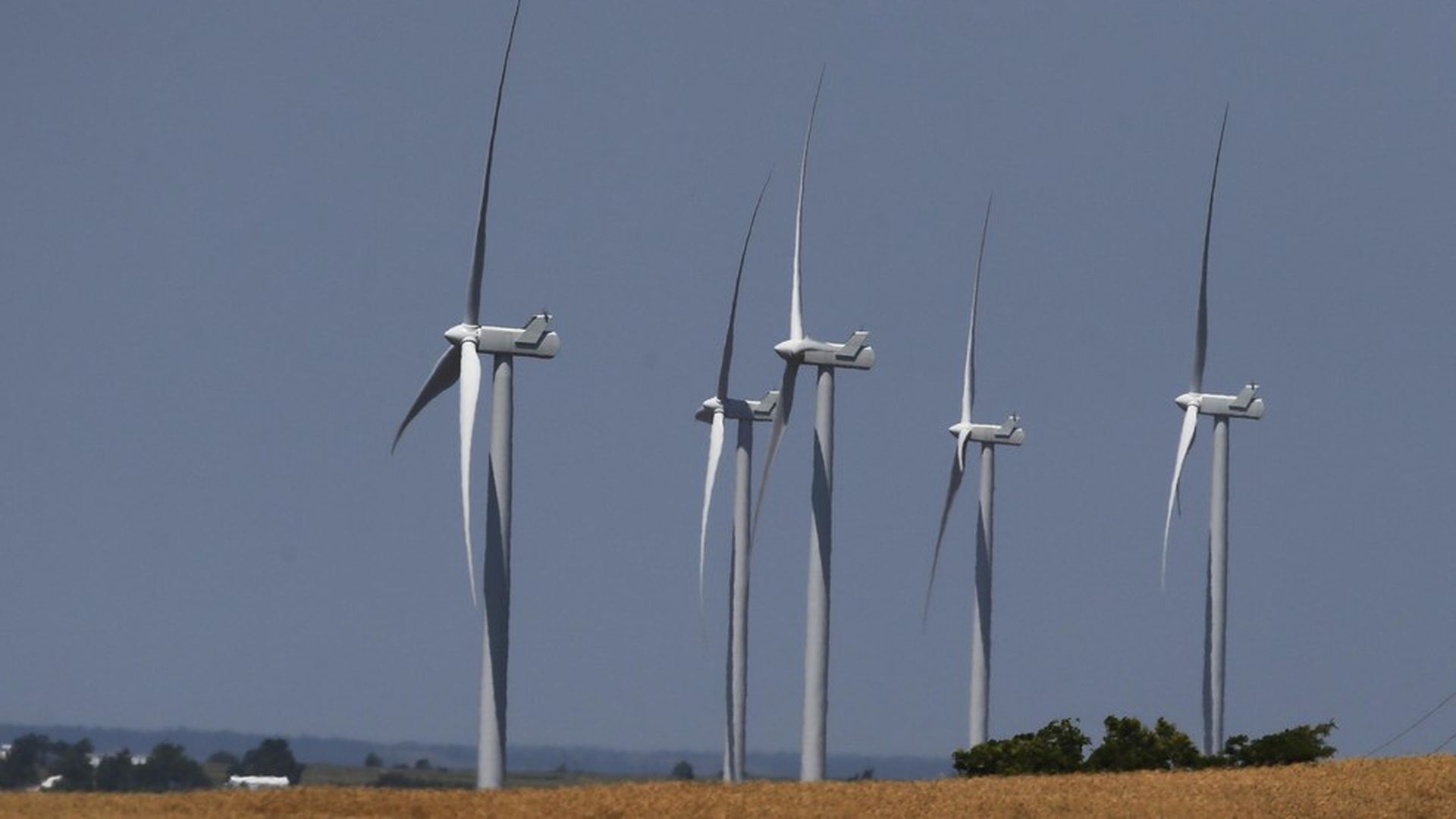
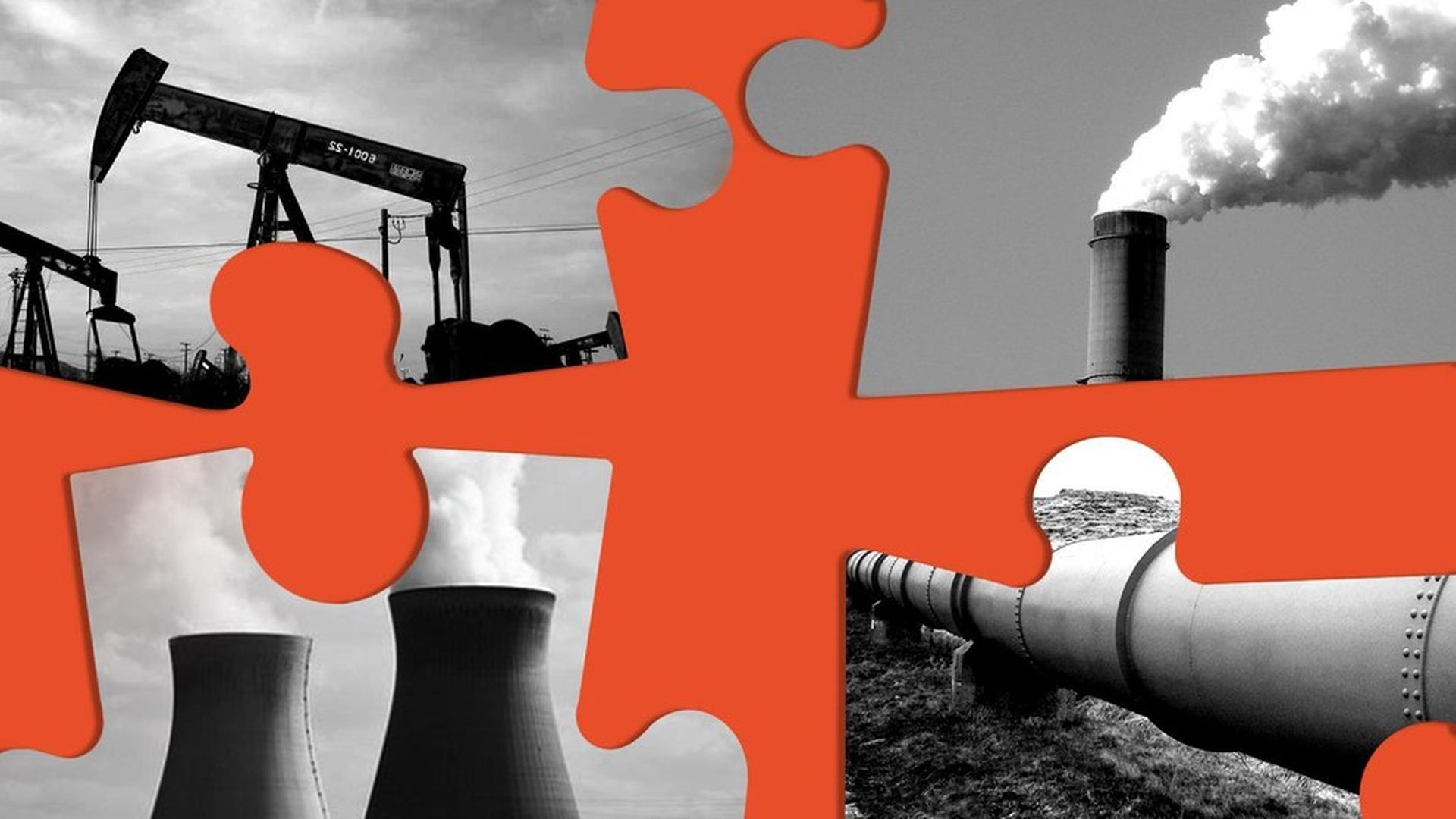
Out today: A large team of energy experts say in a newly-published study that, from an economic and practical standpoint, achieving a nearly carbon emissions-free power system will require a wide range of energy sources, not just renewables.
Why it matters: The new paper in the Proceedings of the National Academy of Sciences comes amid a debate over how to eventually bring about the "deep decarbonization" needed to prevent the most dangerous levels of global warming.
"[T]he weight of the evidence suggests that a broad portfolio of energy options will help facilitate an affordable transition to a near-zero emission energy system."
The closest thing President Trump has to a climate and energy policy is actually a collection of contradictions.
He touts natural gas as a carbon-cutting mechanism, but he also promises to bring back the carbon-emitting coal industry. He talks about "clean coal," but his actions will make it harder for "clean coal" technology to make any headway.
Why it matters: Misleading statements are nothing new in Washington. But these contradictions are becoming the Trump administration's core policy framework. Top officials, including Secretary of State Rex Tillerson and EPA Administrator Scott Pruitt have over the last couple of weeks repeatedly pushed these contradictory positions, so let's take a closer look at them.