When it comes to legalized sports gambling, there's football, and then there's everything else.
Why it matters: While the percentages can vary wildly, each of the 38 states (and D.C.) that have legalized sports betting receive some level of tax revenue on their residents' gambling.
Skechers' stock is skidding after the company fell short of expectations and said tariffs could cause it to shift production.
Why it matters: Apparel companies are especially susceptible to President Trump's threatened tariffs on China and Mexico, in particular.
State of play: Skechers' shares plummeted, closing down almost 13% despite the company reporting Q4 sales growth of 12.8%, to $2.21 billion.
CFO John Vandemore said on an earnings call that Trump's move to impose tariffs on China "has impacted our visibility" and will likely lead to "the reallocation of certain production, vendor concessions and pricing."
Yes, but: The company still enjoyed record sales in 2024.
Netflix is weighing a bid for Formula One broadcasting rights, the New York Times reported today.
Why it matters: The streaming giant is delving deeper into live sports after two Christmas Day NFL games and the Mike Tyson-Jake Paul boxing match delivered huge audiences.
State of play: Netflix enjoyed success with its popular docuseries "Drive to Survive" about F1, but the sport's live races currently air on ESPN in the U.S.
"ESPN's exclusivity period to bid on the broadcast rights beyond 2025 has now expired, sparking a fresh round of interest from broadcasters in picking up the American rights package," NYT reports.
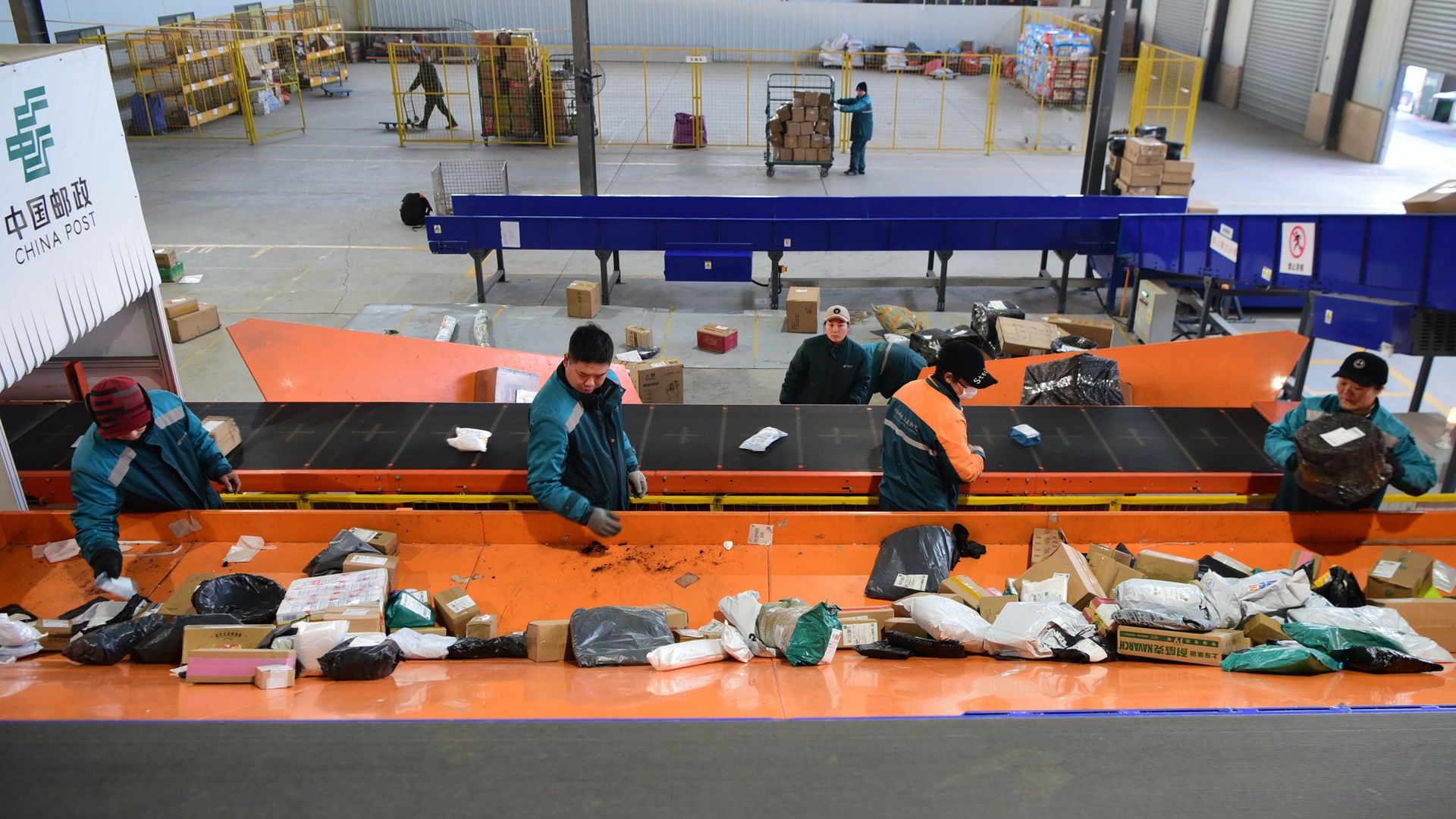
President Trump signed an executive order that temporarily freezes tariffs on low-cost packages from China.
Why it matters: The order reinstates the long-standing de minimisexception for such packages, which are typically valued below $800. This provides relief for consumers who would face higher costs on retail goods shipped from China.
As the Trump administration seeks to lay off thousands of government workers and slash spending that supports many private sector jobs, those cuts could start to show up in economic data — if you know where to look.
Why it matters: Federal government employment is a small share of the overall economy — especially when you exclude the military and the postal services — but the cuts underway may prove large enough to create some visible ripples in the data that comprise the nation's economic dashboard.
The U.S. labor market started 2025 — and President Trump's term — in a state of uncanny balance.
Why it matters: Unemployment is low and steady, and job growth is chugging consistently forward. It's an environment that allows policymakers at the Federal Reserve and beyond to be patient in deciding what to do next.
There is plenty ahead that might jolt the economy for better or worse — trade wars, AI, fiscal policy and more. But January was a month of labor market equanimity.
Consumer sentiment fell across all political parties in early February, while expectations of higher inflation soared alongside tariff threats, according to a closely watched gauge from the University of Michigan.
Why it matters: Receding economic optimism, at least if prolonged, risks consumers holding back on the type of spending that has bolstered the economy.
The carried interest tax loophole is like a movie monster.
Politicians try to kill it every few years, only to get bloodied and then save themselves by letting it slink into the background.
The latest sequel arrived yesterday, with the White House telling House GOP leaders that it wants the loophole closed as part of upcoming tax negotiations.






/2025/02/07/1738940403799.gif?w=3840)