The unkillable carried interest tax loophole

Add Axios as your preferred source to
see more of our stories on Google.
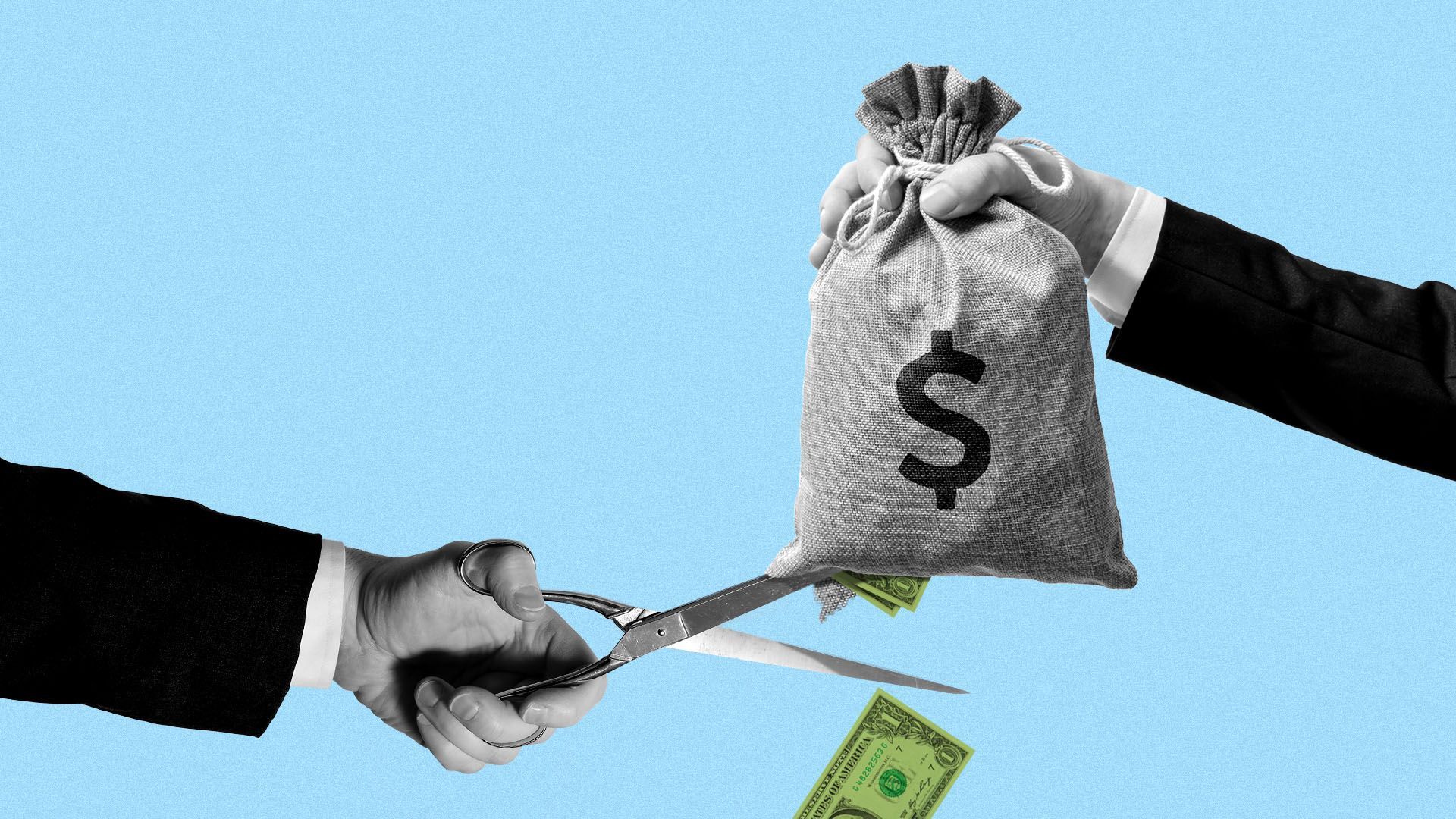
Illustration: Sarah Grillo/Axios
The carried interest tax loophole is like a movie monster.
- Politicians try to kill it every few years, only to get bloodied and then save themselves by letting it slink into the background.
The latest sequel arrived yesterday, with the White House telling House GOP leaders that it wants the loophole closed as part of upcoming tax negotiations.
- For the uninitiated, carried interest is the profit earned by private fund managers on others investors' capital.
- The loophole, which some investors argue isn't a loophole, is that carried interest gets taxed as a capital gain, rather than at the higher ordinary income rates. Even though it's essentially a fee for service, without fund manager capital at risk.
This isn't a new position for President Trump, who unsuccessfully advocated for the same thing in 2017, but it is nonetheless surprising.
- He didn't say a word about carried interest during the recent campaign, and since the election has turned Mar-a-Lago into Sand Hill Road East.
- Moreover, Trump's nominee to lead the Office of Personnel Management — Andreessen Horowitz's Scott Kupor — was an advocate for the carry status quo while chairing the National Venture Capital Association.
Industry trade groups like the NVCA and the private equity-focused American Investment Council already have mobilized, suggesting that private investment would be curtailed were the tax treatment to change.
- Behind the scenes, expect these groups to tie themselves to real estate investors, who also can earn carried interest but who often get exempted from these proposals.
- That's what they did back in 2017, while also successfully proposing a slightly longer hold period to qualify for capital gains rates. Don't be surprised to see a similar fig leaf get floated.
- No word yet on who will be their legislative hero. In 2017 it was Rep. Kevin Brady (R-Texas), who chaired the House Ways and Means Committee. In 2022 it was Sen. Kyrsten Sinema (D-Ariz.). Neither are still in Congress.
The bull case for the loophole being finally closed is that Trump thus far has faced almost no GOP resistance to anything, and there will need to be at least some talking point pay-fors if the 2017 individual tax cuts get extended. Let alone if the corporate rate is lowered further and taxes on tips and Social Security get removed.
The bear case is that we've been through this many times before, under multiple administrations, and it always ends up the same way.
Look ahead: Don't be surprised if some VC and PE managers accelerate IPO or sale plans for certain portfolio companies, fearing a tax change that could take effect in 2026.
The bottom line: Here we go again.
