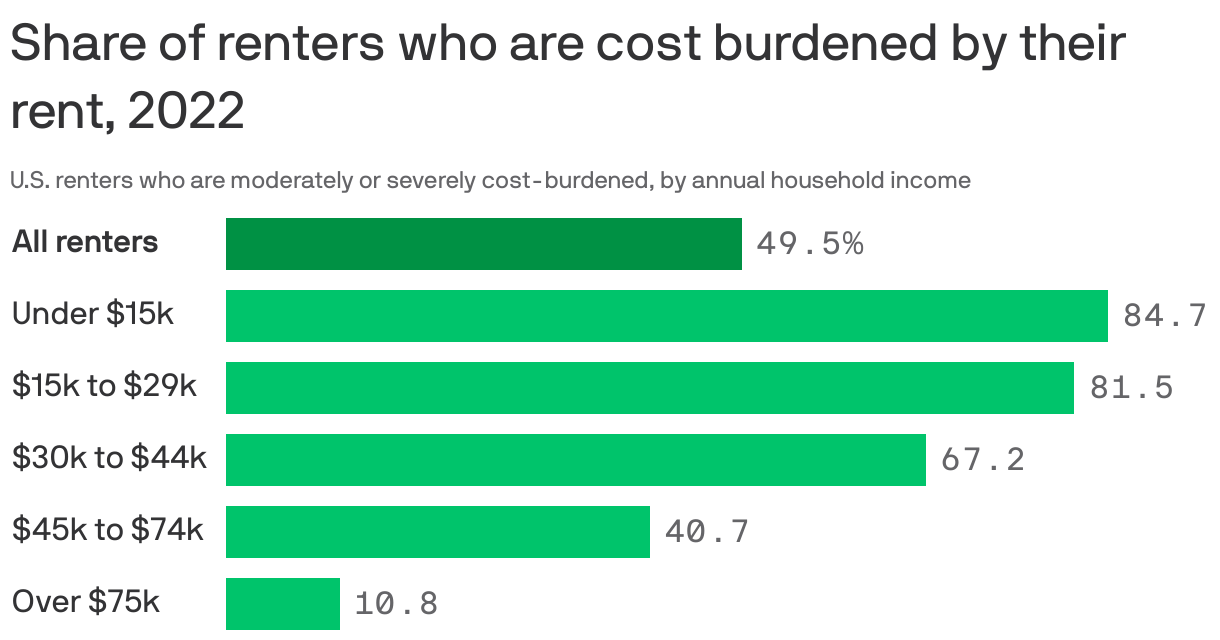
Half of all renters in the U.S. were burdened by the cost of their rent in 2022, a report released by the Harvard Joint Center for Housing Studies this week found.
Why it matters: The increasing lack of affordable housing over the past few years has plagued millions of people across the country, just as homelessness reached an all-time high last year.
Here's a conundrum that got me very puzzled after I was introduced to it by Elizabeth Renter of NerdWallet: Why are single parents so much richer than single non-parents?
Why it matters: It's generally understood that the more money you make, the more money you'll have. But that doesn't seem to be the case when you look at the Fed's triennial survey of consumer finances.
On U.S. social media, false and harmful posts from connections shilling the dubious products of multi-level marketing (MLM) companies have become inescapable.
Why it matters: Trust in media is descending to unprecedented depths — and social media increasingly is media. News is not a distinct category any more, so much as it's a single ingredient in a wide-ranging and often highly toxic stew of highly disparate posts.
Israel'slongstanding cultivation of its global diaspora as a source of funds paid off last quarter, as Jews around the world kept on lending the country money at much lower rates than the commercial markets.
Why it matters: Both Israel and many of its investors are sophisticated players of the arbitrage between debts issued to different types of bondholders. (Traders need not apply: The diaspora bonds are non-tradable.)
When a government is worried that its stock market has fallen too far, sometimes it tries to buy stocks in an attempt to turn the market around. China is looking to unleash about $278 billion to that effect shortly.
Why it matters: Economists generally hate this move, saying it introduces inefficiencies to markets. But policymakers are generally more open to it.