More than 150 executives at major firms based in New York City asked Mayor Bill de Blasio in a letter on Thursday to resolve "public safety" and "quality of life" issues set off by the coronavirus pandemic.
Why it matters: The companies, including Goldman Sachs, Bank of America, Vornado Realty Trust and JetBlue, warned the mayor that deteriorating conditions across industries and all five boroughs are preventing the city's full economic recovery.
The Department of Labor this week issued its first coronavirus-related citation at a meat packing plant, fining the Smithfield Packaged Meats Corp. nearly $13,500 for "for failing to protect employees from exposure" to the virus.
Why it matters: The meatpacking plant, located in Sioux Falls, South Dakota, became an early coronavirus hotspot in April after hundreds of positive cases were traced to the facility. At the time, the company's sick employees made up about 44% of South Dakota's COVID-19 cases, per the NY Times.
Netflix co-founder Reed Hastings is on a publicity tour for his how-to management book, in which he attempts to teach other CEOs how to manage the Netflix way.
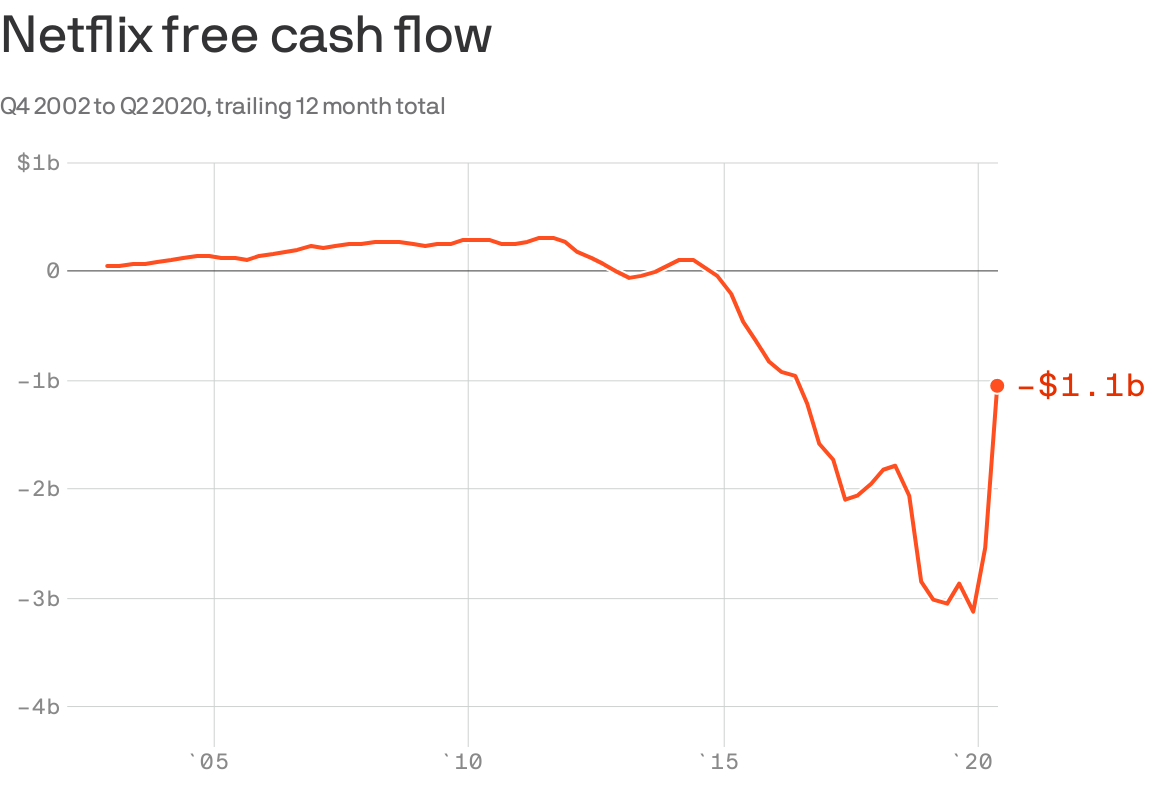
Between the lines: Hastings' real superpower as a manager — one that he never really admits to in the book — is that, thanks to the gravity-defying Netflix share price, he isn't cash constrained. In fact, the more cash he burns, the more valuable his company becomes.
When the first plane hit, I was in a ride-share van going down the FDR Drive on the East Side of Manhattan.
The first thing I noticed was paper. The most ordinary, yet extraordinary, stream of glittery paper — photocopies, memos, restaurant menus, the stuff that was always on your desk in the early aughts — falling from the sky in a hideously gorgeous plume.
Argentina's debt restructuring is finished, and, for anybody who remembers Argentina's last debt default, this one was gloriously smooth.
By the numbers: Argentina restructured $69 billion in foreign bonds, plus another $42 billion in foreign currency local law bonds. The country negotiated a reduction in its effective interest rate from 7% to 3%, which translates to a creditor "haircut" of about 45 cents on the dollar in present-value terms.
The NFL season kicks off tonight in Kansas City, but a lot has changed since the Chiefs hoisted their trophy in February including new economics, experiences and politics.
Axios Re:Cap digs in with ESPN football analyst Mina Kimes.
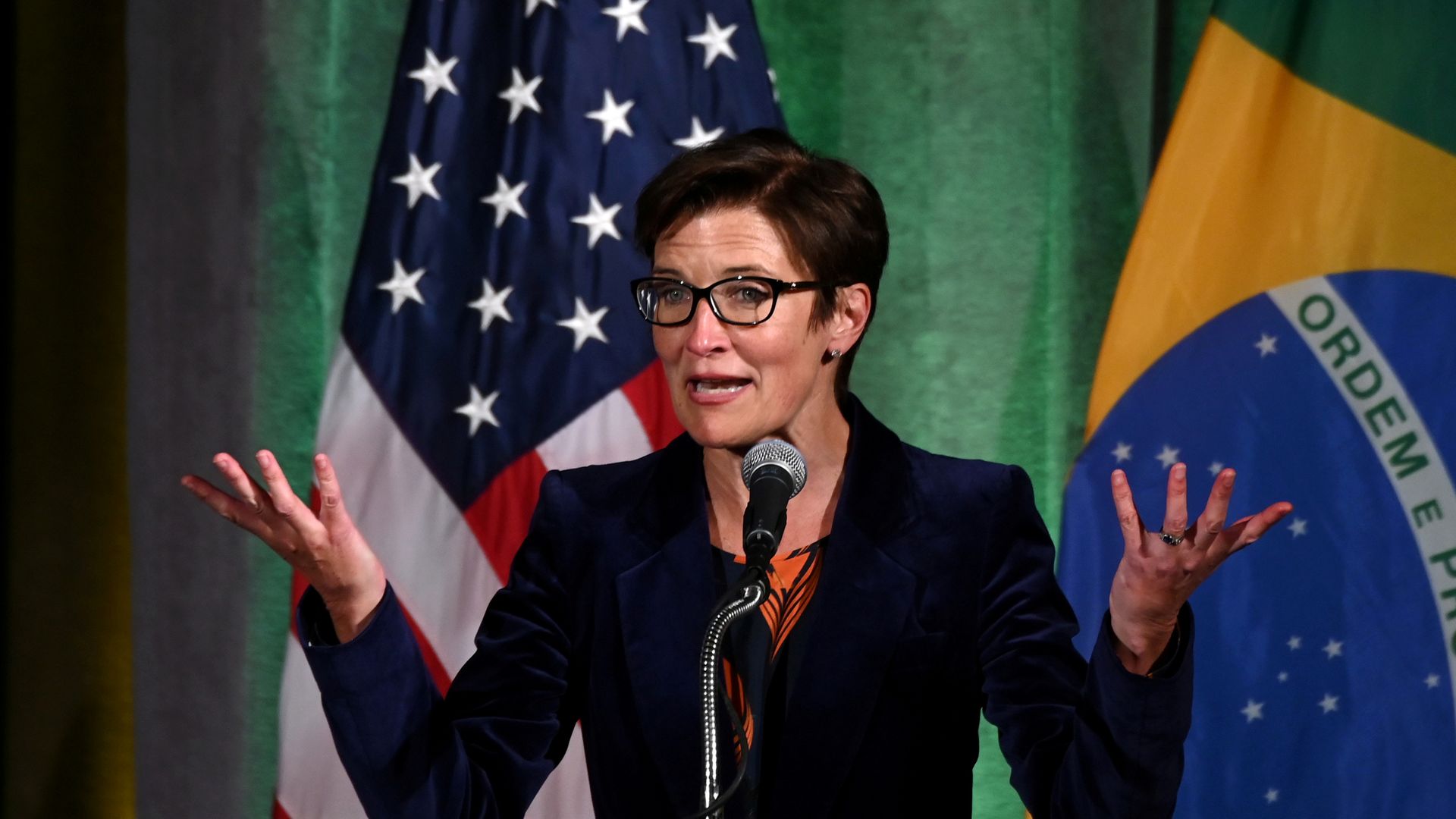
The first female big-bank CEO in U.S. history is a Scot who has triumphed in the world's most competitive arenas — Goldman Sachs, Harvard Business School, McKinsey, and now Citigroup, where she will become CEO in February.
The job that Jane Fraser says challenged her the most is among the most common in the world: Mom.
Simon Property Group (NYSE: SPG) and Brookfield Property Partners (Nasdaq: BPY) have tentatively agreed to acquire most of the retail operations of JCPenney, as part of a deal that will help the bankrupt retailer avoid liquidation.
Why it matters: The deal could save upwards of 70,000 jobs.
LVMH yesterday broke off its $16.2 billion engagement to Tiffany & Co., and then the two sides sprinted to file competing lawsuits in Delaware.
What we learned: The French government may have played a key role in the split, asking LVMH to delay the deal close for two months past the agreed-upon deadline.
Citi CEO Michael Corbat announced Thursday he will retire after 37 years at the company, according to a company statement.
The state of play: The Citi board has chosen Jane Fraser, currently Citi’s president and CEO of global consumer banking, to succeed Corbat in February. She will be the first female CEO of a megabank, per CNBC.
Venture capital funding for energy technology startups has recovered from its mid-2010s trough but is seeing a fresh drop-off this year, new International Energy Agency data show.
Where it stands: Electric vehicles, hydrogen and storage technologies have generally been growth areas in recent years.
July's Job Openings and Labor Turnover Summary showed that while U.S. employers did more hiring than in any month in history and job openings increased to 6.6 million, the labor market is still struggling.
What's happening: There were 708,000 more hires than separations, a strong number but more than a million below the nonfarm payrolls estimate of 1.73 million jobs added for the month. It was, however, less than the more than 2 million job differential seen in June.
Business has entered its next evolution — the can't lose market — but only for large companies with access to public markets.
The state of play: Companies with enough size are starting to take advantage of the moment, and backed by a seemingly endless supply of free Fed money can go all-in on whatever they want.