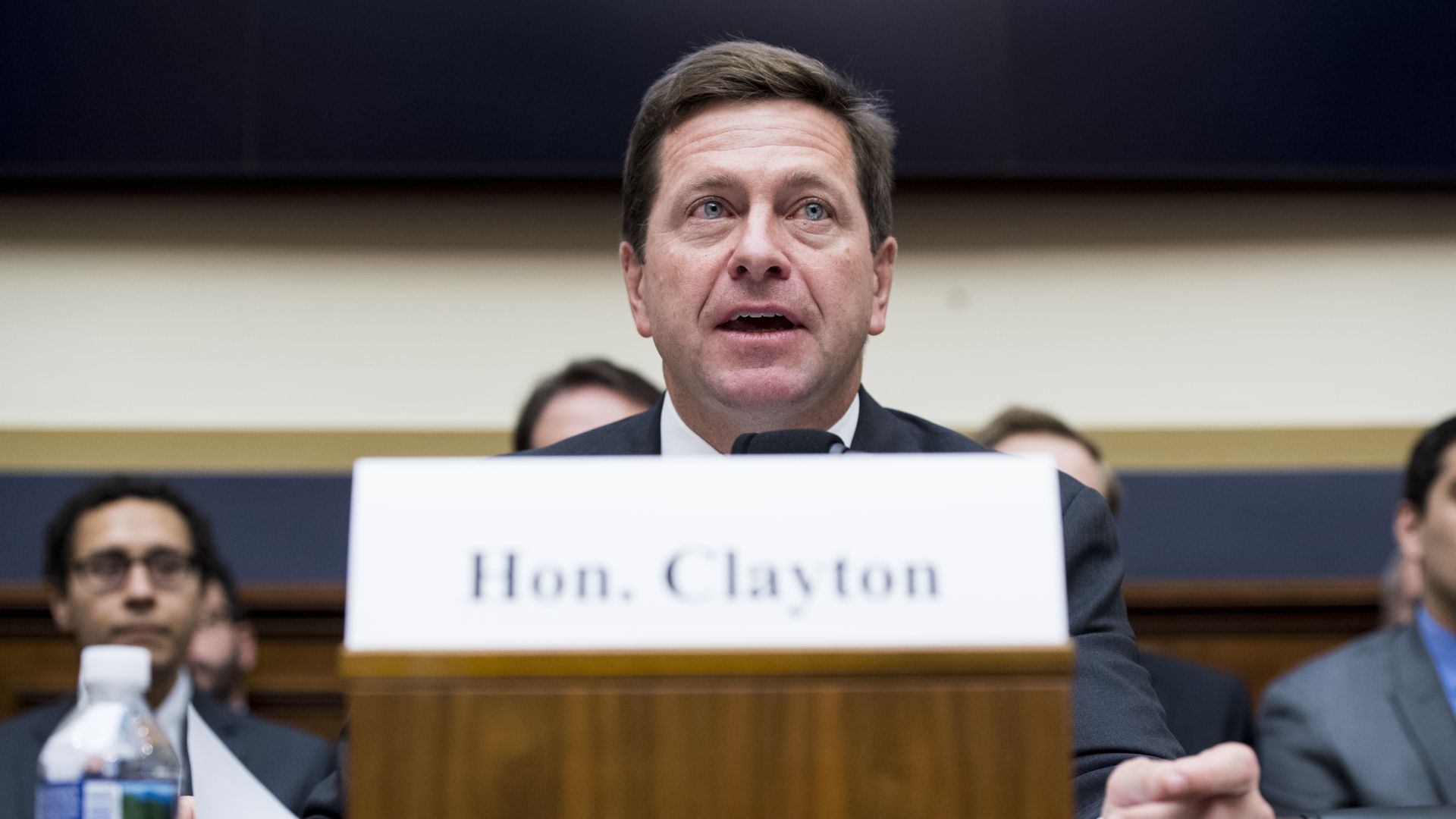
The Securities and Exchange Commission said on Wednesday it would give coronavirus-impacted companies more time to file key financial documents — including quarterly reports — on a conditional basis.
Why it matters: It's among the first agencies to announce regulatory relief for corporations affected by the coronavirus outbreak.
Stocks closed up more than 4% on Wednesday afternoon, erasing all of yesterday's losses. The S&P 500 is 7.5% below record levels seen in mid-February.
Driving the news: The gains in the stock market were led by health care stocks, which analysts say got a boost from a strong Super Tuesday performance by Joe Biden — a candidate whose policies would be more favorable to the sector than those of Bernie Sanders. UnitedHealth, the country's biggest health insurer, had its best day in 10 years.
ViacomCBS is looking to sell Simon & Schuster, the nearly 100-year-old publishing business, ViacomCBS CEO Bob Bakish said Wednesday.
Why it matters: The possible move comes as part of the company's plan to shed noncore assets to better focus on its core businesses: video and streaming.
Many of America's cities are gaining population, but the number of school-aged children is dwindling as families opt for the suburbs.
Why it matters: A growing body of research shows the strong link between the environment where kids grow up and their ability to thrive as adults. Yet the gap between the haves and have-nots is becoming more pronounced in city centers, driving middle-class families out.
Communities are starting to prioritize pre-kindergarten programs to boost children's school performance — as well as to provide quality childcare for parents who need to work.
Why it matters: "This is more than just an educational issue. It's a public health issue, an economic and workforce development issue, and a child poverty issue," said Olivia Allen, project manager at the Children's Funding Project.
Flashback: In November, the outlet said it would "extend its policy of not investigating" Bloomberg, its owner, "to all Democrats running for president in 2020."
The cul-de-sac has been a staple of urban development — and families' real estate wish lists — for the last 50 years. Now some cities are banning them from new developments.
Why it matters: Street-network sprawl determines a city's energy footprint.
The opening of the latest James Bond movie "No Time To Die" has been delayed, scrapping its original April release date until November in response to the coronavirus outbreak, according to a statement issued by producers Michael G. Wilson and Barbara Broccoli on Wednesday.
Why it matters: It's the first major Hollywood movie to push back its global rollout amid virus concerns.
General Motors on Wednesday took the wraps off a broad lineup of electric vehicles powered by a new proprietary battery technology, representing a dramatic transformation of the 112-year-old automaker.
Why it matters: It's a $20 billion bet over the next five years that GM hopes both consumers and investors will endorse as the company walks a tightrope between maximizing sales of its profitable gas-powered trucks and SUVs and delivering on a long-term vision for a cleaner, less congested world.
After Morgan Stanley last month agreed to pay $13 billion for E*Trade, deal-makers began buzzing that Robinhood could be the next discount domino to fall. Particularly on the heels of Charles Schwab agreeing to buy TD Ameritrade for $26 billion.
What's new: Robinhood does now have a target on its back, but the archers are more likely to be lawyers than potential acquirers.
Element Science, a San Francisco-based developer of wearable cardioverter defibrillators, raised $146 million in Series C funding co-led by Deerfield Healthcare and Qiming Venture Partners US.
Why it matters: The U.S. mortality rate from cardiovascular disease has stalled out, after decades of rapid descent. There had been a widespread expectation that cancer would overtake cardio in 2020 as America's top killer, but that's begun to look less likely.
The yield on the U.S. 10-year Treasury note fell below 1% for the first time ever after the Fed's unexpected rate cut.
The state of play: This drop might not be the end. "We expect Treasury yields to remain low and perhaps fall even lower," Charles Schwab chief fixed income strategist Kathy Jones wrote.
Investors and President Trump want the same thing after Tuesday's surprise 50 basis point cut by the Fed: more cuts.
The state of play: The announcement, two weeks to the day before the beginning of the central bank's scheduled March 17–18 policy meeting, has investors scratching their heads. "The Fed pulled the fire alarm without telling anybody why," Bernard Baumohl, chief global economist at the Economic Outlook Group, tells Axios.
Foreign travel to the U.S. is slated to tumble over the next six months, according to the latest data from the U.S. Travel Association.
What's happening: The USTA's three-month Leading Travel Index (LTI) projects international inbound travel will fall by 6% year-over-year, "as the coronavirus outbreak continues to roil the global economy," the agency said in a release Tuesday.