U.S. securities regulators have rejected an application by the New York Stock Exchange to allow companies to raise capital during direct listings, Axios has learned.
Why it matters: As we wrote earlier, the NYSE proposal could have upended the traditional IPO market, which has relied on Wall Street banks to set pricing terms.
There's a split-screen effect with the Saudi Aramco IPO: it's simultaneously the largest ever and an event that's less consequential than initially envisioned.
Driving the news: The company yesterday said shares would be priced at 32 riyals, or $8.53, per share on the country's domestic exchange, representing a $1.7 trillion valuation.
The U.S. economy added 266,000 jobs in November, above the 187,000 economists expected, the government said on Friday, as the unemployment rate fell back to a 50-year low of 3.5%.
Why it matters: The number reflects, in part, striking GM workers returning to work. The report, which also included upward revisions for prior months' job gains, also shows employers haven't pulled back on hiring, despite fears of a trade-war driven economic slowdown.
The return of bullish sentiment that has driven the stock market to fresh all-time highs hasn't dented the safe-haven appeal of money market funds, which are akin to savings accounts or holding cash.
Why it matters: In fact, data shows investors are still selling equities on an overall basis and moving that money into money market funds.
Most economists polled are on record predicting the U.S. added 150,000 to 180,000 jobs in November, but following Wednesday's ADP private payrolls report, which came in strongly below estimates, some are bracing for a weak number.
The big picture: Cailin Birch, global economist at The Economist Intelligence Unit, expects job creation softened significantly last month and that the economy is slowing — though she sees a "minor risk" of a looming recession.
The dollar has fallen every day this week, notching a cumulative loss of around 1% since President Trump complained on Twitter about its strength and took aim at two countries with weak currencies.
Why it matters: The decline may continue, reducing the dollar's strength in 2020, experts say.
Holiday season spending is here, with the frenzy of Black Friday, Cyber Monday,and all the other temptations in full play.
The big picture:This year, Black Friday spending rose an astonishing 20%; even Thanksgiving Day, when most brick-and-mortar stores are closed, was a retail extravaganza, seeing $4.2 billion spent online. But as shopping goes digital, it's easier than ever to find yourself buying fakes — either deliberately or by mistake.
As noted in Axios' Philanthropy Deep Dive on Saturday, philanthropists are big-picture strategic thinkers who generally want to use their money to influence government. By their nature, they're generally unaccountable and undemocratic forces in society.
The big picture: Giving Tuesday, which just passed, is a countervailing force to the prevailing philanthropic winds. It serves no strategic purpose; it merely encourages ordinary citizens to give money to charity on the Tuesday after Thanksgiving. (The bigger long-term trend is that household donations to charity are declining, rather than rising.)
Karen McDougal, a former Playboy model who said she had an affair with President Trump in 2006, has sued Fox News for defamation, the New York Times reports.
The big picture: McDougal said Fox News host Tucker Carlson defamed her with an accusation of extortion when he said in 2018 that she "approached Donald Trump and threatened to ruin his career and humiliate his family if he doesn’t give them money," according to the Times.
Bad news has continued for the hedge fund industry this year. Overall hedge fund returns have continued to trail both the S&P 500 and a mix of 50% global stocks and 50% global bonds by a wide margin.
What's happening: There are too many hedge funds, and too many of them are using simple hedging and shorting strategies that don't work, Dev Kantesaria, founder and portfolio manager of Valley Forge Capital Management, argues. And that may be changing soon.
Economists and fund managers are concerned about the services sector, which makes up around 70% of U.S. employment.
Driving the news: ISM's non-manufacturing PMI report released Wednesday showed a weaker-than-expected reading that was 5.4 points below October, but continued to expand with a reading above 50.
While sentiment indicators have been split, the jobs data and reports from businesses are painting a clear picture of the U.S. manufacturing industry's stress.
What they're saying: Timothy Fiore, chairman of the ISM survey committee, which tracks the sector through its purchasing managers index, said his report may be underestimating the damage. (His company's latest report showed manufacturing contracting for the fourth straight month.)
The manufacturing industry got a huge boost from President Trump's election, seeing a groundswell of job gains during his first year in office. But the trade war with China has undone that progress: Jobs in the sector have stalled out and turned negative in 2019.
Why it matters: Reviving American manufacturing was a central tenet of Trump's 2016 campaign, and the industry's retrenchment shows how another Trump constituency is being punished as a result of his trade war. (The nation's farmers are also struggling mightily.)
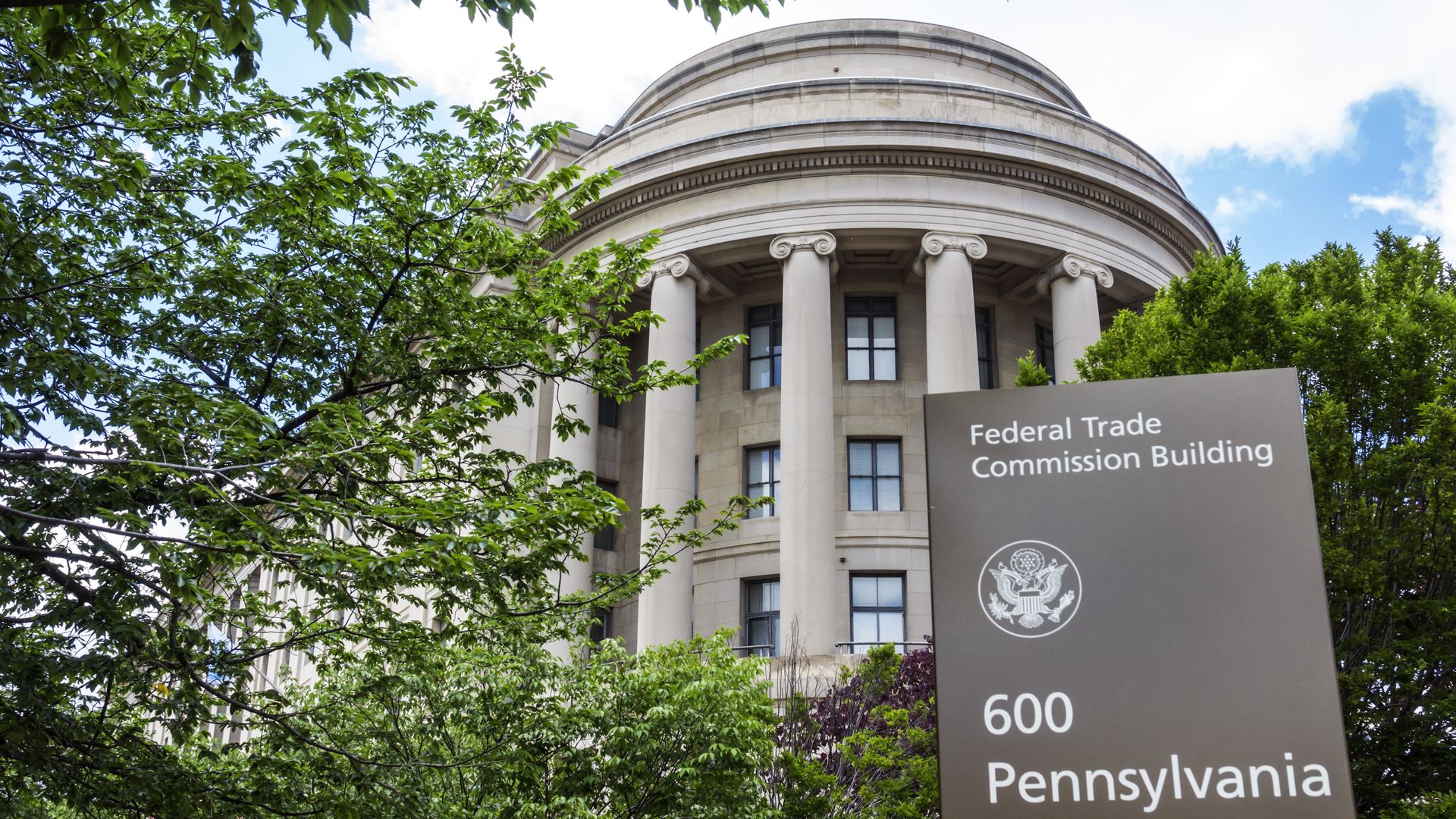
A collection of 31 advocacy groups is pressing the Federal Trade Commission on Thursday to dig into how digital media companies advertise to children and collect their data.
The big picture: The request for the FTC to use its subpoena authority to probe so-called kidtech companies comes as the agency considers updates to how it implements a children's online privacy law.