The role of race in the recent hate-fueled violence — along with President Trump's increasingly brazen embrace of racist stereotypes and language — has highlighted the news media's struggles in talking about race, hate and other painful issues of divisiveness.
The big picture: News organizations are expected to stick to the facts and avoid taking sides, but they're under growing pressure not to mislabel statements and actions that most Americans would consider racist. And the lack of diversity in newsrooms means many have blind spots on issues of race that become obvious in their coverage.
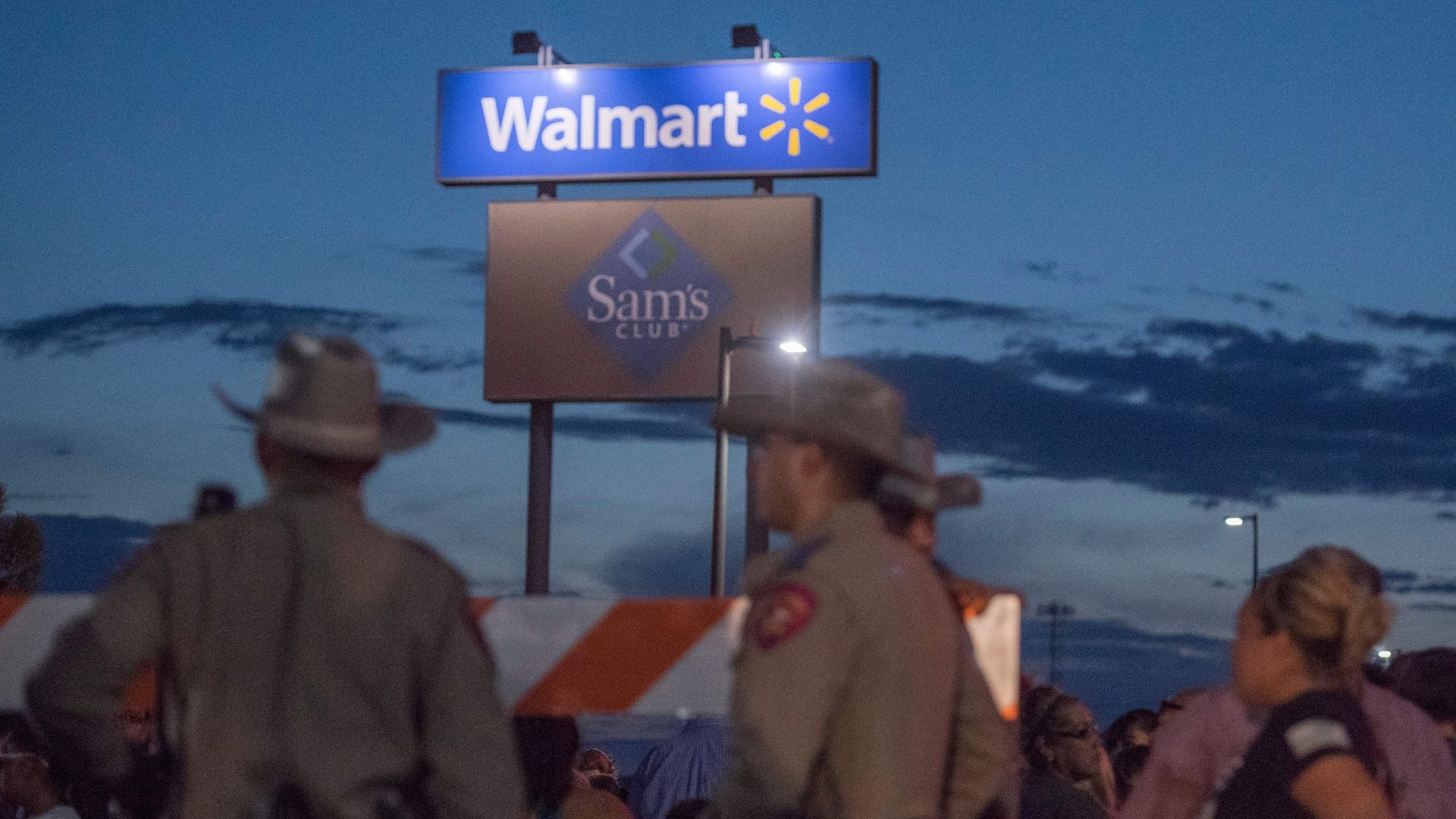
The man accused of killing 22 people in last Saturday's deadly mass shooting at an El Paso, Texas Walmart confessed to law enforcement upon his surrender and admitted to targeting Mexicans in the attack, per AP.
The latest: The suspect reportedly told the police on Saturday, "I'm the shooter," according to Detective Adrian Garcia per an arrest warrant affidavit obtained by the Washington Post.
Walmart has instructed employees to remove "any signing or displays that contain violent images or aggressive behavior," including those marketing violent video games, after recent mass shootings in El Paso and Dayton, the AP reports.
China’s vow to stop buying U.S. agricultural goods comes at a dire time for farmers, who have been cutting costs and picking up side-hustles — like hosting pizza nights for agri-tourists — to make ends meet.
Why it matters: Adverse weather conditions, slumping commodity prices and trade wars are threatening farmers' already-dwindling incomes, in the midst of the worst economic downturn for the sector since the 1980s.






/2019/08/07/1565215348161.gif?w=3840)