Several Chinese apps are experiencing high download levels in the U.S., according to data from Apptopia.
Why it matters: Many of these apps are leveraging ads on Facebook and other platforms targeted to people in the U.S. to drive app downloads here. This has led to the adoption of major Chinese services in many verticals, from retail to social media.
The number of events that have sold based on podcasts has increased by over 2000% in the past six years, according to ticket sales data from Vivid Seats, one of the largest independent ticket vendors in North America.
Why it matters: Live events offer podcasts the opportunity to monetize outside of audio ad revenue, which is growing but still pretty small compared to radio ad revenue.
ACRONYM, a progressive non-profit, will announce Tuesday that it plans to invest over $1 million in "The Dogwood," a new hyper-local digital news site that caters to residents of Virginia, over the next two years.
Why it matters: It's the latest effort made by the progressive community to counter the rise of conservative media voices that it feels is filling the void of dying local news outlets.
Univision, one of the two major Spanish-language broadcasters in the U.S., is in the early stages of exploring a sale, the company announced last week following a Wall Street Journal report.
Details: It's looking for a strategic partner to help it scale so that it can be more competitive on advertising and distribution deals. It's looking to sell now because sources say it's tied up the majority of its distribution agreements, and at this time, there is not one expiring soon.
The People's Bank of China added nearly 16 tons of gold to its reserves in May, the sixth straight month China's central bank has added to its gold reserves.
Why it matters: The Chinese have been working to move away from the dollar as the world's international funding currency for years. They've increased these efforts since President Trump's election.
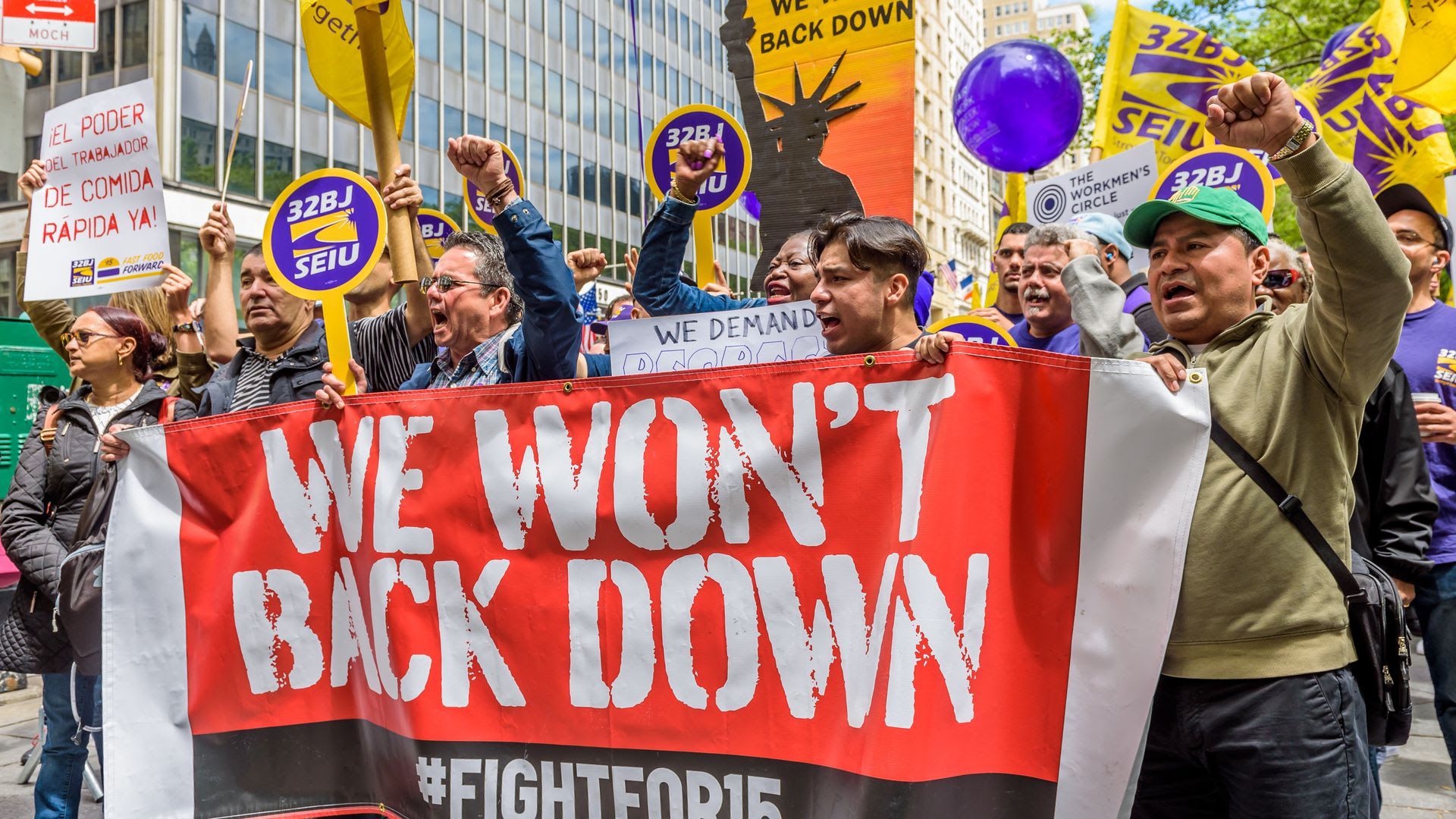
Having largely been left out of the U.S. recovery over the past decade, low-wage workers are starting to see their incomes rise meaningfully and are pushing for more.
Why it matters: With a tight labor market wherein the number of job openings exceeded the number of unemployed by the largest margin on record, businesses are having to make more concessions to keep low-wage workers and find new ones.
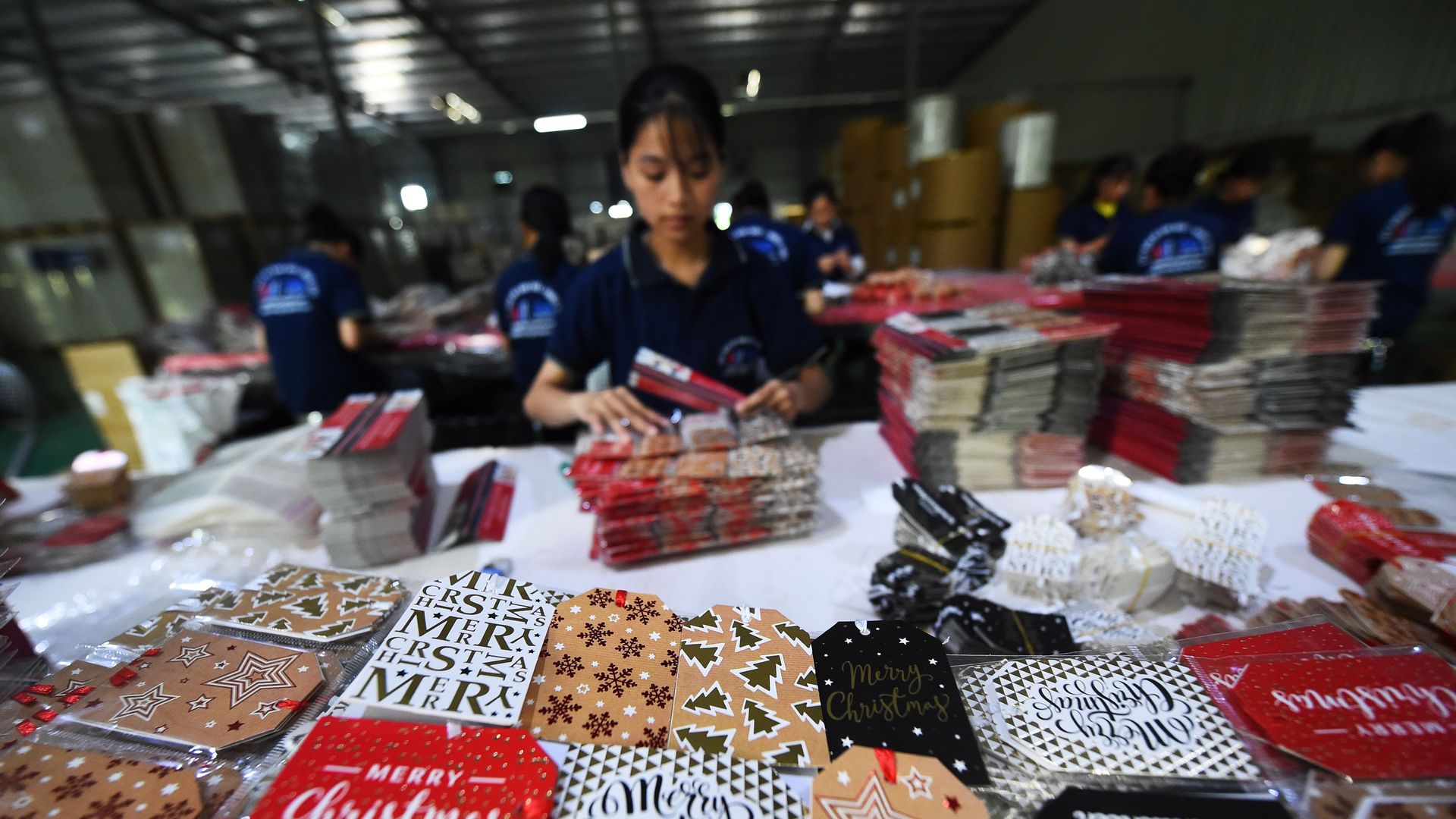
As the trade war with Beijing drags on, dozens of firms — from high-tech electronics manufacturers to apparel companies — have the same idea: relocate out of China to dodge the tariffs.
Yes, but: One seldom-discussed consequence of those moves is a potential labor shortage in places like Vietnam, Bangladesh and Cambodia, where many U.S. companies are fleeing.
Left-leaning media companies designed to counter the rhetoric coming from the Trump White House and its conservative media machine are growing ahead of the 2020 election.
Why it matters: Partisan political media companies are often launched in response to whichever ideology holds power in Washington. In 2017, new left-leaning voices to counter the narrative from the Trump Administration hadn't yet taken hold. But two years into the Administration, they’re beginning to rise.
WeWork is seeking to secure a credit line of between $3 billion and $4 billion, which could eventually expand to $10 billion, as first reported by the WSJ and confirmed by Axios.
Why it matters: This reflects WeWork's belief that public market investors want to see safe passage to profitability.
Saudi Crown Prince Mohamed bin Salman is raking in international capital, and reviving chatter about a possible IPO for Saudi Aramco as the world continues to move past the killing of journalist Jamal Khashoggi.
Driving the news: This week Saudi Arabia rolled out its first-ever bond denominated in euros — a 3 billion euro issue ($3.37 billion) — which was nearly five times oversubscribed.
June's strong U.S. jobs report certainly got investors to rethink their expectations for the Fed's upcoming July 30–31 policy meeting, but Fed funds futures prices show they still see a 0% chance Jay Powell and company don't cut U.S. interest rates.
The U.S. added 224,000 jobs last month. More importantly, nominal average hourly earnings rose by 3.1% year over year, the White House noted in a recent post.
Reproduced from 2 CNBC charts, using Federal Reserve data; Chart: Axios Visuals
It was the long-expected end of an era for Deutsche Bank, as it announced Sunday it will pull out of its global equities sales and trading business, cut its dividend and slash risk-weighted assets by about 40% in some parts of the business, as part of a restructuring plan to save billions.
Our thought bubble as Axios' Felix Salmon points out: The "restructuring will cost 18,000 jobs and $8.3 billion, which is a lot of money for a bank valued at just $16.6 billion at close of trade on Friday."


/2019/07/09/1562678934537.gif?w=3840)