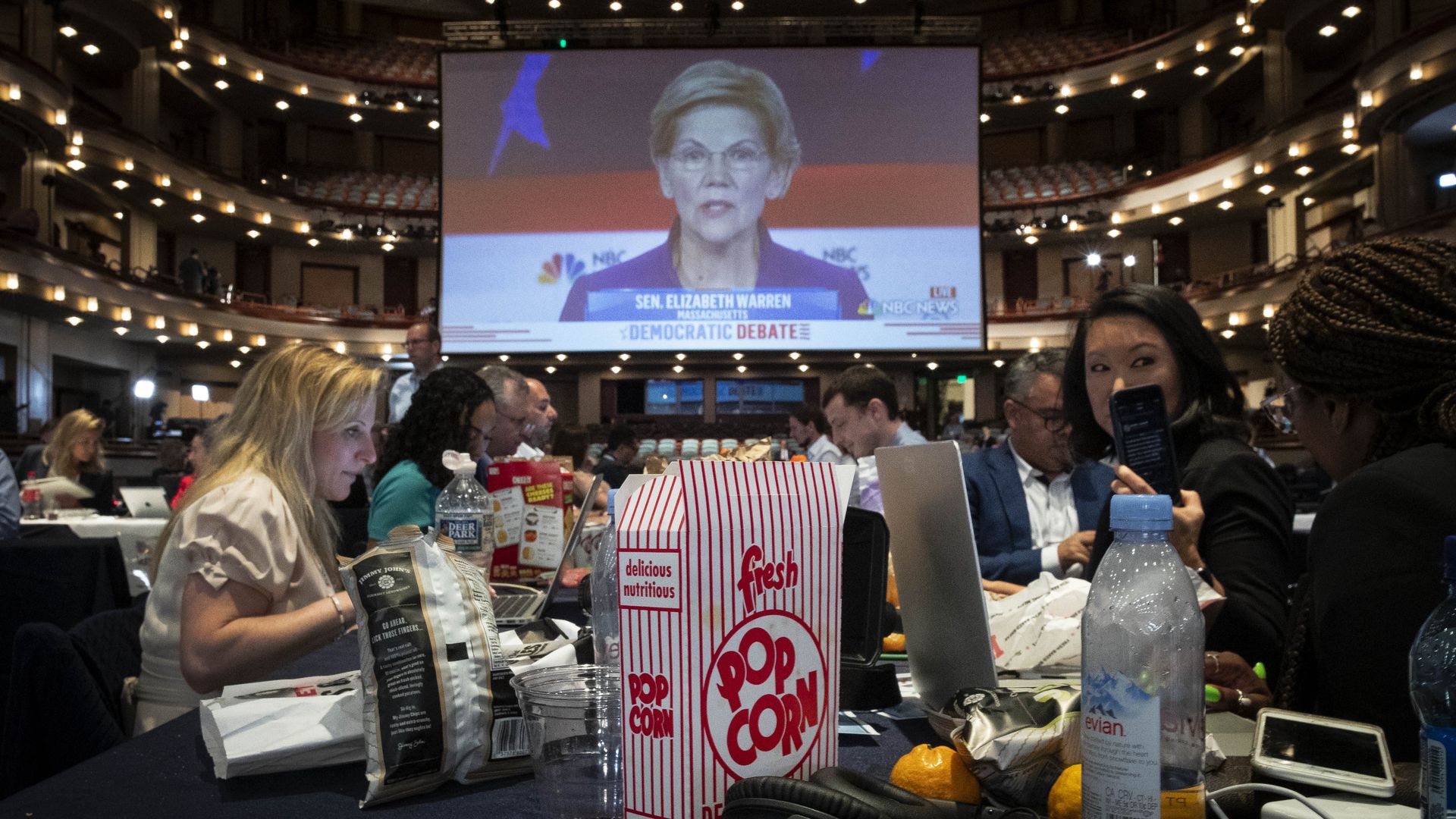
More than 15 million tuned in on live television to the first Democratic debate on Wednesday, according to NBC. Many more watched via streaming or followed along on social media.
Why it matters: The debate had a strong performance compared to what network executives had predicted, but it still came shy of the viewership for both the Republican and Democratic opening primary debates in 2015.
Ford intends to cut 12,000 jobs in Europe by the end of 2020 as part of a broader plan to reduce costs, reports Reuters.
The big picture per Axios' Joann Muller: Brexit and stiff new emissions rules set to take effect in the near term have made the European auto market difficult for carmakers. Ford's cuts are long overdue, but a new alliance with Volkswagen will allow the company to focus on its strengths: SUVs and commercial vehicles.
Global investors pulled $3.78 billion from hedge funds in May, despite overall outperformance against the stock market, a new survey from data firm eVestment shows. However, there was significant difference in redemptions based on size and performance.
Between the lines: Hedge funds with strong performance during the month saw inflows across asset classes, with the lone exception of multi-asset funds, while hedge funds that lost money broadly saw investors pull out their cash.
Everything is going right so far this year for Advanced Micro Devices. The company's stock price rose more than 3% on Wednesday, continuing to shake off trade war fears and pushing back towards a 13-year high touched in June.
The state of play: AMD is benefiting from renewed interest in Bitcoin, which has soared to nearly $13,000 per coin. The company doubled down in November when cryptocurrencies were left for dead, launching a spate of new Bitcoin and blockchain tools.
Private prison companies took another dive on Wednesday after Bank of America announced it would no longer finance the facilities.
What's happening: Shares of major private prison companies GEO Group and CoreCivic had another major selloff, slumping 4.2% and 4.4% respectively after the BofA news.
The U.S. jobs market, having long been the bedrock of the nation's economic expansion, is starting to worry economists ahead of next week's payroll data.
What's happening: After years of remarkably smooth sailing, 2019 has brought market volatility and some concern about whether the economy can keep adding jobs at a fast enough pace to sustain the expansion.
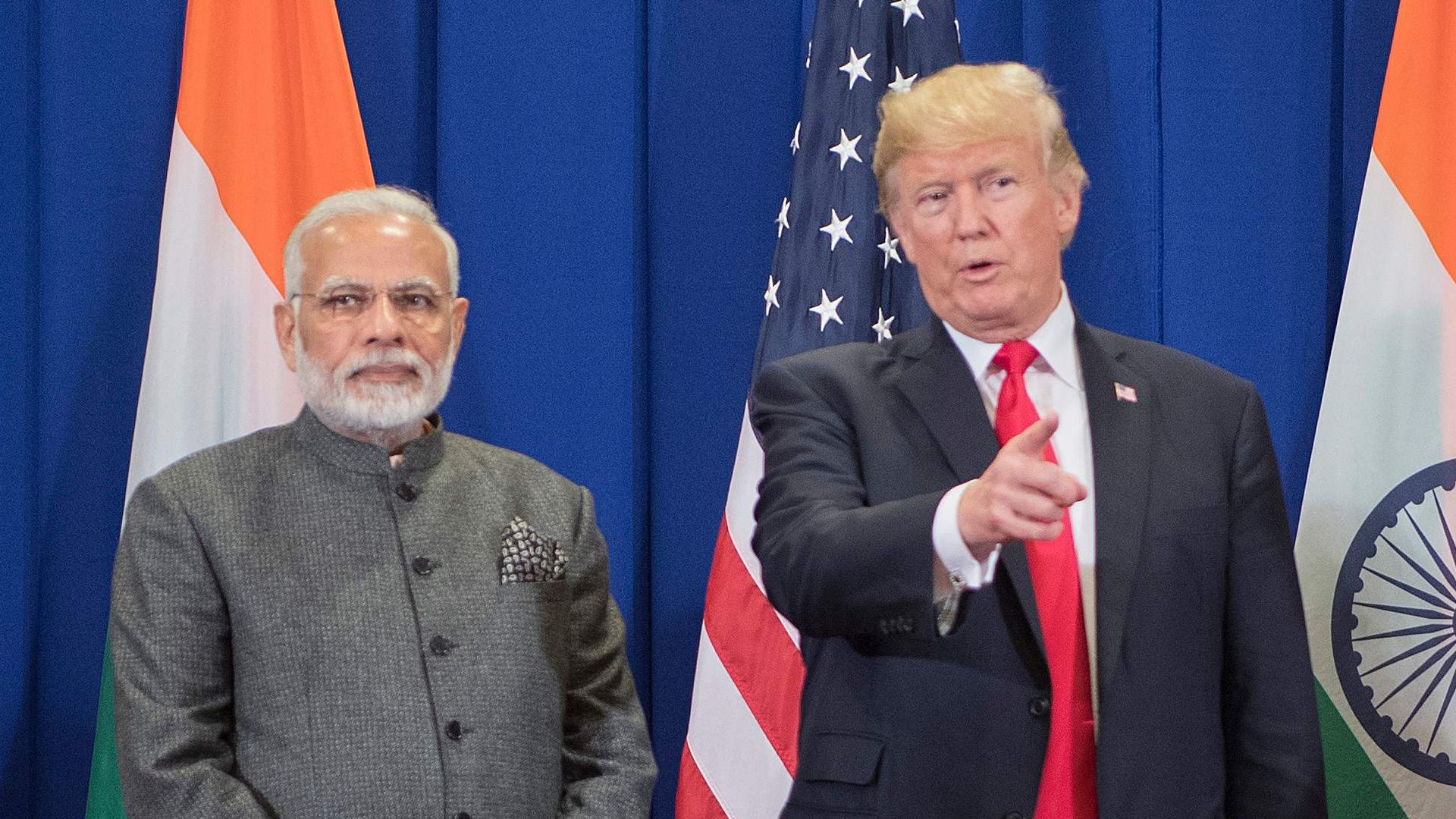
President Trump called on India Wednesday night t0 withdraw its tariffs on U.S. products, ahead of meeting with the country's Prime Minister Narendra Modi at this week's G20 summit.
Shares of Teleflex dropped 3% today after the medical device maker recalled its endotracheal tubes, which are supposed to help patients breathe. The FDA classified the recall as Class I, the most serious kind, after 4 deaths were linked to the devices.
Yes, but: Teleflex's stock price is up 30% year to date. Medical device fatalities are crushing for patients and their families, but usually are just blips on the stock market.
U.S. restaurants have been a beacon of hope in the moribund brick-and-mortar retail picture, but they now face trouble of their own, analysts at ratings agency S&P Global warn.
What's happening: "Already, cracks are showing across our rated restaurant universe," Diya G. Iyer, S&P's primary credit analyst, wrote in a note to clients Tuesday. Iyer worries rising wages and increasing delivery costs will weigh on fast food restaurants while changing millennial dining preferences will hurt casual dining.