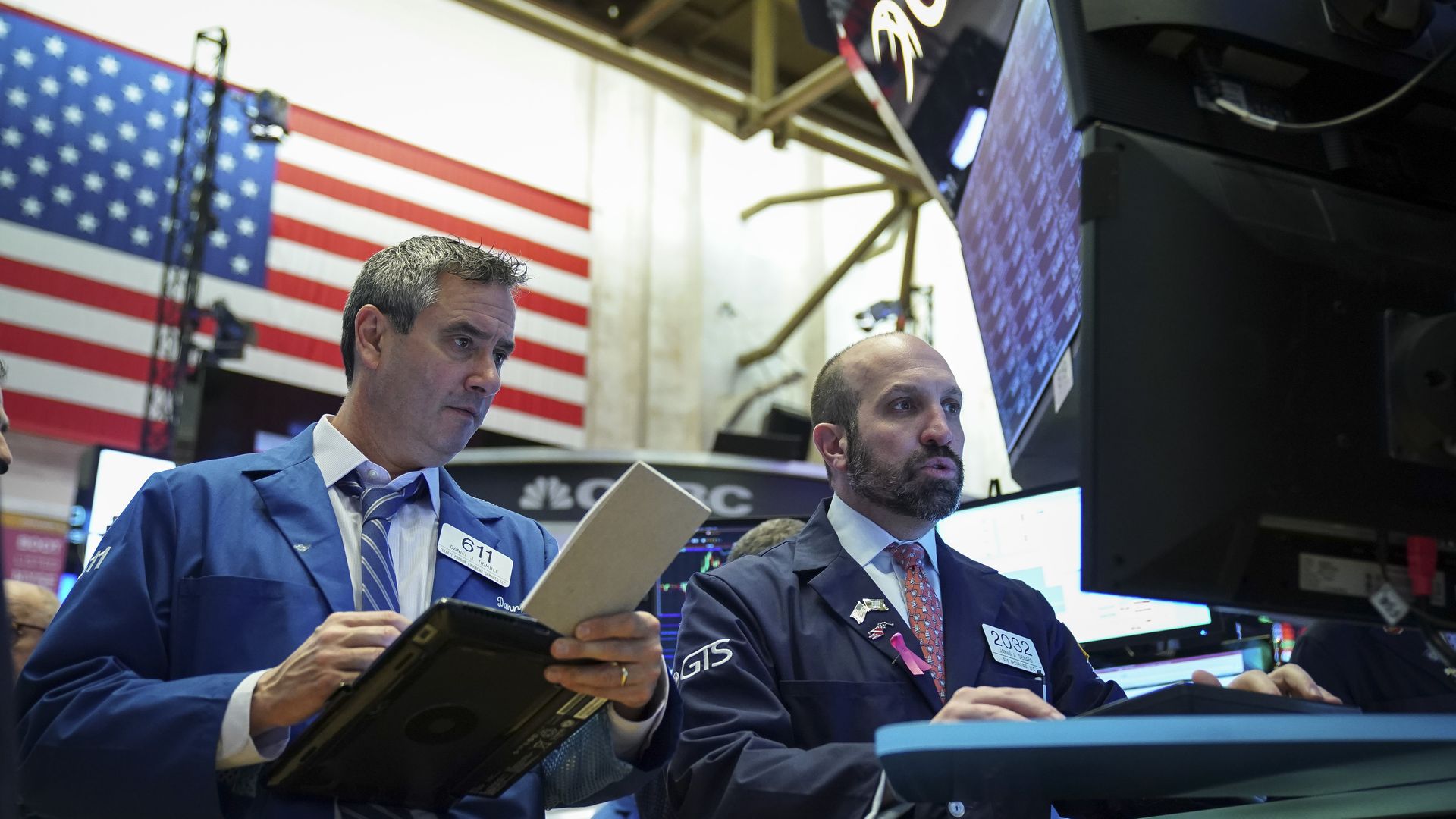
Stocks jumped on Friday following a stronger-than-expected employment report and dovish sentiment from Fed Chair Jay Powell.
The Dow Jones Industrial Average closed up 749 points, or 3.29%, while the S&P 500 and Nasdaq gained 3.43% and 3.38%, respectively.
As would be expected, bond yields also rose. The 2-year rose to 2.4% from 2.3% and the 10-year yield climbed to 2.6% from 2.5%, or 10 basis points each.
Rep. Matt Gaetz (R-Fla.) guest hosted Fox News' "Outnumbered" show on Friday alongside four other co-hosts, he said in a tweet.
Why it matters: Gaetz, a loyal surrogate and ally to President Trump, has been a recurring guest on the network's programs, but now has guest hosted a show despite being a sitting congressman.
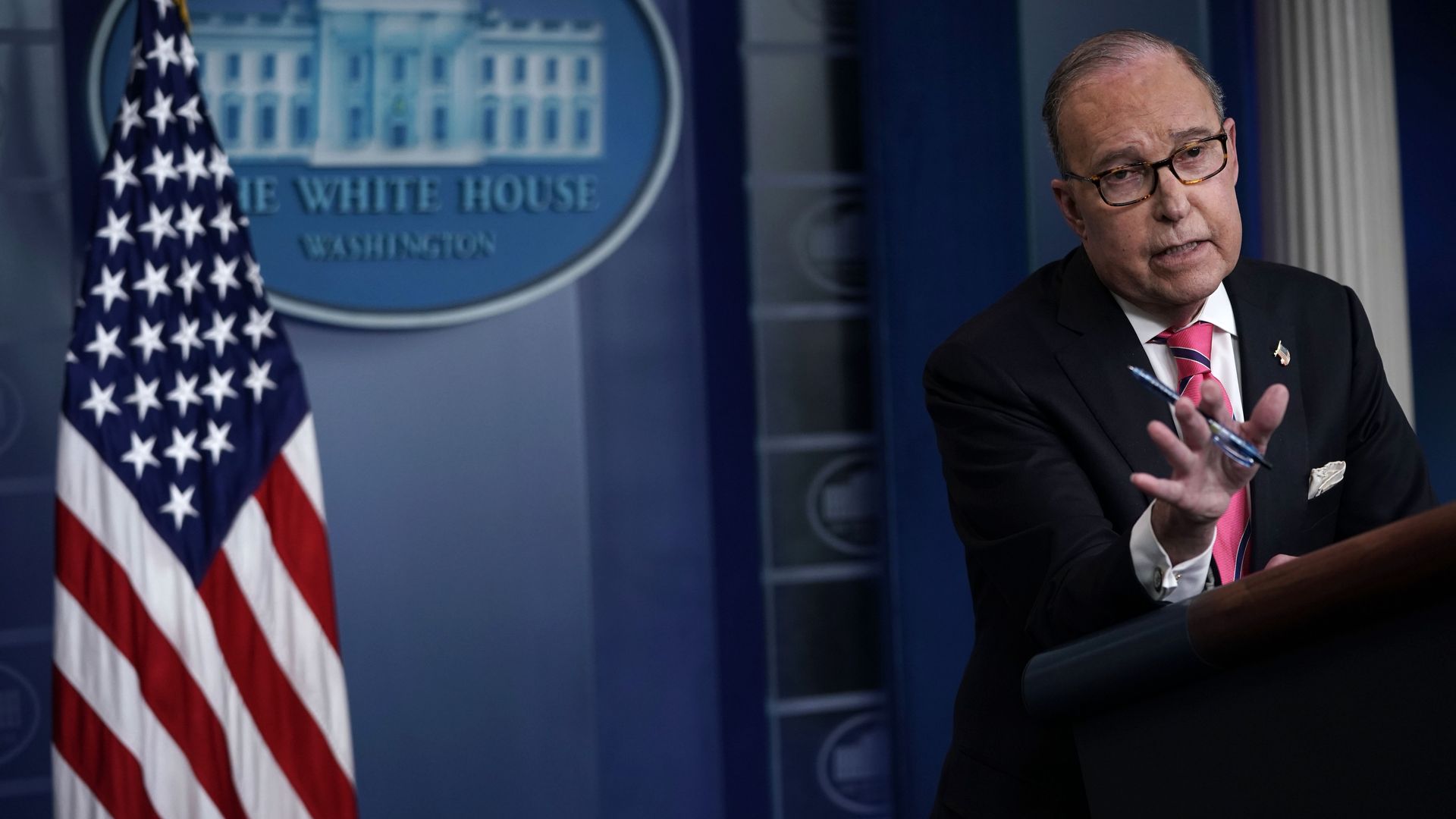
White House economic adviser Larry Kudlow told Bloomberg on Friday that December's strong jobs report was more evidence that there is no "recession in sight," despite a "gloomy" period for the stock market.
The big picture: The strong job gains suggest a healthy labor market, but that's a lagging indicator. More forward-looking data points, like Thursday's manufacturing data, have raised red flags about the health of the economy. Kudlow also played down the impact of the U.S.-China trade war on U.S. companies, saying, "It's a little easy and inaccurate to say all of these American companies are going to crash."
The economy added 312,000 jobs in December, topping the 180,000 that economists were expecting, while the unemployment rate ticked up to 3.9%, the Labor Department said on Friday.
Why it matters: The final jobs report of 2018 saw even stronger wage growth and increased workforce participation. Both were previously missing factors that have puzzled economists with such a strong labor market.
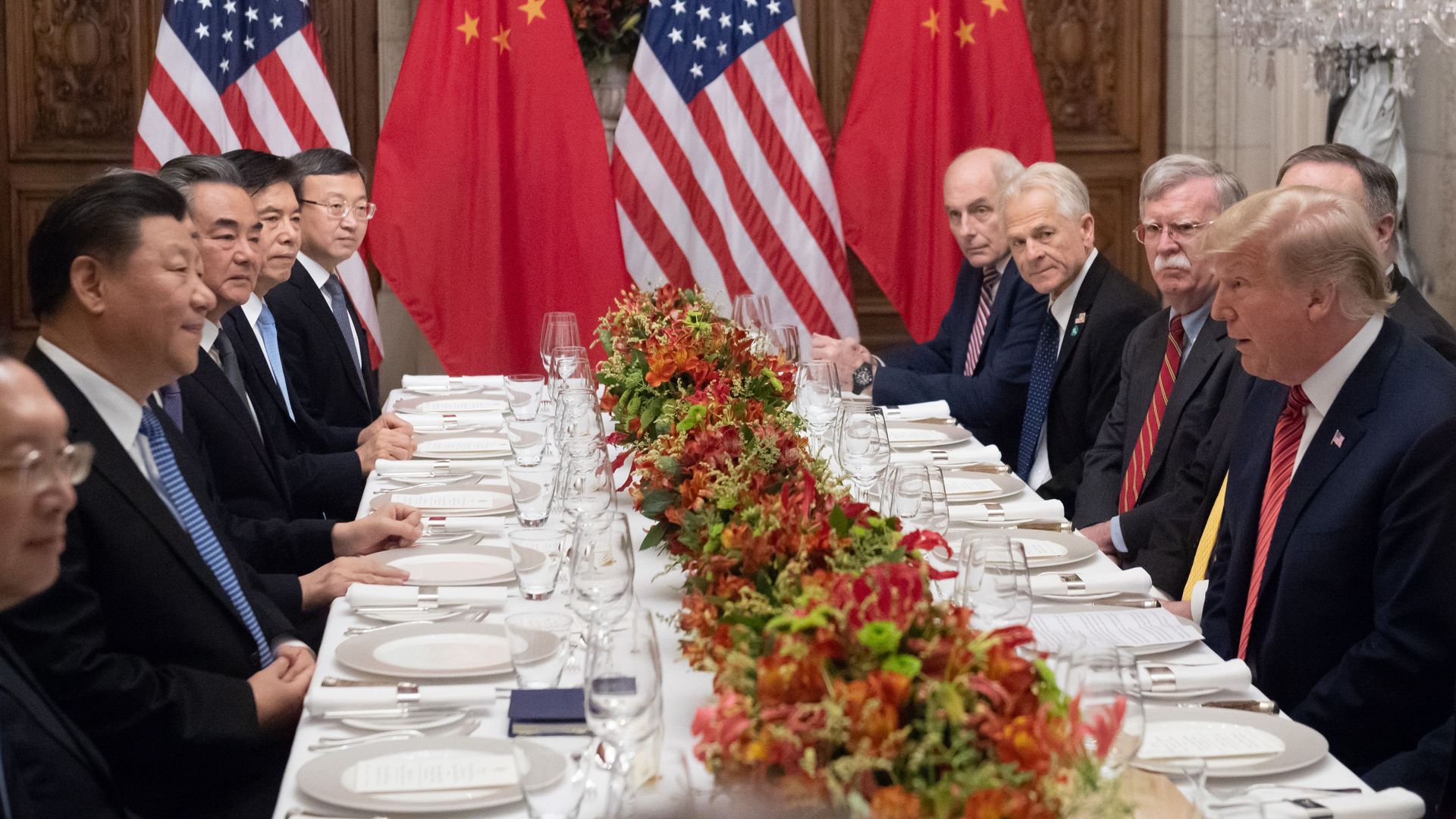
China said Thursday it will host face-to-face trade talks with U.S. officials in Beijing on Jan. 7 and 8, Bloomberg reports.
Why it matters: This is the first time negotiators from the two countries will meet after President Trump and Chinese President Xi Jinping agreed to a 90-day trade war ceasefire on Dec. 1. The U.S. delegation will reportedly be led by Deputy U.S. Trade Representative Jeffrey Gerrish.
Stocks got slammed on Thursday, with the Dow Jones Industrial Average finishing down 2.83%, or 662 points. The S&P 500 fell 2.48%, while the Nasdaq Composite lost 3.04%.
The bottom line: This was a severe hangover from the Apple's revenue warning tied to China's slowing economy, as well as Trump economic adviser Kevin Hassett saying that other U.S. companies will have China-related earnings trouble until the trade war is resolved. Apple's stock shed 9.96%, representing nearly $75 billion in lost value, while Apple suppliers and other companies with high China exposure (like Caterpillar, down 3.92%) also got hit hard.
Kevin Hassett, the chairman of President Trump's Council of Economic Affairs, told CNN on Thursday that a "heck of a lot of companies" that do business in China will see a hit to their earnings until the U.S. and China negotiate a trade deal.
Why it matters: On Wednesday, Apple slashed its revenue expectations due in part to a slowing Chinese economy, which CEO Tim Cook said was exacerbated by the ongoing trade war. In recent weeks, the White House has started to publicly acknowledge the damage tariffs could do to the U.S. economy. Trump told a Cabinet meeting this week that markets will improve "once we settle trade issues" and Hassett told CNN that corporations' "sales will recover" with a China trade deal.
Saudi Arabian state media announced Thursday that the kingdom plans to seek the death penalty against five suspects in the killing of Washington Post columnist Jamal Khashoggi, the AP reports.
The big picture: Saudi Arabia has felt immense international pressure regarding its response to Khashoggi's death, especially following revelations that the assassination may have been overseen by Crown Prince Mohammed bin Salman. And it's sure to face even more scrutiny regarding this ongoing court case — as very few details, including the identities and alleged motives of the suspects, have been made public.
While Apple grabbed headlines after the tech giant warned of a revenue miss thanks to the Chinese market, they're not the only company facing the consequences of China's economic slowdown and its ongoing trade war with the U.S., Bloomberg reports.
The big picture: From coffee suppliers to delivery giants, major corporations are struggling to sell in the world's second-largest economy. FedEx cited trade tensions between the U.S. and China as a primary culprit in pulling back its profit estimates in late December. And, despite Starbucks' rapid expansion in China, the company said long-term sales growth there could be as low as 1% — compared to 3% to 4% in the U.S.