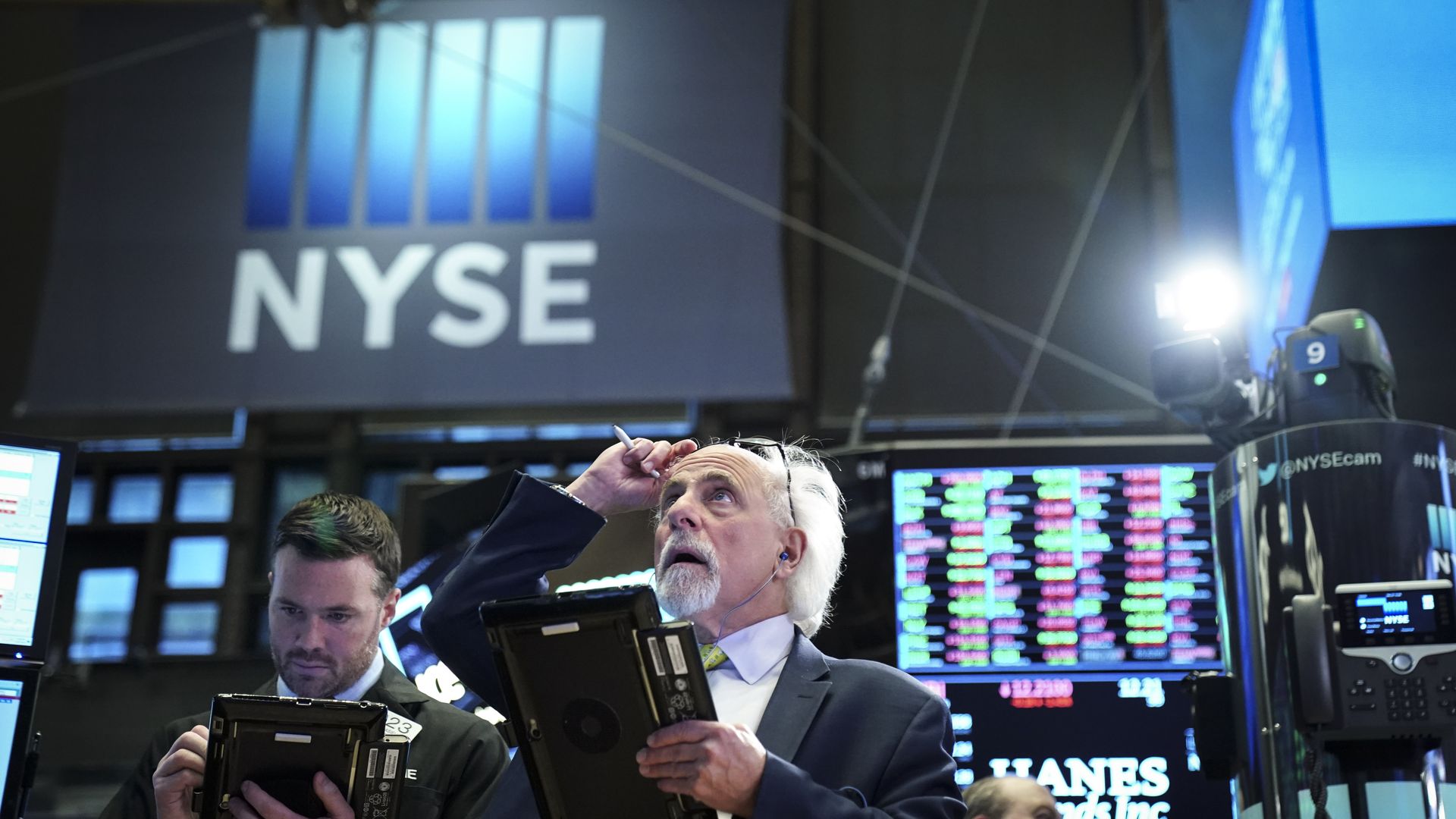
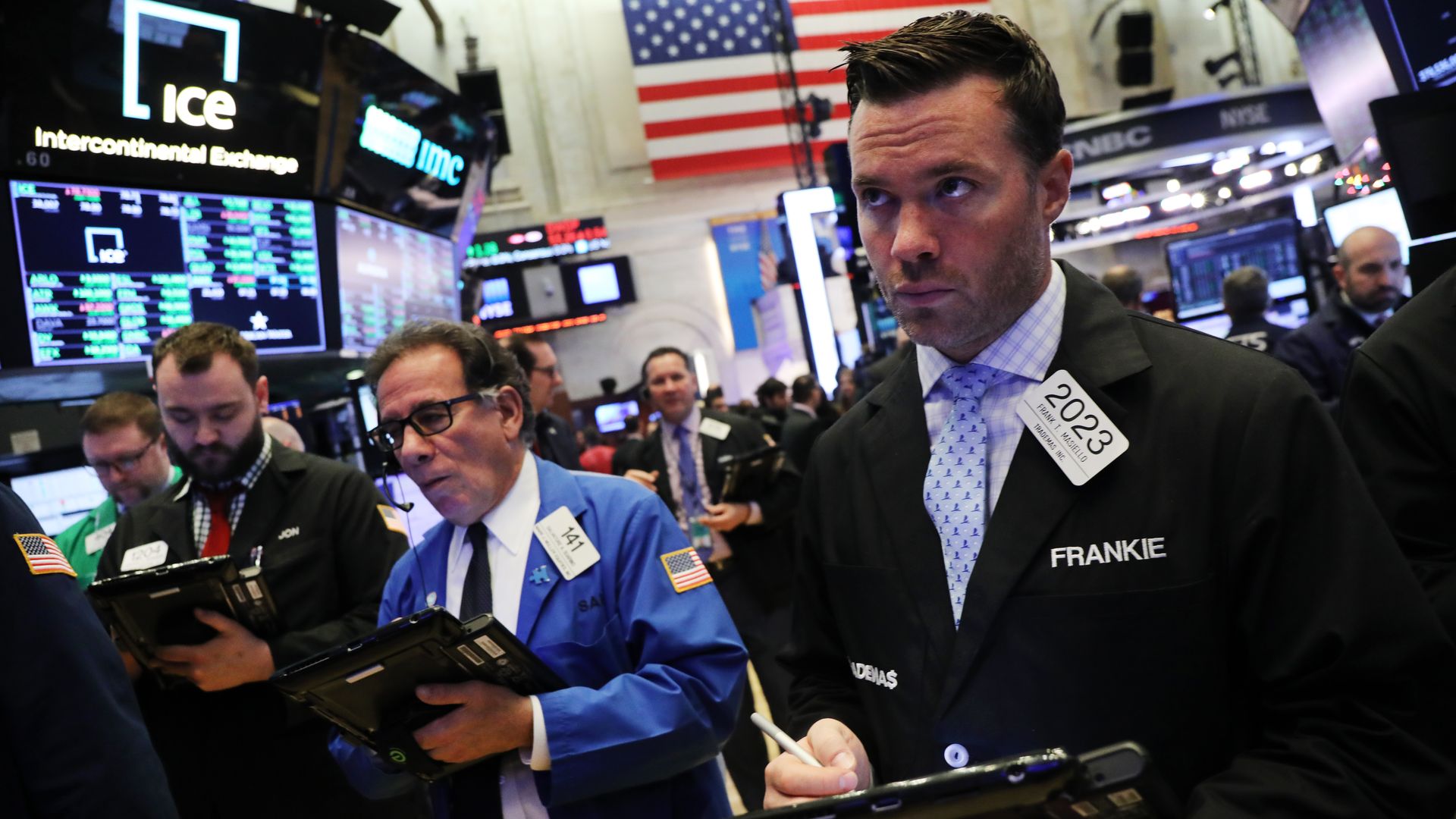
Stocks got slammed on Thursday, with the Dow Jones Industrial Average finishing down 2.83%, or 662 points. The S&P 500 fell 2.48%, while the Nasdaq Composite lost 3.04%.
The bottom line: This was a severe hangover from the Apple's revenue warning tied to China's slowing economy, as well as Trump economic adviser Kevin Hassett saying that other U.S. companies will have China-related earnings trouble until the trade war is resolved. Apple's stock shed 9.96%, representing nearly $75 billion in lost value, while Apple suppliers and other companies with high China exposure (like Caterpillar, down 3.92%) also got hit hard.
Kevin Hassett, the chairman of President Trump's Council of Economic Affairs, told CNN on Thursday that a "heck of a lot of companies" that do business in China will see a hit to their earnings until the U.S. and China negotiate a trade deal.
Why it matters: On Wednesday, Apple slashed its revenue expectations due in part to a slowing Chinese economy, which CEO Tim Cook said was exacerbated by the ongoing trade war. In recent weeks, the White House has started to publicly acknowledge the damage tariffs could do to the U.S. economy. Trump told a Cabinet meeting this week that markets will improve "once we settle trade issues" and Hassett told CNN that corporations' "sales will recover" with a China trade deal.
Saudi Arabian state media announced Thursday that the kingdom plans to seek the death penalty against five suspects in the killing of Washington Post columnist Jamal Khashoggi, the AP reports.
The big picture: Saudi Arabia has felt immense international pressure regarding its response to Khashoggi's death, especially following revelations that the assassination may have been overseen by Crown Prince Mohammed bin Salman. And it's sure to face even more scrutiny regarding this ongoing court case — as very few details, including the identities and alleged motives of the suspects, have been made public.
While Apple grabbed headlines after the tech giant warned of a revenue miss thanks to the Chinese market, they're not the only company facing the consequences of China's economic slowdown and its ongoing trade war with the U.S., Bloomberg reports.
The big picture: From coffee suppliers to delivery giants, major corporations are struggling to sell in the world's second-largest economy. FedEx cited trade tensions between the U.S. and China as a primary culprit in pulling back its profit estimates in late December. And, despite Starbucks' rapid expansion in China, the company said long-term sales growth there could be as low as 1% — compared to 3% to 4% in the U.S.
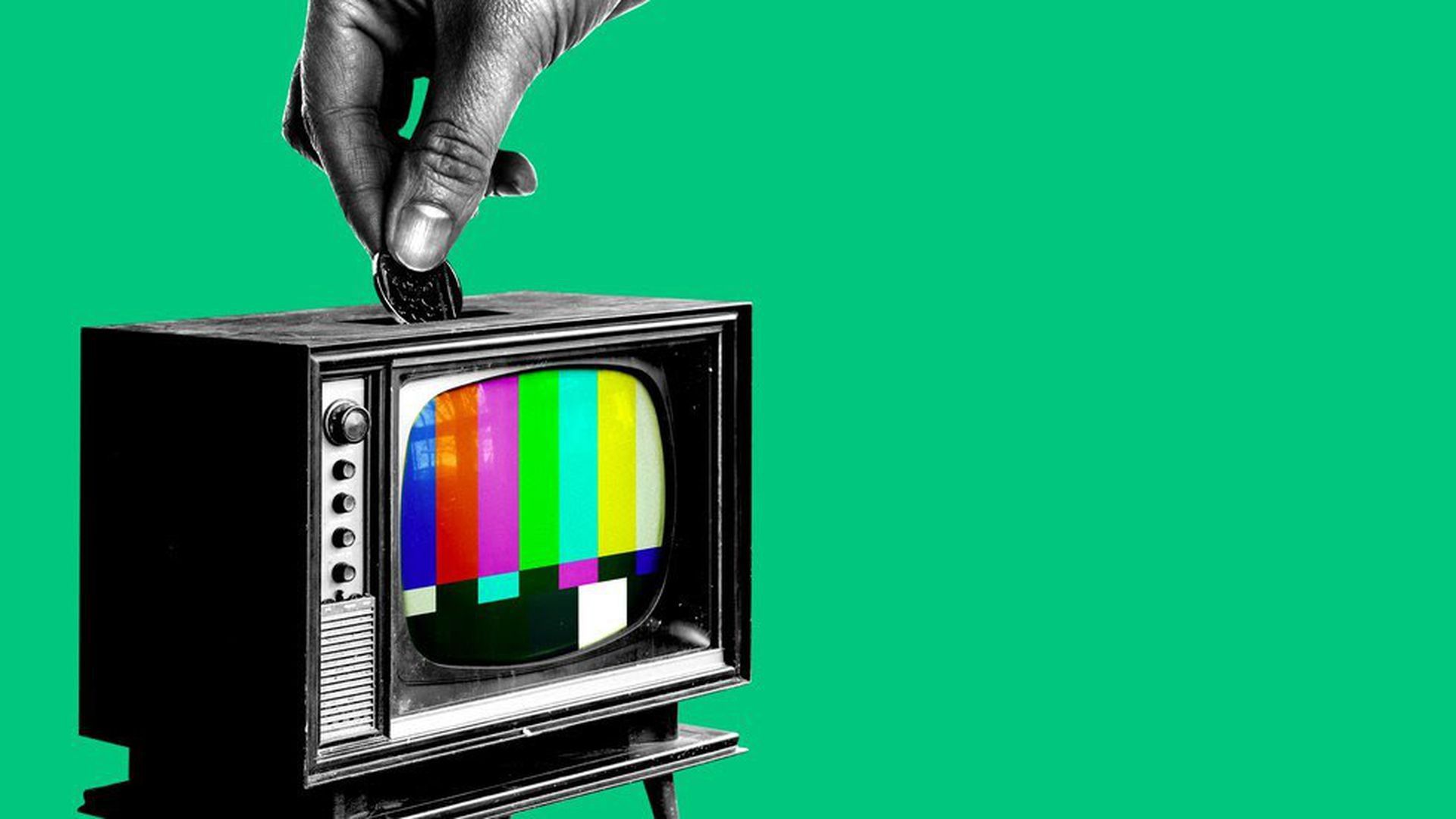
Dozens of channels owned by Tribune Broadcasting have gone dark for 6 million of Charter's Spectrum TV customers nationwide, after the contract between the two parties expired at 5 p.m. ET on Jan. 2.
Why it matters: Content that people care about, like NFL playoff games or local news, will be unavailable to customers until the two parties reach an agreement.
The issues that whipsawed stocks in 2018 — namely trade and the Fed — aren't going anywhere this year, leaving few catalysts to push stocks to new highs.
The big picture:Analysts overwhelmingly predict the historic bull run has at least one more year to go. The analysts who cut their expectations say they did so because of recent market volatility. "The world’s largest banks and money managers are gearing up for the last hurrah of one of the longest bull markets in history," Bloomberg writes.
It's the first trading day of the year, and in just the first hour of trading, the S&P 500 fell 0.82%. That also means that after an hour the S&P 500 was down 0.82% YTD. There are about 1,640 trading hours in the day, which means that on an annualized basis, the S&P is down, um ... 99.99986%.
Be smart: As we head into an arbitrary new year, then, it's worth being aware of some of the other arbitrary conventions that govern a lot of talk about markets.
The Securities and Exchange Commission is among several federal government agencies affected by the shutdown. This means that the promising slate of early 2019 IPOs could be delayed, as no one is currently working to declare new registrations effective or to provide feedback on confidential filings.
The bottom line, via noted IPO adviser Lise Buyer: "While timing is always uncertain, this makes it even more so. And of course companies that had planned to file early in the new year will need to wait for things to fire back up before they can submit their initial documents. Basically, it puts the whole filing part of the process on hold."
Cable and satellite companies are struggling to reach deals with TV channels over how much they should have to pay for the content those channels provide.
Why it matters: These disputes, driven by a shrinking traditional TV market, are leading to more programming blackouts for consumers, and could be forcing some smaller, niche cable channels out of business altogether.