Vance to lead U.S. delegation at peace talks with Iran in Islamabad

Add Axios as your preferred source to
see more of our stories on Google.
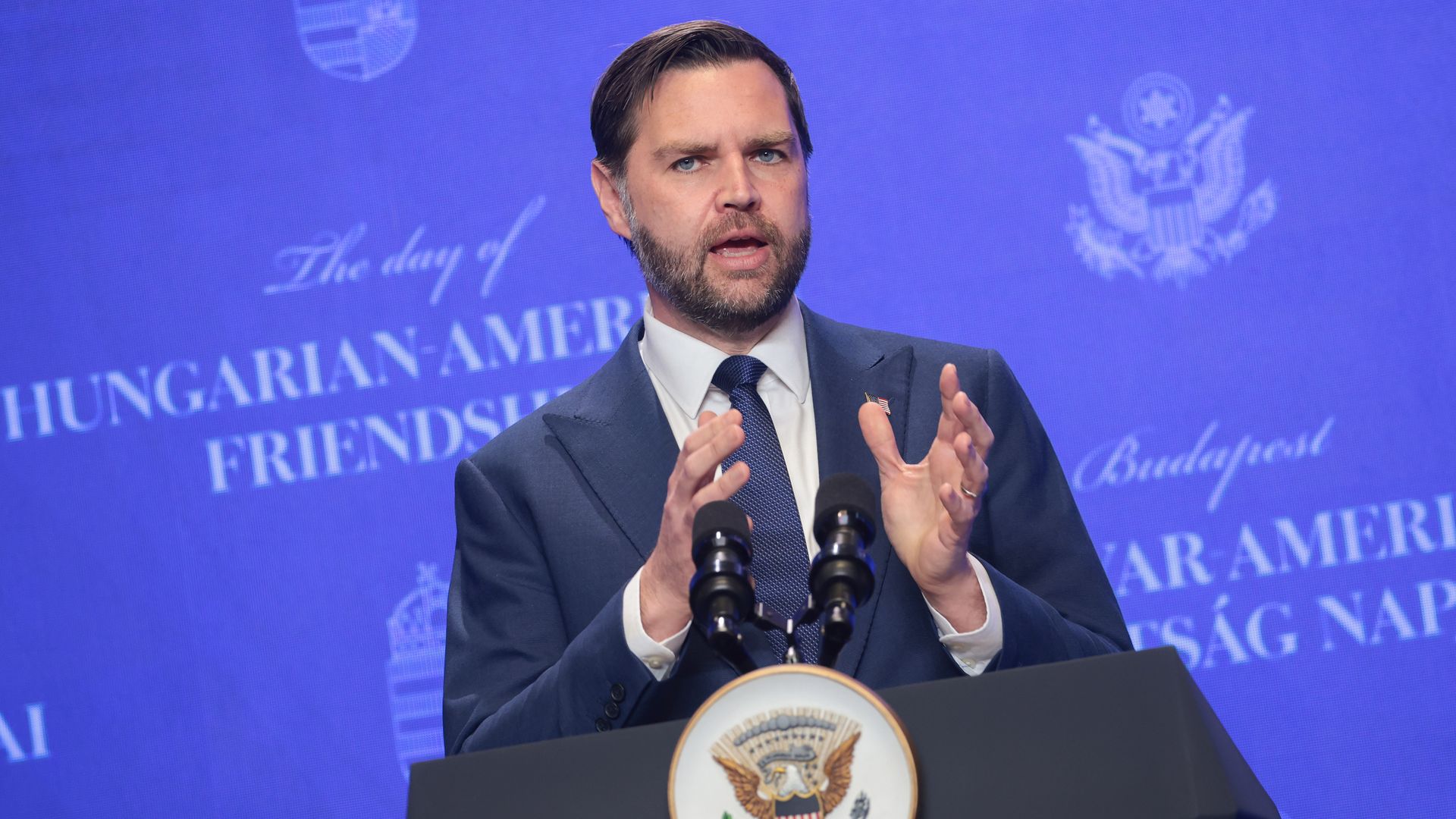
Vice President JD Vance speaks at a joint press conference with Hungarian Prime Minister Viktor Orban on April 7, 2026 in Budapest, Hungary. Photo: Jonathan Ernst - Pool/Getty Images
Vice President JD Vance will head the U.S. negotiating team for the peace talks with Iran on Saturday, White House press secretary Karoline Leavitt said on Wednesday.
Why it matters: It's the highest level meeting between the U.S. and Iran since the 1979 Islamic revolution, as ceasefire negotiations hit a crucial tipping point that could lead to the resumption and escalation of the war if the high-stakes talks fail.
- This will be the most significant and challenging mission in Vance's political career, testing his line of trying to avoid war with Iran and preferring diplomacy as a way to reach a deal.
- Vance said in Budapest on Wednesday that President Trump is "impatient to make progress" with Iran and stressed that if Iranian officials don't engage in good faith "they're going to find out that President Trump is not one to mess around with".
Driving the news: Leavitt said Trump's adviser and son-in-low Jared Kushner and White House envoy Steve Witkoff will also participate in the negotiations.
- Iranian state media reports Iranian Parliament Speaker Mohammad Bagher Ghalibaf is expected to lead Tehran's delegation, with Foreign Ninister Abbas Araghchi also joining the talks.
State of play: Israeli airstrikes in Lebanon generated harsh condemnation from Tehran and claims that it was a breach of the ceasefire.
- Araghchi hinted on X that Tehran could abandon the ceasefire if Israeli strikes continue.
- "The Iran–U.S. Ceasefire terms are clear and explicit: the U.S. must choose—ceasefire or continued war via Israel. It cannot have both," he said. "The world sees the massacres in Lebanon. The ball is in the U.S. court, and the world is watching whether it will act on its commitments."
- A senior American official said the U.S. is not currently concerned that the strikes in Lebanon would jeopardize negotiations.
- Leavitt told reporters that "it has been relayed to all parties" that Lebanon is not part of the ceasefire agreement.
- Trump and Israeli Prime Minister Benjamin Netanyahu would continue to discuss this, "but for now Lebanon is not included," she added.
Zoom in: The basis for the peace talks has been one of the issues over which the U.S. and Iran issued contradictory statements.
- In a series of Truth Social posts on Wednesday, Trump wrote that the 10 points Iran published and claimed were the basis for negotiations were different than the 10 that were given to the U.S. and would be discussed "behind closed doors during these Negotiations."
- "These are the POINTS that are the basis on which we agreed to a CEASEFIRE. It is something that is reasonable, and can easily be dispensed with," he said.
- In a briefing with reporters, Leavitt confirmed Axios' reporting that the 10-point counter-proposal that Iran sent to the White House on Monday was rejected and later amended and redrafted by the mediators in a way that was workable and in line with the White House's 15-point proposal.
- Leavitt claimed that what Tehran says publicly about the issues it has agreed to "is very different from what they say privately." One example she gave is the highly enriched uranium stockpile. "We were given indications that they will turn over the enriched uranium," she said.
The other side: Ghalibaf said three out of 10 clauses in the framework the U.S. and Tehran agreed to have been violated and, therefore, "a bilateral ceasefire or negotiations is unreasonable",
- He said the first violation was regarding the ceasefire in Lebanon, which was a commitment Pakistan's prime minister had mentioned in his statement announcing the ceasefire.
- Ghalibaf claimed the second violation, was the entry of a drone into Iranian airspace and the thirdwas Trump's statement that denies "Iran's right to enrichment, which was included in sixth clause of the framework."
What to watch: Raz Zimmt, director of the Iran program at the Institute for National Security Studies in Tel Aviv tells Axios the primary concern is the extent to which the upcoming talks will address the nuclear issue.
- "There are three minimum requirements that must be met: the removal of 60% enriched uranium from Iran, the dilution of 20% enriched material to a low level, and the suspension of uranium enrichment for as many years as possible," he said.
- "If these demands — some of which Iran rejected before the war — are accepted, the war can end with at least one significant achievement. If the war ends with these nuclear capabilities still in Iran, it would constitute a major failure."
Go deeper: Exclusive: How Iran's supreme leader reached a truce with Trump
