Who are the Kurds and why they could play a big role in the Iran war

Add Axios as your preferred source to
see more of our stories on Google.
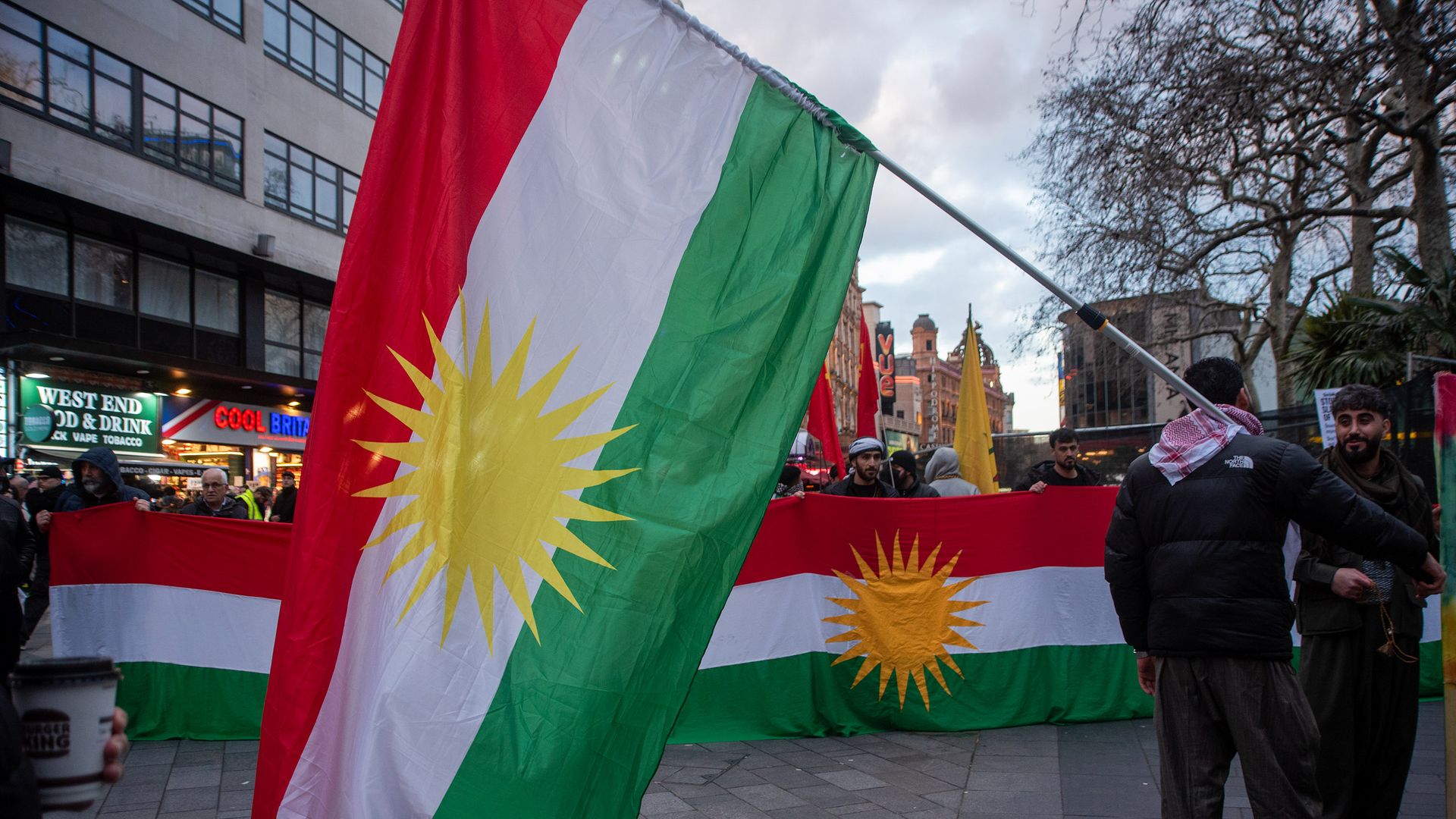
A protester holds a Kurdish flag during a demonstration in London's Leicester Square on Jan. 28, 2026. Photo: Krisztian Elek/SOPA Images/LightRocket via Getty Images
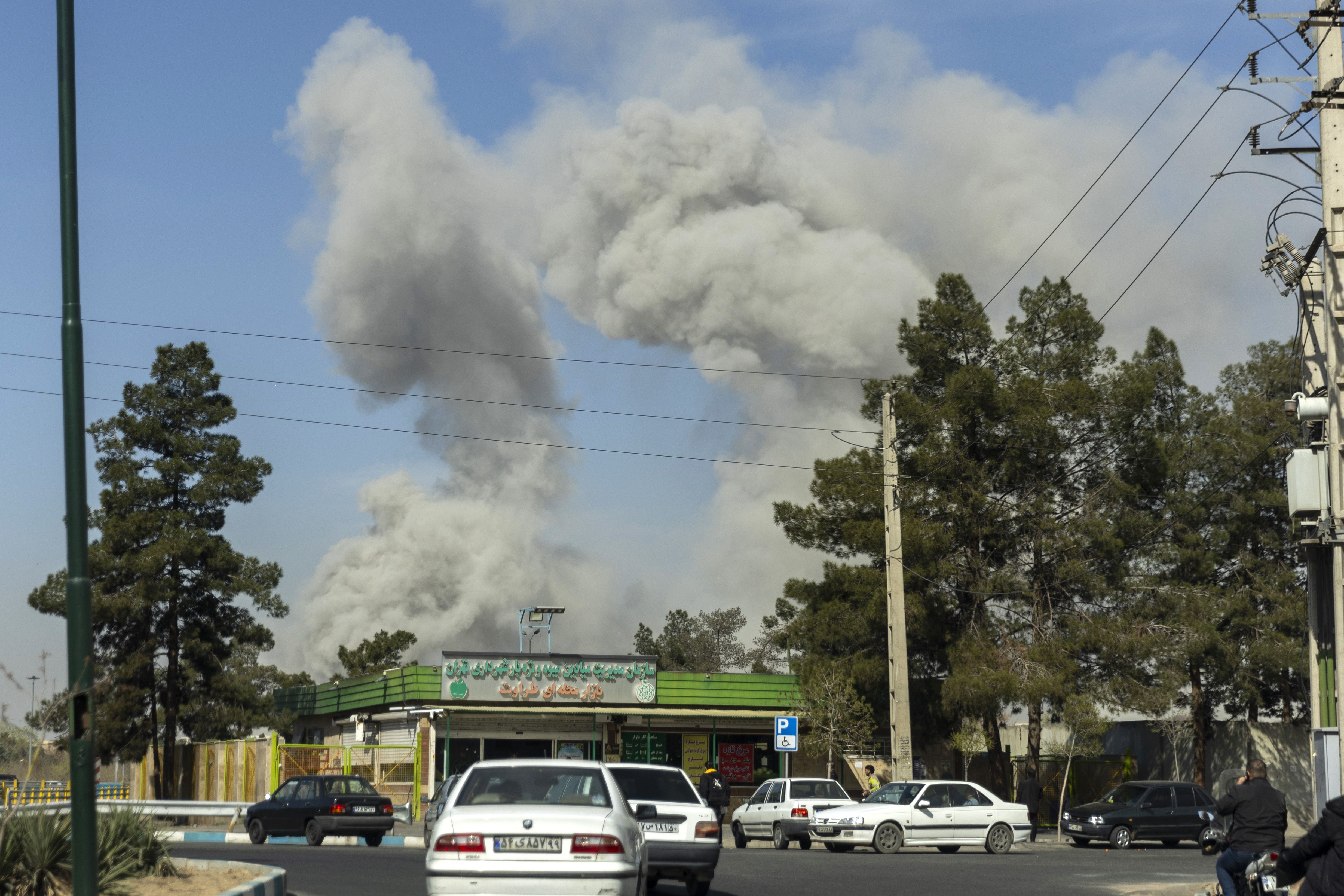
Several Iranian Kurdish factions are preparing for a potential ground offensive against Iran's regime — opening a potential new front in the Iran war.
Why it matters: Kurdish involvement could intensify pressure on Iran's regime and risk widening unrest inside the country.
- The Iranian Kurds, like the Iraqi Kurds, have long pushed for regional autonomy and Iranian regime change.
- For now, only Iranian Kurdish factions are involved in the offensive planning. Iraq's major Kurdish political parties, Kurdistan Democratic Party (KDP) and Patriotic Union of Kurdistan (PUK), are not yet involved.
Read more about the Kurds below.
Who are the Kurds?
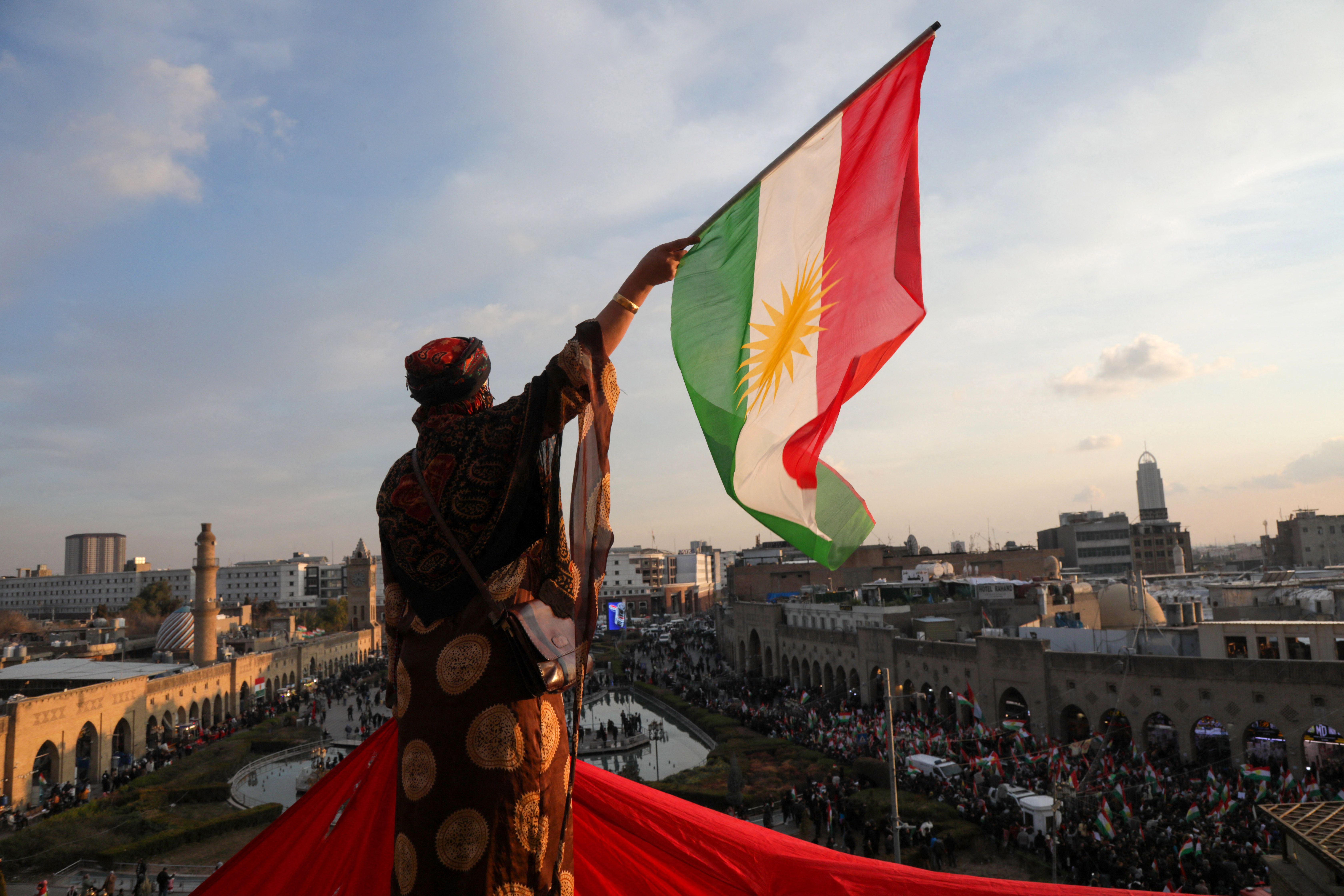
The Kurds are an ethnic group native to their ancestral region of the Middle East known as "Kurdistan," spanning southeastern Turkey, northern Syria, northern Iraq and northwestern Iran.
- There are also Kurdish communities throughout Europe, with an estimated worldwide population of 30 to 40 million people.
Yes, but: The Kurds don't have their own independent nation-state.
- The Kurdish people were dispersed after the Ottoman Empire fell following World War I. A Kurdish state was considered but never realized.
- Iraqi Kurds, the country's largest ethnic minority, govern a semiautonomous region of northern Iraq established after the 2003 U.S. invasion toppled Saddam Hussein.
History of U.S.–Kurdish cooperation
The U.S. and Kurds have worked together for decades, mainly against Hussein and later ISIS.
- More recently, tensions have grown after Trump withdrew from Syria in 2019, which effectively allowed a Turkish military offensive to kill Kurdish people on the border of Syria.
State of play for U.S., Kurds in 2026
The U.S. sees the KDP and PUK as the main Kurdish factions.
- PUK leader Bafel Talabani's stock rose in the Trump White House for how he calmed troubles in Syria.
Kurdish factions started preparing for war before the U.S. struck Iran last Saturday. Iraqi and Iranian Kurds formed the Coalition of Political Forces of Iranian Kurdistan to fight Iran.
- Iranian Kurdish factions sent fighters from Iraq into Iran to prepare for possible attacks against the regime, sources tell Axios.
Trump called both Talabani and KDP leader Masoud Barzani on Sunday to discuss the U.S.–Israel war with Iran.
- The call came after months of lobbying by Israeli Prime Minister Benjamin Netanyahu. Israel has maintained close security, military and intelligence ties with Kurds in Syria, Iraq and Iran for years.
- The Iranian Kurdish militias are backed by the Mossad and the CIA, Axios reported Wednesday.
Why Kurds may play a major role in the Iran war
Kurdish fighters — called the "peshmerga," or "those who face death" — have years of combat experience fighting in Iraq and against ISIS in Syria.
Friction points: The Kurds have long had a hostile relationship with Turkey, which could complicate matters as Turkey, a U.S. ally and NATO member, has said it won't allow its airspace to be used against Iran.
- However, Turkey's defense ministry said Wednesday NATO neutralized a missile launched by Iran directed at Turkey. (Iran has denied it fired a missile toward Turkey.) And Turkey condemned Iran's strikes on Azerbaijan Thursday.
Cracks are also emerging with the Iranian opposition, the AP reports, as Reza Pahlavi, the exiled son of Iran's last shah, condemned the Kurdish offensive — even though he opposes the current Iranian regime.
- Pahlavi, who seeks to reclaim power if Iran's Shiite theocracy falls, accused the Kurds of wanting to carve up Iran, saying that "Iran's territorial integrity is the ultimate red line," he wrote on X.
What's next: It remains unclear whether Iraqi Kurdish fighters will join the effort or keep their distance.
Go deeper:
