Where to see the Northern Lights in the U.S. this week

Add Axios as your preferred source to
see more of our stories on Google.
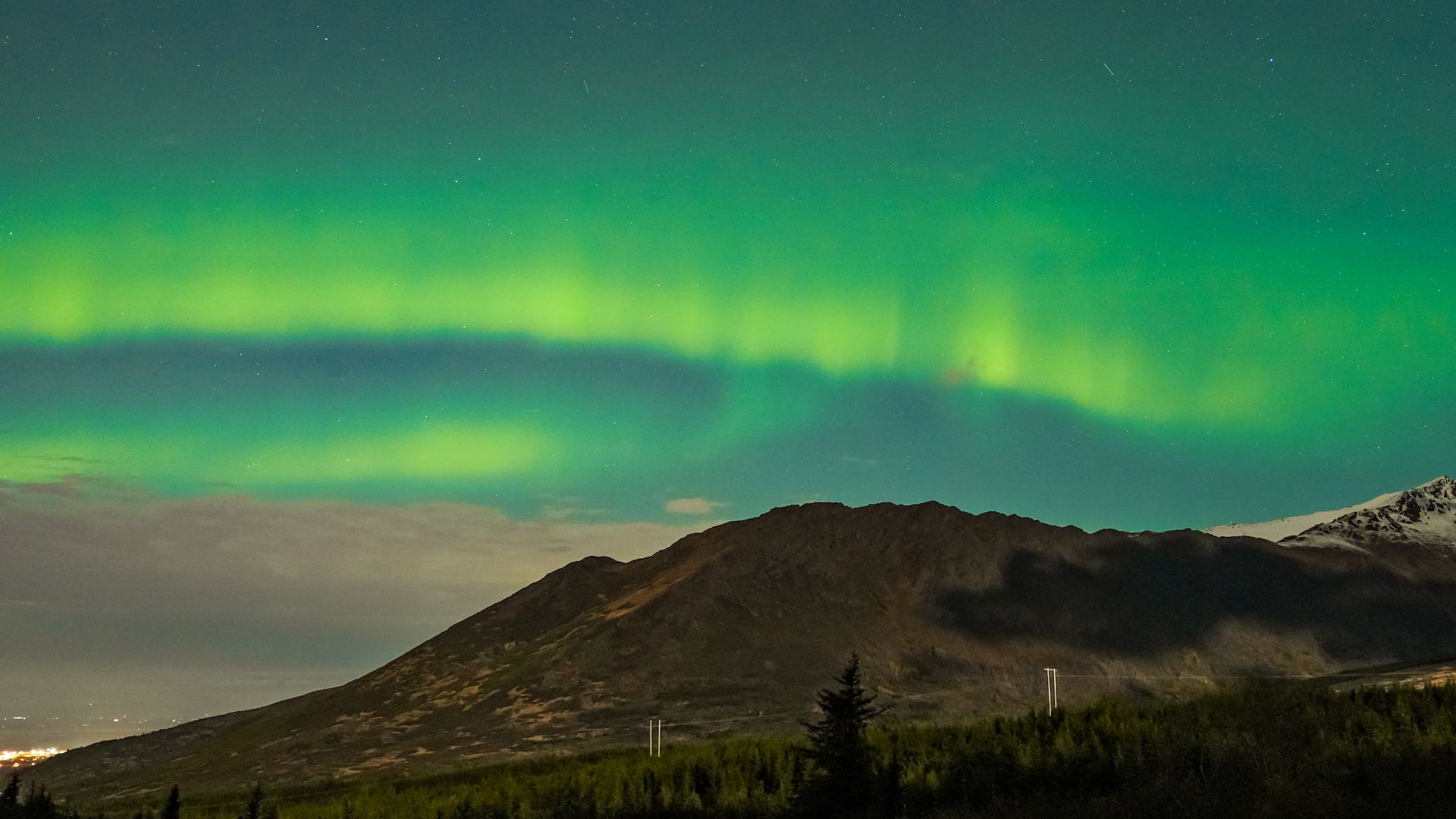
The northern lights dazzled the sky over Anchorage, offering a unique spectacle for observers on October 03, 2025 in Alaska. Photo: Hasan Akbas/Anadolu/Getty Images
Nearly half of the United States could catch a glimpse of the Northern Lights on Thursday night into Saturday.
Why it matters: It's shaping up to be one of the strongest geomagnetic storms of the year, offering a rare opportunity to see the Aurora Borealis as far south as Indiana.
- The Northern Lights occur when solar winds hit the atmosphere, causing atoms to glow in vivid colors across the night sky.
- The glow can appear in shades of green, red, pink or purple — depending on which gases are excited and how much energy is released.
Driving the news: Forecasters at NOAA's Space Weather Prediction Center expect G3 or "strong" geomagnetic storm levels that could produce the Aurora.
- The activity is expected to fluctuate between November 6th and 8th.
- The strongest activity is expected Thursday night into Friday morning, with the levels of geomagnetic activity dropping into Saturday.
States that will see the Northern Lights
NOAA's latest forecast map shows the Aurora view line stretching well into the U.S., giving many Northern states a shot at seeing the glow, include:
1. Alaska
2. Washington
3. Oregon
4. Idaho
5. Montana
6. Wyoming
7. North Dakota
8. South Dakota
9. Nebraska
10. Minnesota
11. Iowa
12. Wisconsin
13. Illinois
14. Indiana
15. Ohio
16. Michigan
17. New York
18. Pennsylvania
19. Vermont
20. New Hampshire
21. Massachusetts
22. Maine
Zoom out: The National Weather Service predicts varying cloud cover across the country Thursday night, with parts of the Northeast, especially around the Great Lakes, likely to face widespread clouds that could obscure visibility.
- Conditions in the Northern Plains region appear to be mostly clear in the evening.
Best tips for seeing the Northern Lights
NOAA's Space Weather Prediction Center offers several tips to improve your odds of seeing the lights.
Location: Getting closer to the poles will help.
- Northern hemisphere viewers can increase their chances of seeing the lights by finding a better vantage point, such as on top of a hill for an unobstructed view, SWPC says.
Darkness: Avoiding city lights and heading into a more remote location will make it easier to see the Auroras.
Timing: NOAA recommends looking for the lights between 10pm and 2am local time, when the geomagnetic activity level is increasing.
- Northern Lights are best viewed during nighttime or early morning hours when the sky is still dark.
Geomagnetic activity: Solar activity and solar coronal holes typically drive geomagnetic activity, making the Aurora brighter.
More from Axios:
