Northern Lights likely visible in these 15 states. Here's how to see them

Add Axios as your preferred source to
see more of our stories on Google.
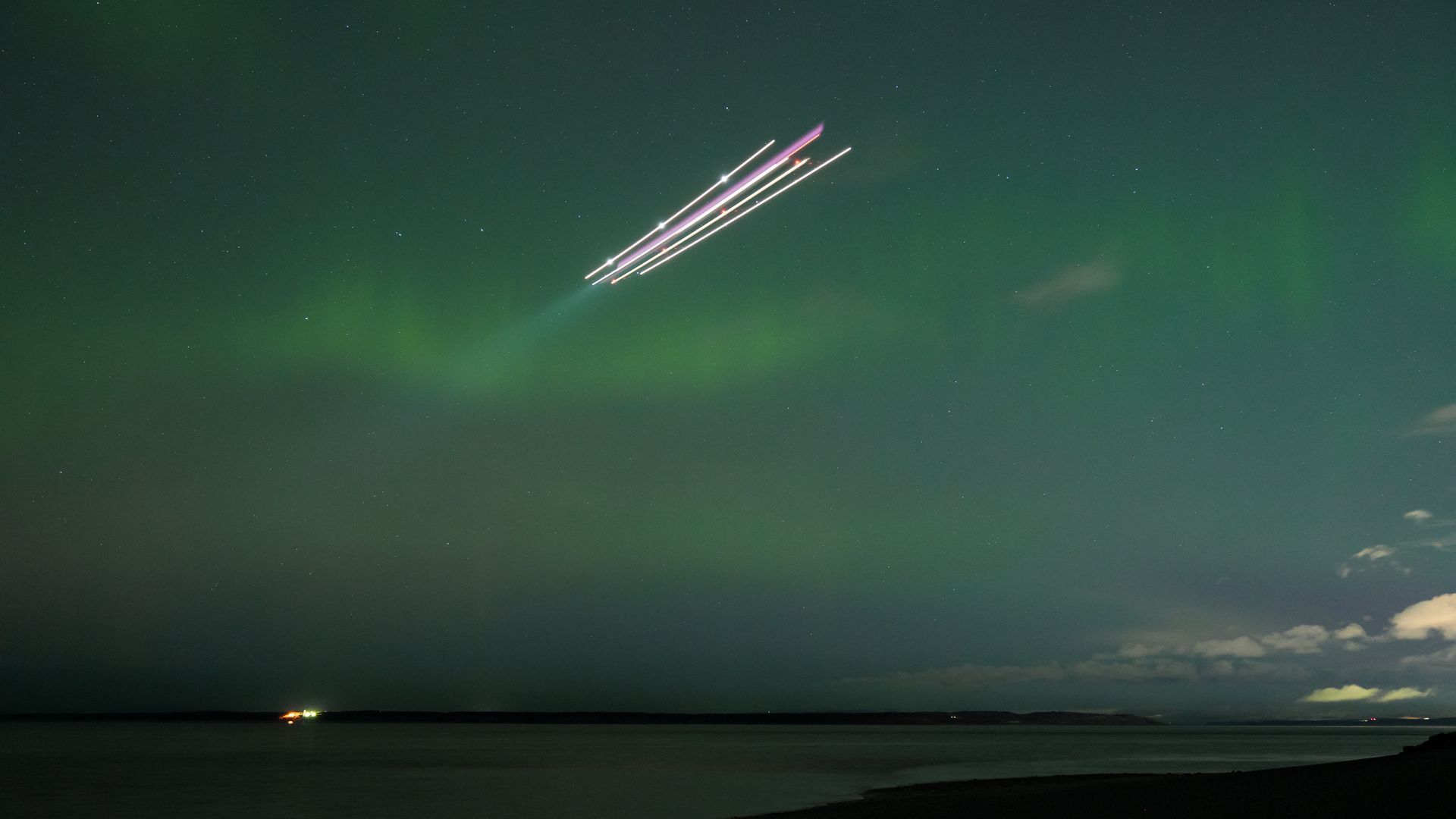
The Northern Lights glow over Anchorage after a geomagnetic storm warning boosted aurora visibility across Alaska. Photo: Hasan Akba/Anadolu via Getty Images
More than a dozen states could see the sky light up from the Northern Lights Tuesday night and Wednesday.
Why it matters: Forecasts suggest geomagnetic activity will trigger breathtaking celestial shows of the Northern Lights, also known as the aurora borealis, in the bulk of upper North America.
- The Northern Lights appear when solar winds hit the atmosphere, creating moving lights in the sky.
- Auroras generally show off a range of colors — greens, pinks, reds and purples.
Driving the news: Forecasters at NOAA's Space Weather Prediction Center (SWPC) predict that geomagnetic storm conditions will create a chance to see the Northern Lights this week.
- The activity is expected to fluctuate from Oct. 28 through the evening of Oct. 29.
- Tuesday and Wednesday night present ideal conditions for seeing the auroras.
States that will see Northern Lights
Maps published by NOAA show the aurora view line stretching from lower Canada into the northern United States. A handful of states are within that boundary including:
- Alaska
- Idaho
- Iowa
- Maine
- Michigan
- Minnesota
- Montana
- New Hampshire
- New York
- North Dakota
- South Dakota
- Vermont
- Washington
- Wisconsin
- Wyoming
View the full map here.
Northern Lights forecast for October 2025
The aurora is expected because fast solar wind from a large coronal hole on the sun will mix with Earth's magnetic field.
- Most of Canada will have a chance to see the lights. Northern Alaska also has a fair shot of visibility.
- The U.S. has a chance to see them too if conditions are right. Spotting auroras requires cloud-free skies and a little bit of luck.
Zoom in: National Weather Service offices predict mainly clear skies across the northern and central regions of the U.S., with some occasional partly cloudy skies.
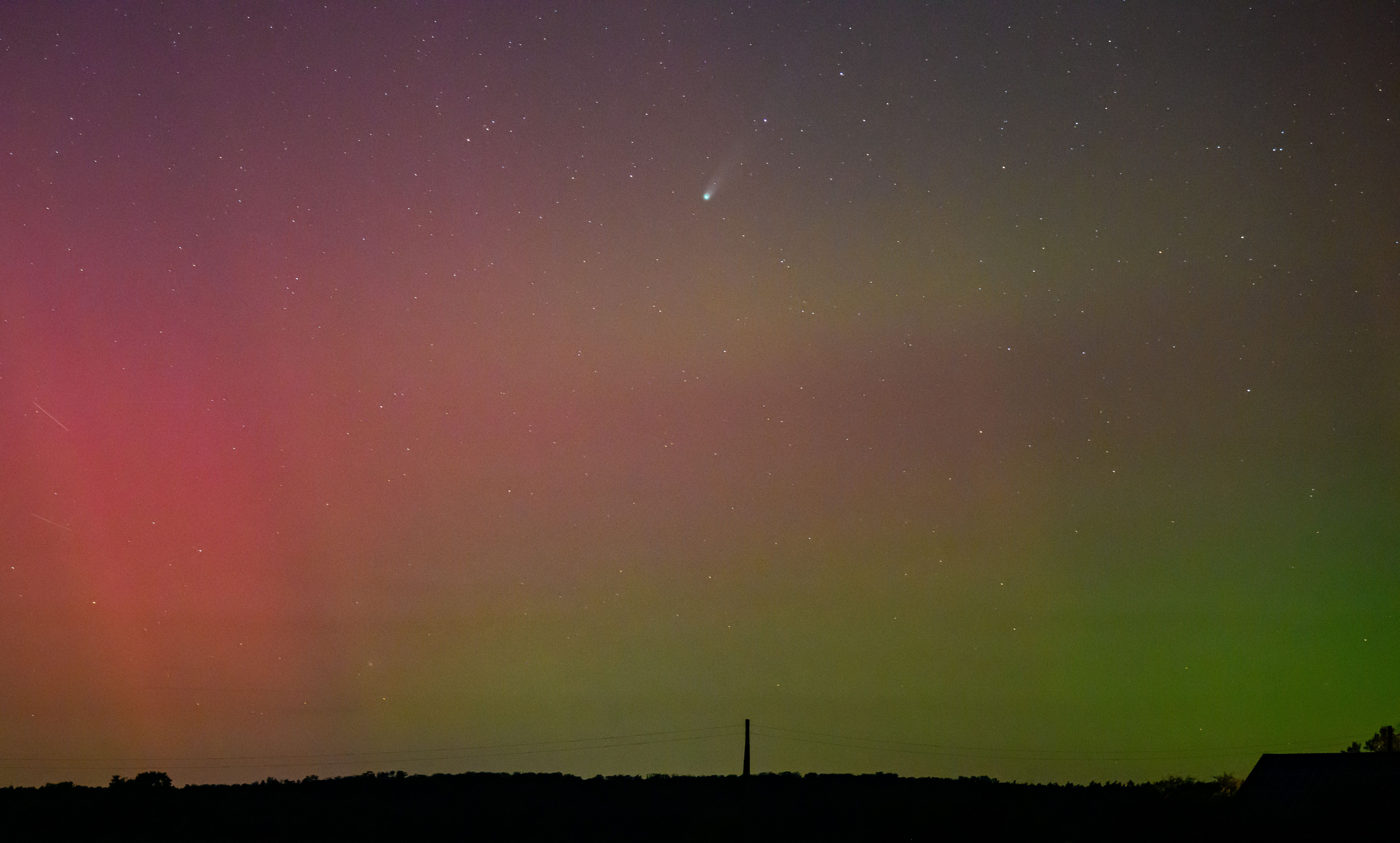
Aurora viewing tips: Best way to see Northern Lights
NOAA's Space Weather Prediction Center has a few factors at play for those looking to catch the lights.
Geomagnetic activity: Geomagnetic activity, normally driven by solar activity and solar coronal holes, can make the aurora brighter.
- "If the geomagnetic field is active, then the aurora will be brighter and further from the poles," the SWPC says.
Location: The SWPC recommends going closer to the poles to see the lights. Those in the Northern Hemisphere should find a place where they can see the North for the best view, the center says.
Darkness: Yes, it needs to be significantly dark for the auroras to appear. That means getting away from the city lights.
- "Aurora can often be observed somewhere on Earth from just after sunset or just before sunrise. The aurora is not visible during daylight hours," the NOAA says.
Timing: The auroras are mostly seen during the nighttime or early morning hours when the skies are still dark.
Best times to see Northern Lights
Context: Per NOAA, the activity for the auroras will be active during the "night" hours that stretch from the following times:
- 7pm to 7am ET
- 6pm to 6am CT
- 5pm to 5am MT
- 4pm to 4am PT
Typically, the best hours to see the lights are between 10pm and 2am local, the prediction center says.
More from Axios:
