Trump admin cracks down on pro-Palestinian protests at colleges


Add Axios as your preferred source to
see more of our stories on Google.
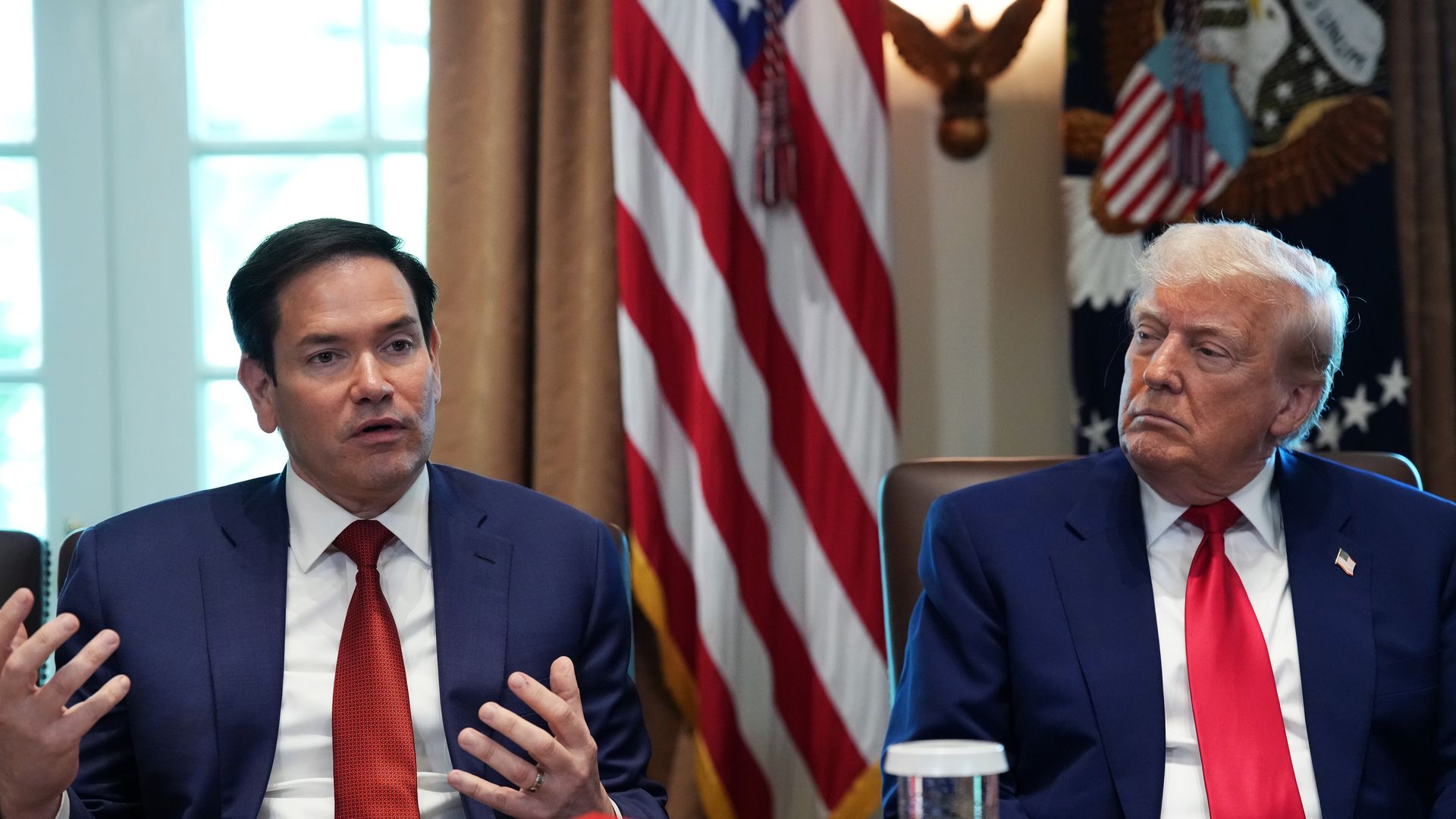
Secretary of State Marco Rubio and President Trump at the White House in April. Photo: Andrew Harnik/Getty Images
Secretary of State Marco Rubio said the State Department is "reviewing the visa status" of pro-Palestinian protesters who occupied Columbia University's main library in Manhattan on Wednesday evening.
Why it matters: Rubio's announcement builds on President Trump's January order, titled "Additional Measures to Combat Anti-Semitism," to remove international students who've joined protests and a direction for institutions and "monitor for and report activities by alien students and staff."
- The secretary of state's action comes as the Trump administration's Task Force to Combat Antisemitism reviews the University of Washington over a pro-Palestinian protest that saw some 30 students arrested on Monday after they occupied a Seattle campus building.
- Trump vowed in March to stop the federal funding of any schools or university that allows "illegal protests," and the White House said the president had promised to "Deport Hamas Sympathizers and Revoke Student Visas."
- The administration's action this week underscores that to enforce Trump's order, it will go after student protesters at individual colleges.
Details: "We are reviewing the visa status of the trespassers and vandals who took over Columbia University's library," Rubio said on X.
- "Pro-Hamas thugs are no longer welcome in our great nation."
What they're saying: A State Department spokesperson told Axios in an emailed statement Thursday that it "cannot preview future visa-related decisions, which are made on a case-by-case basis, based on the individual facts relevant to the case."
- The spokesperson added: "The Trump Administration is focused on protecting our nation and our citizens by upholding the highest standards of national security and public safety through our visa process."
The big picture: Columbia students were among the first to set up encampments as protests against the treatment of Palestinian citizens during the Israel-Hamas war swept U.S. college campuses last year.
- The college agreed to increase safety measures in a lawsuit settlement with a Jewish student who felt threatened and their education disrupted by the campus protests.
- Some Jewish students who've taken part in pro-Palestinian protests at Columbia told Al Jazeera on Wednesday they feel antisemitism is being "weaponized" and said their activism "is driven by their faith."
Between the lines: Rubio is citing a rarely used provision in U.S. law to try to remove legal residents for their pro-Palestinian speech.
The intrigue: The Trump administration's push to cast pro-Palestinian protesters as Hamas supporters — and then use anti-terrorism and immigration laws to quiet campus demonstrations — was forecast in a little-known plan last year from the creators of Project 2025.
- That plan, dubbed "Project Esther," was reflected in the White House's moves to arrest Columbia graduate Mahmoud Khalil, a protest leader, and pull about $400 million in federal funding from the university over antisemitism allegations.
- It was produced by the Heritage Foundation, the conservative group behind Project 2025, and took aim at what it called antisemitism on college campuses.
- Trump appears to have adopted many of the suggestions in Project Esther.
More from Axios:
- UW suspends 21 students after protest arrests
- NYPD arrests pro-Palestinian demonstrators after Columbia library protest
- How free speech on college campuses is being challenged
- Israeli-Palestinian conflict: The people, places and terms to know
Editor's note: This article has been updated with new details and statements throughout.
