2025 Pulitzer winners for journalism

Add Axios as your preferred source to
see more of our stories on Google.
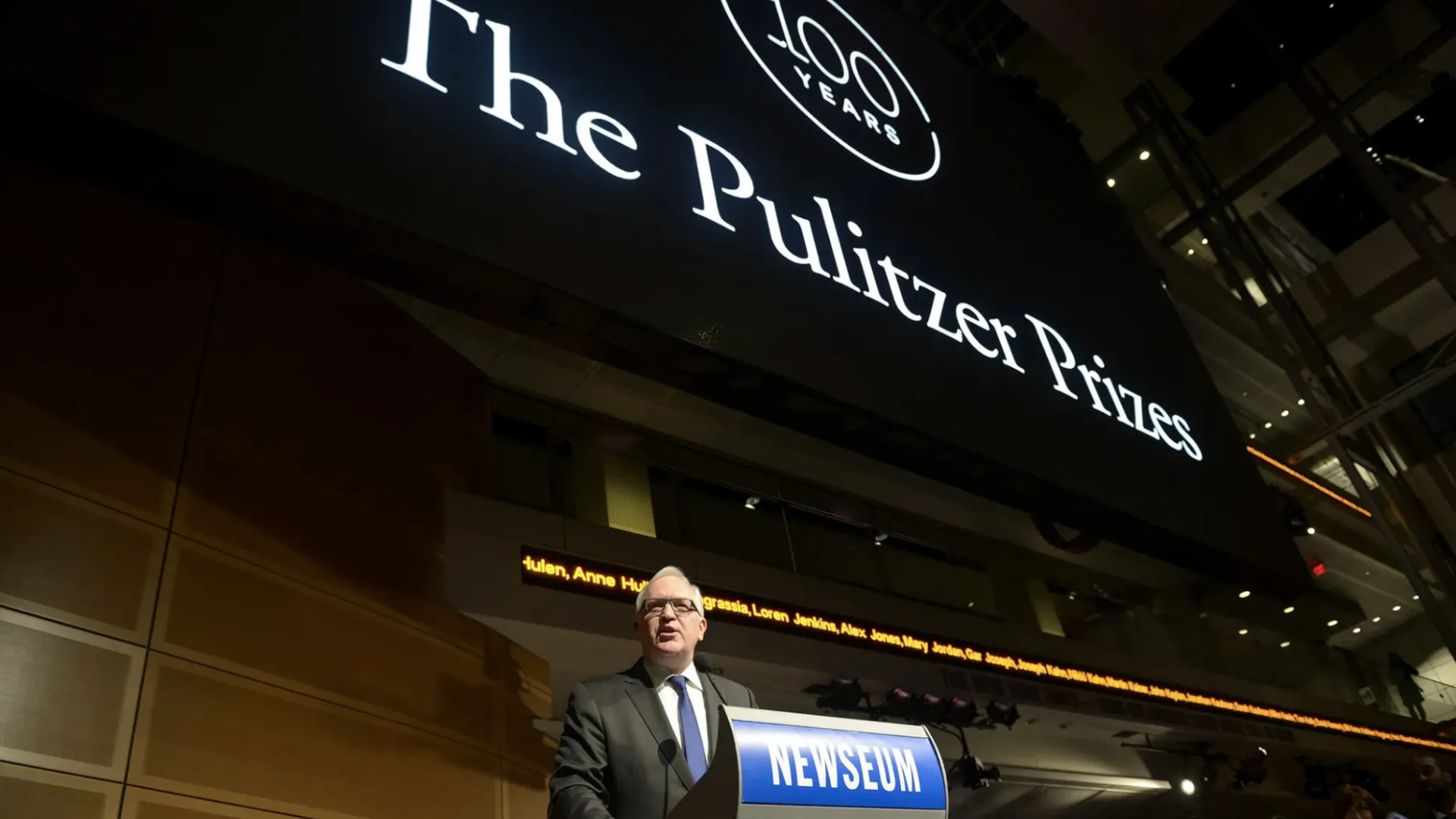
The 2025 Pulitzer Prize winners were announced Monday, with several prizes awarded to news organizations for their coverage of the assassination attempt on then-presidential candidate Donald Trump last summer.
Why it matters: This year's prizes underscored the value of journalists having access to powerful people and institutions to hold them to account and be present to accurately write the first draft of history.
- Two prizes this year, given to writers at The New York Times and staffers at The New Yorker, were awarded for highlighting the failures of the U.S. military in Afghanistan and Iraq.
- The Wall Street Journal took home a prize for best National Reporting for "chronicling political and personal shifts" of Elon Musk.
- The Washington Post's longtime cartoonist Ann Telnaes was awarded a prize for "delivering piercing commentary on powerful people and institutions with deftness, creativity and a fearlessness that led to her departure from the news organization after 17 years." Telnaes resigned from the Post earlier this year, alleging one of her cartoons was killed because it targeted owner Jeff Bezos, a claim the paper's opinion editor denied.
Details: While a few local and regional outlets took home prizes, this year's award winners were dominated by national outlets.
- The New York Times took home the most awards (4), followed by The New Yorker (3) and the Washington Post (2).
Zoom out: In announcing the 2025 awards, the Pulitzer Prizes' administrator, Marjorie Miller, acknowledged how difficult the environment for journalism has become.
- "Hundreds of Pulitzer Prizes have been announced here through wars, national tragedies and a global pandemic. These are particularly difficult times for the media and publishers in the United States," she said.
- "On top of years of severe financial pressures and layoffs, amid the dangers of covering wars and natural disasters, journalists and writers now face additional threats in the form of legal harassment, the banning of books and attacks on their work and legitimacy."
- "These efforts are meant to silence criticism, to edit or rewrite history. They're an attempt to erode the First Amendment of our Constitution, which guarantees a free press and free speech. Despite all of this, and partly because of it, today is a day for celebration."
Of note: The Pulitzer Committee presented one special citation to the late Chuck Stone "for his groundbreaking work as a journalist covering the Civil Rights movement, his pioneering role as the first black columnist at the Philadelphia Daily News — later syndicated to nearly 100 publications — and for co-founding the National Association of Black Journalists 50 years ago."
Zoom in: The below descriptions of the winners' work are quotes from Miller, who announced the winners.
Public Service (1917–present)
- Winner: Staff of ProPublica for "their urgent reporting about pregnant women who died after doctors delayed urgently needed care for fear of violating vague 'life of the mother' exceptions in states with strict abortion laws."
Breaking News Reporting (1998-present)
- Winner: Staff of the Washington Post for "urgent and illuminating coverage of the July 13 attempt to assassinate then-presidential candidate Donald Trump, including detailed storytelling and sharp analysis that couple traditional police reporting with audio and visual forensics."
Investigative Reporting (1985-present)
- Winner: Staff of Reuters for "a boldly reported exposé on lax regulation in the U.S. and abroad that makes fentanyl one of the world's deadliest drugs, inexpensive and widely available to users in the United States."
Explanatory Reporting (1998-present)
- Winner: Azam Ahmed, Christina Goldbaum and contributing writer Matthieu Aikins of the New York Times "for an authoritative examination of how the United States sowed the seeds of its own failure in Afghanistan, primarily by supporting murderous militia that drove civilians to the Taliban."
Local Reporting (1948-1952, 2007-present)
- Winner: Alissa Zhu, Jessica Gallagher and Nick Thieme of The Baltimore Banner and the New York Times "for a compassionate investigative series that captured the breathtaking dimensions of Baltimore's fentanyl crisis and its disproportionate impact on older black men, creating a sophisticated statistical model that the Banner shared with other newsrooms."
National Reporting (1948-present)
- Winner: Staff of The Wall Street Journal "for chronicling political and personal shifts of the richest person in the world, Elon Musk, including his turn to conservative politics, his use of legal and illegal drugs, and his private conversations with Russian President Vladimir Putin."
International Reporting (1948-present)
- Winner: Declan Walsh and the staff of the New York Times for "their revelatory investigation of the conflict in Sudan, including reporting on foreign influence and the lucrative gold trade fueling it and chilling forensic accounts of the Sudanese forces responsible for atrocities and famine."
Feature Writing (1979-present)
- Winner: Mark Warren, a contributor for Esquire, for "a sensitive portrait of a Baptist pastor and small town mayor who died by suicide after his secret digital life was exposed by a right-wing news site."
Commentary (1973-present)
- Winner: Mosab Abu Toha, a contributor The New Yorker, for "essays on the physical and emotional carnage in Gaza that combined deep reporting with the intimacy of memoir to convey the Palestinian experience of more than a year and a half of war."
Criticism (1973-present)
- Winner: Alexandra Lange, a contributing writer for Bloomberg City Lab, for "graceful and genre-expanding writing about public spaces for families, deftly using interviews, observations, and analysis to consider the architectural components that allow children and communities to thrive."
Editorial Writing (1917-present)
- Winner: Raj Mankad, Sharon Steinmann, Lisa Falkenberg and Leah Binkovitz of The Houston Chronicle "for a powerful series on dangerous train crossings that kept a rigorous focus on the people and communities at risk, as the newspaper demanded urgent action."
Illustrated Reporting and Commentary
- Winner: Ann Telnaes of the Washington Post for "delivering piercing commentary on powerful people and institutions with deftness, creativity and a fearlessness that led to her departure from the news organization after 17 years."
Breaking News Photography (2000-present)
- Winner: Doug Mills of the New York Times for "a sequence of photos of the attempted assassination of then-presidential candidate Donald Trump, including one image that captures a bullet whizzing through the air as he speaks."
Feature Photography (1968-present)
- Winner: Moises Saman, contributor to The New Yorker, for "his haunting black and white images of Sednaya prison in Syria that capture the traumatic legacy of Assad's torture chambers, forcing viewers to confront the raw horrors faced by prisoners and to contemplate the scars on society."
Audio Reporting (2020-present)
- Winner: Staff of The New Yorker for "their 'In the Dark' podcast, a combination of compelling storytelling and relentless reporting in the face of obstacles from the U.S. military, a four-year investigation into one of the most high-profile crimes of the Iraq War, the murder of 25 unarmed Iraqi civilians in Haditha."
Full list of winners in journalism and descriptions of their awards, via The Pulitzer Board, can be found here.
Editor's note: This story was corrected to reflect that the Pulitzer Prizes' administrator, Marjorie Miller (not the Pulitzer Center's president, Lisa Gibbs), announced the awards.
Go deeper:
