Trump signs order to pull U.S. out of Paris Agreement

Add Axios as your preferred source to
see more of our stories on Google.
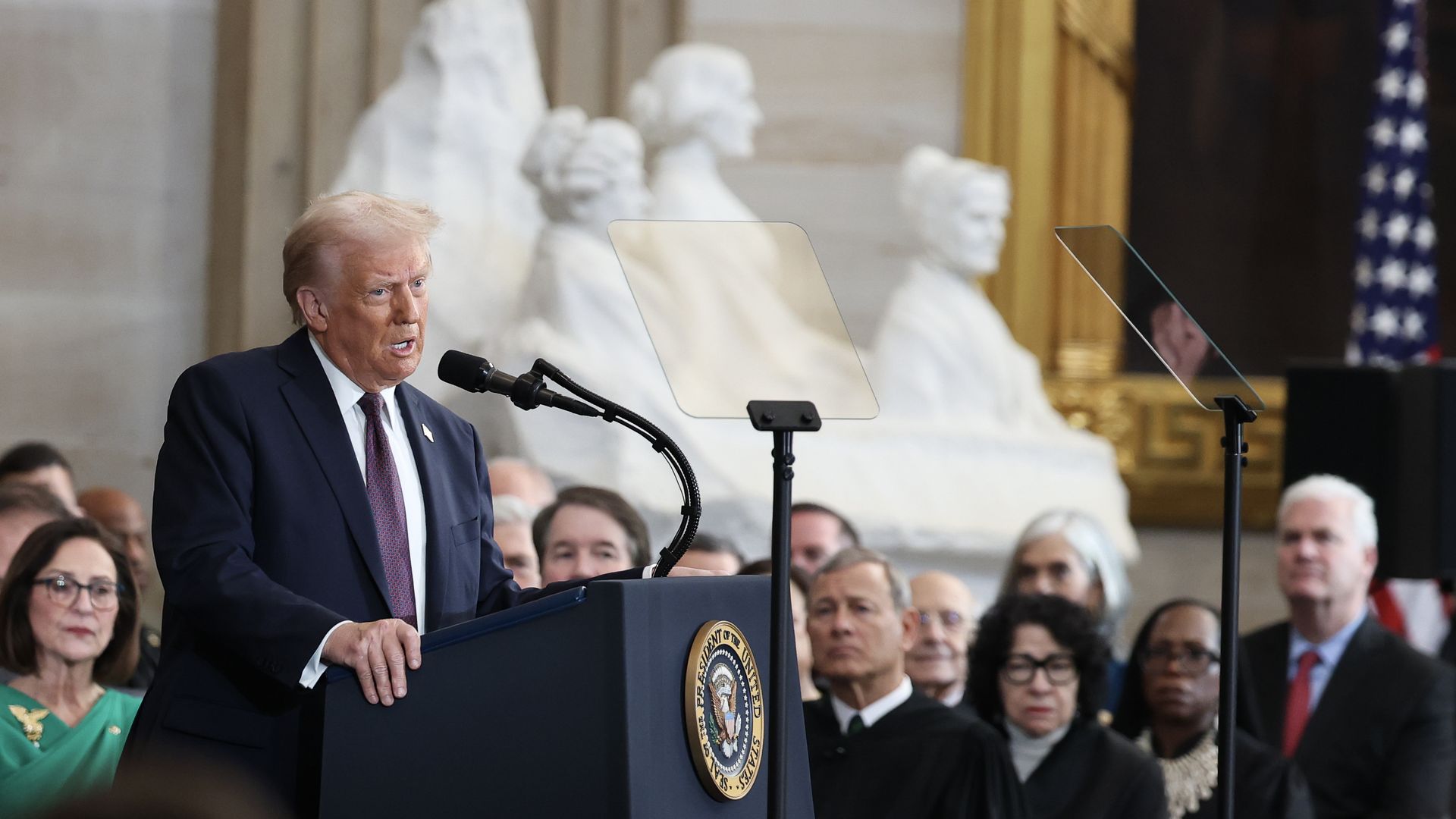
President Trump speaks during inauguration ceremonies. Photo: Kevin Dietsch/Getty Images
President Trump signed an executive order during his first hours in office to begin the process of pulling the U.S. out of the Paris Climate Agreement — the second time he has done so.
Why it matters: The U.S. is the world's second-largest emitter of planet-warming greenhouse gases and top producer of oil and natural gas.
- Another U.S. departure from the pact would leave a major hole in international efforts to curtail greenhouse gas emissions and potentially call the country's foreign policy credibility into question.
Zoom in: It takes a year for a country to withdraw from the agreement.
- The Paris Agreement doesn't require countries to cut their emissions, but works through international peer pressure and countries' domestic laws to encourage nations to set ambitious emissions reduction targets.
Under former President Biden, the U.S. had committed to the voluntary goal of cutting emissions economy-wide by 61% to 66% below 2005 levels by 2035.
- Other countries are setting their own commitments — including China, the world's top emitter and leading nation in renewable energy deployment.
- Prior to signing the order, the incoming Trump administration described this and other actions on energy as a way to end former Biden's "climate extremism."
Flashback: The U.S. has been here before. Trump pulled the country out of Paris during his first term, only to have former President Biden rejoin the pact on his first day.
- Then, no other country followed the U.S. move to leave the agreement. The U.N. says 194 nations plus the European Union have joined the pact.
- Also, the first Trump administration continued to send representatives to the annual climate summits.
Between the lines: Leaving Paris again could cement foreign diplomats' and observers' view of the U.S. as an unreliable partner, given the U-turn from Biden's climate policies.
- Trump and his nominees have promised to increase fossil fuel production, roll back climate programs that the Biden administration had put in place, and unleash a broad policy of "energy dominance."
- In addition to the Paris Agreement executive order, Trump signed multiple energy orders that would — if implemented — reorient the U.S. away from a focus on lowering greenhouse gas emissions, and toward increasing oil and gas production and boosting available electricity on the grid.
The intrigue: Trump has long characterized the agreement as putting too much burden on the U.S. compared to other countries.
- "The United States will not sabotage our own industries, while China pollutes with impunity," Trump said Monday night before signing the executive order.
Reality check: Right now, greenhouse gas emissions are still too high to meet the agreement's temperature targets, even though some country's, including the U.S., have been reducing their emissions.
- If a U.S. departure were to slow the decline in domestic emissions and cause other countries to balk at taking more aggressive efforts, then it may make it even harder for the targets to be met.
- The action on Paris comes amid an increase in the severity and frequency of certain extreme weather events, and a little more than a week after climate change-worsened wildfires tore through metro LA, killing at least 27 and destroying more than 10,000 homes.
What they're saying: "By leaving the Paris Agreement, this administration has abdicated its responsibility to protect the American people and our national security," said Gina McCarthy, former White House national climate adviser and now managing co-chair of the "America is All In" coalition.
- "The U.S. withdrawing from the Paris Agreement is unfortunate, but multilateral climate action has proven resilient and is stronger than any single country's politics and policies," said Laurence Tubiana, a key architect of the Paris Agreement, in a statement.
- Simon Stiell, the top UN climate diplomat, issued a statement saying any country is welcome to offer "constructive engagement" at future climate talks.
Go deeper:
