Biden's big impact on climate diplomacy

Add Axios as your preferred source to
see more of our stories on Google.
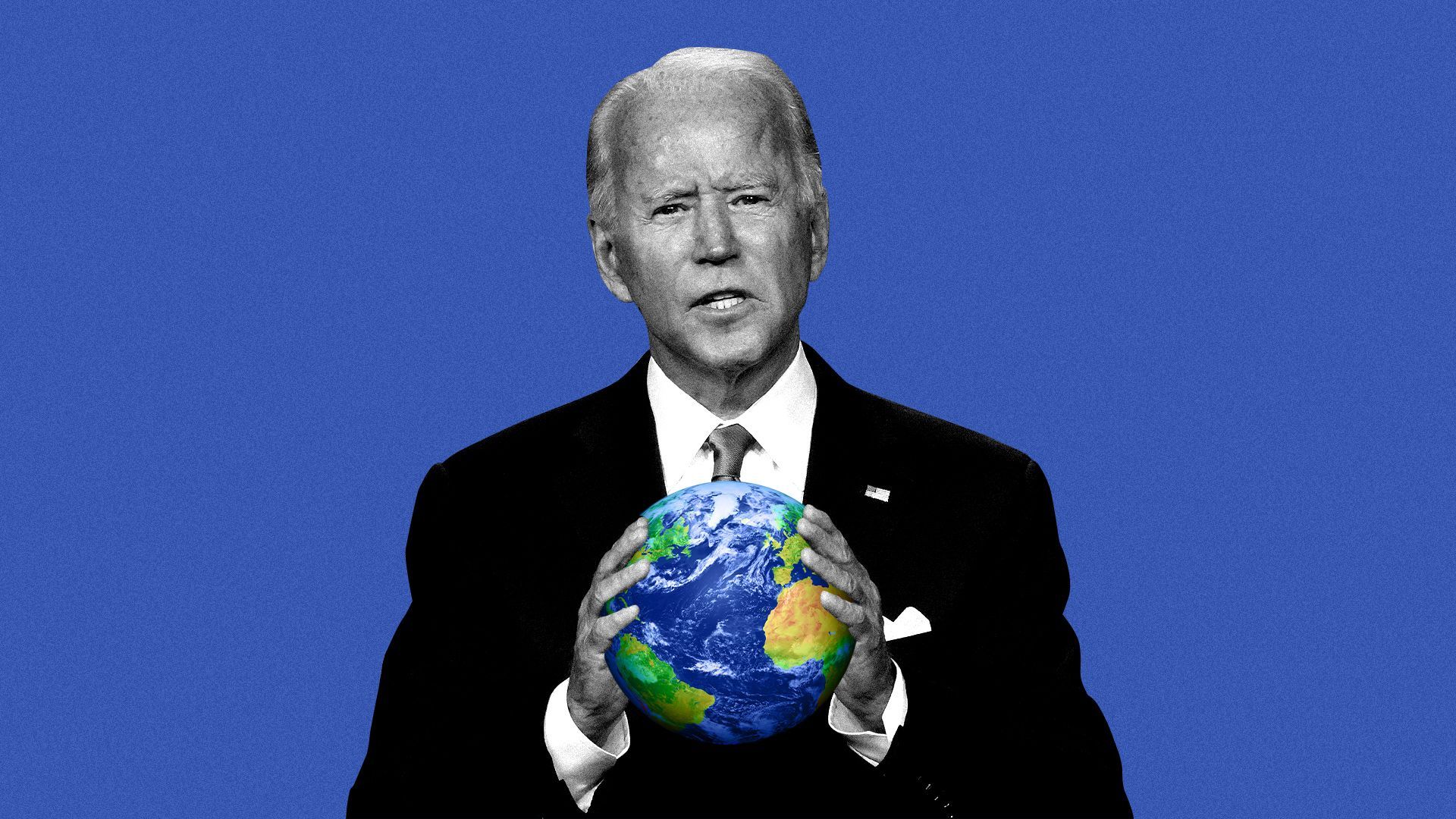
Photo illustration: Aïda Amer/Axios. Photo: Win McNamee/Getty Images
President Biden raised the profile and ambition of U.S. climate diplomacy relative to previous presidents, starting on his first day in office.
Why it matters: Biden set the stage for diplomatic breakthroughs, though geopolitical developments have complicated their success.
Zoom in: Biden rejoined the Paris climate agreement and elevated the position of the top climate diplomat to Cabinet-level.
- His choice of former Secretary of State John Kerry for that role boosted the country's gravitas at bilateral and multilateral meetings worldwide.
- In its emissions commitments under the Paris Agreement, the U.S. set reach goals for greenhouse gas emissions reductions and renewable energy growth to encourage others to follow suit.
- Kerry jetted around the world to move the "clean" energy transition forward and secure public and private funding for renewable energy and climate aid.
- Biden addressed world leaders at two of the past three climate summits, having sent Vice President Harris to COP28 in Dubai.
The intrigue: Through Kerry's sheer persistence, the administration carved out bilateral agreements with China to tackle particular climate-related challenges.
- In Dubai, Kerry played a significant role in securing non-binding yet historic language on fossil fuels, with the final agreement calling for "transitioning away from fossil fuels in energy systems, in a just, orderly and equitable manner."
- This was the first time the term "fossil fuels" had made it into an agreed- upon text after three decades of climate negotiations.
Yes, but: Despite these and other efforts, global emissions of greenhouse gases are still rising, and most climate scientists agree that the Paris Agreement's goals, particularly the 1.5-degree temperature target, are slipping out of reach.
- Geopolitical challenges, such as the Russian invasion of Ukraine and war in Gaza, have overshadowed climate and reduced the international will needed to tackle the issue.
- And critics say multilateral bank reform, a prerequisite for unlocking billions for climate aid to the developing world, has been painfully slow.
What's next: Kamala Harris, the presumed frontrunner for the Democratic nomination, is no stranger to the UN climate talks, having represented the U.S. in Dubai during the heads of state portion of the summit.
The bottom line: Reengaging and restoring U.S. leadership on climate change has not yet translated into actions that would meet the severity and speed of the climate challenge.
