Trump and Harris chase Latino vote in final stretch

Add Axios as your preferred source to
see more of our stories on Google.
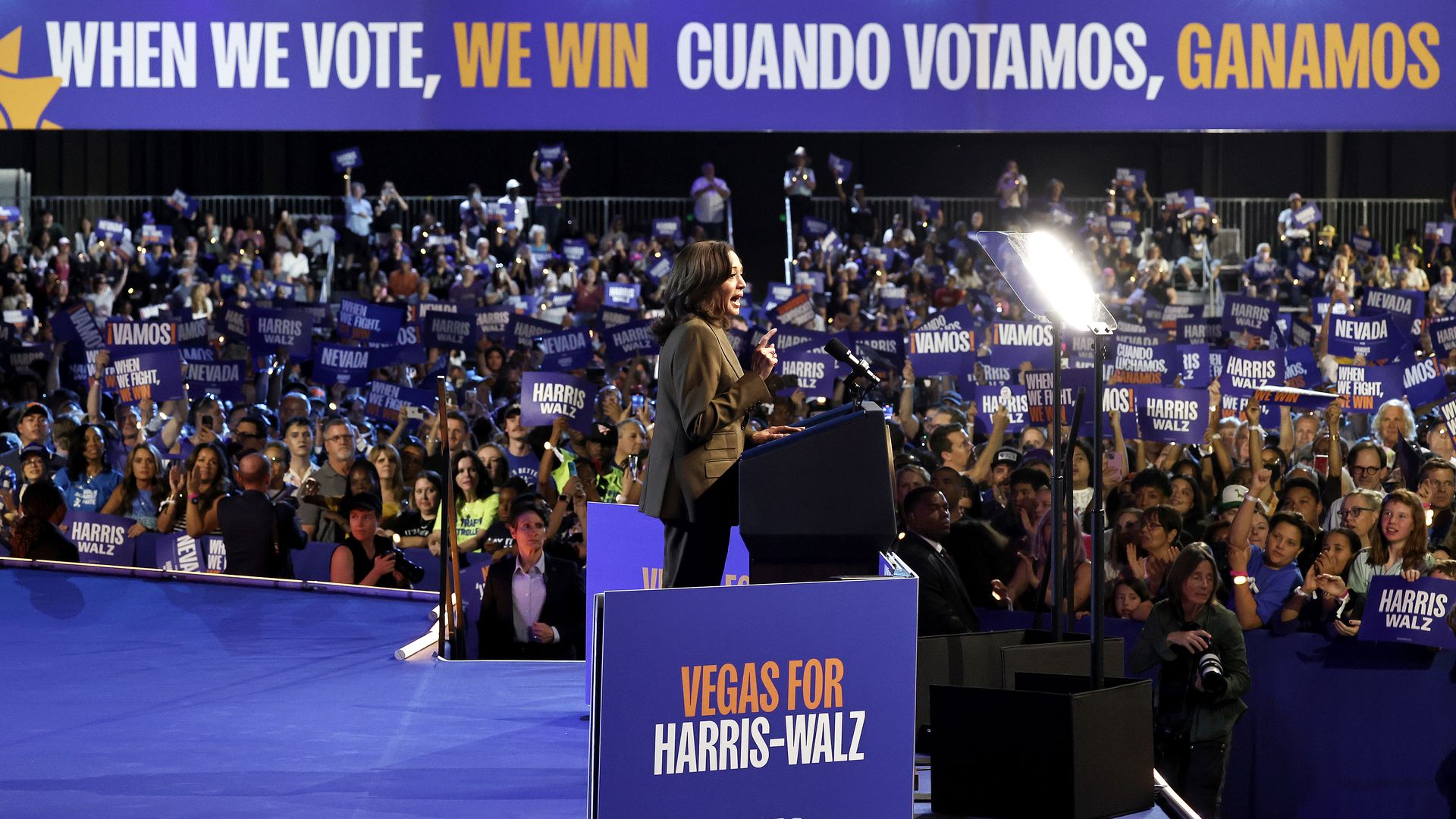
Vice President Kamala Harris during a campaign rally on Sept. 29 in Las Vegas. Photo: Mario Tama/Getty Images
Less than a month before the presidential election, campaigns are finally reaching out to the Latino voters who will play a key role in determining the outcome of the tight contest, a new poll indicates.
Why it matters: A record number of Latinos are eligible to vote this year and could especially have an impact in Arizona, Pennsylvania, Nevada and other swing states where their numbers have been increasing.
- Many Latinos had been reporting that campaigns barely or never contacted them, which advocates said was one reason Latinos weren't registering to vote.
Driving the news: But a newly released poll of voters in battleground states found a majority of Latinos (64%) say they've now been contacted by campaigns or get-out-the-vote organizations.
- It was the first time this year that more than half of those polled by the Hispanic Federation and Latino Victory Foundation said they'd heard from the campaigns.
- 7 out of 10 Hispanics polled similarly said they definitely plan to vote on Nov. 5, with as many as 74% saying so in Florida, Michigan, Arizona and Georgia. Latinos in Pennsylvania and Wisconsin had a slightly lower 66% and 69% reported voter intent, respectively.
- "This expected turnout will undoubtedly impact the 2024 election and may very well be decisive in who will win the White House, Senate and House of Representatives," Frankie Miranda, president and CEO of the Hispanic Federation, said Tuesday in a press conference.
State of play: Both Kamala Harris and Donald Trump agreed to town halls hosted by Univision, one of the two main Hispanic-focused U.S. networks.
- Harris fielded questions last week in Las Vegas, and Trump's town hall in Doral, Florida, was broadcast Wednesday.
- Trump is trying to appeal to voters of Cuban and Venezuelan descent by likening the criminal cases against him to how those countries' regimes treat dissidents.
- The GOP has been opening Hispanic outreach centers in cities like Milwaukee and Reading, Pennsylvania.
- Both campaigns have deployed celebrity endorsers in Pennsylvania, where there is a large Puerto Rican community. "The Bear" actress Liza Colón-Zayas spoke at a Harris rally last month.
- Harris' running mate, Tim Walz, also led the launch of the "Hombres con Harris" drive last week, which is geared towards Latino men.
Harris has a lead among Latino voters in general in several polls, but young Hispanic men have signaled they're likely to vote for Trump.
- 55% to 60% of Latino voters in those polls say they support Harris — a margin that is lower than that ofr previous Democratic presidential candidates who won elections in recent history.
- Support for Harris among Latinos is polling in the mid- to upper-50s — higher than for President Biden as a candidate earlier this year, but not at the level Democrats historically have needed to win the White House.
Between the lines: Latino voters nationwide have consistently said that in this election cycle they are mainly concerned about inflation – even as it has gone down — housing costs and jobs.
- That holds among Latinos polled in battleground states, where economic issues were followed by abortion and reproductive rights and gun violence, according to the Hispanic Federation-Latino Victory Foundation poll released Tuesday.
The bottom line: "This all shows that Latino voters are a force to be reckoned with,"says Elizabeth Vaquera, director of the Cisneros Hispanic Leadership Institute at George Washington University.
- Politicians, she says, usually reach out to Latinos at lower rates, "which of course leads to lower engagement."
- Whether the candidates this time have succeeded in making the case to them or left it too late won't be determined until Nov. 5, she says.
- "With the share of eligible young Latino voters literally growing by the minute, campaigns need to ensure their strategies" stir up participation from this demographic from much earlier on, Vaquera says.
