Fears grow over detention of anti-Maduro protesters

Add Axios as your preferred source to
see more of our stories on Google.
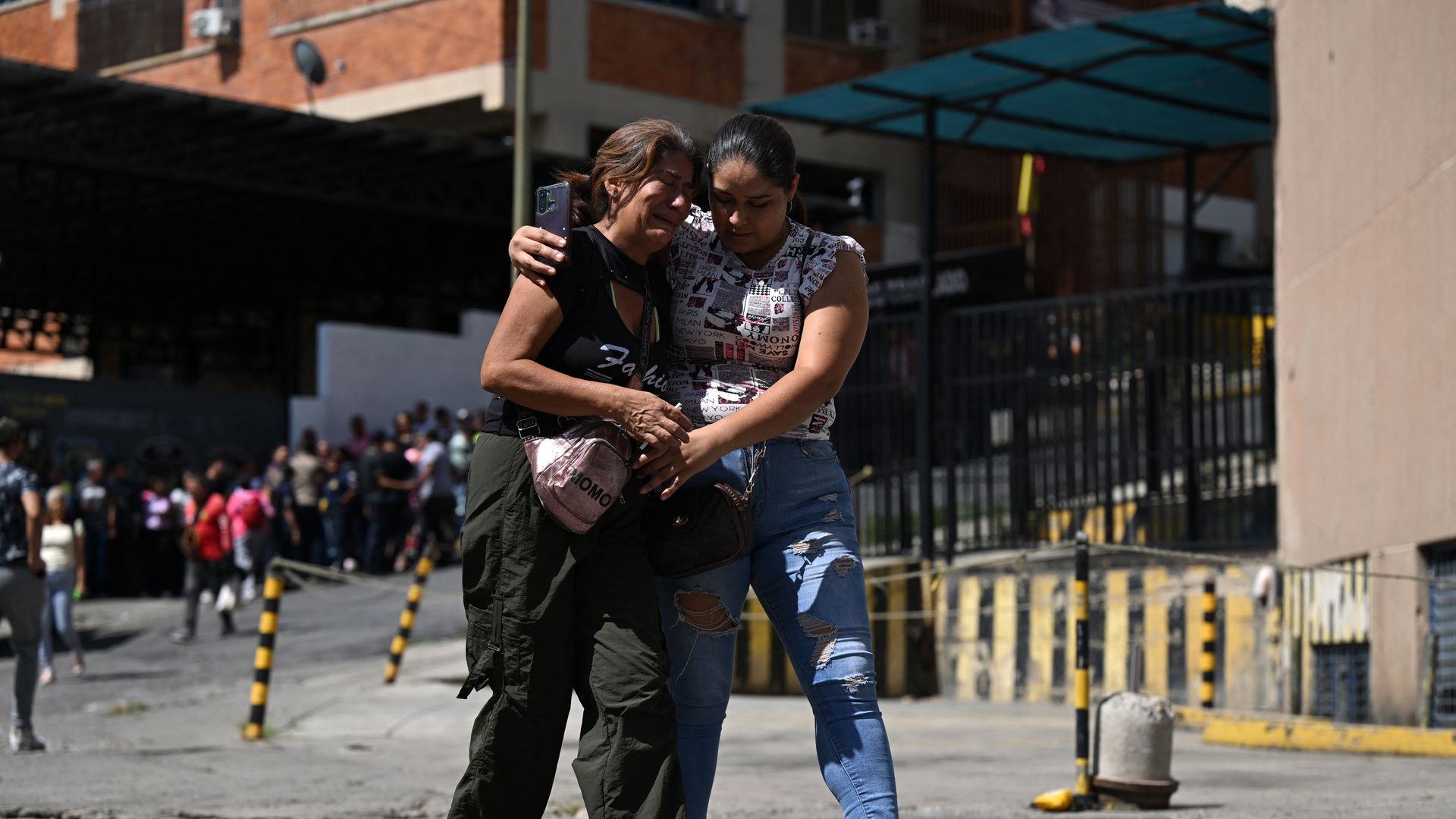
People leave the National Police headquarters in Caracas, Venezuela, Aug. 1, after trying to get information about detained loved ones. Photo: Raúl Arboleda/AFP via Getty Images
Alarm is growing in Venezuela as President Nicolás Maduro doubles down on the detention of protesters and opposition campaign volunteers.
The big picture: The scale of the crackdown after the contested July 28 elections —at least 1,220 have been arrested so far, per the NGO Foro Penal — has not been seen in Venezuela's recent history, even after similar mass anti-government protests in 2014 and 2017, lawyers and analysts say.
- "Within the span of a week we've had about 40% as many arrests as we saw in the many months that the 2017 protests stretched out … if this continues the number of detentions could be stratospheric," Lisette González, of human rights group Provea, tells Axios Latino.
Catch up quick: The protests have centered on demands for the regime to show its vote tallies, since the electoral body allied with Maduro claims, without evidence, that he won a third term against opposition candidate Edmundo González Urrutia.
- The opposition says its army of volunteers gathered vote tallies from more than 80% of precincts and that González is the winner.
- Maduro has been in power since 2013, and the ruling United Socialist Party of Venezuela has governed for 25 years, previously with Hugo Chávez —which is why the regime and its policies are widely known as Chavismo.
Human Rights Watch says it's in the process of confirming credible reports that at least 24 people have died in connection with the protests.
Between the lines: Although in the past the Maduro regime has played down arrests of protesters (in part to claim protests weren't significant), this time around it is acknowledging the mass arrests.
- That could signal Maduro is aware of how much support he's lost, per Mariano de Alba, Venezuelan lawyer and analyst.
- Maduro boasted this week that 2,200 people have been detained so far, a number larger than the one Foro Penal has been able to confirm.
- Maduro said many of those detained will be moved on Saturday to the Tocorón and Tocuyito prisons, which international organizations have found to be especially violent and where families are often not allowed in for visits.
Zoom in: Venezuela's justice system is largely co-opted by Chavismo, which has been known even to arrest judges who don't fall in line, making due process for suspects unlikely.
- Many detainees slapped with charges of terrorism are being denied the chance to pick their own lawyers or being moved to prisons across the country where their lawyers and families cannot easily get in touch, according to González of Provea.
- "The law says public defenders have to faithfully represent everyone, but in these cases (of protesters) that hasn't happened in the past," says de Alba.
- Human rights advocates are watching for accusations of torture and coerced confessions, a common pattern in Venezuela under Chavismo.
The bottom line: "It's clear the government's aim is to sow fear to make it much less likely that people will continue protesting en masse," says de Alba.
- González says any talks as neighboring countries try to defuse the situation "will be insufficient if there aren't also entreaties so that all people arbitrarily arrested in these past few days be set free."
Subscribe to Axios Latino to get vital news about Latinos and Latin America, delivered to your inbox on Tuesdays and Thursdays.
