Harris gains support among Latinos — but needs more to win

Add Axios as your preferred source to
see more of our stories on Google.
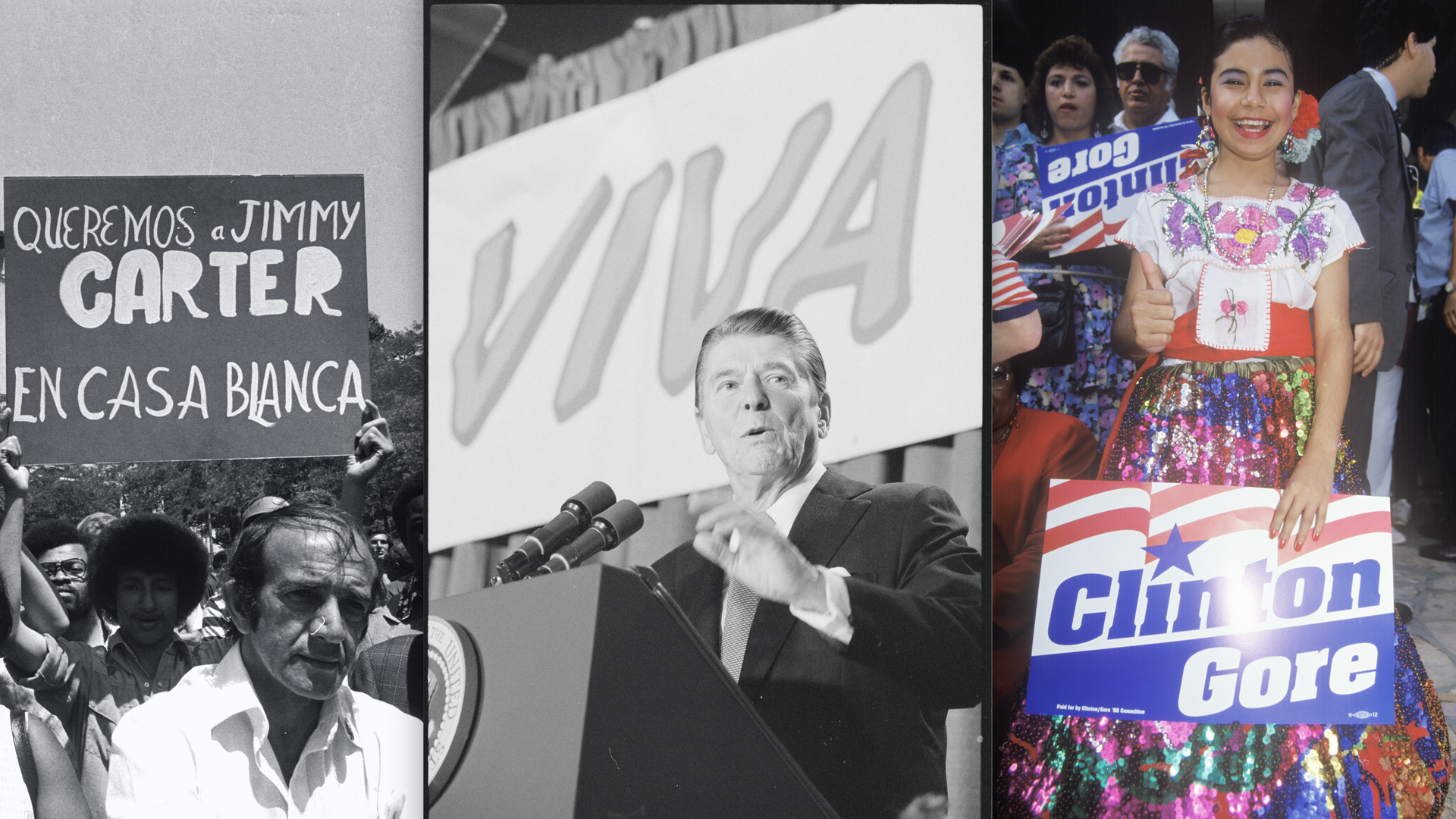
Jimmy Carter supporters in 1976; President Reagan in 1983; Latino supporters of Bill Clinton in 1992. Photos: Owen Franken/Corbis via Getty Images; Bettmann/Getty Images contributor; Joe Sohm/Visions of America/Universal Images Group via Getty Images
Early polls suggest Vice President Kamala Harris has opened up a lead over former President Trump among Latino voters. But so far, she hasn't hit the level of support Democrats historically have needed to win the White House.
Why it matters: An Axios review of exit polls going back 50 years finds that when Democratic presidential candidates get less than about 64% of the Latino vote, they typically lose.
- That benchmark is key for Democrats as Latinos — who now make up nearly 20% of the U.S. population — represent a crucial segment of the party's historical coalition that recently has drifted toward Republicans.
- Harris' support among Latinos is polling in the mid- to upper 50s — a big improvement from what President Biden's numbers had been this year, but a signal to Democrats that they have work to do.
Zoom in: Latino voters make up a politically, geographically and culturally diverse electorate in which generational differences also affect voting patterns.
- Trump has helped increase Latino support for Republicans, partly by appealing to those who support his economic policies, oppose abortion and favor crackdowns on illegal immigration.
- But many Latinos have been turned off by Trump's heated rhetoric about immigrants and his plan for mass deportations.
Harris has moved quickly to try to appeal to Latino voters — particularly in the Sun Belt, the hottest battleground for them.
- This week Harris' campaign released an ad emphasizing her family's immigrant roots. Harris and her running mate, Minnesota Gov. Tim Walz, had campaign stops in the Southwest that included a big rally in the Phoenix area.
- One encouraging sign for Harris' campaign: an endorsement Friday by the political arm of the League of United Latin American Citizens (LULAC), a generally nonpartisan group that hadn't endorsed a presidential candidate in its nearly 100-year history.
By the numbers: Since Jimmy Carter was elected president in 1976, when reliable exit poll data on Latinos were first collected, most Latino voters have backed Democrats. But that support has fluctuated.
- The Axios review found no indication of a long, gradual shift of Latino voters to the GOP in presidential elections. Instead, there have been surges toward Republicans that subsided.
- Carter got 76% of the Latino vote in defeating President Ford after Democrats' massive outreach to Hispanic voters during the post-Watergate campaign.
- Four years later, Carter got just 56% of the Latino vote and lost badly to Ronald Reagan, whose economic message resonated with many Americans.
In 1996, Bill Clinton rode a solid economy to re-election, capturing 72% of the Latino vote.
- Barack Obama never got less than 67% of the Latino vote in his comfortable victories in 2008 and 2012.
- Democrat Al Gore got 63% of the Latino vote in 2000 and lost to Republican George W. Bush, a Texas governor with a solid Hispanic voter outreach operation.
- In 2004, John Kerry, who was widely seen as having a weak outreach program, got just 53% of the Latino vote and lost to Bush in a close race.
- And in 2020, Biden got about 65% of the Latino vote in defeating Donald Trump — though some exit polls showed Biden's support as less than that. Trump did particularly well among Latinos with no college education.
Yes, but: The exception to the pattern was in 1992, when Bill Clinton got 61% of Latinos' support despite a strong Hispanic voter outreach.
- Clinton was elected with just 43% of the overall vote because he was in a three-way race against President George H.W. Bush and independent Ross Perot, both Texans who together got 39% of the Latino vote.
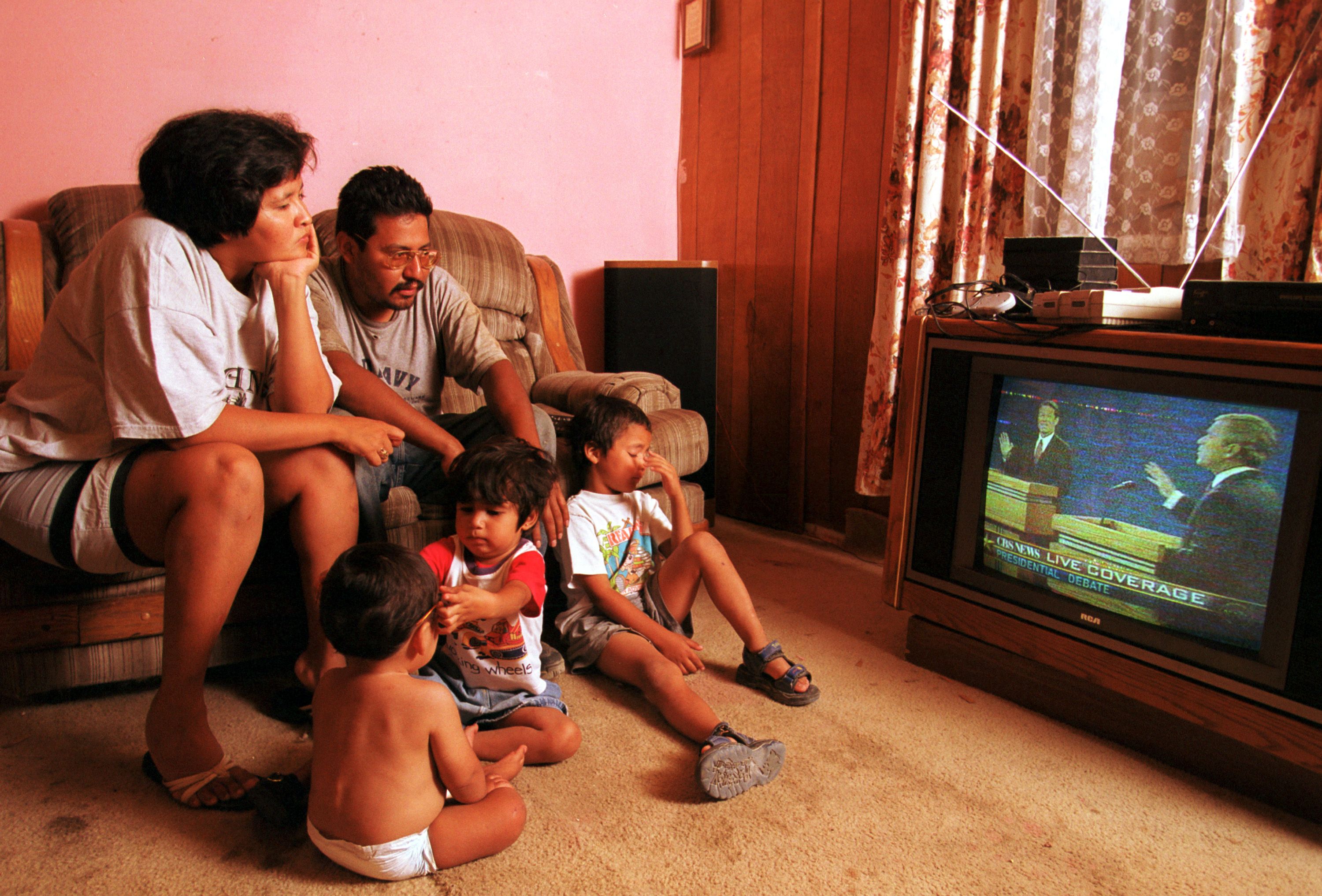
Zoom out: Latino voters historically have leaned progressive on many issues, but new voters who are the grandchildren and great-grandchildren of immigrants have made the Latino electorate more difficult to assess, University of Houston political science professor Jeronimo Cortina tells Axios.
- College-educated Latinas are leaning Democratic, but many working-class Latino men without college are, like white men with similar backgrounds, tilting toward the GOP.
- "It's not a shift to the right. It's not a swing vote. It's the emergence of a new vote," California GOP consultant Mike Madrid tells Axios.
- Madrid said the fastest-growing segments of the Latino electorate are those under 30 with little voting history, and they appear to lean toward economic populism — which helps explain Trump's appeal to some.
