Helene leaves "unimaginable" destruction in 6 states, as death toll tops 160


Add Axios as your preferred source to
see more of our stories on Google.
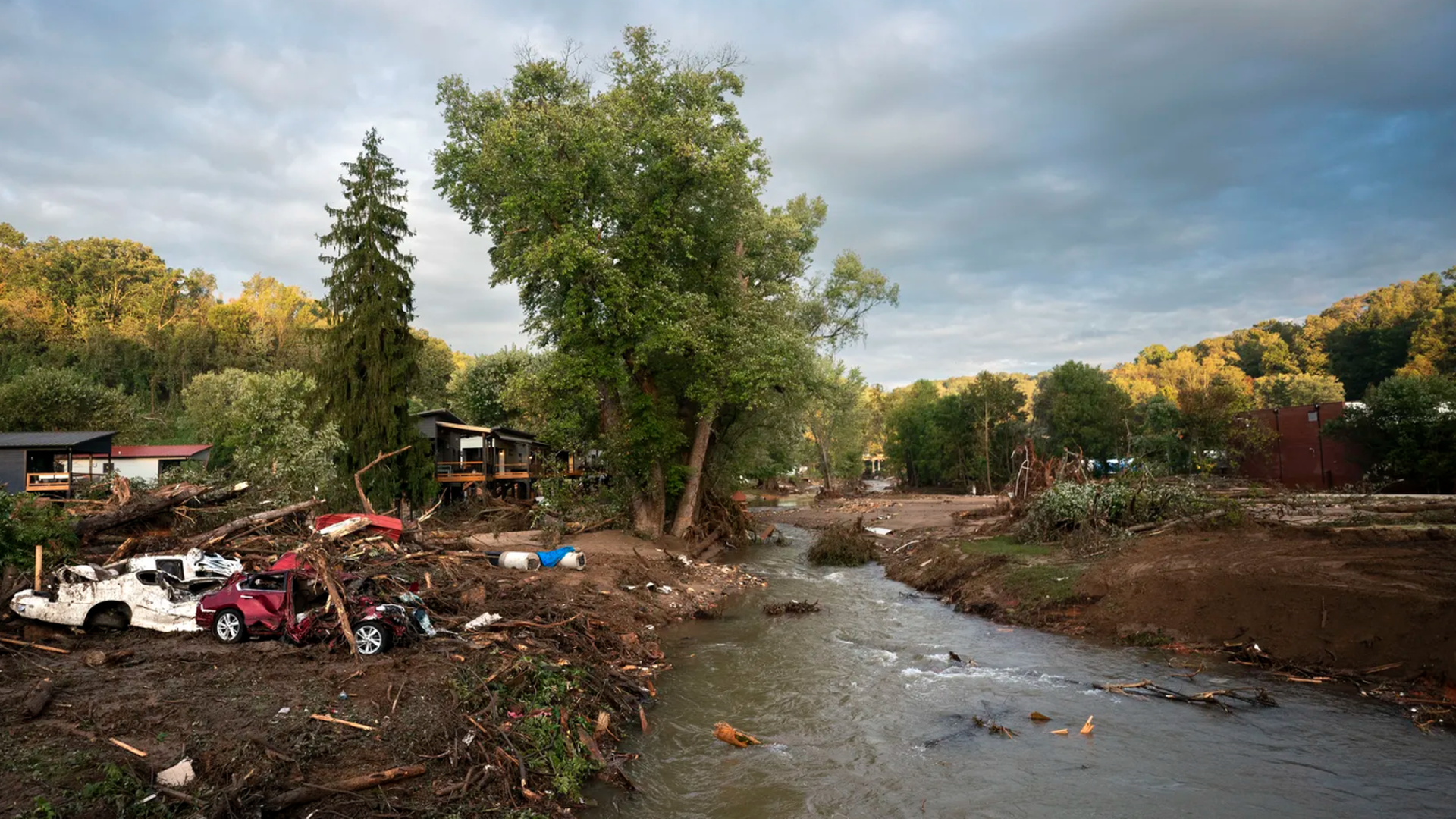
Storm-damaged cars sit along Mill Creek in the aftermath of Hurricane Helene on Sept. 30 in Old Fort, North Carolina. Photo: Sean Rayford/Getty Images
Hurricane Helene has left officials in six Southeastern states grappling to respond to the widespread destruction it caused after hitting Florida as a Category 4 storm last week.
The big picture: Officials confirmed at least 57 deaths in North Carolina Tuesday and raised the death count in Georgia from 17 to 25 Monday, bringing the number of storm-related deaths across six states to more than 166, per AP.
- Buncombe County in western North Carolina is home to the city of Asheville, where residents saw historic water level rises.
- Storm-related deaths were also confirmed in Florida, South Carolina, Tennessee and Virginia, as search and rescue teams continued to respond to the fallout from the hurricane that struck Florida late Thursday before moving into Georgia, the Carolinas and Tennessee.
- Widespread outages still affected hundreds of thousands of people in multiple states Wednesday morning, including in North and South Carolina and Georgia.
State of play: Underscoring the widespread threats the former Hurricane Helene posed, the Biden-Harris administration approved emergency requests for federal assistance from Florida, Georgia, North and South Carolina and Alabama ahead of the storm's landfall.
- FEMA administrator Deanne Criswell told CBS News Sunday that the states affected by the storm "are going to have very complicated recoveries, but we will continue to bring those resources in to help them, technical assistance as they're trying to identify the best ways to rebuild."
- She noted on CBS' "Face the Nation" that there's "historic flooding" in North Carolina, particularly in the state's west.
- "I don't know that anybody could be fully prepared for the amount of flooding and landslides they are having right now," Criswell said.
- Pamlico County Emergency Management in a Saturday Facebook post described the damage from Helene's remnants in Chimney Rock, some 41 miles southeast of Asheville, as "unimaginable."
The American Red Cross has received more than 3,000 requests for help from those looking for lost loved ones in the last 24 hours, and the agency reported more than 2,400 survivors in 75 shelters from Florida to North Carolina, Axios reported.
- The Department of Health and Human Services is staging a disaster portable morgue in North Carolina — a unit last deployed during the Maui wildfires in 2023.
Zoom in: Criswell joined Florida Gov. Ron DeSantis to survey damage in the hurricane-hit state on Tuesday. She surveyed damage in Valdosta, Georgia, on Sunday and met with leaders in flood-affected North Carolina communities on Monday.
- Criswell will remain on the ground in North Carolina until the situation has stabilized, as directed by President Biden.
- Biden said Tuesday he'd spoken with North Carolina Gov. Roy Cooper about visiting the state the next day and that he'd travel to Georgia and Florida "as soon as possible" to survey damage, per a White House pool report.
- "We're going to be landing in Raleigh for a meeting with the Emergency Operations Center, and I'll then do an aerial tour," said Biden, according to the report on his videoconference with Cooper and others involved in storm recovery efforts.
- Vice President Kamala Harris also intends to visit impacted communities once this is possible, according to a Sunday report from poolers traveling with the Democratic presidential nominee.
- Former President Trump visited Valdosta on Monday and met with local officials and volunteers involved in the storm response, according to posts shared by his presidential campaign team.
By the numbers: More than 500,000 customers were without power in South Carolina and nearly 380,000 others in Georgia were without electricity on Wednesday morning, per poweroutage.us.
- Over 349,000 in N.C., nearly 47,000 in Virginia and almost 41,000 in Florida also had no power, according to the utility tracker.
What we're watching: The U.S. Postal Service warned in an online alert that Hurricane Helene's effects "may impact the processing, transportation, and delivery of mail and packages" in Fla., Ga., S.C., N.C., Alabama, Tenn., Kentucky, and Va.
- The USPS on Sunday announced that retail and delivery operations for facilities in several N.C. cities had been "temporarily suspended due to Hurricane Helene impacts."
Between the lines: Hurricanes are increasingly likely to become more intense, and studies show human-caused climate change is a major driver of this.
- Hurricane Helene was part of a growing trend of storms that have undergone rapid intensification. This one was among eight other landfalling storms in the U.S. since 2017 that rapidly intensified by at least 35 mph in 24 hours before landfall.
- The extreme intensification rate was due in large part to hot ocean temperatures in the Gulf of Mexico, along with ocean heat content values. Research shows climate change is boosting global ocean temperatures.
- Climate change is also causing hurricanes to deliver more rainfall than they did just a few decades ago.
More from Axios:
- Hurricane Helene adds stress to election in North Carolina
- In photos: 6 states reel from Hurricane Helene's destruction
- "Our hearts are heavy": NWS writes emotional letter to Carolinas, Georgia
Editor's note: This story has been updated with the latest conditions and death toll.
