Maui's painful recovery, one year after devastating wildfires

Add Axios as your preferred source to
see more of our stories on Google.
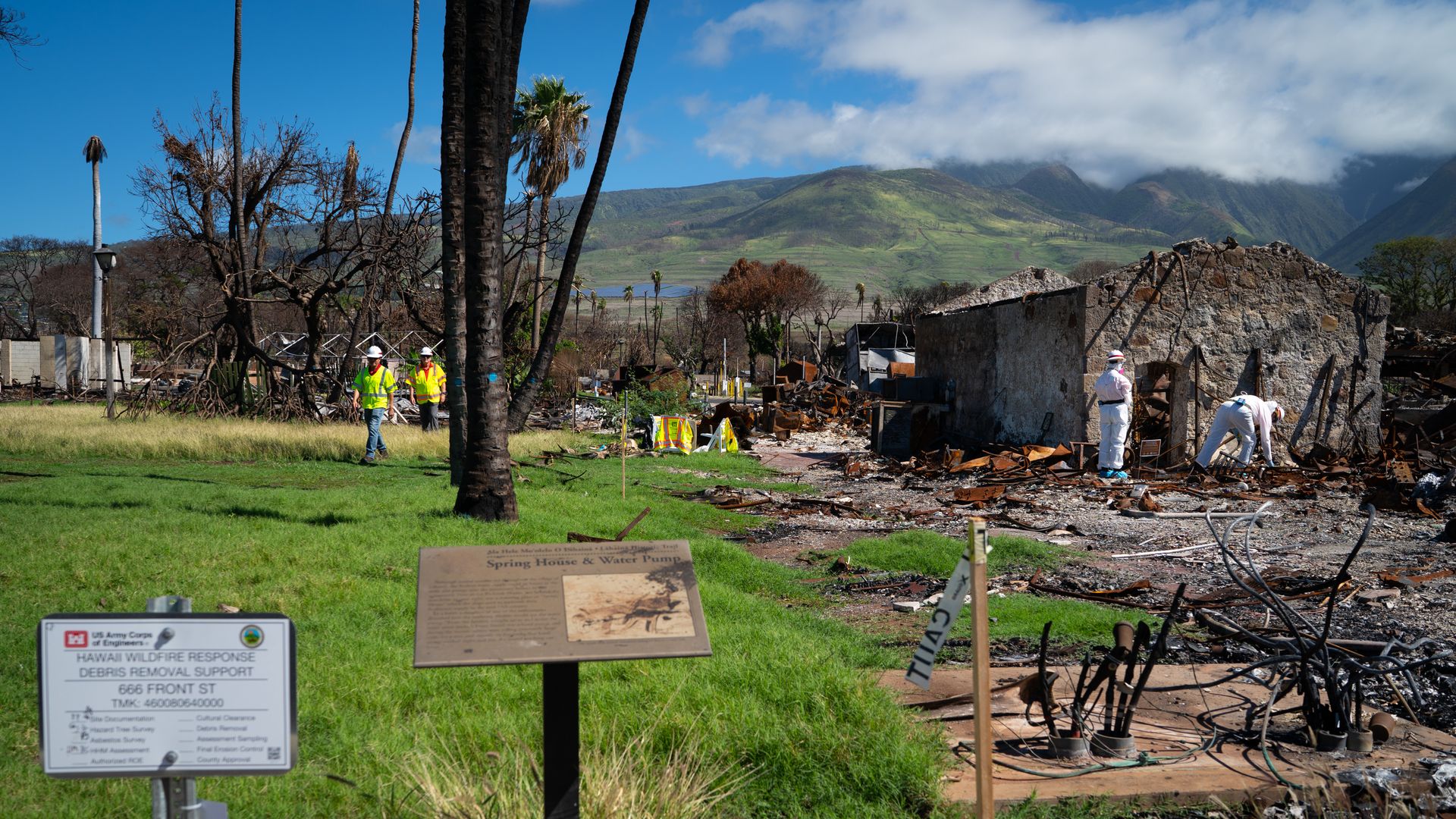
Workers pictured in Lahaina last January — five months after wildfires burned the town. Photo: Sarah L. Voisin/The Washington Post via Getty Images
HONOLULU — One year after fast-moving wildfires destroyed the town of Lahaina, Maui, there are visible signs of progress to rebuild.
- Lots have been mostly cleared of debris. The water and wastewater systems have been rebuilt. Permits for residents to start rebuilding have been approved. Even its iconic, 151-year-old Banyan tree seems to have survived.
Why it matters: But the wildfires that killed more than 100 people on Aug. 8, 2023, exacerbated a housing crisis and have forced local residents and leaders to confront bigger questions about how to rebuild on Maui.
Zoom in: Many people who lost their homes are still struggling with housing and money.
- More than a quarter out of an estimated 5,400 displaced families who lost their homes in the fire have left Maui, mostly due to a shortage of affordable housing and jobs.
- Many fire survivors are still not in permanent housing. A recent survey of fire survivors found that 6-in-10 had moved more than three times since losing their homes.
- The county is considering a proposal to convert half of the island's existing short-term housing rentals into long-term use to ease the housing crunch, after emotional public meetings.
Solving the problem will require finding the right balance with the island's dependency on tourism, which has fallen substantially in the past year.
- The number of monthly visitors to Maui in June fell 22% compared with a year ago, according to a new report.
Reality check: Maui has enough housing to meet local demand. The problem is that much of it is being used for high-paying visitors.
What they're saying: "The balance of housing being used to generate revenue and housing used to shelter our residents has been thrown off long before the fire," Maui County council member Keani Rawlins-Fernandez told Axios.
- Recent legislation to convert condos for tourists for locals, she said, "would try to maintain some sense of balance."
Between the lines: The exodus of residents — especially those who lost their homes in the fire — is likely to get worse before it gets better. The decline in tourism, along with a permanent place to live, leaves many without options.
- Local nonprofit and government agencies have set up programs to get people affected by the fires additional assistance, but some of those are running out of funds.
- Nearly half of Maui residents say their financial situation has worsened since the fire. Nearly half of the fire survivors said they are "very seriously" considering leaving Maui.
What's next: Many in the local business community are frustrated with the pace of rebuilding, such as Lahaina's iconic Front Street along the water, as priority has gone to housing residents displaced by fire, according to Honolulu Civil Beat.
- Some businesses that burned down, like Kohala Brewery and Ululani's Hawaiian Shave Ice, have started over elsewhere on the island, or in other locations.
But local leaders haven't yet drawn up plans for rebuilding the town — roads may need to be widened or moved to improve evacuation routes that trapped people trying to escape the fires.
- Front Street may need to be set back from the ocean due to rising sea levels.
- "Lahaina is still closed, but the rest of Maui needs visitors in order for us to survive," Ululani's co-owner David Yamashiro, whose store burned down, told Spectrum News.
