Record-warm oceans streak ends at 15 months

Add Axios as your preferred source to
see more of our stories on Google.
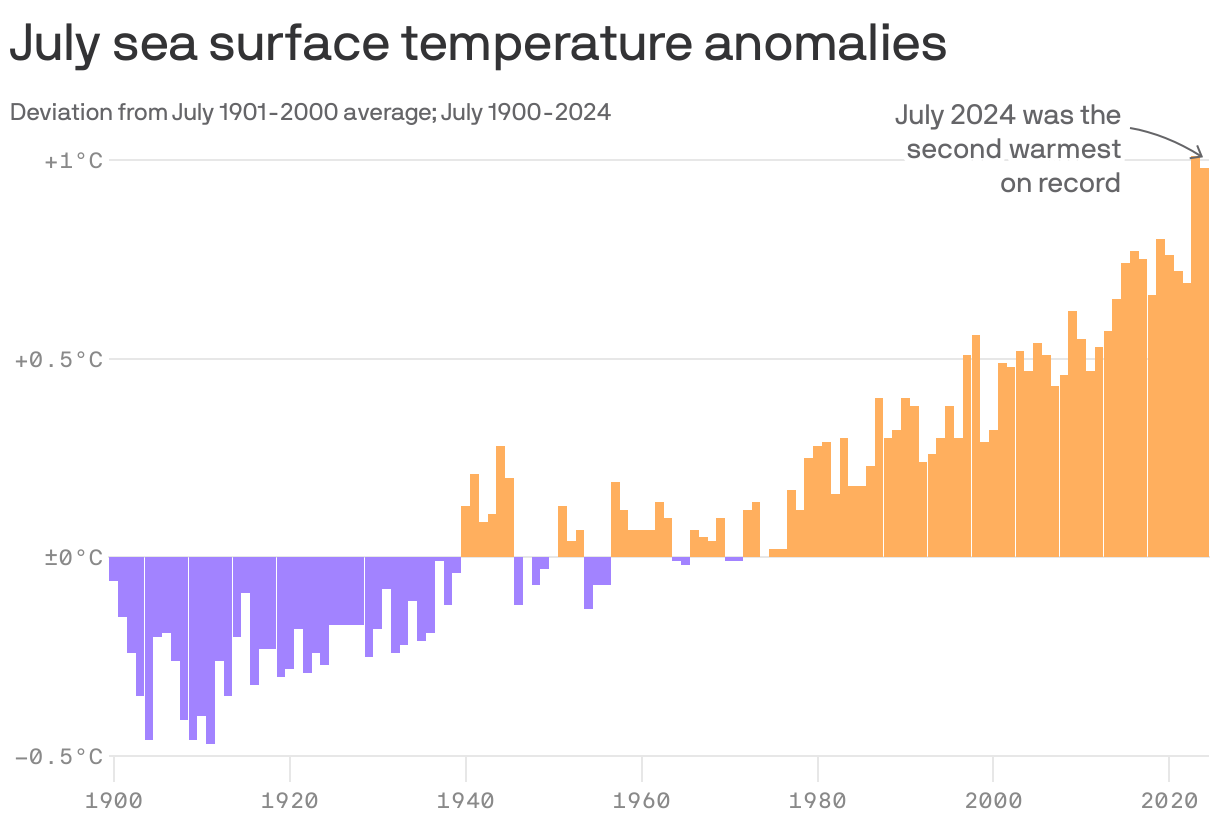
July may have been the warmest such month on record globally, but sea surface temperatures were no longer record warm, according to NOAA. Instead, they came in second, ending a 15-month stretch of record-warm months.
Why it matters: The streak has been a key feature of the spike in global warming during 2023 and into 2024.
- In addition to disrupting marine ecosystems, including through coral bleaching, warmer oceans provide more energy for hurricanes to develop and intensify.
- They also play a role in giving rise to precipitation extremes on land.
Zoom in: During July, global average sea surface temperatures were 0.98°C (1.76°F) above the 1991-2020 average, NOAA stated Monday.
- This was just below last July's record of 1.01°C (1.82°F) above average.
- The slow development of a La Niña event in the tropical equatorial Pacific Ocean is largely responsible for ending the heat streak at 15 months, given the presence of cooler-than-average waters in that region.
- Most other areas of the globe had unusually hot sea surface temperatures.
Yes, but: The amount of ocean heat building up in the oceans continues to climb, even with the slight ebb in sea surface temperatures.
- The oceans, including at depths as low as 2,000 meters, or 6,562 feet, absorb about 90% of the extra heat added to the climate from the human-caused buildup in carbon dioxide and other planet-warming pollutants.
Go deeper:
Global oceans see 14th-straight month of record-shattering heat
Warmest ocean temperatures in 400 years threaten Great Barrier Reef
