Cable crisis could nationalize local sports


Add Axios as your preferred source to
see more of our stories on Google.
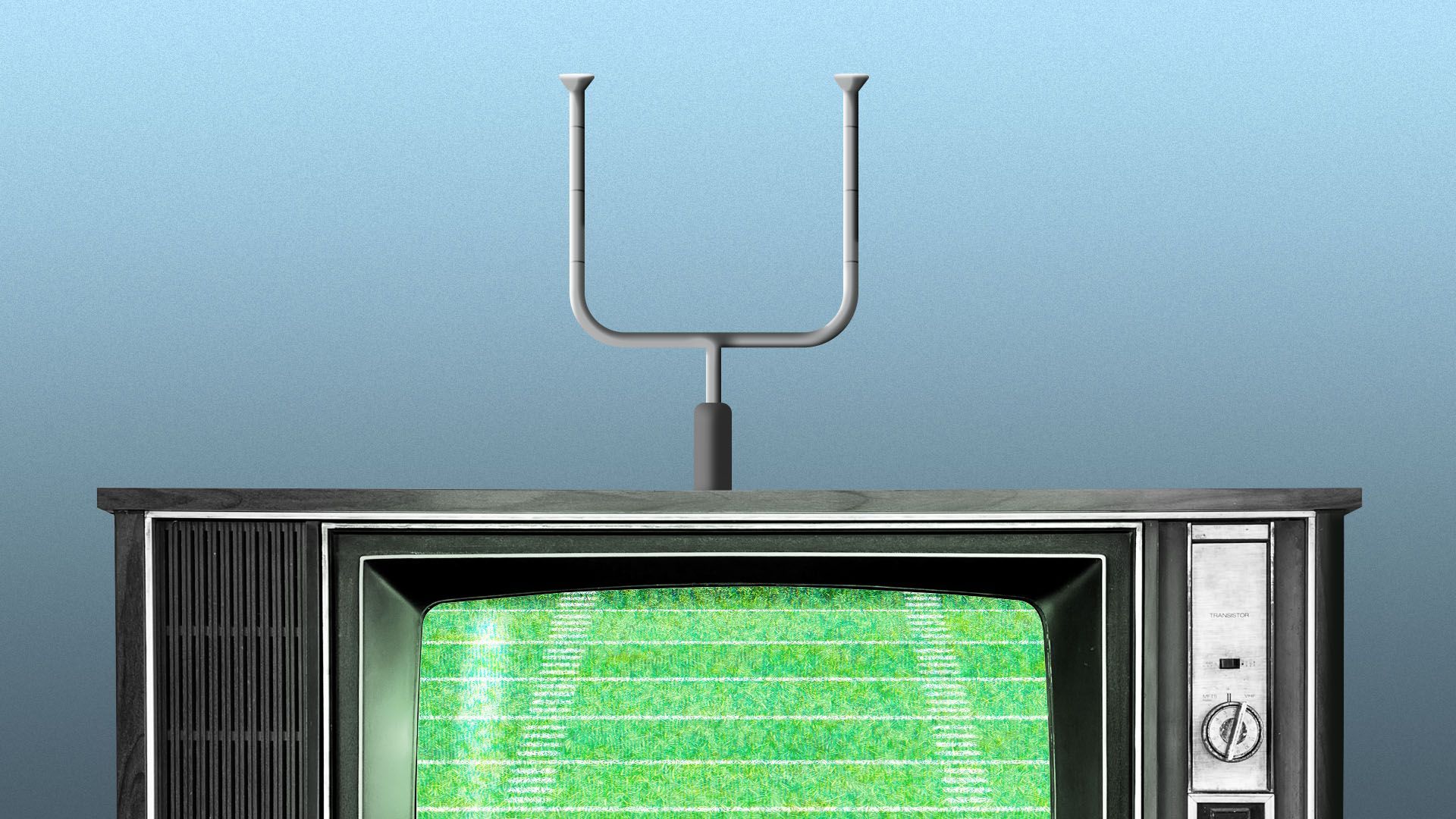
Illustration: Sarah Grillo/Axios
The heads of major national networks are eyeing local sports rights as part of their streaming and/or broadcast portfolios, executives told Axios. At the same time, the NBA and MLB are also eyeing ways to nationalize their local rights.
Why it matters: For decades, consumers were willing to pay for a bloated cable bundle full of regional sports networks (RSNs) whether or not they watched. Amid cord-cutting, that business model doesn't appear tenable.
- Nationalizing their rights could be the best path for survival.
The big picture: NBA and NHL teams that are leaving their RSNs have opted for a hybrid model that includes over-the-air broadcast stations and streaming, sacrificing revenue to try to reach more fans.
- That has allowed local TV giants like Scripps and Gray TV to compete for sports rights.
- While teams are striking their own local streaming deals to complement their new broadcast rights, league and network executives are starting to consider the opportunities around national streaming packages that can be customized down to the local level.
Driving the news: "We're in the local station business, and a lot of the strategy has pivoted to some combination of DTC [direct-to-consumer streaming] and local stations," Paramount Global co-CEO George Cheeks told Axios at IMG and RedBird's annual summit in London last week.
- "So we see that as a huge opportunity for our own stations, and we think that is a big piece of the future of our events," Cheeks said.
- Longtime NBC Sports exec Jon Miller said he expects teams will have to start moving their rights to more over-the-air platforms or create their own direct-to-consumer streaming opportunities.
- He warned that everyone, including leagues, teams and soon players, will have to "tighten their belt" now that the lucrative RSN model is being challenged.
Zoom in: ESPN chair Jimmy Pitaro told reporters last month at the network's Bristol, Connecticut, headquarters that he's interested in a national streaming package for the MLB, similar to what ESPN+ offers for the NHL.
- "If Major League Baseball is able to put together a group of teams, we would love to sit down with [MLB execs] Rob [Manfred] and Noah [Garden] and Kenny [Gersh] and do a larger deal that, quite honestly, would be simpler than having to do individual team deals," he said. "Team-specific deals are definitely on the table."
- The rights don't necessarily have to flow through ESPN's forthcoming streaming service, for now dubbed Flagship, but Pitaro said ESPN believes Flagship "should be part of the solution."
- ESPN already has partnerships with Boston-based NESN and Washington, D.C.-based Monumental that allow subscribers of those RSNs to link out directly to games from the ESPN app.
Zoom out: Leagues are starting to admit they need to make distribution changes, but those shifts will come at a cost.
- NBA commissioner Adam Silver told reporters last week that the league will spend the next six months evaluating their teams' local TV situations and hinted streaming will likely play a much larger role.
- In order to help bankrupt RSN group Diamond Sports, which holds rights to 13 NBA teams, stay afloat this year, Silver said they took "significantly" smaller fees. "You have sort of a broken RSN model," he said.
- MLB, meanwhile, has long believed that the RSN model can't be fixed. "We have an opportunity to make our sport more national," MLB commissioner Manfred told a crowd at a CNBC conference last week.
What we're watching: How quickly leagues can overhaul their local rights will depend on if Diamond can successfully emerge from bankruptcy later this year.
- The RSN group is the largest holder of local team rights. Although it's shed a handful since entering bankruptcy last year, Diamond has rights to 22 teams across the NBA and NHL and is under contract with nine MLB teams for next season.
- If Diamond cannot successfully exit bankruptcy, all of those teams would be free agents next year. It recently reworked its deal with its creditors to ensure it can operate through the coming NBA and NHL seasons.
- Amazon had initially agreed to invest $115 million in Diamond but recently backed out of that deal, further clouding Diamond's outlook.
Friction point: It will be hard to convince big market teams, many of which own their RSNs and are profitable, to pool their rights with others and share revenue.
- James Dolan, the owner of the New York Knicks and Rangers, blasted the NBA's new TV deal for eating away at local exclusive games.
- Some of these big-market teams have launched their own streaming solutions to grab viewers that have cut cable.
- YES and MSG Networks plan to launch a Gotham Sports App that will give New York sports fans access to local team baseball, hockey and basketball games for $42 per month, per The Athletic.
The bottom line: RSNs may face pressure from cord-cutting, but audience interest in live sports has never been higher. The challenge is figuring out how to monetize that interest in the streaming era.
