War and recession fears test Harris campaign's momentum


Add Axios as your preferred source to
see more of our stories on Google.
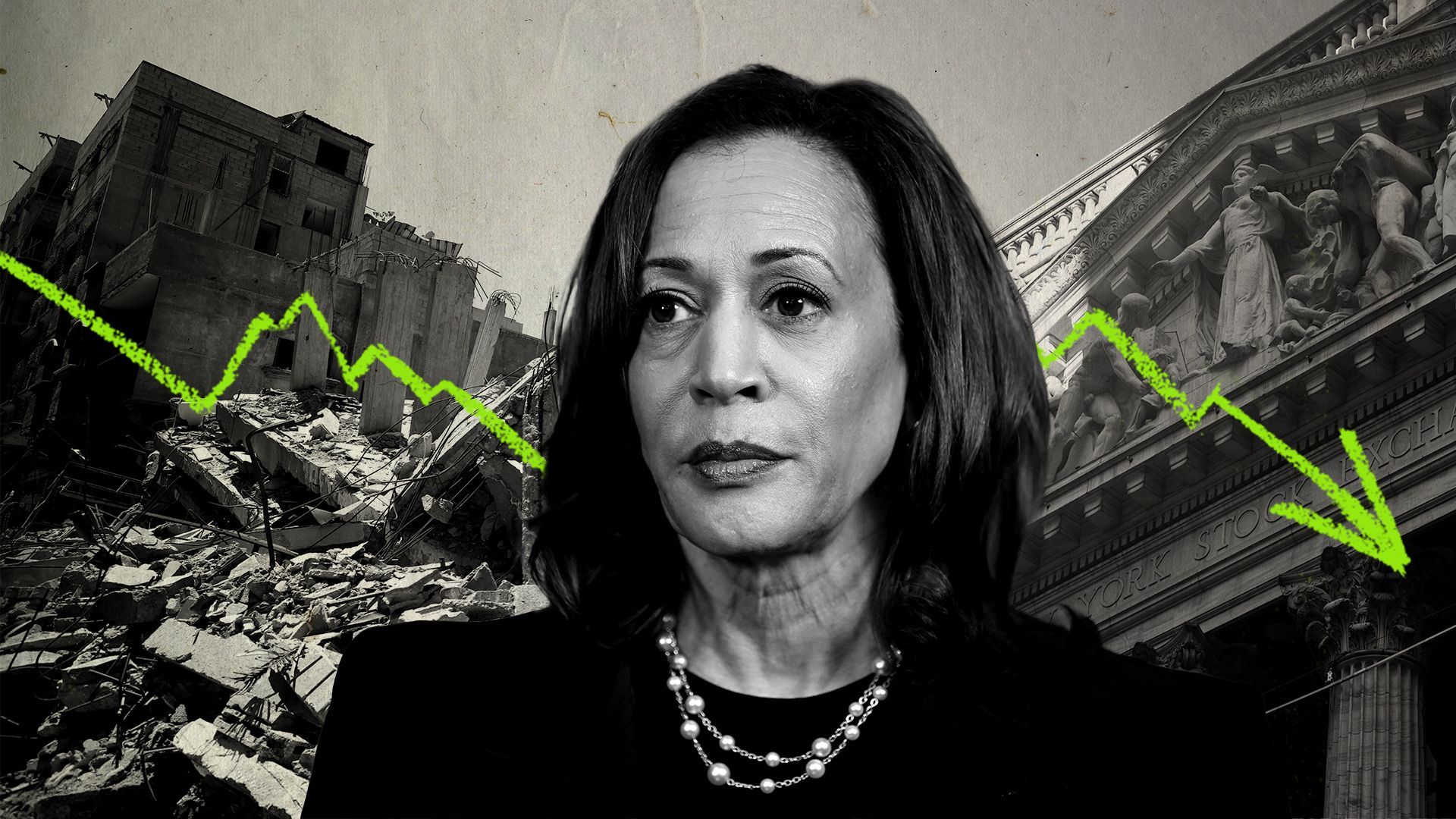
Photo illustration: Allie Carl/Axios. Photo: Anadolu, Spencer Platt/Getty Images & Bloomberg via Getty Images
The growing risk of twin calamities — recession and war — is suddenly looming over the U.S. election.
- Neither life-altering event is inevitable. But each could imperil Vice President Kamala Harris' ascendant campaign at a critical moment.
Why it matters: For the next 90 days, Republicans intend to treat Harris as the incumbent. That means saddling her with every crisis consuming the headlines, even when her role as vice president is murky or minimal.
Zoom in: Harris' unprecedented political honeymoon faced its first major test Monday when the stock market suffered its worst losses since 2022, driven mainly by a weakening U.S. economic outlook.
- Experts point to the Federal Reserve as the main culprit for holding interest rates high even as inflation has fallen, reflecting the central bank's political independence and fear of a resurgence in prices.
- A massive stock meltdown in Japan, where the surging yen is forcing investors to unwind huge trades, also fueled Monday's market panic.
- Still, Republicans were eager to shift blame to the White House — eyeing a rare opportunity to seize a news cycle dominated by tightening polls and speculation about Harris' running mate.
Driving the news: Top allies of former President Trump flooded social media with the phrase "Kamala Crash" and videos of Harris promoting President Biden's economic policies.
- "STOCK MARKETS CRASHING. I TOLD YOU SO!!! KAMALA DOESN'T HAVE A CLUE," Trump roared in one of at least eight Truth Social posts blaming Harris for the sell-off.
- Sen. JD Vance (R-Ohio), Trump's running mate, accused Harris of being "too afraid to answer media questions" and called for the kind of "steady leadership" that he said Trump provided in his first term.
Reality check: The stock market has long been Trump's favorite measure of economic success, but presidents — let alone vice presidents — typically don't have much influence over it.
- The S&P 500 is still up about 15% over the past year and over 30% since Biden's inauguration. Several of the market's steepest drops ever took place during Trump's presidency, in the early days of the pandemic.
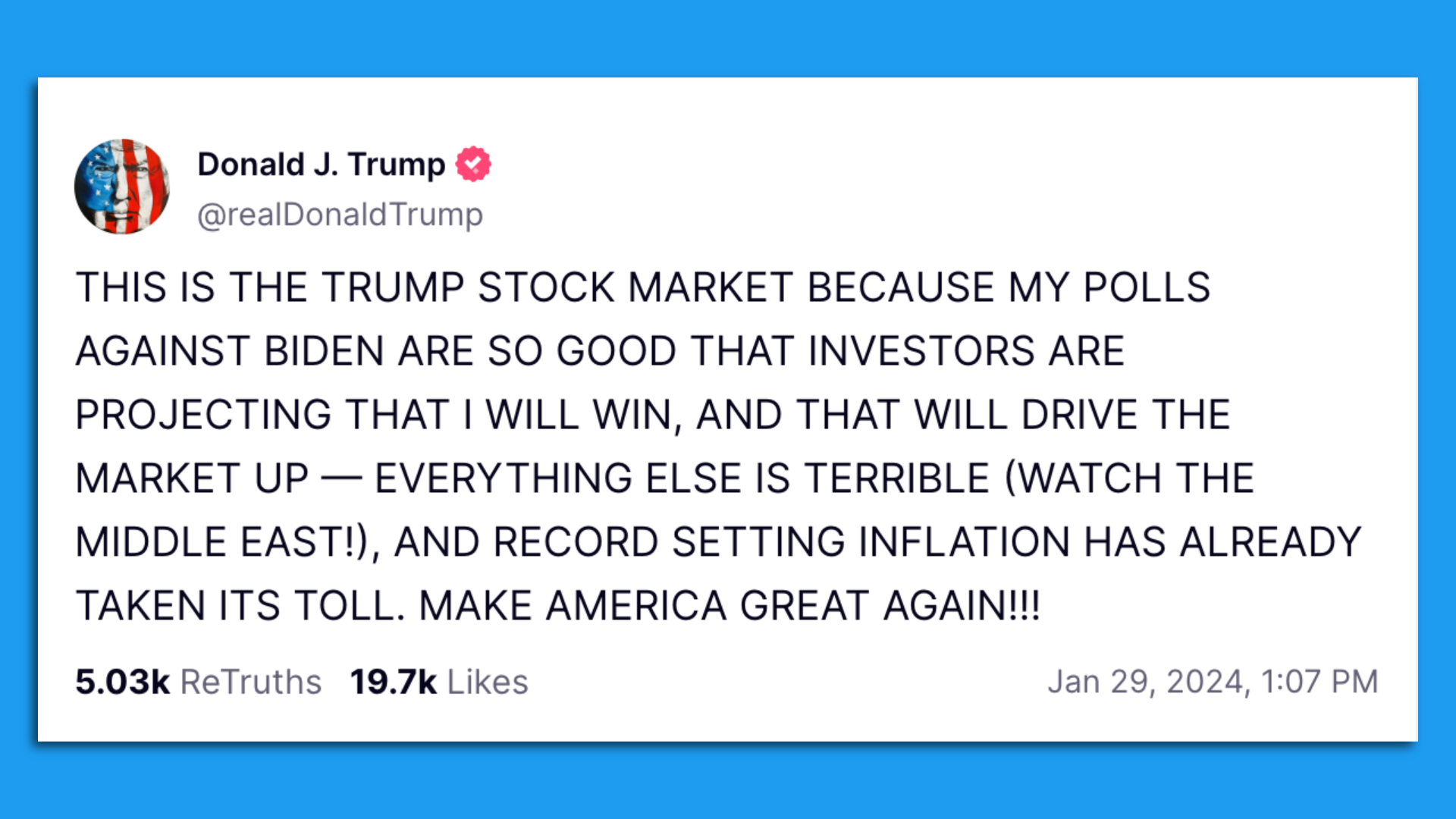
- This January, Trump tried to take credit for the market's record highs — claiming that investors were pricing in polls that projected he would defeat Biden in November.
Between the lines: Even when the job market was at its strongest, polls suggested that most Americans disapproved of Biden's handling of the economy.
- Early indications are that Harris hasn't inherited the full extent of Biden's economic baggage, but that could change with a few weeks of recession alarms.
- Harris hasn't commented on the market turmoil and appears focused on the future — beginning with a whirlwind tour of swing states with her new running mate, set to be announced Tuesday.
Zoom out: Unlike the stock market, a full-scale war in the Middle East would have direct ramifications for Harris' day job as vice president — and could potentially yank her off the campaign trail.
- Harris and Biden met with national security officials in the White House's Situation Room on Monday as the U.S. and Israel prepared for a major attack by Iran and Hezbollah in retaliation for Israel's recent spate of assassinations.
- Several U.S. personnel were injured in a rocket attack Monday at Al Asad air base in Iraq, which repeatedly has been targeted by Iran-backed militias since Oct. 7.
What they're saying: "Donald Trump botched the COVID response costing American lives, was the first president since Hoover to leave office with fewer jobs than when he entered, and had Americans terrified he'd tweet our way into another world war," Harris campaign spokesperson James Singer said in a statement.
- "No one is more prepared to lead our country than Vice President Harris, who has helped clean up Trump's mess and made meaningful progress on the issues that Americans care about most."
The bottom line: It's only August. The rapidly mutating 2024 election almost certainly has more twists in store.
