Axios Future of Defense
May 06, 2026

Hello, hello. How y'all doing?
- No Weezer references this week. Sorry.
👽 Situational awareness: Scout Space raised $18 million. The Series A was led by Washington Harbour Partners. The startup is building a 2,600-square-foot facility in northern Virginia.
Ready, set, go: A new C-390 fleet, In-Q-Tel's "forward-deployed" pivot and a $100 million deep-tech fund for New Mexico.
Today's newsletter is 1,641 words, a 6-minute read.
1 big thing: Bombs up, attention down
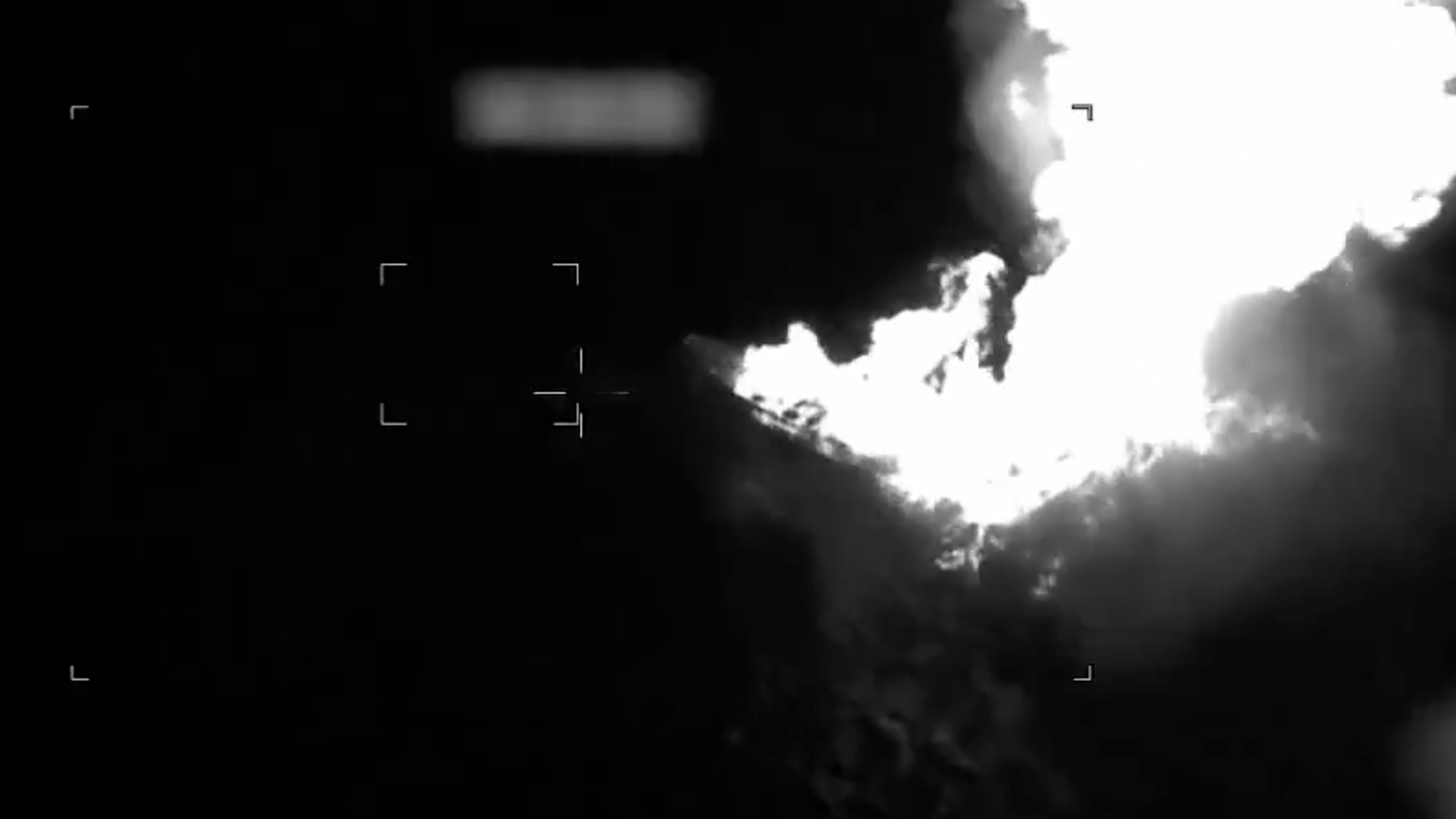
The U.S. has killed more than 180 people in eight months in the Caribbean Sea and Pacific Ocean. While the headlines have slowed, the Southern Spear strikes on alleged drug runners have not.
Why it matters: The Trump administration says it's reprioritizing security in "America's neighborhood." Critics say it's carrying out an indefinite campaign of extrajudicial killings.
- Public scrutiny of the operation, meanwhile, has largely faded.
Driving the news: Democrat displeasure surfaced briefly last week during back-to-back Hill testimonies from Defense Secretary Pete Hegseth, Joint Chiefs Chairman Gen. Dan Caine and Pentagon comptroller Jules Hurst.
- Sen. Jack Reed of Rhode Island dinged the strikes as "illegal."
- Sen. Tim Kaine of Virginia questioned the targeting criteria.
- And Rep. Bill Keating of Massachusetts described the operations as "pirating American values," predicated on "phony rationale" and requiring further investigation.
- Hegseth called Keating's remarks an "incredible array of false accusations."
Zoom in: The military continues to release virtually no information about who was killed, on what basis, or with what weapons.
- U.S. Southern Command made seven announcements about strikes in April, as late as the 26th. Three such disclosures were made in March. Only one strike was noted in January.
- The command publishes footage of individual airstrikes with boilerplate language summarizing the scene.
But we are beginning to learn a bit more.
- The New York Times reported a ramp-up of MQ-9 Reaper drones, made by General Atomics, and fixed-wing attack aircraft operating from El Salvador and Puerto Rico.
- The U.S. has used between $12–50 million in munitions to carry out the strikes, according to a Costs of War analysis. The same report found the U.S. spent upward of $4.7 billion on Southern Spear and Absolute Resolve, the latter culminating in the capture of Venezuela's Nicolás Maduro.
- "Costs will continue to mount as some naval assets and aircraft remain in the region and strikes continue," it reads. "Without greater accountability, the human toll will mount and U.S. citizens will continue to bear the financial cost."
Zoom out: There's no indication Southern Spear will wrap anytime soon. Carrying on through the long term could stretch resources.
- "If the administration wants to compete with China — that seems to be central — and wants to maintain this presence in the hemisphere and wants to be involved in a foreign conflict, then you need a bigger Navy," Mark Cancian, a senior adviser at the Center for Strategic and International Studies, told me.
- "Now, they are doing that, but that will take many years."
Go deeper: Trump 2.0 refashions U.S. military muscle
2. Fun with Deal Team Six

The director of the Pentagon's Economic Defense Unit has heard your "Deal Team Six" jokes. He thinks the nickname is both fun and fitting.
- "Economic warfare has been a part of all successful nations for thousands of years," George Kollitides, who's months into the job, told me at the Milken Institute Global Conference in California.
The big picture: Dealmaking is synonymous with national security. There is no missile production, no shipbuilding, no crazy venture valuations, no European rearmament and no American reindustrialization without it.
- Inside the EDU, markets and investments are a domain just like land and sea.
State of play: The unit is relatively new, mentioned first, perhaps, in a November acquisitions-reform memo. It was allocated hundreds of millions of dollars in the fiscal 2027 budget blueprint, which totaled $1.5 trillion.
- Kollitides said the money would be spent motivating defense contractor output, studying what the U.S. lacks, doing due diligence, hiring experts and conducting "sensitive activities" that he declined to further detail.
- "We're trying to accomplish a lot," he said.
- "POTUS has made it clear that he thinks taxpayers should be getting a good deal and that government should not just be giving the money away."
Zoom out: Trump 2.0's Pentagon is peppered with businesspeople. That includes Deputy Secretary Steve Feinberg, with whom Kollitides has worked closely for years, and Army Secretary Dan Driscoll.
- Up until last month, the list also included John Phelan.
What we're watching: Where and how American and Chinese economic influence collide. Washington for years outsourced manufacturing and labor. Meanwhile, Beijing extended its tendrils via the Belt and Road Initiative.
- "Our primary adversary has been successfully waging economic warfare against us for close to 30 years now," Kollitides said.
Go deeper: Defense contractors sidestep Trump chatter of partial ownership
3. UAE airlifters

The United Arab Emirates is buying 10 Embraer-made C-390 aircraft and is keeping the door open for another 10 in the future.
Why it matters: It's a big buy, and the first such deal for the Millennium transporter in the Middle East.
- Embraer's other customers include Brazil, Hungary, Lithuania and the Netherlands.
Driving the news: The contract with the UAE Air Force was announced Monday, coinciding with the Make it in the Emirates 2026 conference.
- The value of the deal was not disclosed.
Zoom in: Embraer said the C-390 will bolster the UAE's ability to shuttle troops and cargo, conduct airdrops, evacuate injured people and operate from unpaved runways.
What we're watching: Whether this ingratiates Embraer with American markets.
More from Axios:
Embraer teases counter-drone missions for Super Tucano
Northrop and Embraer join forces for KC-390 refueling boom
Israel sent "Iron Dome" system and troops to UAE during Iran war
4. Exclusive: The IQT shuffle

In-Q-Tel is refashioning its investment strategy to focus on a smaller number of big bets in key areas like autonomy, contested logistics and critical infrastructure, CEO Steve Bowsher told me.
The big picture: The venture capital firm, birthed from the CIA, helped elevate Anduril Industries and Palantir Technologies, among the splashiest companies in today's defense-tech frenzy.
- Its hundreds of other investments include drone-maker Neros, cyber specialist Twenty and remote-sensing company ICEYE.
Driving the news: Bowsher laid out his vision of "mission investing" and "forward-deployed conflict" yesterday at a private CEO summit out west.
- "The theme that this administration is driving — that we wholeheartedly support — is get tech on-mission faster," Bowsher told me ahead of his remarks.
- "The iteration cycle is so fast that what works in the Ukrainian conflict today doesn't work six weeks from now. There's this whole cat-and-mouse game," he added. "Everything is moving out to the edge."
State of play: The overhaul and its announcement are months in the making. It follows consultations with Defense Department, intelligence community and homeland security officials, as well as preliminary messaging that kicked off in January.
- There's consensus that "the U.S. government should be shifting a significant portion of its spend from the traditional primes, who are great at building small numbers of expensive, exquisite platforms, to a set of companies that are going to build a large number of cheap, unmanned things," Bowsher said.
- "There's going to be a couple of huge winners out of this space. Of that I have no doubt," he added.
- "If the next conflict is determined by whose junior military officer corps is more creative, more capable, more decisive, that's where the U.S. wins."
Yes, but: Around a dozen people were laid off or left as a result of the changes. In-Q-Tel employs approximately 180 people.
By the numbers: There were 290 defense-tech deals globally in 2025, valued at nearly $9.5 billion, Axios previously reported, citing Pitchbook data.
- The sector's acceleration began around 2021, but 2025 set a new pace.
5. Quick hits
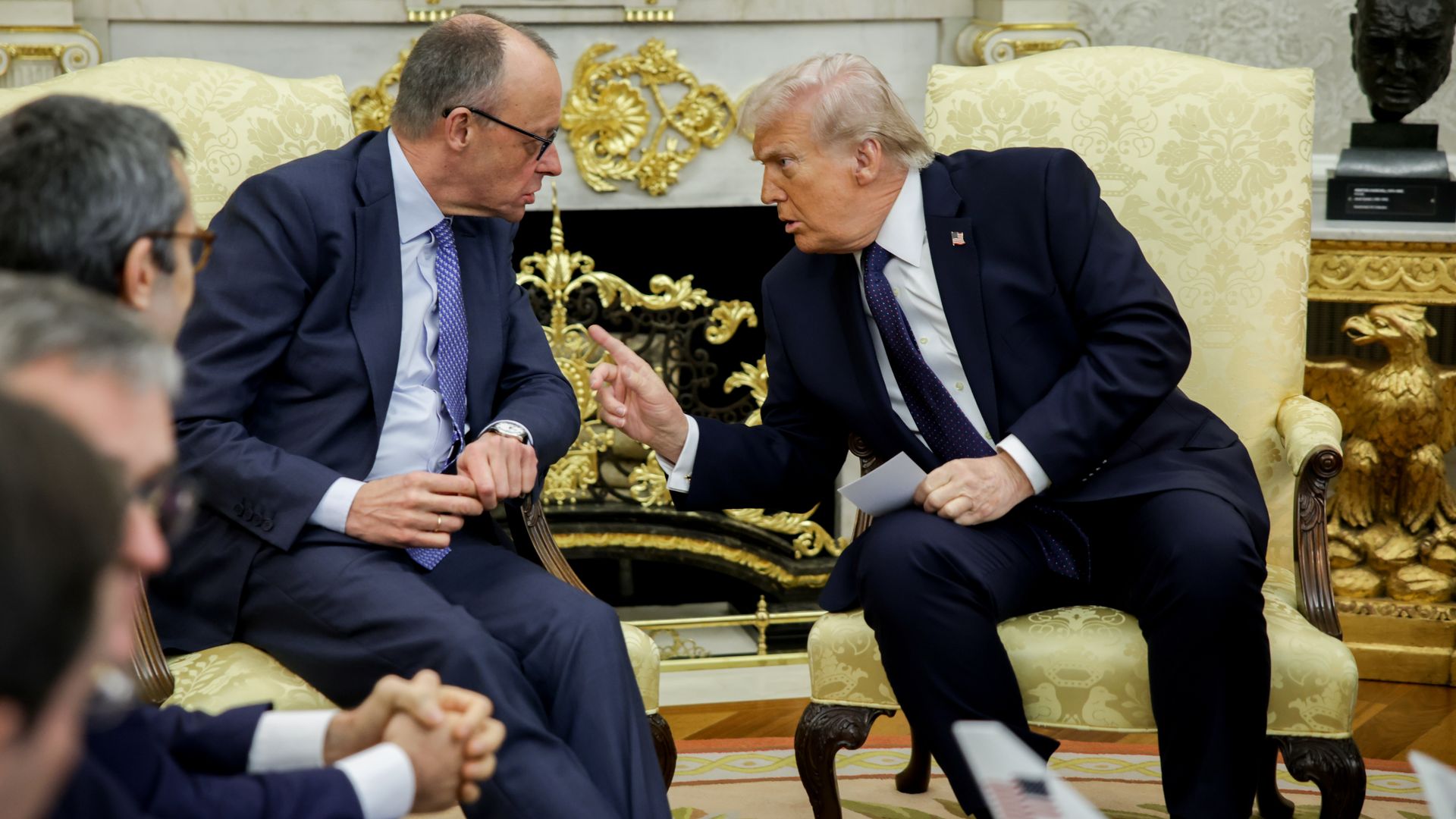
🇩🇪 The U.S. will withdraw 5,000 troops from Germany, the Pentagon said. Tens of thousands will remain.
- Why it matters: Germany plays an outsize role for American power projection, including training, maintenance and emergency medicine. (Also relevant: Chancellor Friedrich Merz's comments that the Iranian regime had humiliated Washington.)
- 💭 My thought bubble: Give it time. This isn't a done deal.
🗳️ Lt. Gen. Doug Schiess was nominated as the next chief of space operations, the Space Force's top uniformed leader. He currently serves as the deputy chief of space operations for operations at the Pentagon.
- Why it matters: Schiess would be the third person in this post in the service's six-year history.
- 💭 My thought bubble: Thomas Novelly at Defense One had the scoop! Read that, here. (He also has fantastic Nashville recommendations.)
🔥 Australia tapped Northrop Grumman to kickstart domestic solid-rocket motor manufacturing and touted an initial $91 million investment. The country is expected to make motors for the Guided Multiple Launch Rocket System at the Mulwala complex by 2030.
- Why it matters: The move "will ensure the Australian Defence Force has reliable, resilient access to the capabilities needed to defend Australia and our immediate region," according to defense industry minister Pat Conroy.
- 💭 My thought bubble: European rearmament. Canadian rearmament. Japanese rearmament. Australian rearmament?
🏦 Tierra Adentro Growth Capital raised $100 million for deep-tech infrastructure investments across New Mexico. J2 Ventures advised on the fund's creation and will continue to provide advice.
- Why it matters: "The Tierra Adentro fund has more companies seeking investment than it can currently handle — with no marketing to date," J2 co-founder Alex Harstrick said in a statement.
- 💭 My thought bubble: Tectonic has more details, here.
6. Check this out

The Defense Department is laser posting. Again.
Why it matters: The second Trump administration is becoming the loudest proponent of directed-energy weapons in recent memory.
Zoom in: I spy AeroVironment's LOCUST. Plus, a quadcopter getting zapped.
What we're watching: Asked if DOD can make lightsabers, the DoWCTO account replied with the eyes emoji (👀).
- So, yes?
Go deeper: Aurelius aims to be America's one-stop laser shop
Shoutout to Dave Lawler for editing and Matt Piper for copy editing.
👋🏼 Thanks, as always, for reading and sharing. Tell your friends to subscribe here.
Sign up for Axios Future of Defense