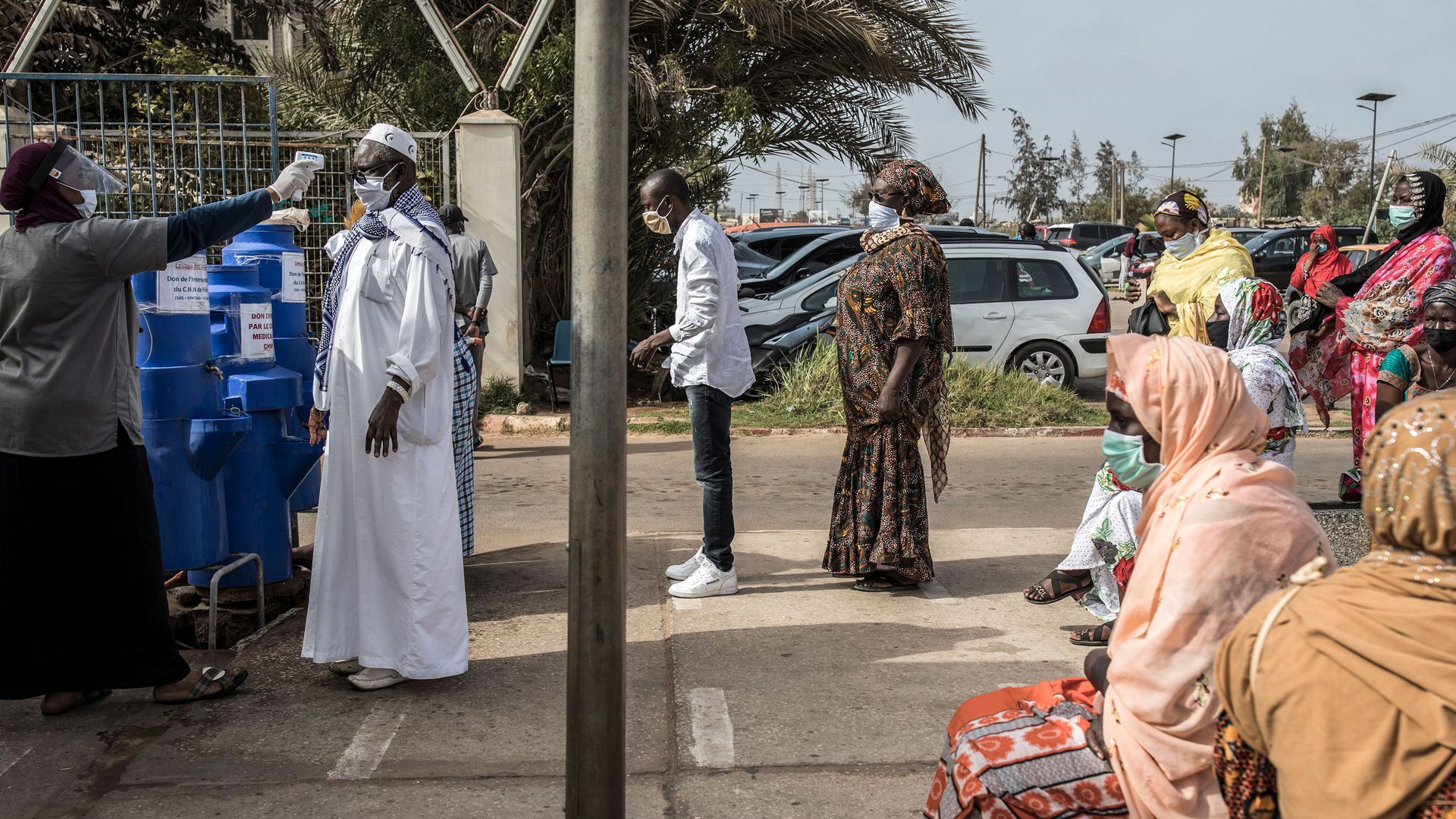
South Korea and Hong Kong recorded no new local cases yesterday, and New Zealand and Australia also approached that milestone.
The big picture: Beyond those poster children of effective COVID-19 responses (Germany and Taiwan also qualify), there are a number of other success stories with lessons to offer the world.
There are three truly existential threatsto humanity: pandemics, climate change and nuclear weapons.
Why it matters: COVID-19 has rightfully absorbed the world's attention and will for months to come. But the last treaty constraining the world’s largest nuclear arsenals is set to expire in nine months.
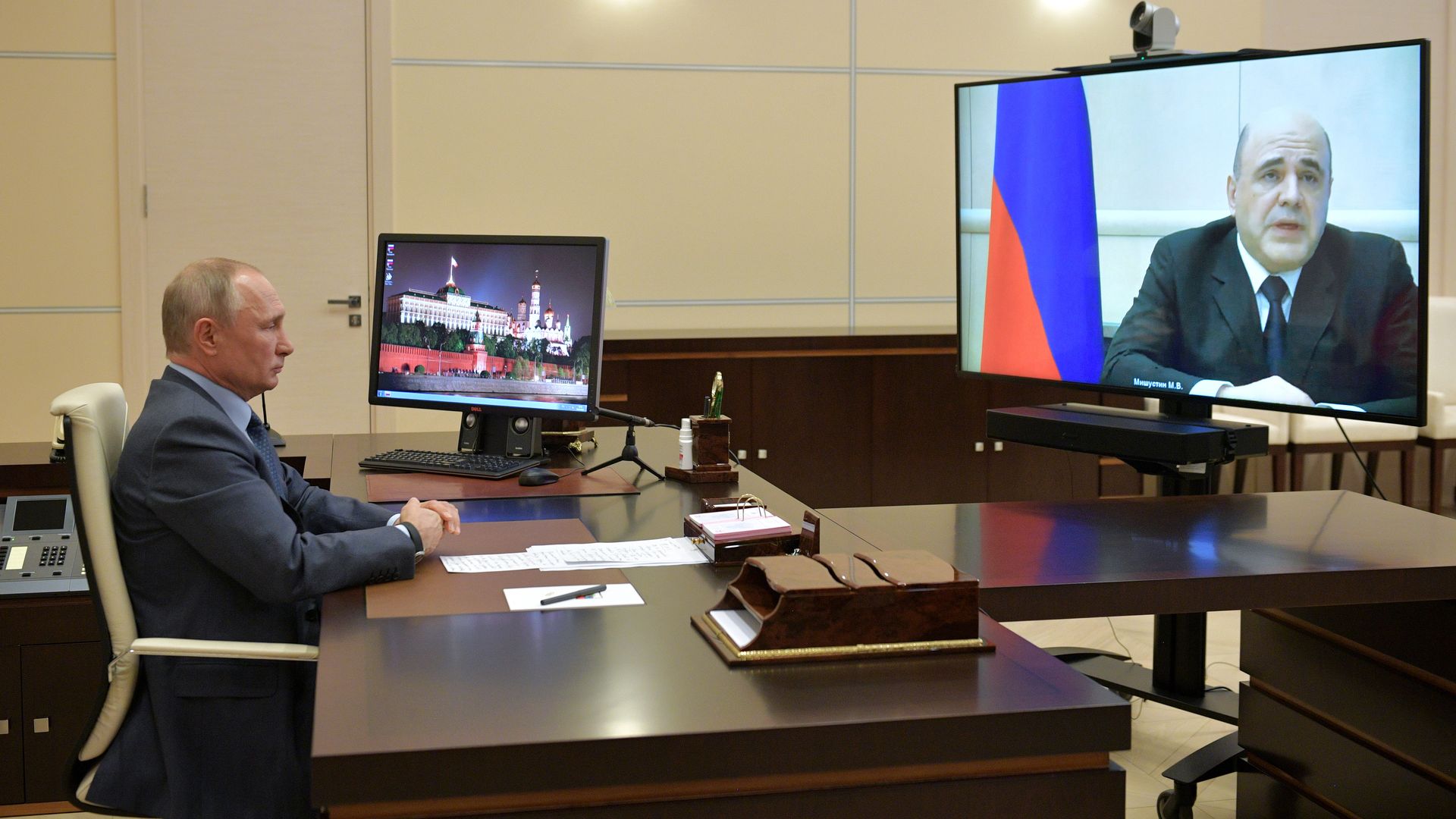
Russian Prime Minister Mikhail Mishustin told President Vladimir Putin in a televised meeting on Thursday that he had tested positive for the novel coronavirus.
Why it matters: Mishustin is one of just a handful of major elected world leaders to test positive for the virus. U.K. Prime Minister Boris Johnson tested positive in early April and was forced to step away from his work for several weeks, including for a stint in intensive care.
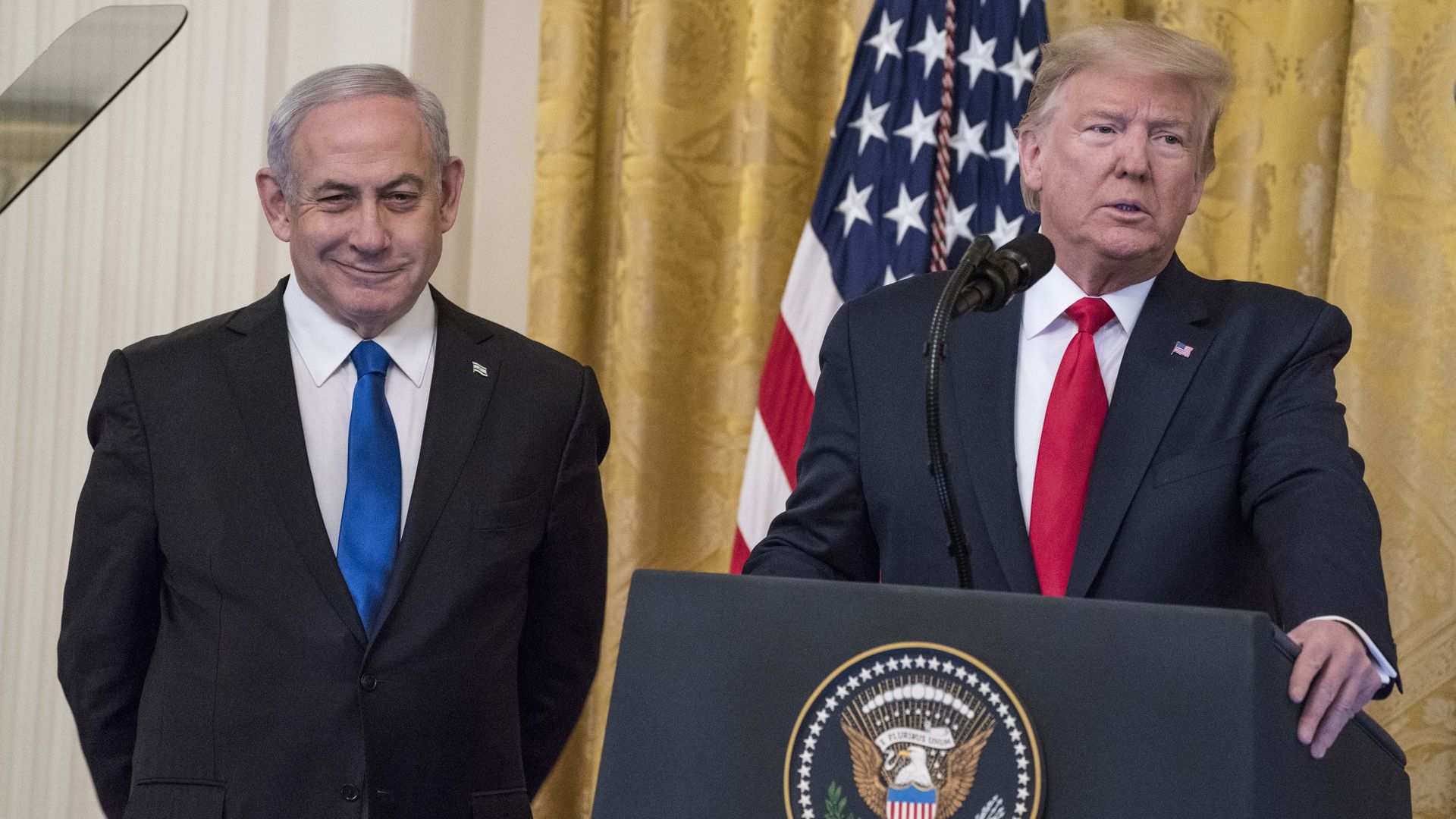
The Trump administration has told Israel it won't support annexations in the West Bank unless Israel agrees to negotiate over a Palestinian state and fully endorses President Trump's Middle East peace plan, U.S. and Israeli officials tell me.
Why it matters: Prime Minister Benjamin Netanyahu has promised to move ahead with annexations, but the White House is urging him not to do so without accepting its broader package, which calls for a Palestinian state after several criteria are met.
Returning to the podium Thursday for the first time since recovering from the coronavirus, Prime Minister Boris Johnson said he could confirm that the U.K. is "past the peak of this disease."
Why it matters: The U.K. has Europe's second-highest death toll, behind Italy, and the number of active cases continued to tick upwards last week even as it fell in other hard-hit countries like France and Spain. With the situation now improving, Johnson said he'll announce a "comprehensive plan" next week for re-opening the economy, schools and transportation.
The vast majority of people across 34 countries surveyed by Pew Research Center say it's important for women to have the same rights as men — but majorities in many countries still believe men should take priority when jobs are scarce.
The big picture: Opinions vary widely across the countries as to whether men currently have better lives than women, with majorities in countries like France (70%), Sweden (62%) and the U.S. (57%) believing that is the case, but pluralities in Poland, Russia, Nigeria and India believing men and women have equally good lives.
Initially hailed as a savior of Brazil's economy as stock prices climbed to record highs after his election, President Jair Bolsonaro now has the country's markets on a crash course.
What's happening: Brazil's benchmark stock index has been one of the world's worst performers, down by nearly 30% in its local currency so far this year, and lower by 46% in U.S. dollar terms.
Over 4 million workers have applied to Italy's national welfare agency to get €600 payments (roughly $650) for wages lost due to the country's stay-at-home order, the agency tweeted on Wednesday.
The big picture: Italy plans to phase out of the world's longest-running coronavirus lockdown next week. As factories and construction sites reopen, the country will have to keep infections down to prevent another novel coronavirus spike.
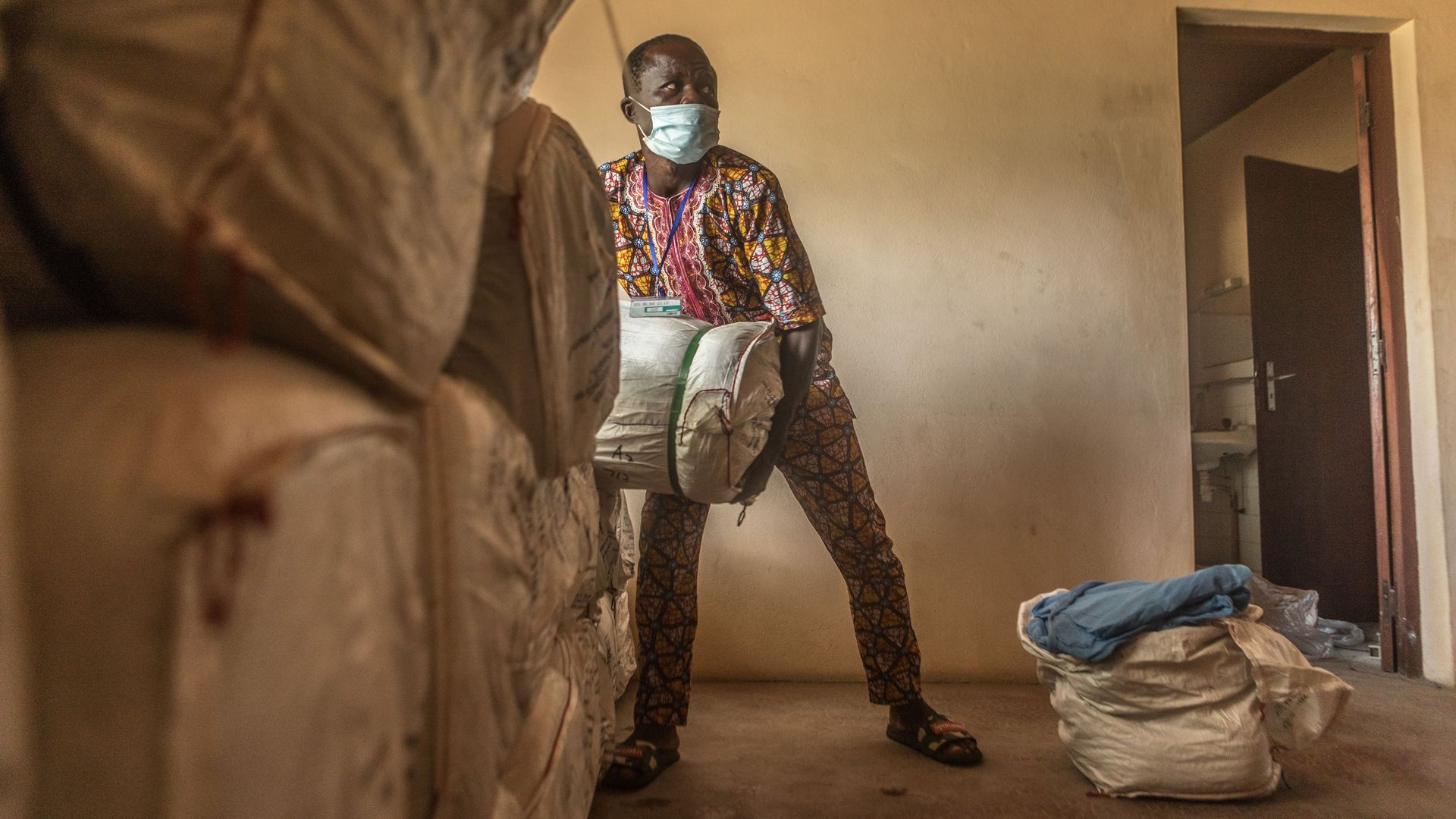
One worst-case scenario caused by the novel coronavirus is that the number of malaria deaths in sub-Saharan Africa could double, World Health Organization Director-General Tedros Adhanom Ghebreyesus said.
The big picture: Roughly 380,000 people living in countries observed by WHO's African Region died from malaria in 2018, the latest year that data from WHO is available.
Sen. Tom Cotton (R-Ark.) suggestion that Chinese students should not be allowed to study science and technology in the United States has set off a debate about espionage and immigration.
What's happening: Under the Trump administration, the DOJ's China Initiative has targeted intellectual property theft at America's research institutions.
China will likely be a major issue in the 2020 presidential election, as the coronavirus crisis continues to paralyze large swaths of the U.S. economy. But even without a global pandemic ramping up the geopolitical stakes, Democrats and Republicans have long disagreed over how to deal with the world's most populous country.
Why it matters: Debates from decades ago still echo in today's partisan divide over China policy, revealing entrenched attitudes that complicate America's search for a sustainable relationship with Beijing.
JD.com, a Beijing-based e-commerce giant, filed confidentially for a Hong Kong stock float that could raise at least $2 billion, per multiple reports.
Why it's the BFD: It reflects how Hong Kong's 2018 decision to relax listing rules on dual-class shares is paying off by bringing local giants back home, with JD.com looking likely to follow NYSE-listed Alibaba Group's giant Hong Kong stock sale from last November.