Thursday's world stories

Theresa May fights for her Brexit deal, and her political future
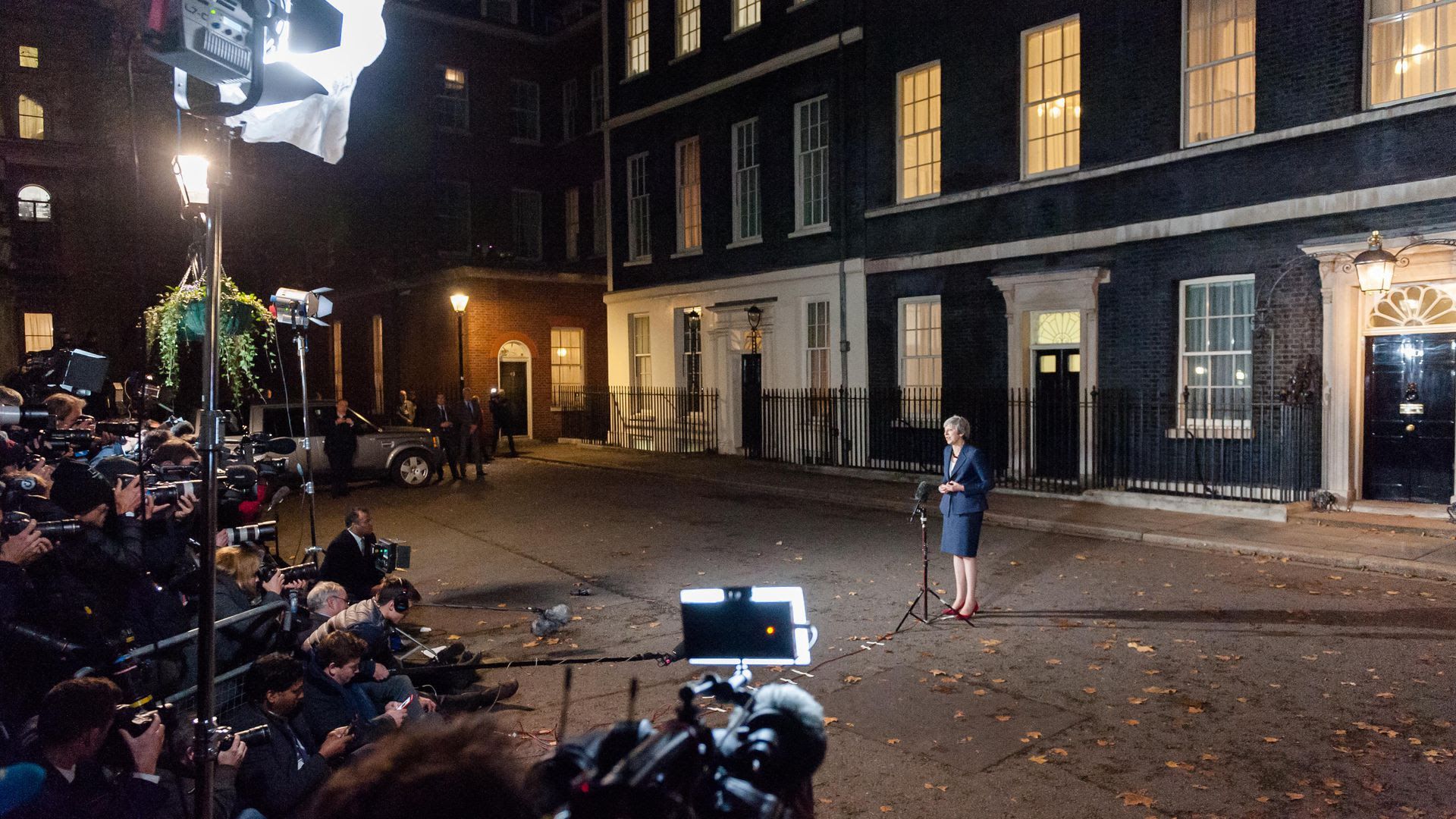
British Prime Minister Theresa May has set a clear line in the face of letters of no confidence and denunciations from her own party: she won’t relinquish her post unless it's taken from her.
Driving the news: May must stare down a rebellion in her party just to secure the opportunity to present a deal that has every chance of failure in Parliament. If she fails, no one really knows what comes next.
Theresa May vows to "see this through" on Brexit deal
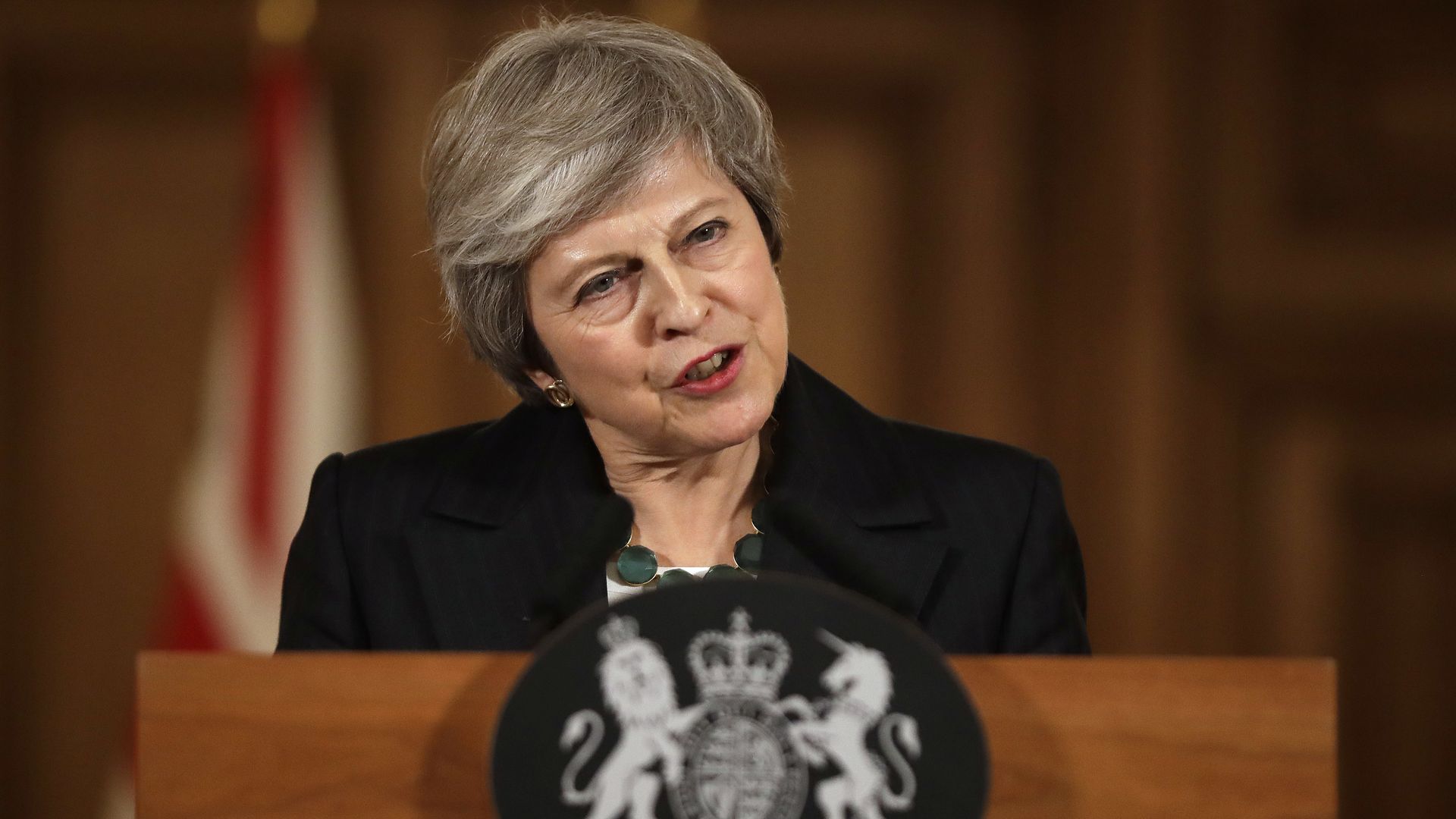
British Prime Minister Theresa May vowed to "see this through" when asked how she would handle a potential vote of no confidence over her proposed Brexit deal during a Downing Street press conference on Thursday.
The backdrop: She told reporters that she believes "with every fiber of [her] being" that her Brexit deal is the best course for the U.K. to leave the EU, despite a difficult day that saw the resignation of two of her Cabinet members and a possible challenge to her leadership of the Conservative Party from members who favor a "hard Brexit."

Theresa May’s premiership faces reckoning over Brexit deal
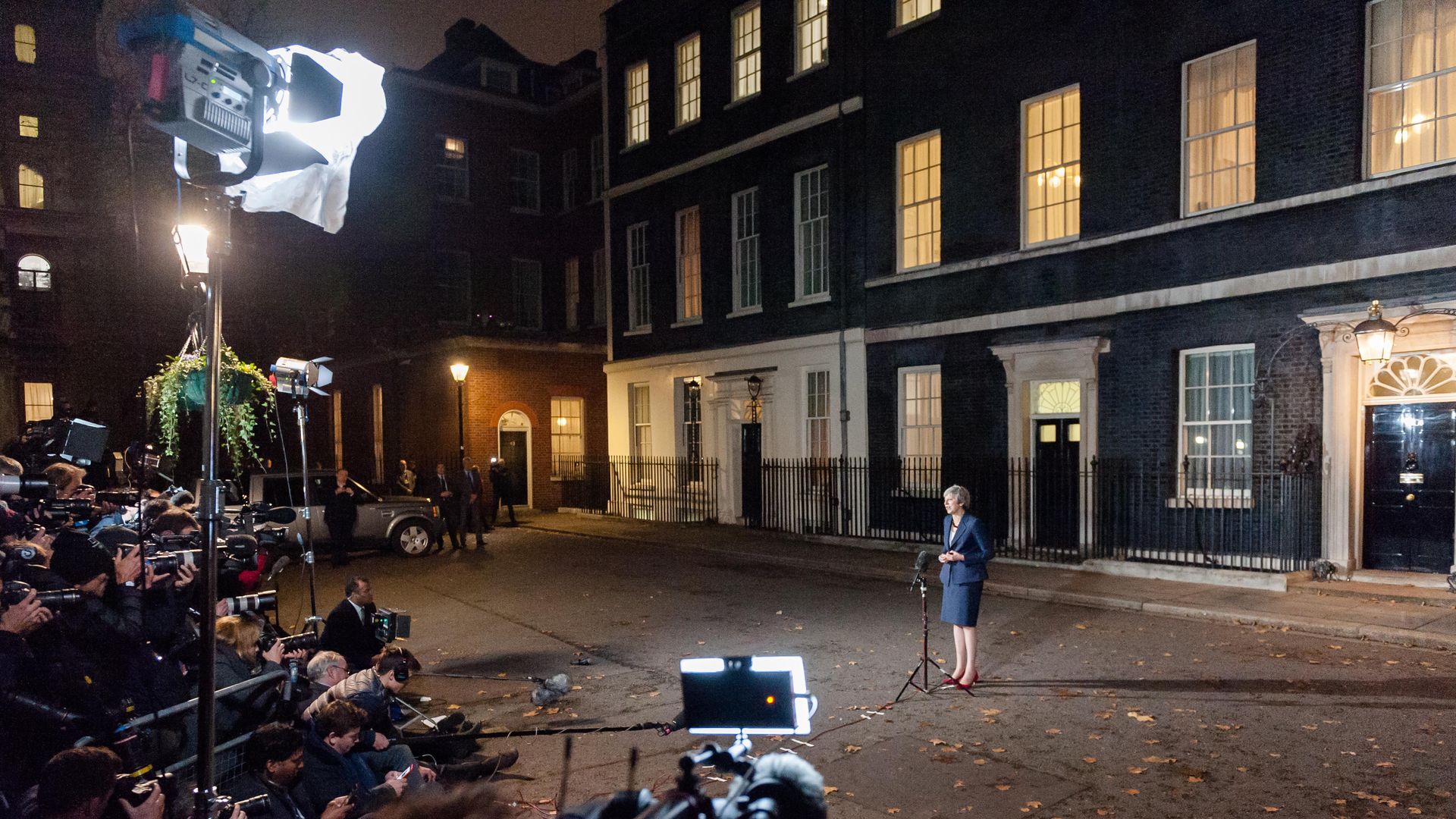
British Prime Minister Theresa May lost two of her Cabinet ministers Thursday morning — crucially, Brexit Secretary Dominic Raab — as well as a host of junior ministers and could face more resignations by day's end after her proposed Brexit deal was met with backlash from members of her Conservative Party.
The state of play: May took questions for nearly three hours during a hostile back-and-forth in the House of Commons this morning, as members of Parliament demanded answers about her negotiated deal. But Jacob Rees-Mogg, the chair of the arch-Brexiteer European Research Group, submitted his letter of no confidence to force a vote on May's future as party leader, which would be triggered if 48 Conservative MPs submit such documents.
Trump renews attacks on Mueller investigation after midterms
President Trump renewed his attacks on the credibility of special counsel Robert Mueller's investigation in a series of Thursday morning tweets, using his oft-repeated refrain of "WITCH HUNT."
The inner workings of the Mueller investigation are a total mess. They have found no collusion and have gone absolutely nuts. They are screaming and shouting at people, horribly threatening them to come up with the answers they want. They are a disgrace to our Nation and don’t care how many lives the ruin. These are Angry People, including the highly conflicted Bob Mueller, who worked for Obama for 8 years. They won’t even look at all of the bad acts and crimes on the other side. A TOTAL WITCH HUNT LIKE NO OTHER IN AMERICAN HISTORY!
Why it matters: Mueller's office has not issued any new indictments since July 13, when 12 Russian military intelligence officers were charged with conspiring to interfere in the 2016 presidential election. Now that the midterms are over, Mueller is again expected to begin filing indictments, according to CBS News. Roger Stone associate and former Infowars contributor Jerome Corsi said Monday he expects to be indicted by Mueller for perjury.
Dominic Raab resigns as Theresa May's Brexit Secretary
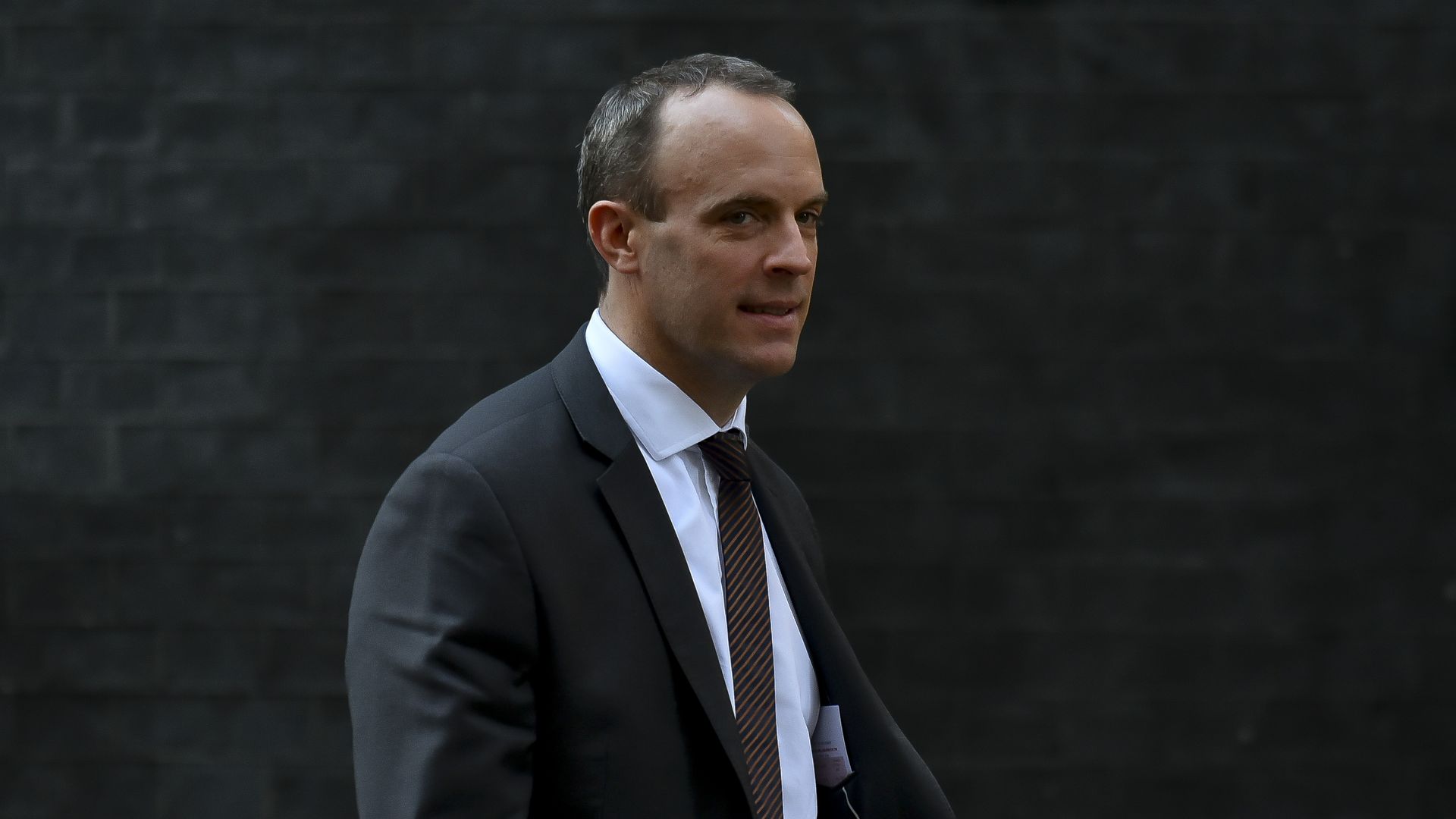
Dominic Raab, British Prime Minister Theresa May's Brexit Secretary, resigned Thursday — the morning after May's Cabinet approved a draft agreement for Brexit.
Why it matters: Raab is the second Brexit secretary that May has lost over her plans for the United Kingdom's exit from the European Union, and his departure is almost certain to kick off even more Cabinet resignations. While it's been forecasted for months, it seems likely that now is the time that Brexiteers in May's Conservative Party may finally make a move against her premiership.
The case against Mueller target Roger Stone
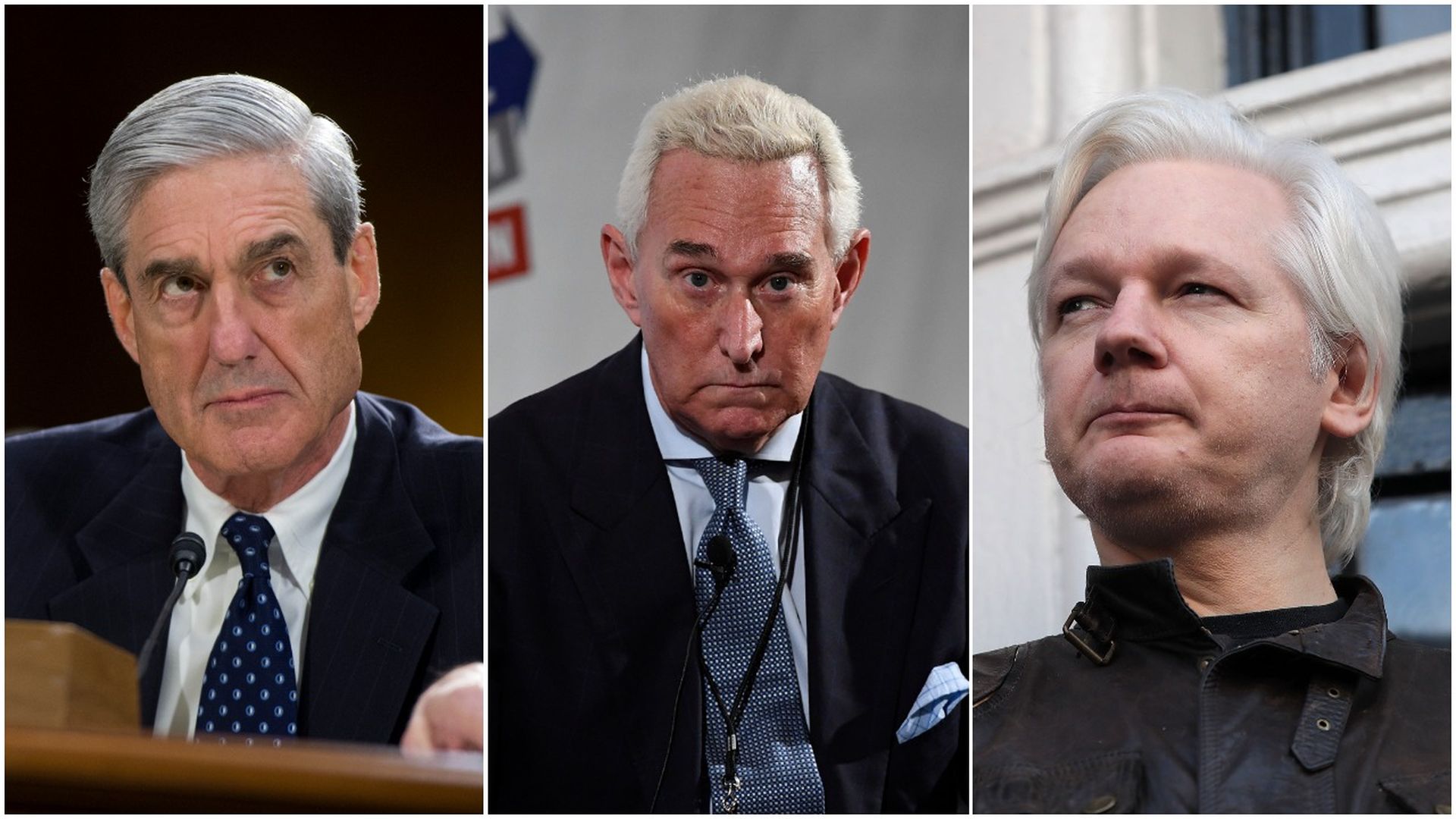
Roger Stone has long been reported to be under the microscope of special counsel Robert Mueller for possibly acting as an intermediary between the Trump campaign and WikiLeaks, which in 2016 published thousands of Democratic emails hacked by Russian intelligence operatives.
Driving the news: NBC News has obtained text messages that appear to show radio host Randy Credico sending Stone updates about WikiLeaks founder Julian Assange’s plans to release Clinton campaign emails, days before they were published. Stone has claimed he never spoke directly to Assange, and that Credico, who writes in the text messages that he is best friends with Assange’s lawyer, functioned as his intermediary. Mueller is reportedly investigating whether Stone has tried to intimidate Credico, who as a witness to the investigation has contradicted Stone's version of events, per the WSJ.
Theresa May's Cabinet backs draft Brexit agreement
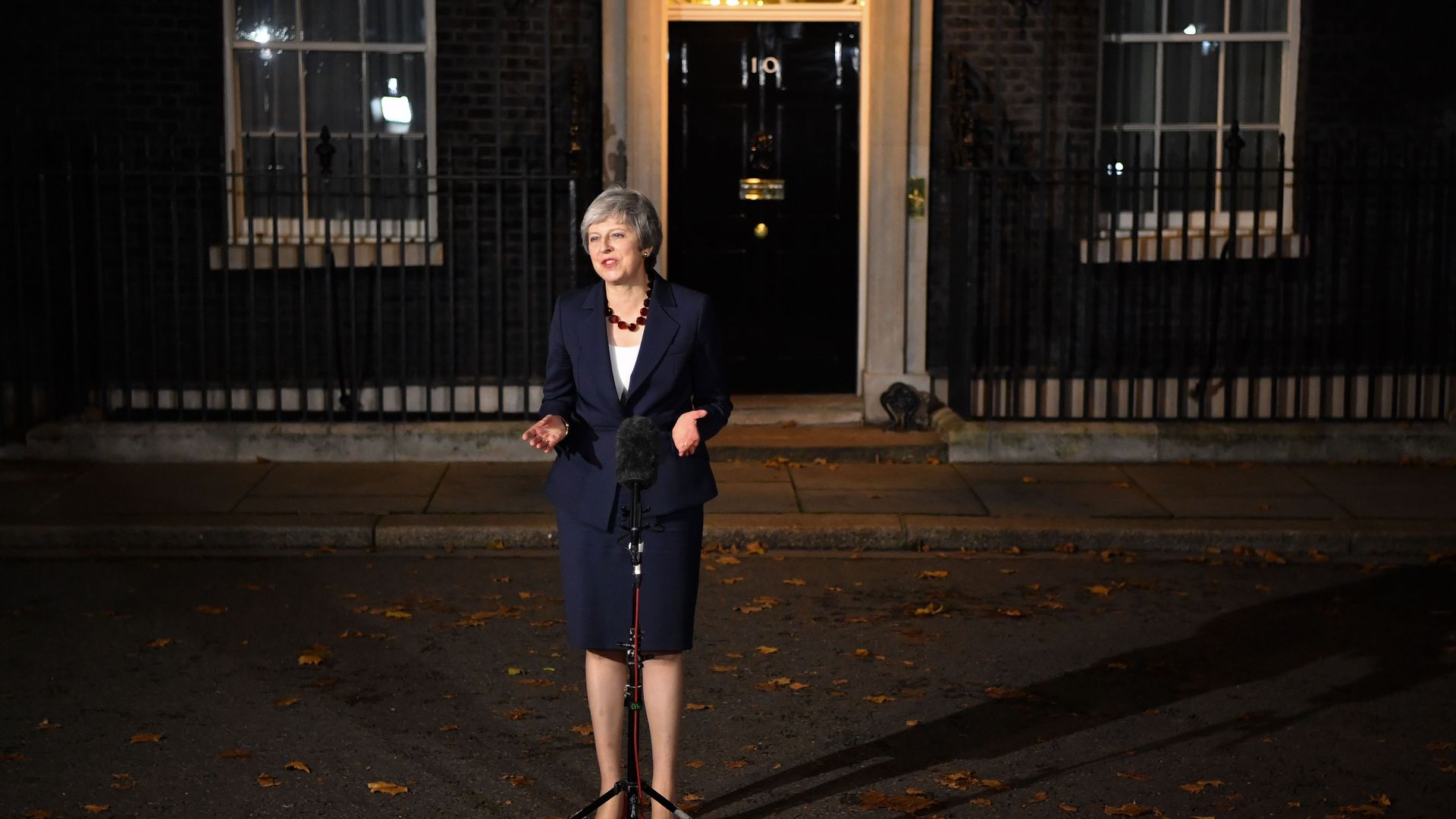
British Prime Minister Theresa May announced Wednesday on Downing Street that — after a marathon five-hour meeting — her Cabinet has agreed to back a draft Brexit agreement between U.K. and EU negotiators.
What to watch: May will provide details on the agreement before the House of Commons on Thursday, calling it "a decision which is in the best interests of our entire United Kingdom." But while she has managed to get her Cabinet on board, it will be more difficult to convince the entirety of the House of Commons, including "hard Brexiteers" in her own Conservative Party who are threatening the possibility of a no confidence vote against May over the deal, according to the BBC's Laura Kuenssberg.
Go deeper: Read the draft agreement here

As powers compete for its allegiance, Papua New Guinea could cash in

A geopolitical contest is playing out in one of the world’s least developed countries —Papua New Guinea (PNG). In this case, geopolitical competition, often the source of war and strife, may be a force for good.
What's happening: Leaders from 20 countries will arrive in the island nation this weekend for the start of the annual APEC summit, a club of nations located in the Pacific region. The summit provides a backdrop to an ongoing tug-of-war over the country’s allegiance: before representatives from the U.S. and neighboring Australia touch down in Port Moresby, PNG’s seaside capital, Xi Jinping will arrive on Thursday for the first ever official state visit by a Chinese president.
Russian military interfered with GPS signals during NATO war games
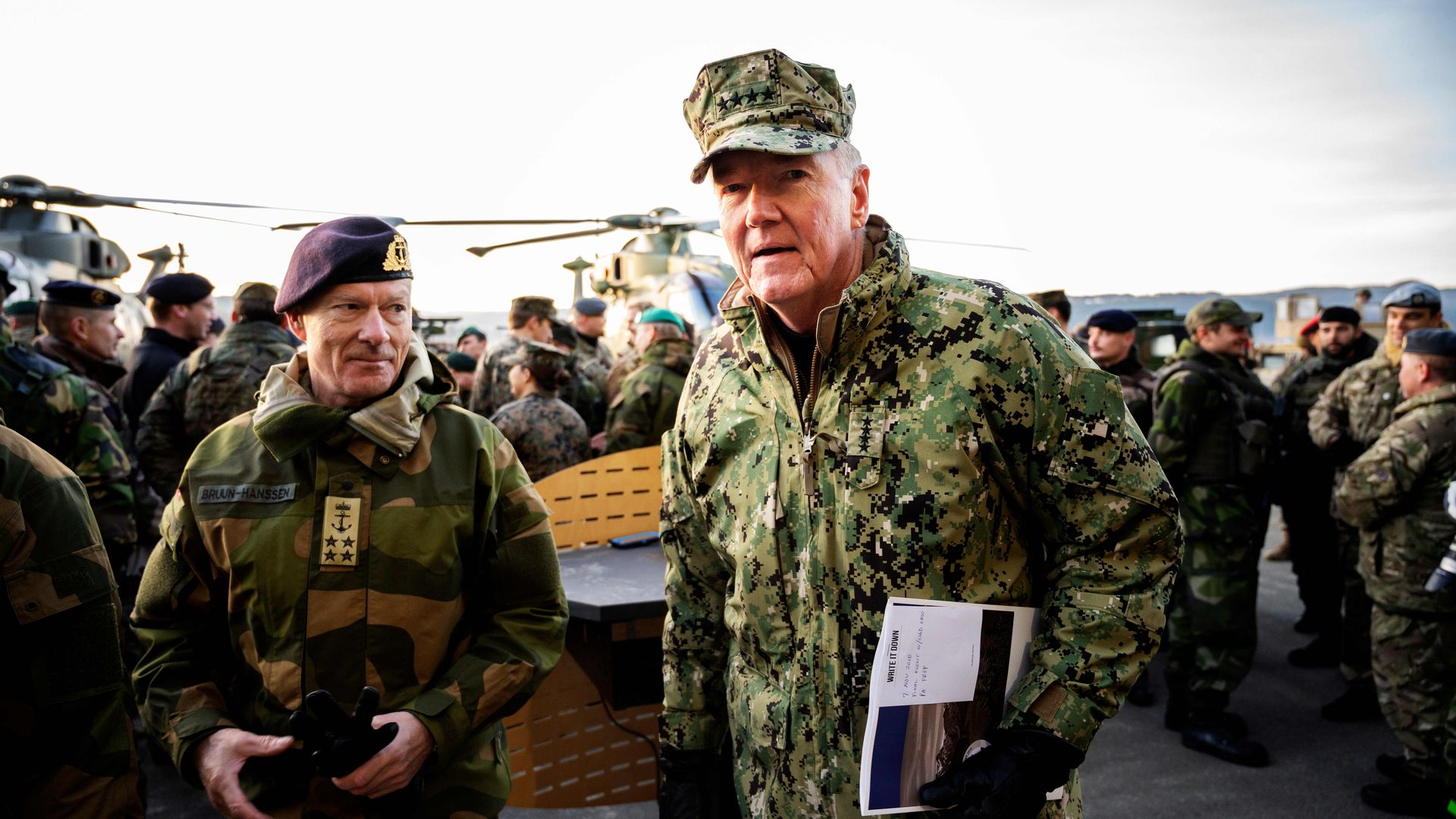
The Russian military interfered with GPS signals during NATO's Trident Juncture, a massive military exercise in Norway that involved 50,000 alliance and U.S. personnel, a NATO spokesperson told CNN.
The big picture: Held between Oct. 25 and Nov. 23, it was NATO's largest military exercise since the Cold War. It came about a month after Russia held its own massive war games, which Kremlin spokesman Dmitry Peskov said was in response to "the current international situation, which is often quite aggressive and unfriendly to our country."
Israeli defense minister quits over Gaza ceasefire
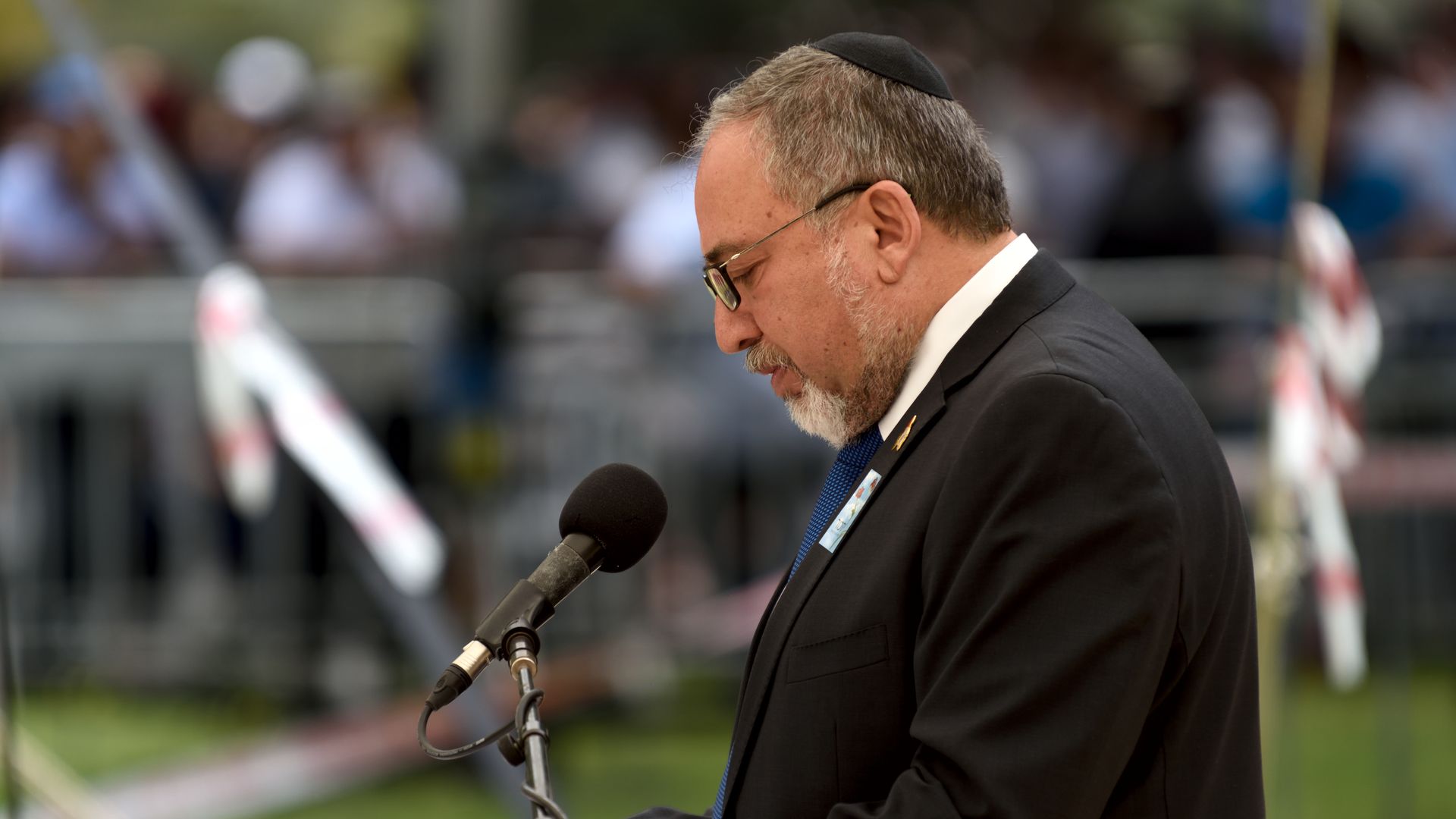
Israeli Defense Minister Avigdor Lieberman has resigned over his opposition to a ceasefire with Palestinian militants in Gaza, slamming the move as "surrendering to terror," reports the BBC.
The big picture: Lieberman's resignation follows two days of violent clashes in Gaza that left eight people dead. Lieberman also said all members of his party, Yisrael Beiteinu, would quit the government coalition, leaving Prime Minister Benjamin Netanyahu with a slight majority in the Knesset, Israel's parliament, and the looming possibility of a snap election if other coalition members should quit as well, according to Haaretz.
U.S. faces worst national security crisis in decades, commission warns
U.S. national security is in greater peril “than at any time in decades,” according to a new report from a panel of top national security experts tasked by Congress with reviewing the state of American national defense.
Why it matters: The U.S. has entered into an era of "great power competition" with China, which poses an unprecedented challenge to U.S. dominance both economically and militarily, and with an increasingly assertive Russia. According to the report from the National Defense Strategy Commission, American military superiority has deteriorated to the point where the U.S. “might struggle to win, or perhaps lose, a war against China or Russia.” As U.S. superiority fades, the authors write, the likelihood of war rises.