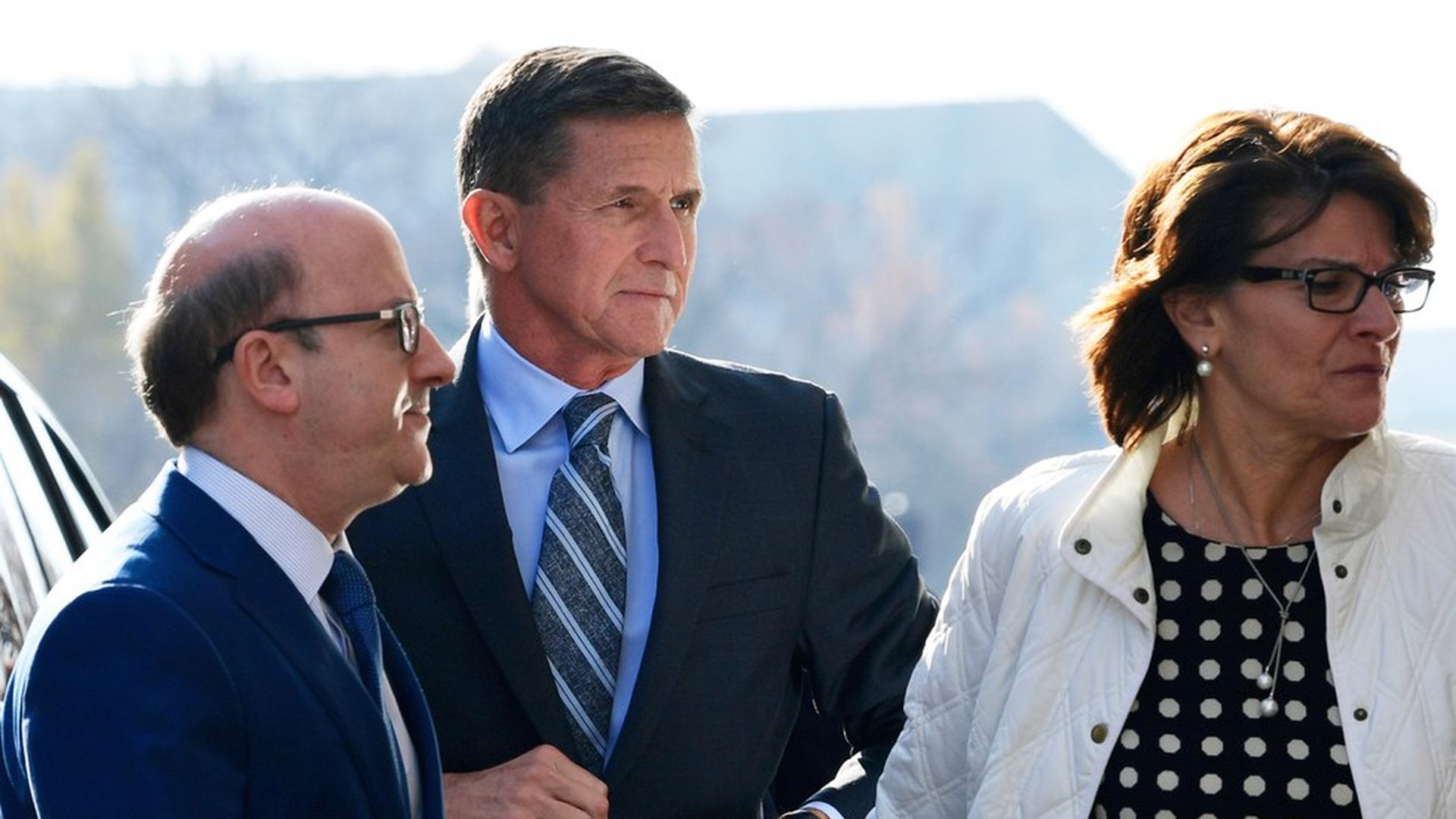
Emails among top officials in President Trump's transition suggest that Michael Flynn was in contact with top members of the transition team before and after he had a phone call with Russian ambassador Sergey Kislyak discussing sanctions, the New York Times reports, citing emails "provided or described" to the paper.
Why it matters: Flynn has been portrayed "as a renegade who had acted independently in his discussions" with Kislyak, the Times says. But the emails suggest that after President Obama applied sanctions to Russia, the Trump team was strategizing a way "to reassure Russia." They believed retaliation between the U.S. and Russia would overshadow Trump's victory, per the Times.
President Trump's former national security advisor Michael Flynn pleaded guilty during a court appearance this morning to "willfully and knowingly [making] false, fictitious and fraudulent statements and representations" to the FBI regarding his conversations with Sergey Kislyak, Russia's then-ambassador to the United States. Flynn's plea came under Special Counsel Robert Mueller's expanding investigation into Russian interference in the 2016 election.
Why it matters: With his plea, Flynn agreed to cooperate fully with Mueller's investigation. In a development that could have far-reaching implications as Mueller's probe moves forward, Flynn admitted in his plea that senior transition officials directed his contacts with Russian officials in late December of last year.
North Korea's launch of a missile that appears capable of striking anywhere in the U.S. is an early test of the Trump administration's relationship with China, and the goodwill reinforced during President Trump's November meetings with General Secretary Xi Jinping in Beijing. But even if Xi wants to help, there are no good options.
Reality check: China doesn't actually have that much leverage with North Korea, and until the regime is interested in negotiations, even more help from China isn't going to help the U.S. solve the crisis.