The crypto establishment is making headway in some corners of Latin America, where adoption would appear poised to accelerate.
Why it matters: The U.S. is the financial capital of the world. But there is a future in which crypto adoptees in Brazil and Argentina, for example, drive the utility of digital assets farther than consumers in developed nations have.
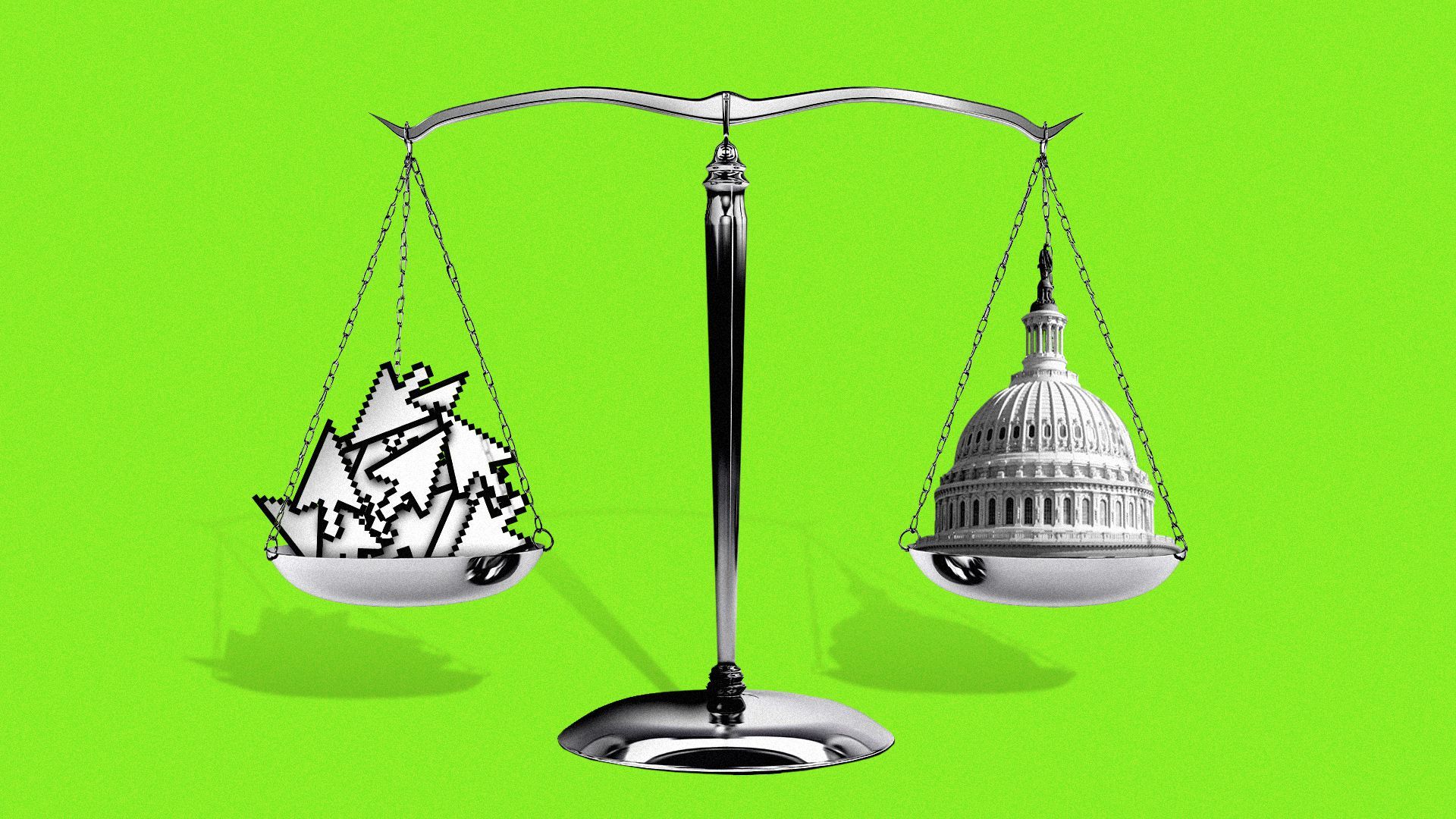
Meta's plan to acquire a small virtual-reality firm — and the Federal Trade Commission's lawsuit to stop the deal — has become a Rorschach test for influential figures in both D.C. and Silicon Valley.
The big picture: Washington regulators see a monopoly move, but for much of the industry, it's just everyday capitalism at work.
An Australian court ruled that Google is a search engine and not a publisher of a defamatory article, siding with the tech giant in a lawsuit on Wednesday morning local time.
The big picture: It's a win for Google in a years-long defamation suit in which the company argued that article hyperlinks "only communicate that something exists ... and it is the operator of the webpage who communicates the content to the user."
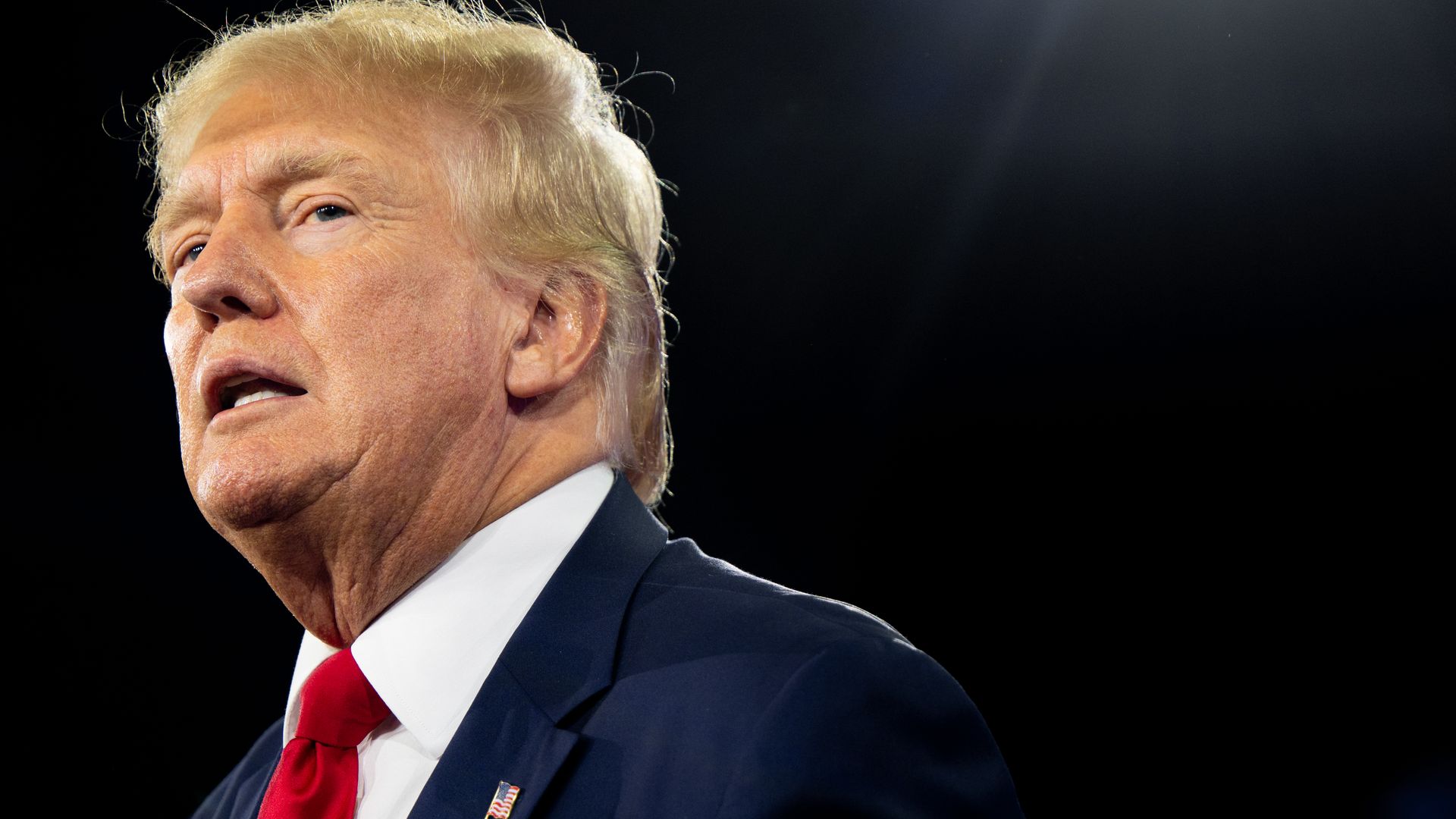
Digital World Acquisition Group (DWAC), the blank check company that plans to merge with the parent company of former president Donald Trump's social media app Truth Social and take it public, has requested an extension from the SEC to file its second-quarter earnings results.
Why it matters: The success of Truth Social and its parent Trump Media and Technology Group (TMTG) rides on the financial health of its parent company and its SPAC.
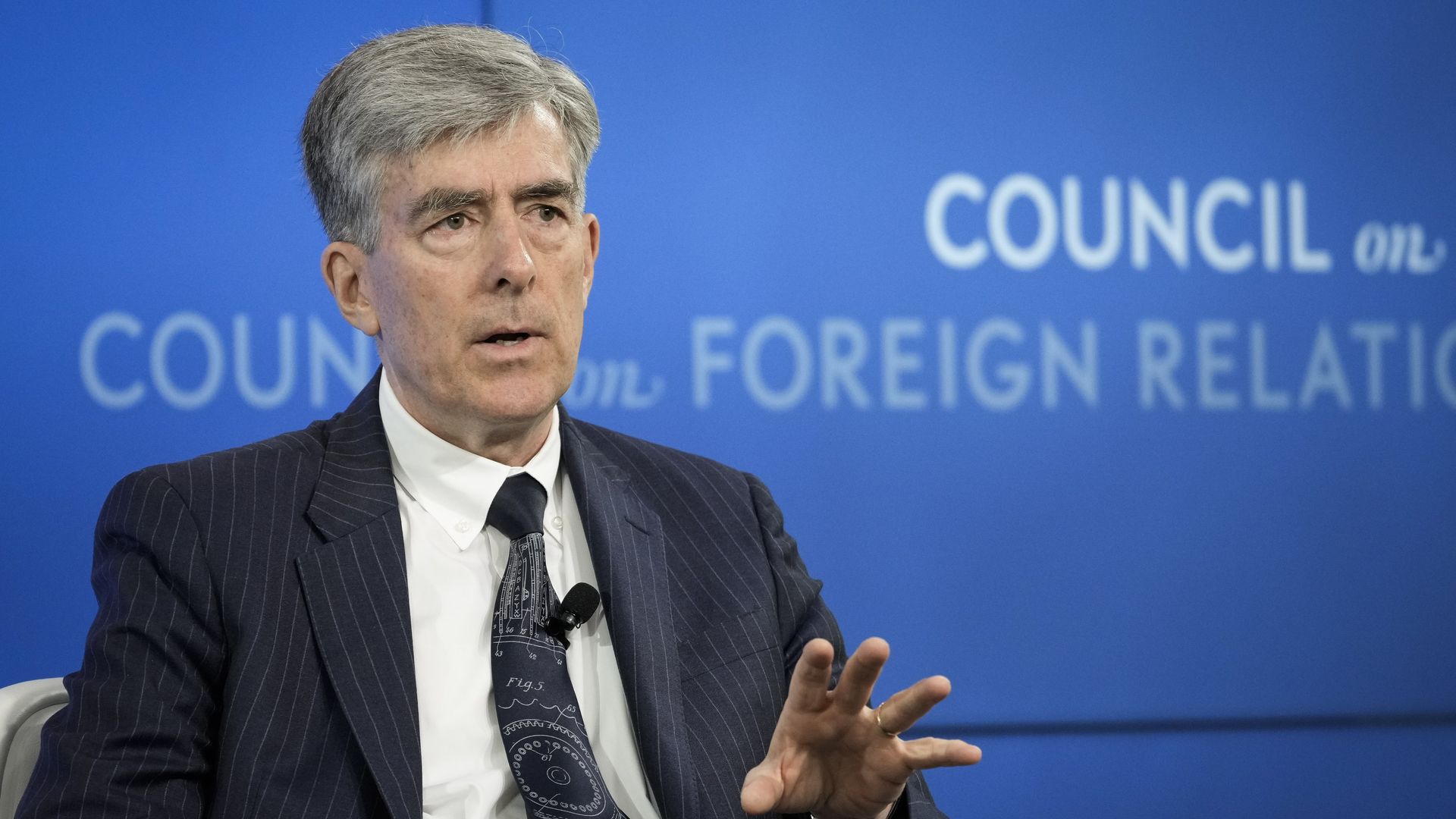
One year into his tenure, national cyber director Chris Inglis tells Axios his office — now nearly fully staffed — is ready to tackle its first big job.
Driving the news: The Office of the National Cyber Director (ONCD) plans to release the administration's national cybersecurity strategy next month after the White House charged the office in late June with leading its development. The strategy will define the nation's plans to prevent major cyberattacks and responses to them when they occur.
WeWork founder Adam Neumann's score of a gargantuan new venture-capital investment shows that Silicon Valley's love affair with free-wheeling, big-spending startup founders remains hot — even in a down market.
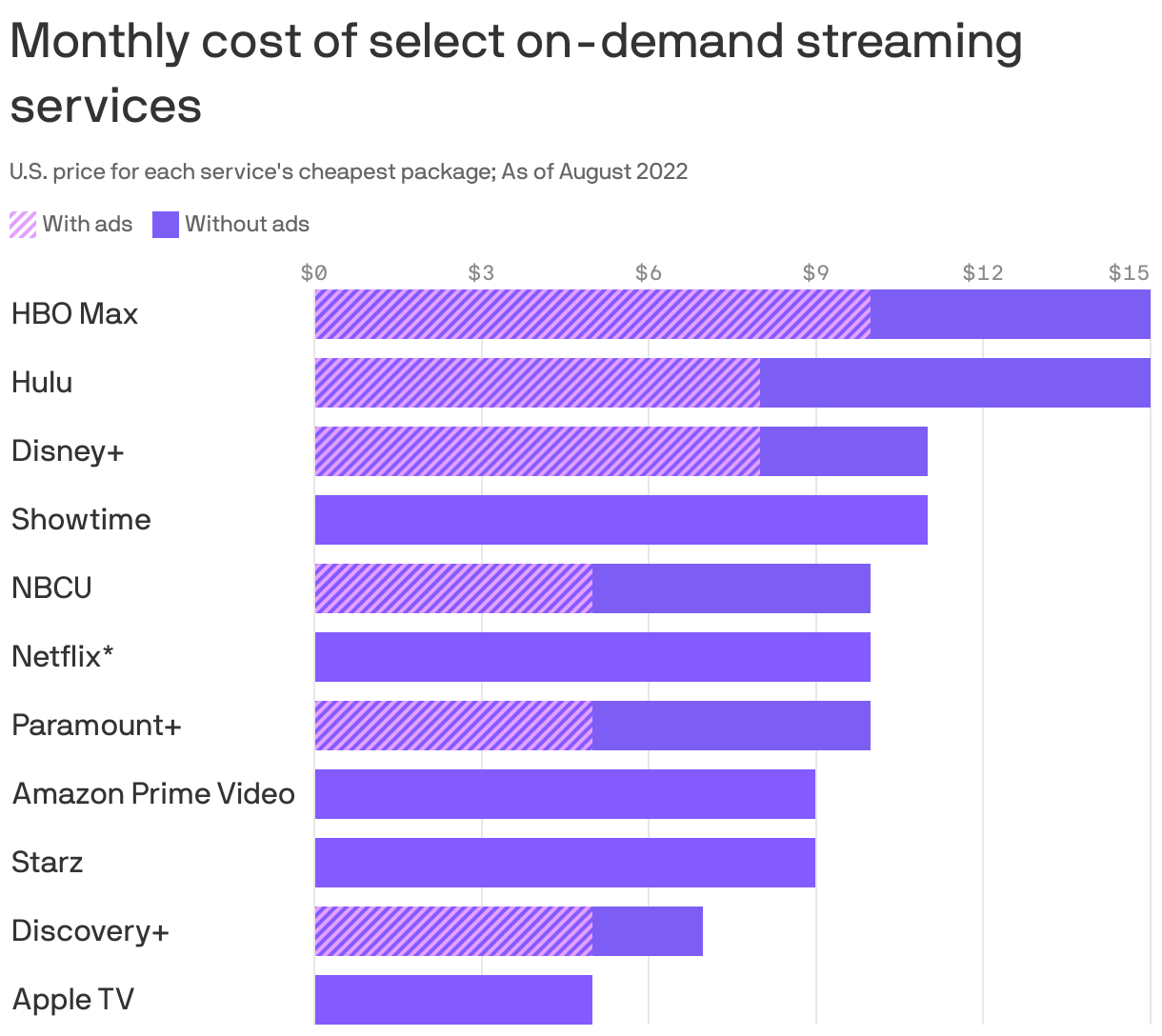
Data: Axios research; Chart: Danielle Alberti/Axios (NOTE: Netflix plans to launch an ad-supported tier in early 2023.)
Facing saturation in the U.S., most major streamers are launching cheaper ad-supported streaming tiers, and are beginning to bundle their offerings — often the cheaper plans — with other subscriptions to attract more users.
Why it matters: The streaming era was supposed to give consumers more choice, but streaming options increasingly resemble the bloated cable bundles they sought to replace.
The Biden administration has three key leaders for the country to turn to during a major cyberattack — but until last year, two out of the three positions they hold didn't exist.
Why it matters: The industry execs, former officials and lobbyists who talk regularly with this trio are still trying to distinguish who does what.
Oracle has begun vetting TikTok's algorithms and content moderation models to ensure they aren't manipulated by Chinese authorities, Axios has learned.
Why it matters: The effort is meant to provide further assurance to lawmakers that TikTok's U.S. platform operates independently from influence by the Chinese Communist Party.
Lyft is adding a new fleet of electric, autonomous vehicles (AVs) to its ride-hailing network in Las Vegas, bringing it one step closer to offering a full robotaxi service.
Why it matters: It's the latest milestone in the partnership between Lyft and Motional, one of a half-dozen leading autonomous tech companies.
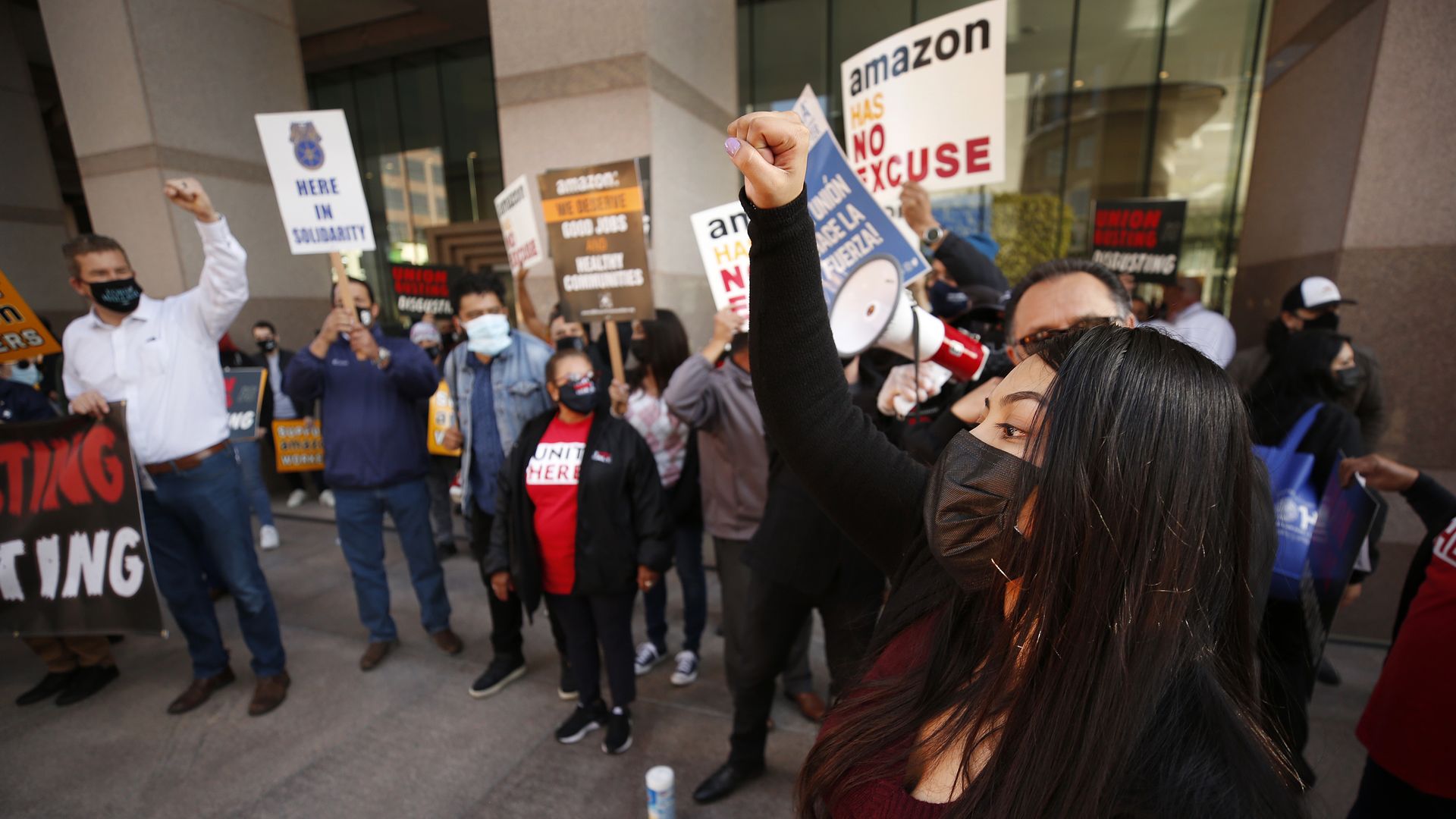
Workers at Amazon's San Bernardino air hub in Southern California walked off the job Monday in protest for better wages and working conditions.
Why it matters: More than 150 people participated in the walkout as part of the first coordinated labor action in Amazon’s growing air cargo network, according to the Washington Post.






/2022/08/16/1660613917381.gif?w=3840)