A coalition of state attorneys general is launching an investigation into how Instagram, owned by Meta, draws in young users and affects their well-being, some of the states involved announced Thursday.
Why it matters:Meta has made it clear it wants to entice young users in order to compete with companies that have been more popular with kids and teenagers, like TikTok and Snapchat.
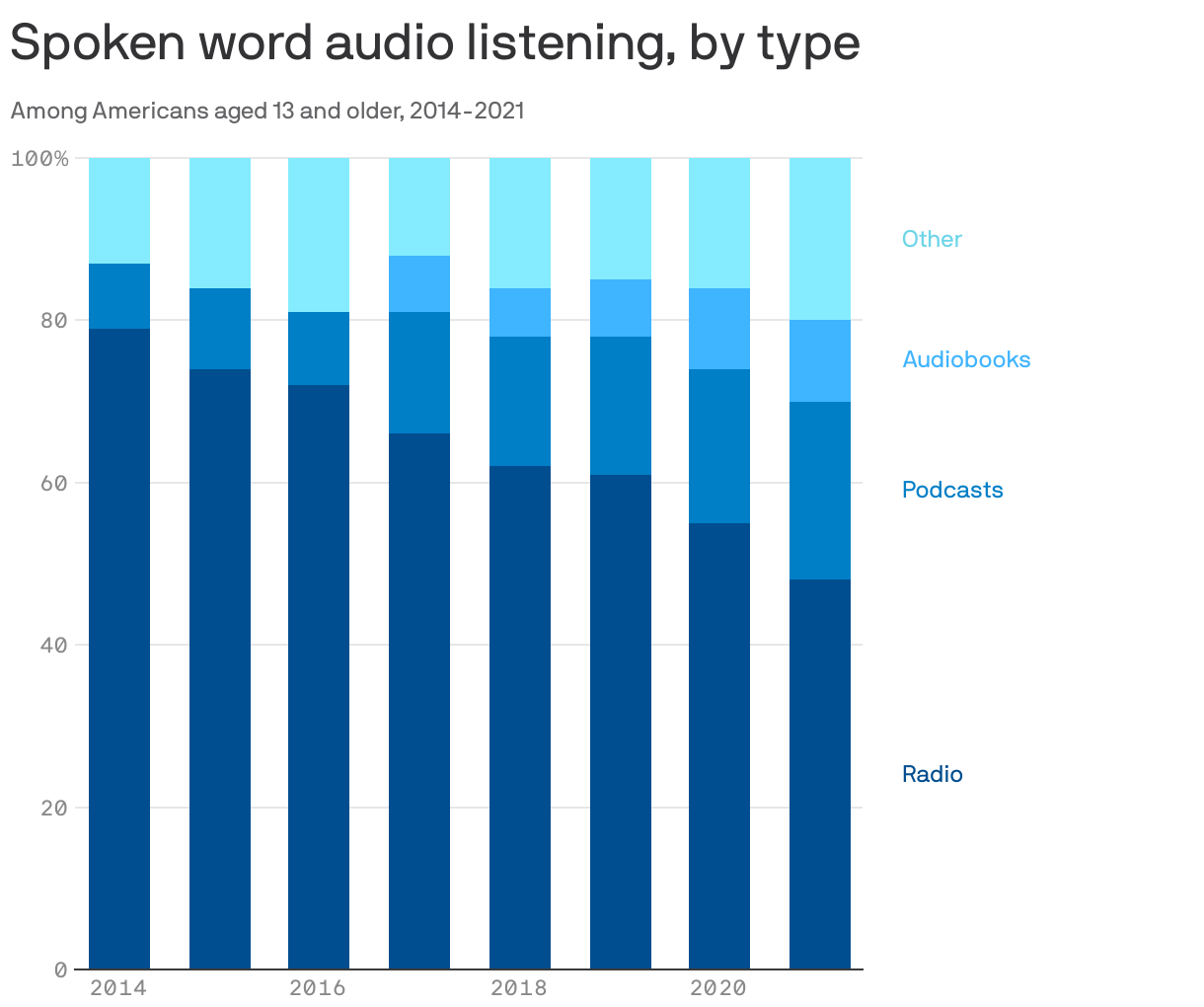
Data: 2021 Spoken Word Audio report from NPR and Edison Research; Chart: Axios Visuals
New data finds the share of audio consumed by people ages 13+ in the U.S. that includes the spoken word — podcasts, audiobooks, live talk shows, etc. — has increased by 40% since 2014, while the share of music vs other mediums has decreased by 8 percentage points in that time.
Why it matters: Streaming has made it much easier for consumers to convert hobbies from the analog world, like listening to the radio or reading a book, to the digital world.
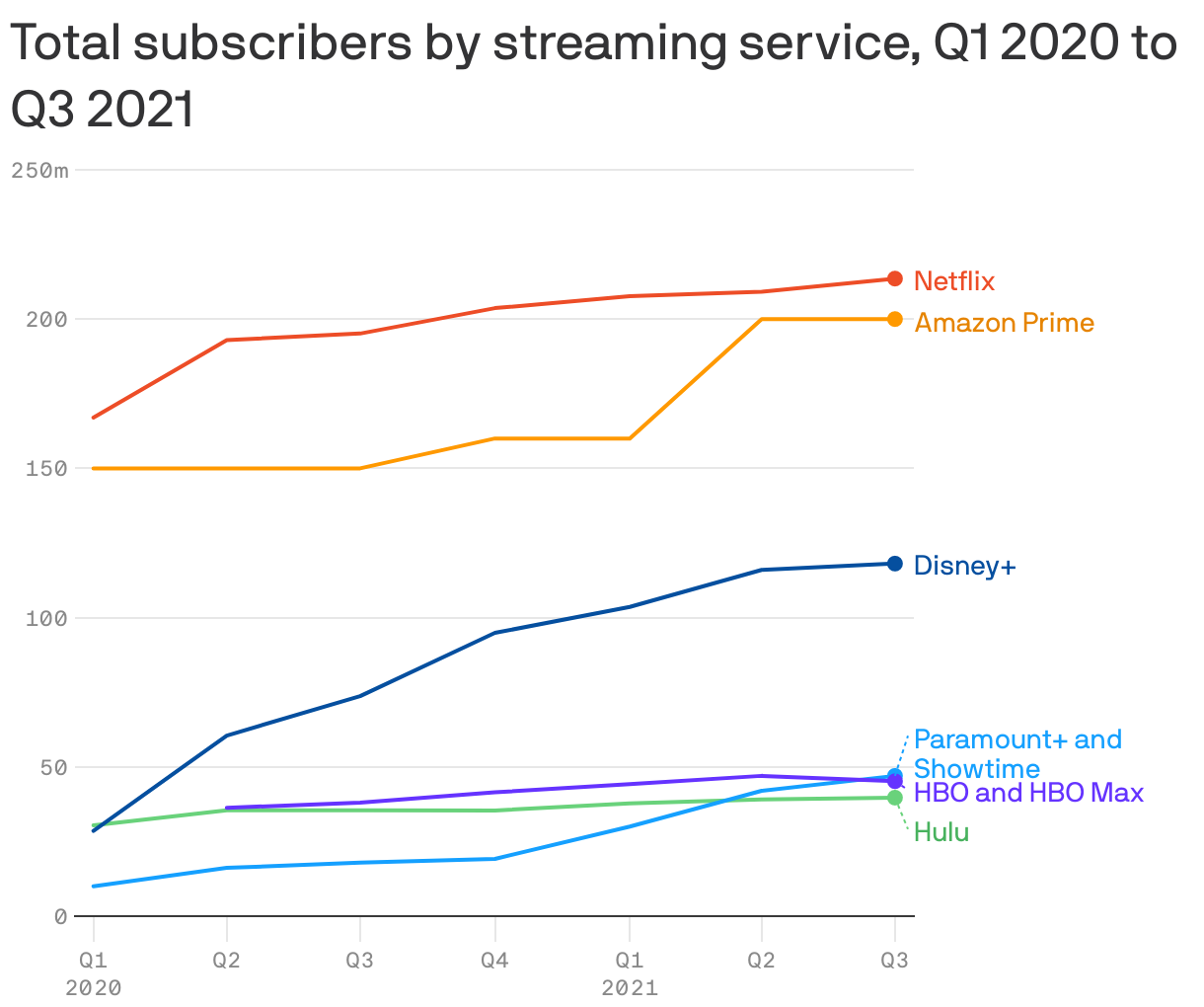
Data: Company filings; Note: "Paramount+ and Showtime" was formerly "CBS All Access and Showtime"; Chart: Kavya Beheraj/Axios
Subscriber growth slowed last quarter for most of the major streaming services, prompting analysts to consider whether the subscription streamers are prepared to compete globally as the U.S. market saturates.
Why it matters: "Consumers sampled many different SVODs during the height of the pandemic. Churn is a challenge as consumers get back to a new normal routine," said Andrew Hare, SVP of research for global media & entertainment at media research firm Magid.
Facebook on Thursday said it is expanding the controls it gives advertisers to make it easier for them to limit the types of News Feed content their ads show up next to. Excludable categories include news and politics, tragedy and conflict and debated social issues.
Why it matters: The move ispart of a wider effort by Facebook to help advertisers avoid misinformation, hate speech or other content that may not be deemed "brand safe."
The Federal Communications Commission voted unanimously Thursdayto require phone companies to route text messages sent to "988" to the National Suicide Prevention Lifeline.
Why it matters: By making it easier to text the Lifeline, the FCC aims to increase accessibility for communities at a higher risk of suicide and mental health crises.
The artificial intelligence research company OpenAI will eliminate the waiting list for access to the API of its natural language processing program (NLP) GPT-3.
Why it matters: The move will accelerate access to the world's best-known reading and writing AI model, and is a sign that OpenAI believes the program is safe enough — and can be monitored sufficiently — to be disseminated more widely.
A federal move to promote texting the national suicide hotline for help could strain crisis center capacity.
Why it matters: Texting can make reaching help more accessible for vulnerable communities, including young people and members of the LGBTQ community, but many insist the system will need more resources.









/2021/11/17/1637186893130.gif?w=3840)