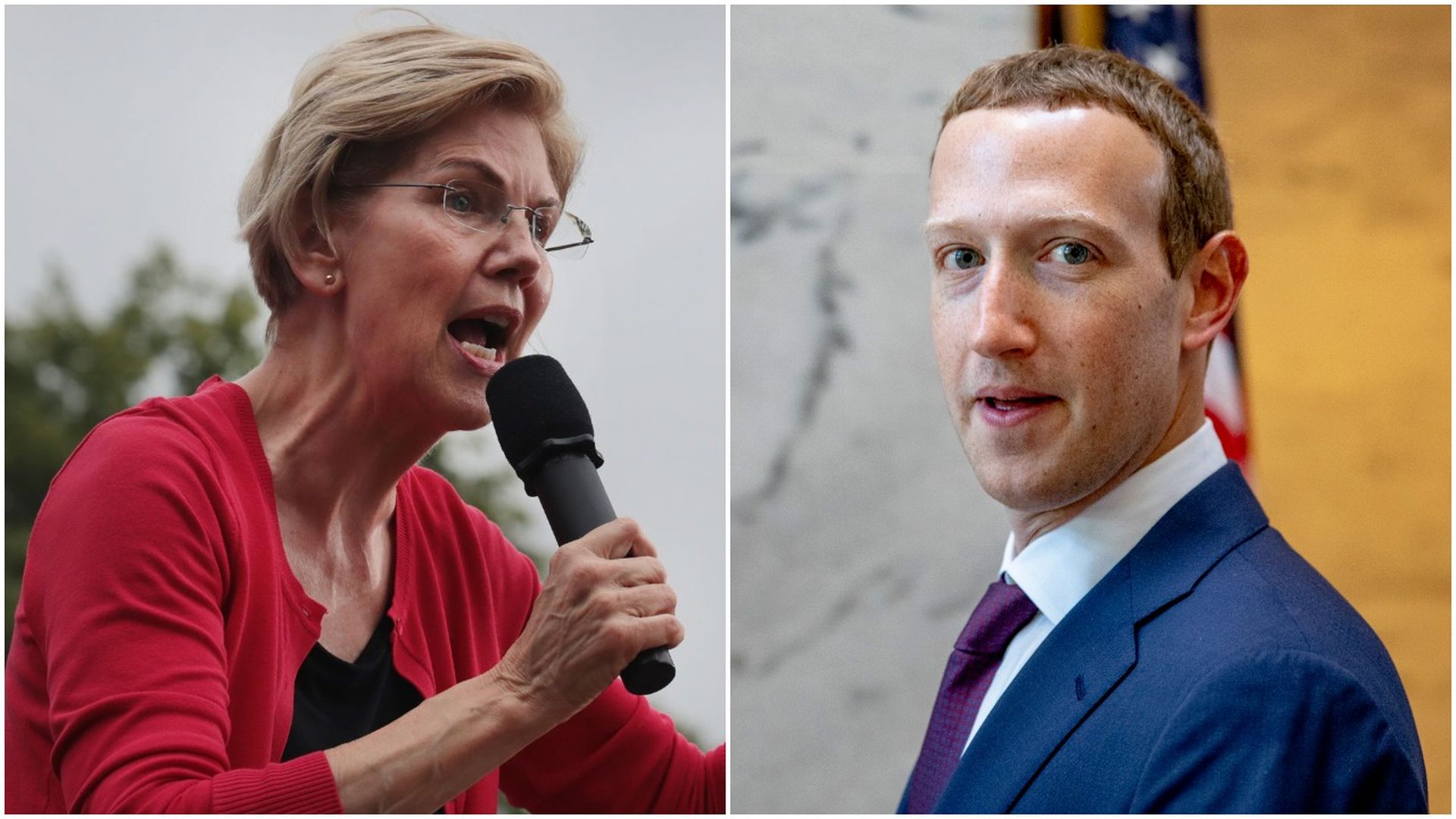
The battle between Facebook’s chief executive and one of the top 2020 Democratic candidates for president is escalating as the election inches closer.
Our thought bubble: Sen. Elizabeth Warren and Mark Zuckerberg are convenient political targets for one another. Warren can paint Facebook as an example of capitalism gone wild, while Facebook can point to Warren as a misguided regulator who wants to break up its business because she doesn't understand how it works.
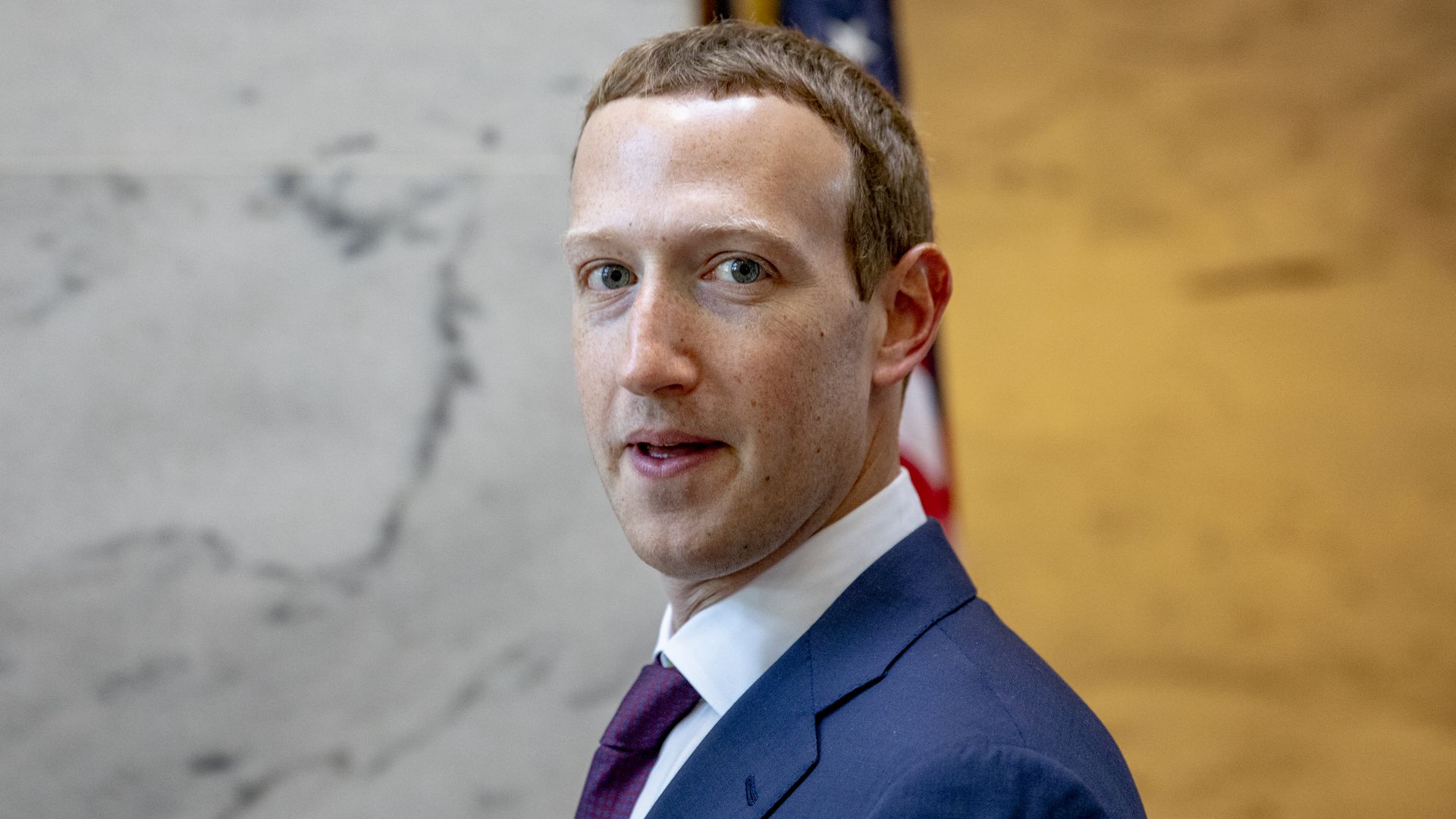
Facebook CEO Mark Zuckerberg plans to testify on Libra, Facebook's proposed global cryptocurrency, on Oct. 23. — in the wake of Visa, Mastercard, eBay, Stripe and PayPal pulling out of the project.
The big picture: Visa, Mastercard and Paypal were the largest payment companies in Facebook's "Founding Members" group, or organizations that said it would back the Switzerland-based foundation that plans to manage the Libra cryptocurrency.
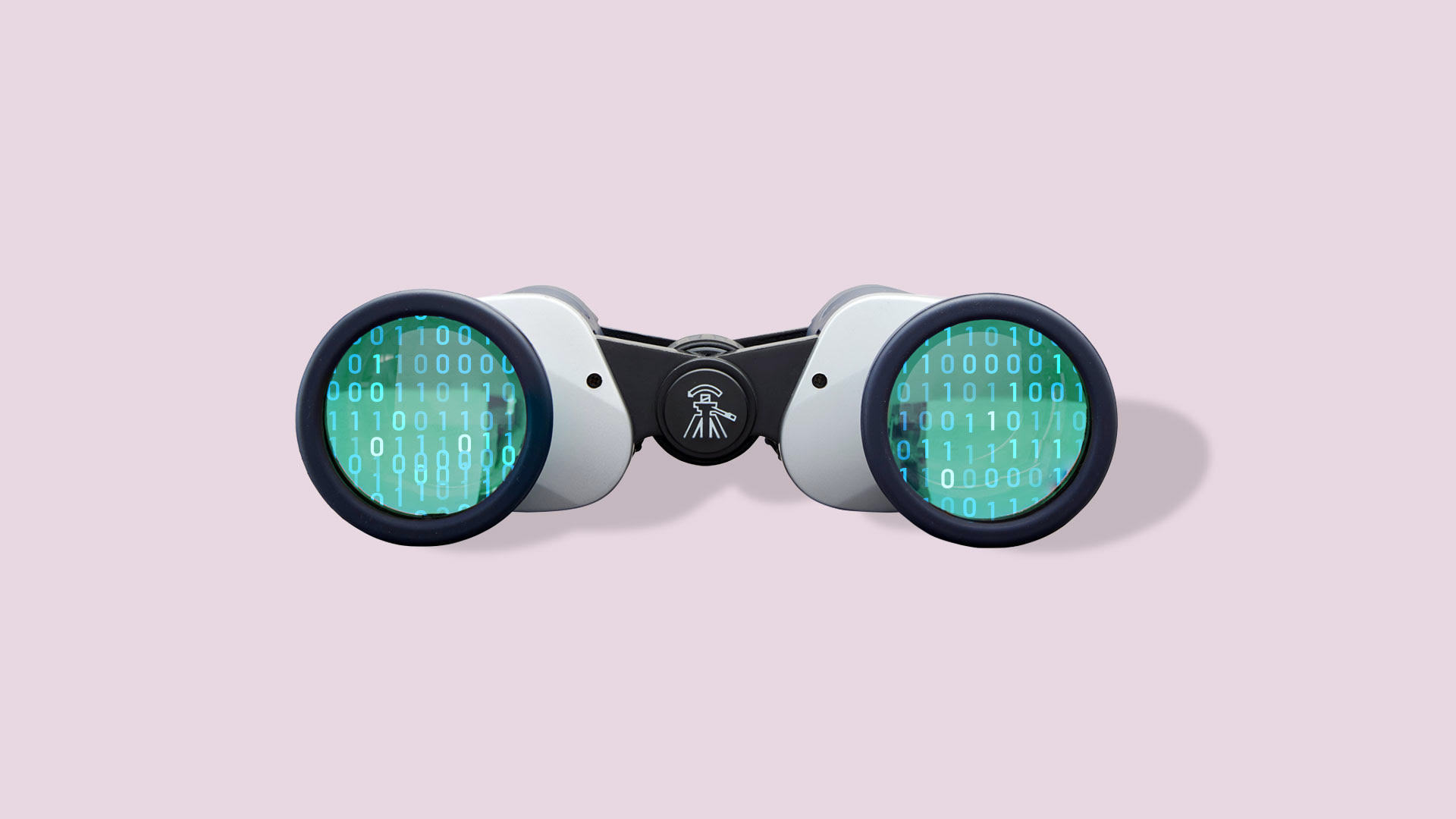
Turn AI cameras on your employees and you can measure their productivity. Fly them over the Pacific Ocean and you've got yourself an automated shark-warning system.
What's happening: UC Santa Barbara, with the help of a few AI experts from Salesforce, is using drones to monitor sharks near California beaches in real time.
Uber has struck a deal to acquire a majority stake in grocery-deliver company Cornershop, as it tries to take a bigger bite out of the food retail market, the Wall Street Journal reports.
Why it matters: Uber is working to expand its business model beyond ride-hailing with its latest acquisition alongside its food-delivery service Uber Eats, per WSJ.
AI systems have an endless appetite for data. For an autonomous car's camera to identify pedestrians every time — not just nearly every time — its software needs to have studied countless examples of people standing, walking and running near roads.
Yes, but: Gathering and labeling those images is expensive and time consuming, and in some cases impossible. (Imagine staging a huge car crash.) So companies are teaching AI systems with fake photos and videos, sometimes also generated by AI, that stand in for the real thing.
As deepfakes become more convincing and people are increasingly aware of them, the realistic AI-generated videos, images and audio threaten to disrupt crucial evidence at the center of the legal system.
Why it matters: Leaning on key videos in a court case — like a smartphone recording of a police shooting, for example — could become more difficult if jurors are more suspicious of them by default, or if lawyers call them into question by raising the possibility that they are deepfakes.
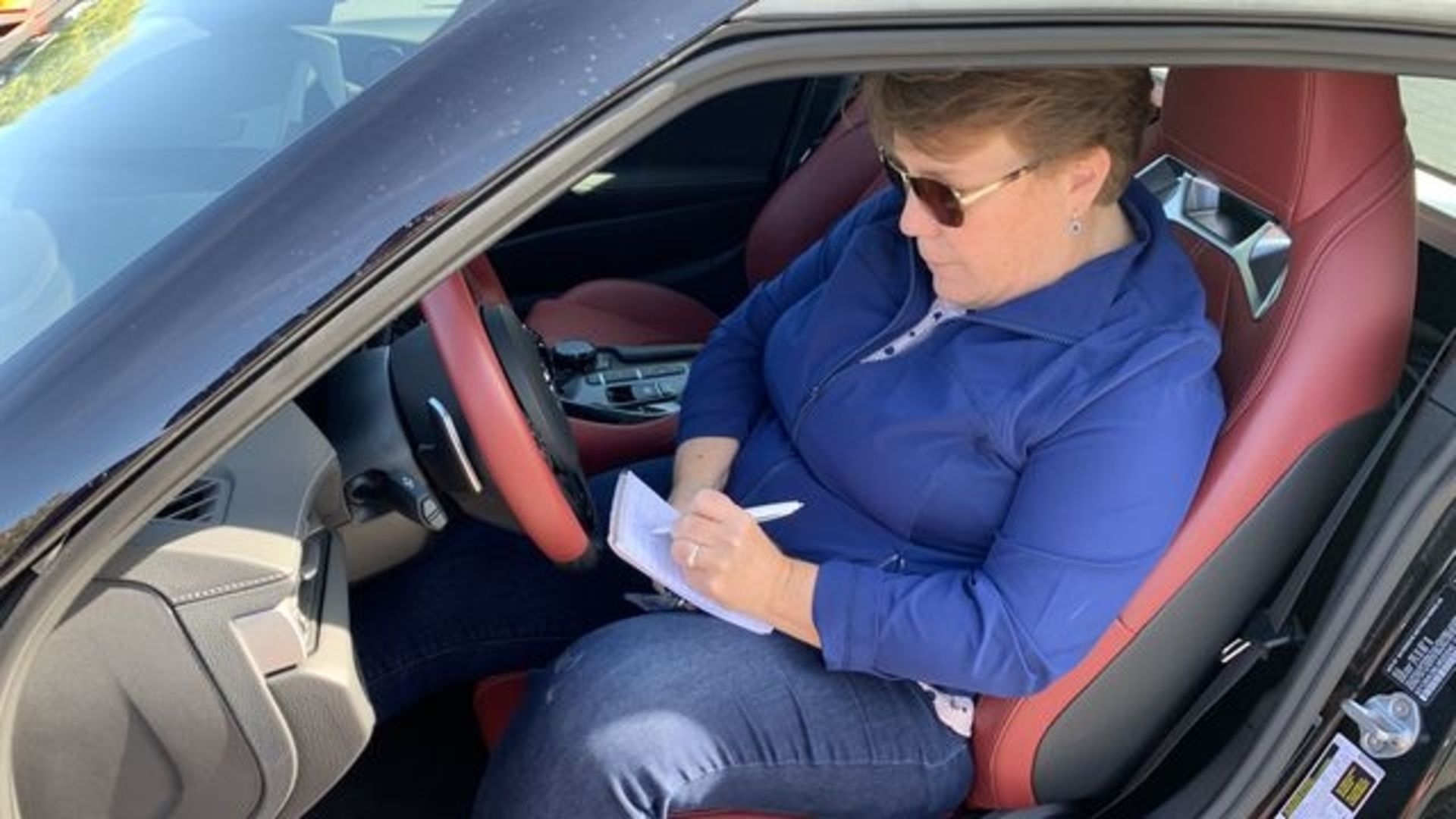
This week, I managed to get away from the office for 2 days for some fun — and important — driving.
The big picture: I'm one of approximately 50 professional automotive journalists on the jury for the North American Car and Truck of the Year awards, now in its 26th year.
Most jobs are still out of reach of robots, which lack the dexterity required on an assembly line or the social grace needed on a customer service call. But in some cases, the humans doing this work are themselves being automated as if they were machines.
What's happening: Even the most vigilant supervisor can only watch over a few workers at one time. But now, increasingly cheap AI systems can monitor every employee in a store, at a call center or on a factory floor, flagging their failures in real time and learning from their triumphs to optimize an entire workforce.



/2019/10/12/1570898539834.gif?w=3840)

/2019/10/11/1570822555805.gif?w=3840)
/2019/10/11/1570835343656.gif?w=3840)