Tuesday's science stories





Axios Live: Huntsville's biotech boom opens paths beyond research

HUNTSVILLE, Ala. — Huntsville is building a biotech economy, and the city will need a larger workforce with specialized skills to support the burgeoning industry.
Why it matters: If the region pairs its research strengths with practical training, infrastructure and employer partnerships, recent investments could transform it into a lasting life-sciences hub.
Axios' Derek Lacey and Brock Turner spoke to Jerome Baudry, chair of biological sciences at The University of Alabama in Huntsville; Cummings Research Park executive director Erin Koshut; HudsonAlpha Institute for Biotechnology president Neil Lamb; and Alabama state Rep. Rex Reynolds. The Oct. 15 event was sponsored by PhRMA.
What they're saying: Education is a key piece of the puzzle.
- Reynolds said workforce development could begin before students reach college, guiding them toward industries that are new to northern Alabama and give the next generation the skills they need.
- The University of Alabama in Huntsville is developing a professional master's program and a new biotech concentration to prepare students for shifting industry needs, Baudry said.
- "Multidisciplinary approaches are going to be the key of continuing to lead here," he said.
Zoom in: HudsonAlpha connects interns, companies, entrepreneurs and scientists for maximum collaboration, Lamb said.
- "How do we weave these pieces together … has been part of the fabric of the institute from the beginning," Lamb said.
Follow the money: "Biotech companies want to be around other biotech companies," Koshut said, so creating the conditions for one may bring others.
- "Investments made by the city … ensure the people that live here have a place they want to call home," Koshut added.
What's next: Biotech in Alabama in 10 years "will just grow from here," Reynolds said. "But we are doing the right things with the right partners."
Content from the sponsor's segment:
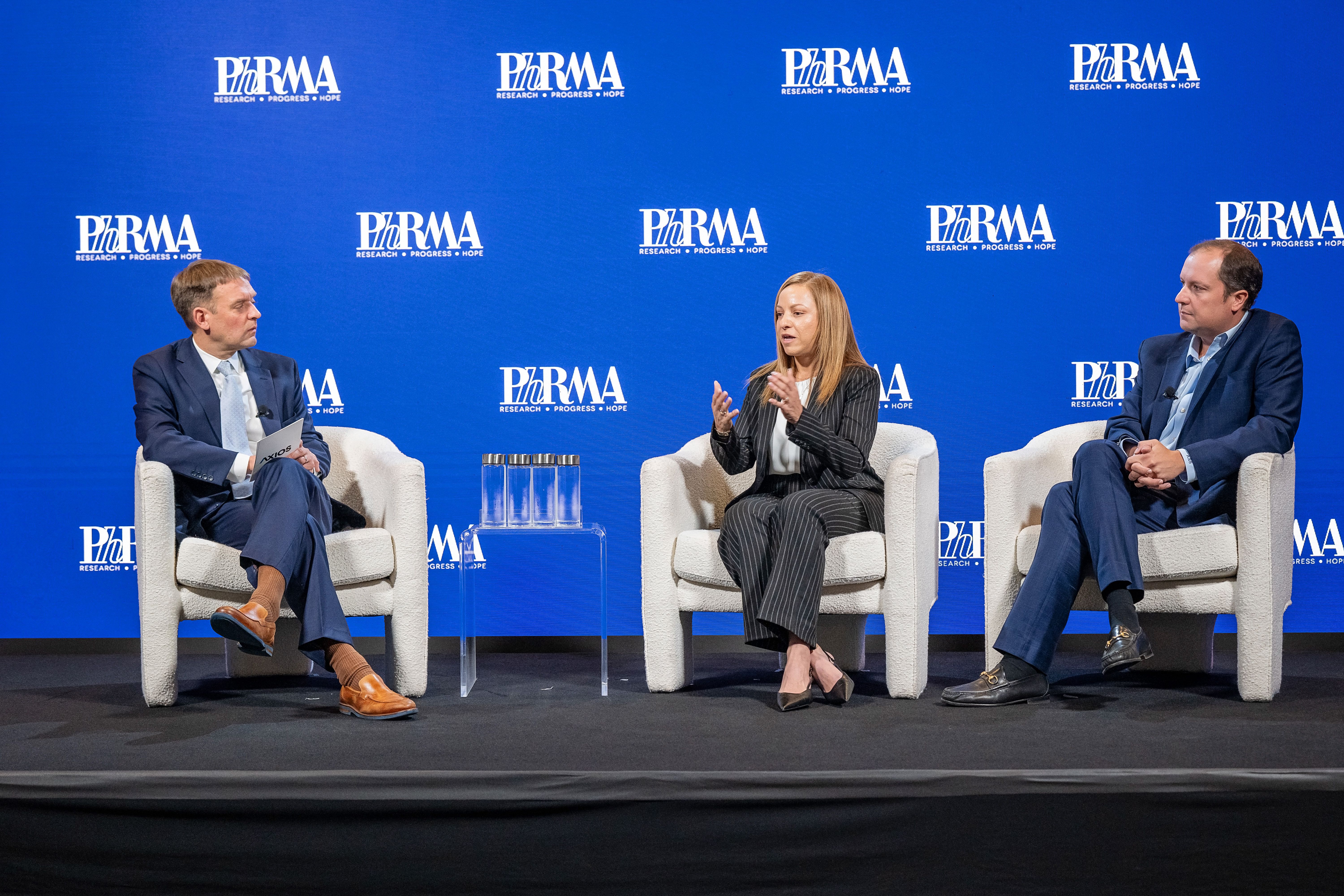
In a sponsored View From the Top conversation, PhRMA senior vice president of public affairs Alex Schriver said industry investments could strengthen the U.S. supply chain.
- "Our partner companies have announced in the last year over $500 billion … to bring medicine development back to the United States and produce those medicines here in America," Schriver said.
Graciela M. Romero, Eli Lilly vice president and Huntsville site head, said the company's decision to build its $6 billion plant in Huntsville was based on the area's infrastructure, policy and workforce potential.
- "Part of why Lilly selected Huntsville [is] easy access to utilities, easy access to transportation, favorable zoning and incentives. … But at the end of the day, it's about the location and community," Romero said.
Go deeper: Watch the full event.
Axios Live: Texas aerospace growth calls for expanding its skilled workforce

DALLAS — The aerospace industry's growth is pushing Dallas employers and educators to focus on training more skilled workers as technology redefines the sector's standards.
Why it matters: Heightened national security needs and rising commercial aviation demands are fueling investment in North Texas' aerospace and defense industries, underscoring the importance of a highly skilled workforce.
Axios' Colin Demarest and Naheed Rajwani-Dharsi spoke with Tarrant County College Aviation Technology department chair Phillip Craig, Bell SVP for the Bell 525 Michael Deslatte, Lockheed Martin Missiles and Fire Control VP of operations Michael Patton, and Workforce Solutions Greater Dallas president and CEO Laura Ward. The Oct. 14 event was sponsored by GE Aerospace.
What they're saying: Patton said Lockheed Martin is aiming to hire 2,000 Texas employees over the next year, citing a growing sense of "national security urgency."
- "We are definitely seeing people wanting to migrate into our industry," he said.
- Retaining young workers and bolstering the talent pipeline supported by job training investments comes down to "communicating opportunity often," Ward said.
- "I think upskilling while they're on the job is really important," Ward said of maintaining a robust workforce for the industry.
- New technology, including AI, is speeding up the productivity and efficiency of young aerospace engineers, Deslatte said. "It used to take a better part of a decade for a brand-new engineer to become fairly productive within an OEM [original equipment manufacturer] setting. We're seeing that timeline accelerate drastically," he added.
Zoom in: Commercial airline and aerospace industries are facing a projected shortage of aviation maintenance technicians over "the next 20 years," Craig said. TCC aims to prepare students for the most in-demand skills in aerospace, he added.
Content from the sponsor's segment:

In a View From the Top conversation, chief human resources officer for GE Aerospace Christian Meisner said the aerospace industry needs to prioritize building long-term career opportunities for employees, starting with apprenticeship and training programs.
- "Whether it's an apprenticeship program, whether it's a partnership with a local community college or a tech school … we really need to scale."
Go deeper: Watch the full conversation.