SALT LAKE CITY — Utah's tech adaptation and training opportunities position the state well to weather economic uncertainty, state business and political leaders said.
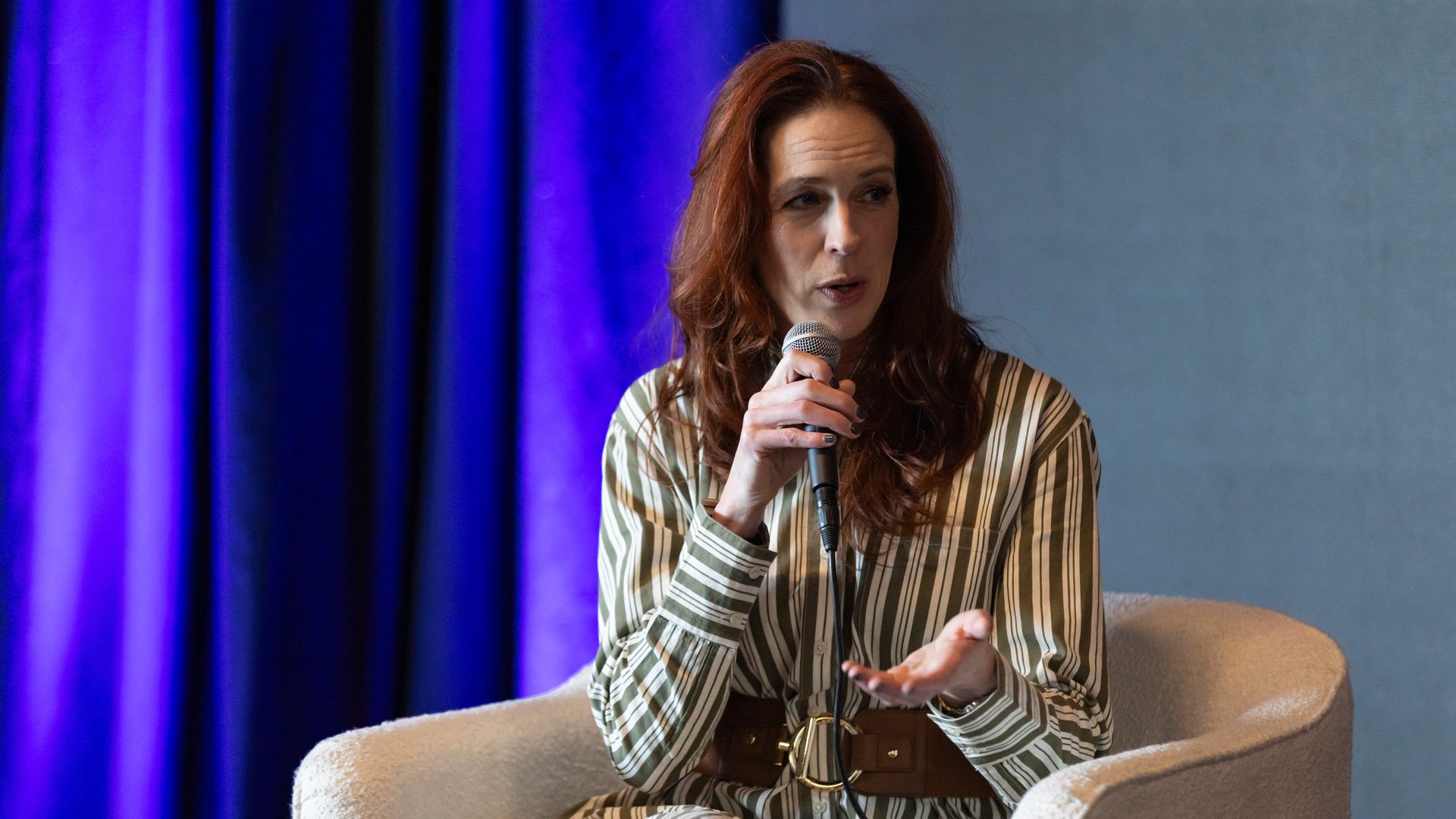
Axios' Erin Alberty and Megan Morrone spoke to state Rep. Jennifer Dailey-Provost (D-Salt Lake City), Salt Lake Chamber president and CEO Derek Miller, Utah Governor's Office of Economic Opportunity executive director Jefferson Moss, and Nomi Health co-founder and COO Joshua Walker for the May 19 event, which was sponsored by Anthropic.
What they're saying: A new directive from Gov. Spencer Cox says all recent or upcoming college graduates will "have an AI certificate at no charge to them" to set them up for success, Moss said.
Many businesses are incorporating AI into daily operations and for customer service improvements, according to Miller.
"Most of the world, and certainly the United States, are really clueing in to how innovative Utah has become," Dailey-Provost said. "We absolutely have led the country in AI … and tech policy."
If approved, it would be one of the biggest data centers in the world.
What's next: We have to make sure "that we're maximizing safety and tech … in a rapidly changing economy and workplace," Dailey-Provost added.
Content from the sponsor's remarks
In a View From the Top segment, Anthropic head of central policy Miriam Chaum said that Utah is thinking hard about how to bring Claude into state agency work.
In a recent, four-week pilot program, "over 70% of the engineers involved reported that they had saved over 20 hours" of work, Chaum said.
"Safety comes down to the least safe player in the room," she added, "and that's why you need regulation."
The U.S. space economy is evolving. What once centered on large programs and long timelines is now expanding into something faster, more flexible and founder-driven.
Why it's important: Aerospace is starting to look more like a startup ecosystem, where speed, access to capital and ownership matter earlier in the build cycle.
Greater Seattle is one place where that shift is already taking hold.
The U.S. government on Thursday said that it has agreed to take equity stakes in nine quantum computing companies, tied to $2 billion in CHIPS Act grants.
Why it matters: These sorts of quasi-socialist arrangements have been normalized with breathtaking speed.
A just-departed executive at one of the world's most influential wellness companies is giving us three pieces of advice for preserving our humanity in the age of AI.
The big picture: David Ko, who was CEO of the app Calm for the last four years, recently stepped down to pursue a new, undisclosed path focused on guardrails for kids using AI. He's exceptionally candid about his exit.