Thursday's science stories

VC investors step into defense tech with limited visibility

Venture capital investors have been citing reduced red tape and the Golden Dome as major drivers of their leap into defense tech.
Yes, but: Obstacles remain when the U.S. government collides with Silicon Valley.
Behind the scenes: Most VCs lack the clearances necessary to access classified information — limiting visibility into their investment.
- In board rooms, it's not uncommon for a member to excuse themselves when details relating to a major contract emerge.
- "We hosted a defense tech dinner in D.C., and people asked, 'Do you have clearance? 'And I say no, and they say: 'Well, I can't tell you this, but I'll speak about it in the abstract," says Michael Brown, managing partner of Battery Ventures.
That has implications for the due diligence process.
- Investors still see the overall finances of a business, but might not see the technical specifications of a product tied to a classified project.
- In one case heard by Axios, a company could not reveal when a major payment hit, as it risks signaling a highly watched product has successfully been completed.
Between the lines: As record-high dollars flow into the sector, the big question is if investors without clearances have enough information to make investment decisions.
- Most investors I spoke to believe the information flow is adequate, noting that not all defense tech deals have highly classified information or are wholly dependent on the government for revenue.
- DCVC's Matt Ocko argues clearances will be an edge for investors as the industry dives deeper into critical, and likely sensitive, tech. "You're not getting ground truth," he says. "If there is a new nation-state actor or threat, you can't tell if your company is viable anymore or if you have the golden ball of 'unobtanium'."
Zoom out: "In the defense tech world, there's this overlapping weave of regulatory regimes," says Joshua Gruenspecht, a partner of Wilson Sonsini.
- Companies with foreign investors not only file with CFIUS, but they may also face further scrutiny from the Defense Counterintelligence and Security Agency (DCSA) if they handle classified information. And while a foreign investment may not be an issue with the CFIUS, it could be a problem for DCSA.
- The constant transition from one administration to the next has led to more self-policing by companies, says Holland & Knight partner Robert A Friedman.
- "I've seen people turn down eight-figure amounts," Gruenspecht says, with companies aiming to avoid any conflict with the DCSA. "Scrutiny on FOCI (Foreign Ownership, Control, or Influence) has increased meaningfully. "
Case in point: Allen Control Systems, an autonomous-turret maker, says it's purposely not taken foreign investments of any kind to avoid slowdowns in the contracting process.
The bottom line: Defense tech is not for the faint of heart.

AI brands are using pop-ups and events to build awareness and trust

There was a line around the block in New York City's West Village this week as tech enthusiasts, creators and curious passersby waited to check out Anthropic's pop-up, the Claude cafe inside the Air Mail newsstand.
Why it matters: It's common for consumer, lifestyle and entertainment brands to invest in experiential marketing, but now AI and B2B companies are adopting the playbook.

Exclusive: Walmart debuts "Auto Center of the Future"

Walmart is reimagining car care with its first "Auto Care Center of the Future," debuting in Arkansas — a pilot offering smart-locker key drop and real-time app updates, the company told Axios exclusively.
Why it matters: The world's largest retailer is bringing its digital playbook to the garage to make car maintenance as easy as stocking the fridge.

Exclusive: Salesforce lets AI agents speak for themselves
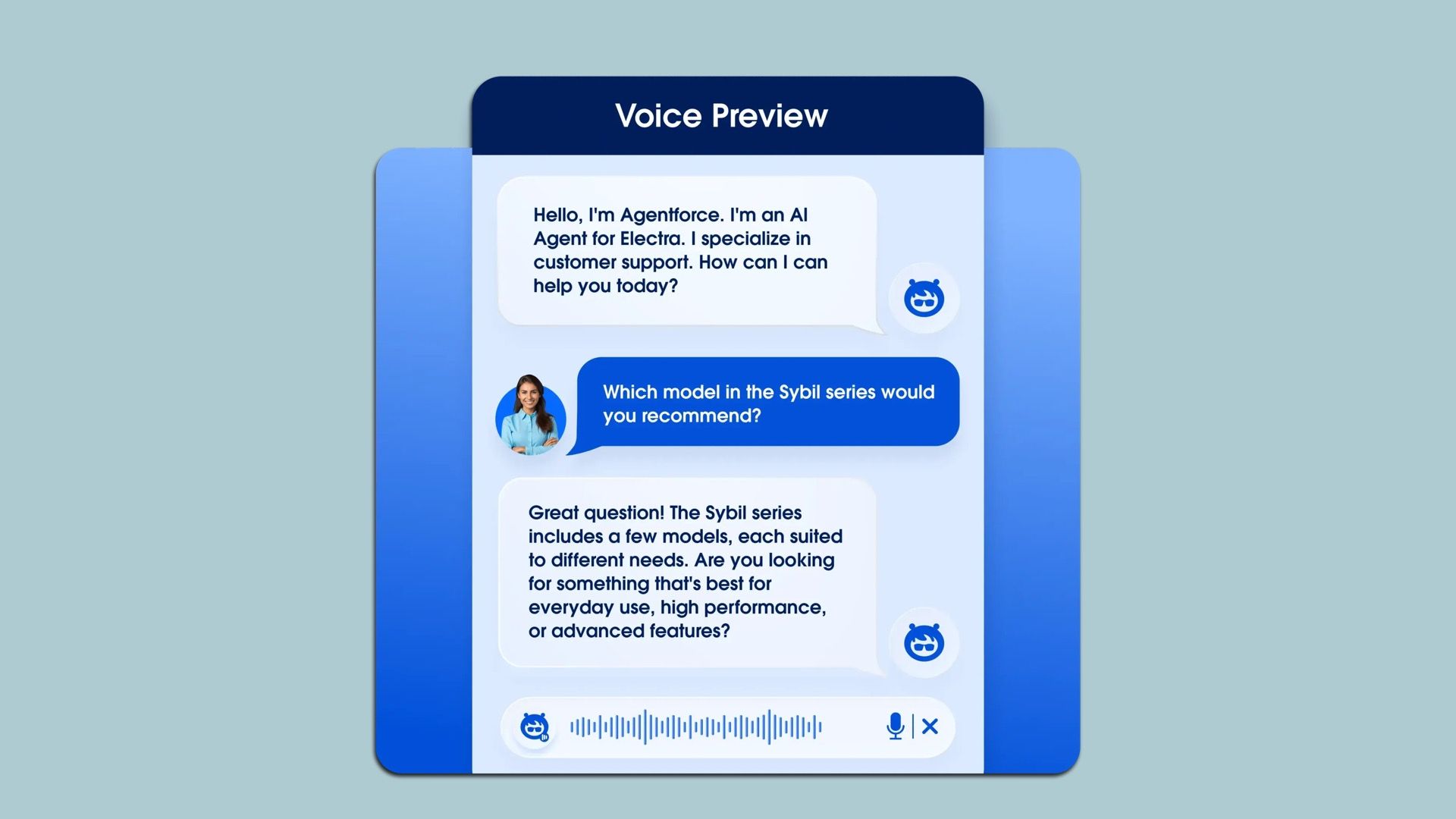
Salesforce will announce next week two new capabilities designed to make its AI agents more versatile and useful for businesses, Axios has learned.
Why it matters: Salesforce faces growing competition from tech giants with their own large language models and startups focused on AI customer service.

Exclusive: Bessent to keynote AI summit

Treasury Secretary Scott Bessent will keynote an AI summit on Oct. 21 hosted by the newly formed Prometheus Initiative, according to an invitation shared with Axios.
Why it matters: Government officials and industry players are eager to tout the societal benefits they're expecting from AI and quell concerns around job displacement, disinformation and more.

Google's Dahut: Quick embrace of emerging tech is "a mindset challenge"

Karen Dahut, the chief executive at Google Public Sector, would like to see the defense world more quickly adopt emerging technologies.
- "I think that is a mindset challenge. I think it's a cultural challenge. I think it's a process challenge, and I think it's an acquisition challenge," she told Axios in an interview.
- "Legacy providers are motivated to maintain the status quo," she said. "That's a challenge for the Department of Defense."
Why she matters: Dahut has decades of experience in the tech space. She's a former U.S. Navy officer and spent time with Booz Allen Hamilton's global defense business.