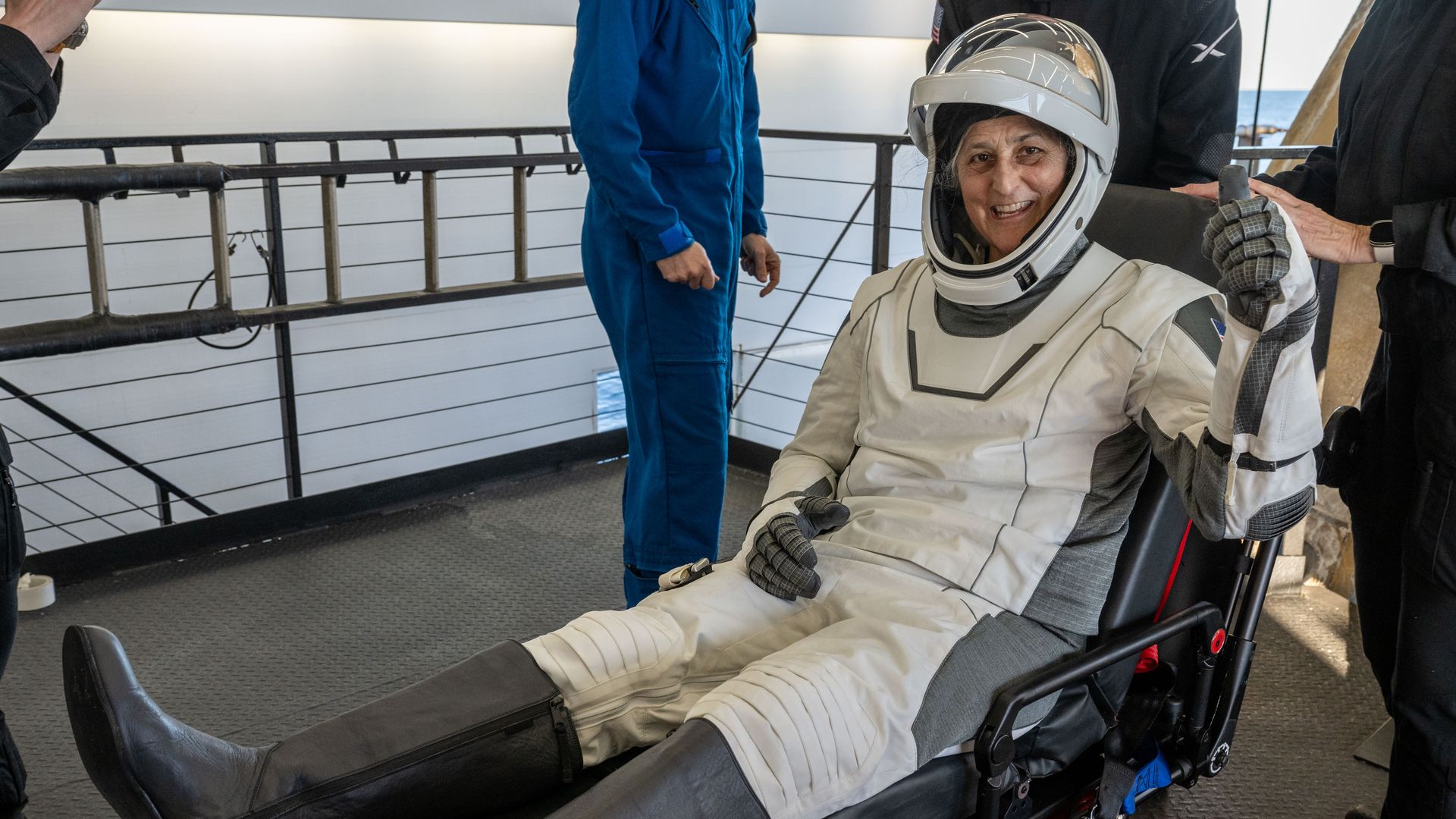
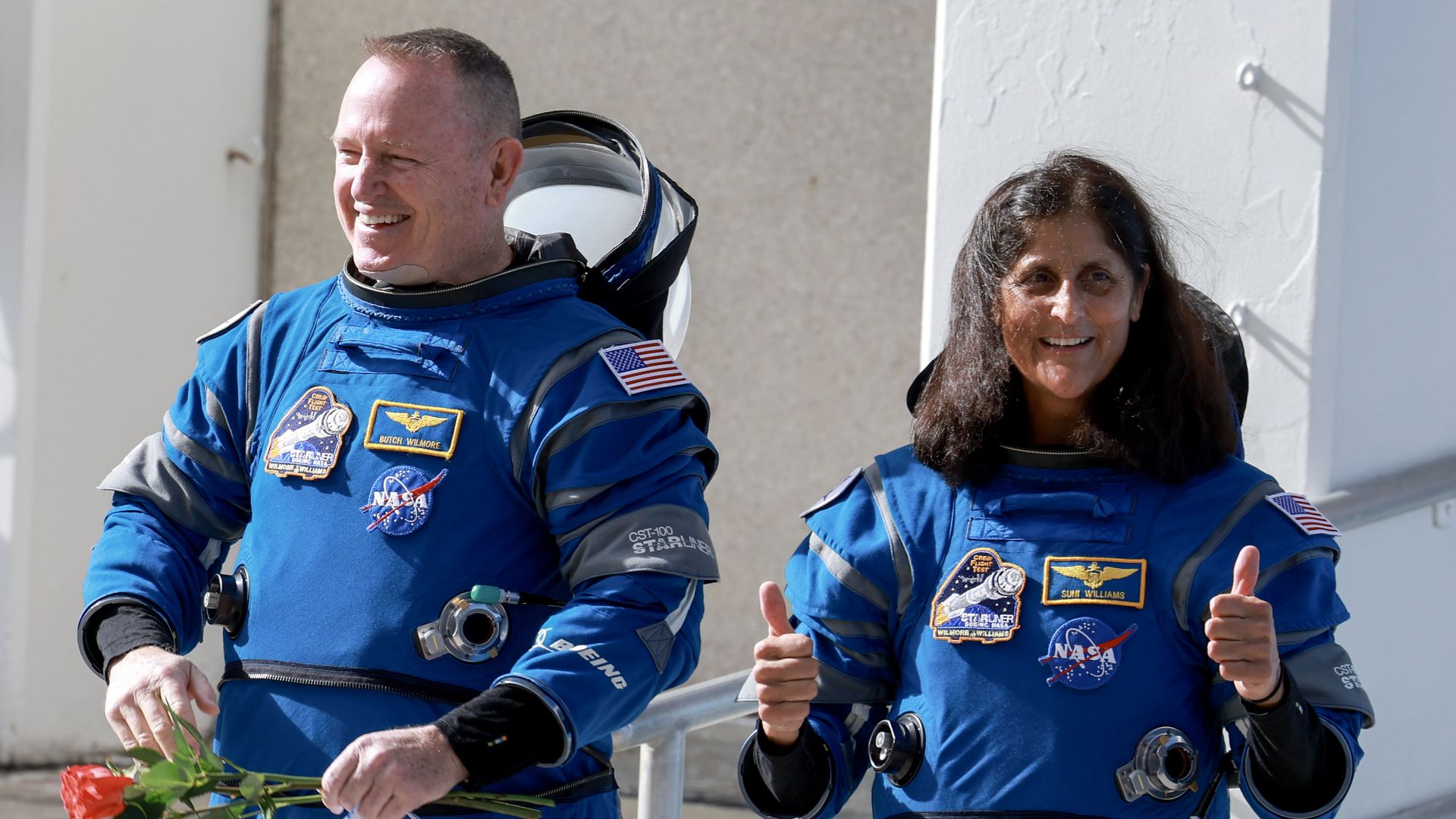
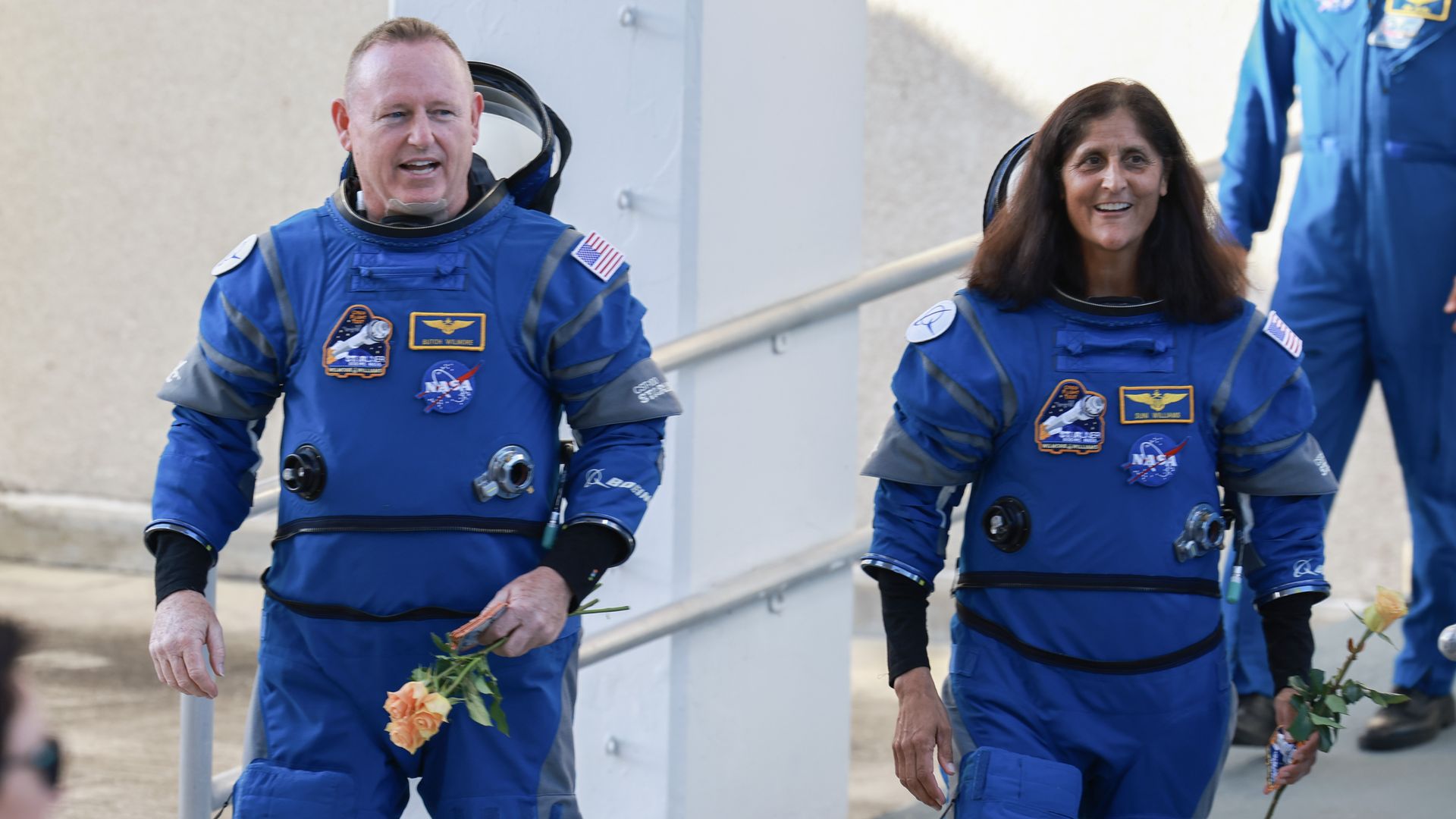
NASA astronauts Suni Williams and Barry "Butch" Wilmore returned to Earth on Tuesday after spending some nine months in space.
The big picture: The astronauts traveled to the International Space Station in June 2024 as part of the Boeing Starliner's first crewed test flight. They drew global attention after technical issues and safety concerns delayed their return, but they rejected claims they were stranded or "stuck."
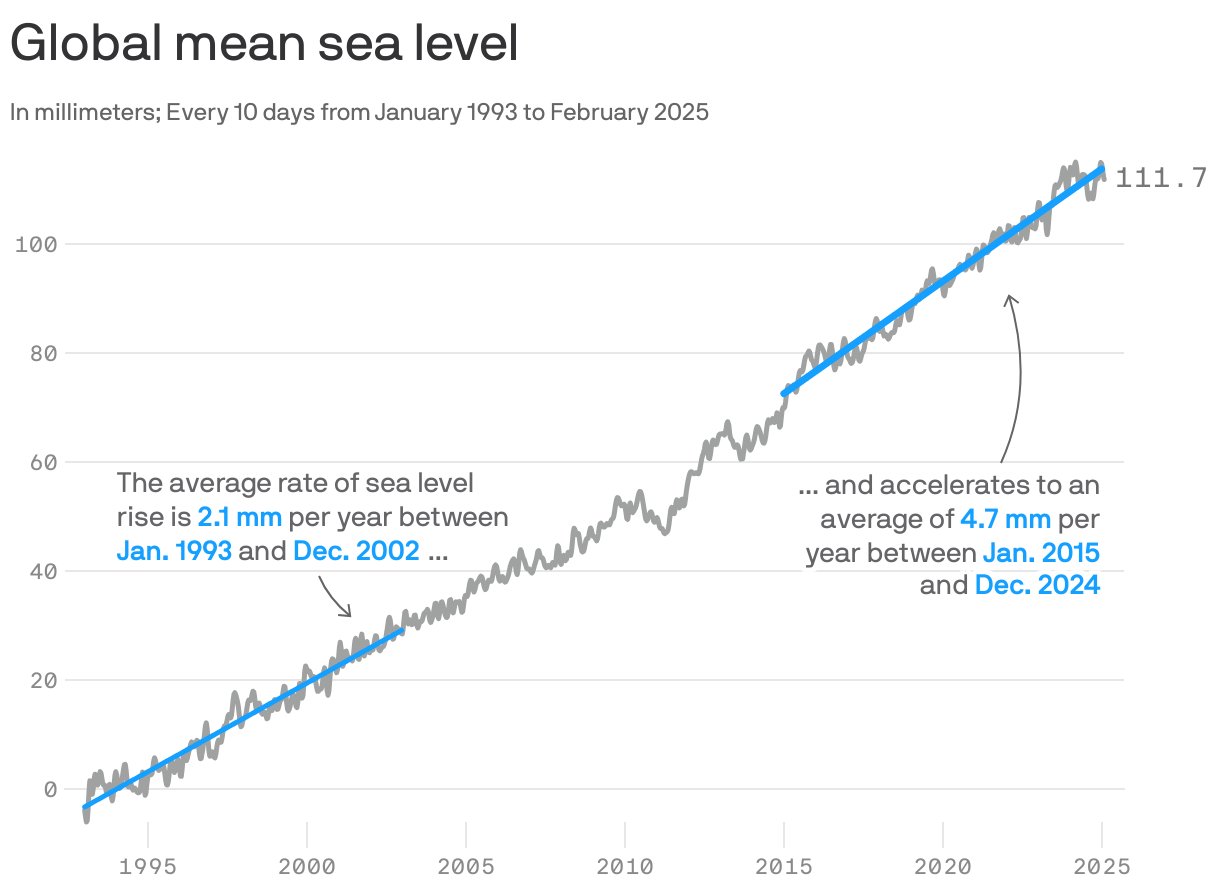
Why it matters: The World Meteorological Organization's State of the Global Climate 2024 report is designed to inform policymakers of the status of the climate system.
Why it matters: Muscle atrophy, bone density loss and even vision changes are expected side effects of long-duration space missions. And while some of the impacts of a layover hundreds of miles above Earth are quickly reversible, others can persist.
Ahh, spring. The season of thawing out, fresh air and, yes, more daylight.
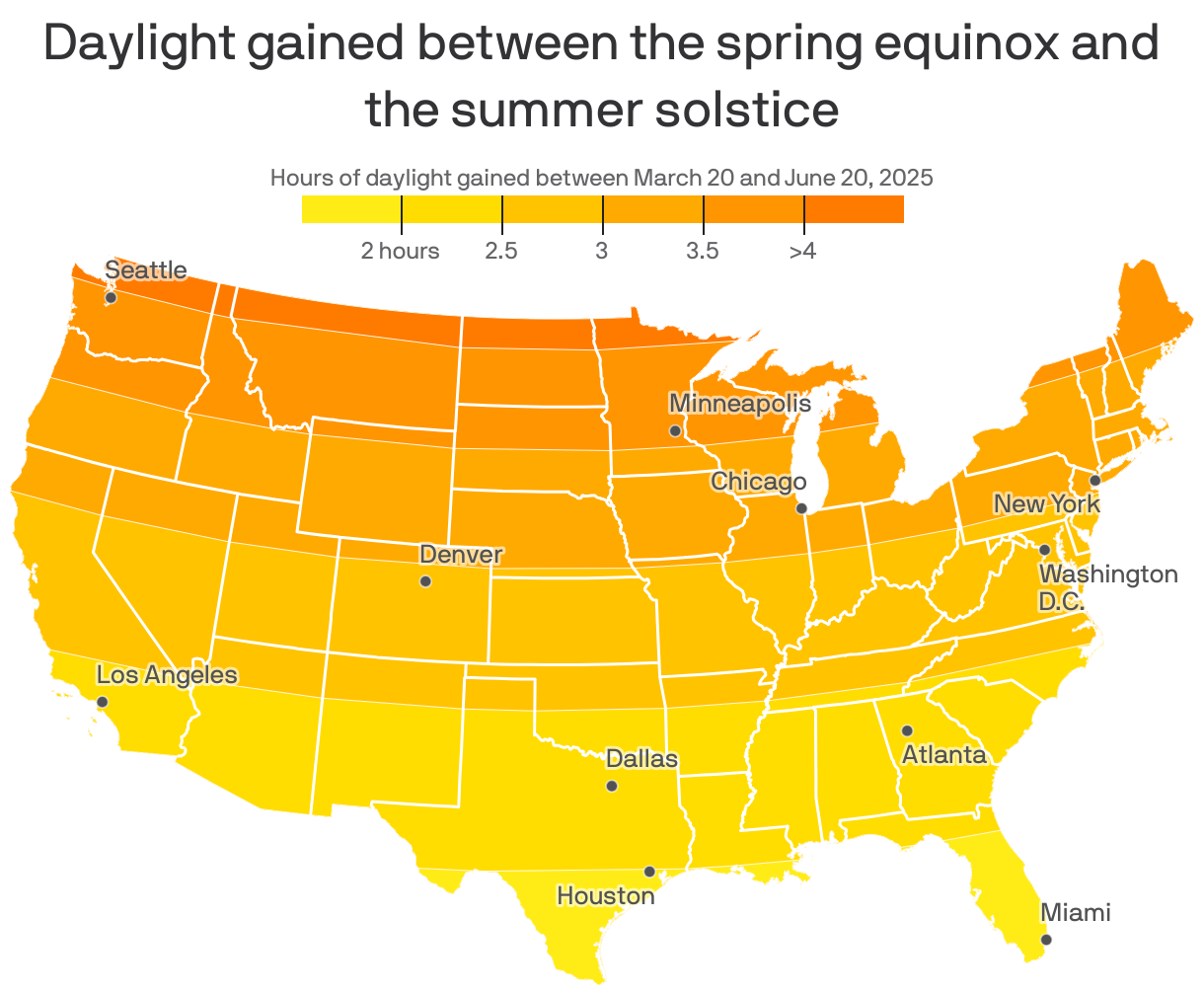
Driving the news: Parts of the U.S. will gain three hours or more of daylight between Thursday's spring equinox and the summer solstice on June 20, per NOAA's solar calculator.
Editor's note: Read the latest on the astronauts' splashdown and see photos here.
Two NASA astronauts who spent more than 280 days aboard the International Space Station undocked from the ISS early on Tuesday, kicking off their long-awaited return journey.
The big picture: Barry "Butch" Wilmore and Sunita "Suni" Williams have been in a galactic holding pattern hundreds of miles above the Earth's surface after boarding the ISS in June 2024 as part of the Boeing Starliner's first crewed test flight.