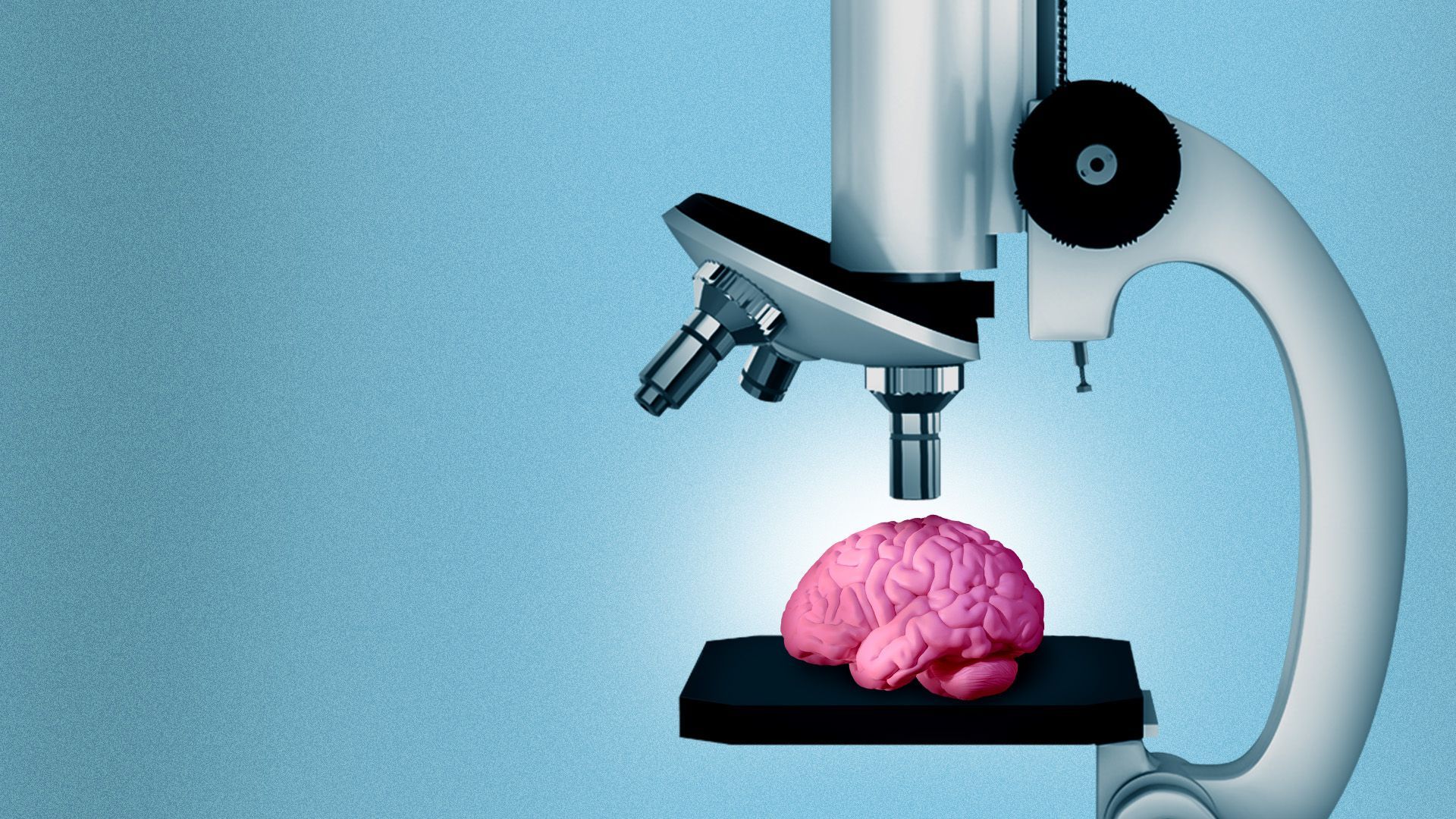
Scientists now have a census of the cells in the human brain — a key step in creating a detailed map of the organ where our thoughts, movements and emotions originate.
Why it matters: Scientists say this parts list — combined with information still to be gleaned about the circuits they form — will help provide much-needed insights into diseases and disorders that affectthe brain.
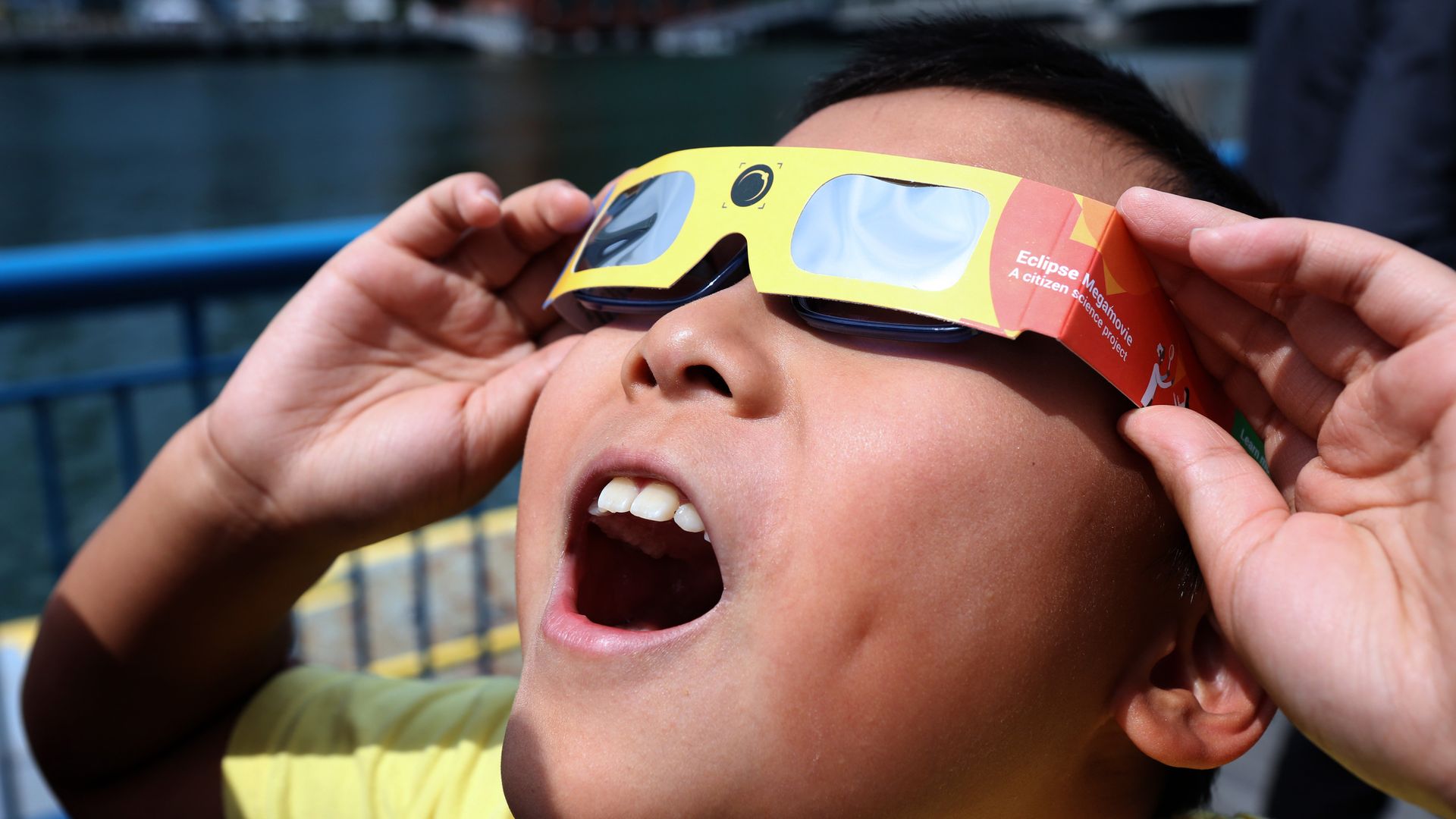
Taking a glimpse at Saturday's solar eclipse — even a quick one — can cause damage if you don't wear the right protective eyewear.
Why it matters:NASA warns that "there is no time when it is safe to look directly at the Sun" without protection such as eclipse glasses and special-purpose solar filters.
A rare chance to see a solar eclipse arrives Saturday for most of the country.
The big picture: It depends on where you're located if you'll be able to see an annular solar eclipse — also known as a "ring of fire" eclipse — or a partial solar eclipse.
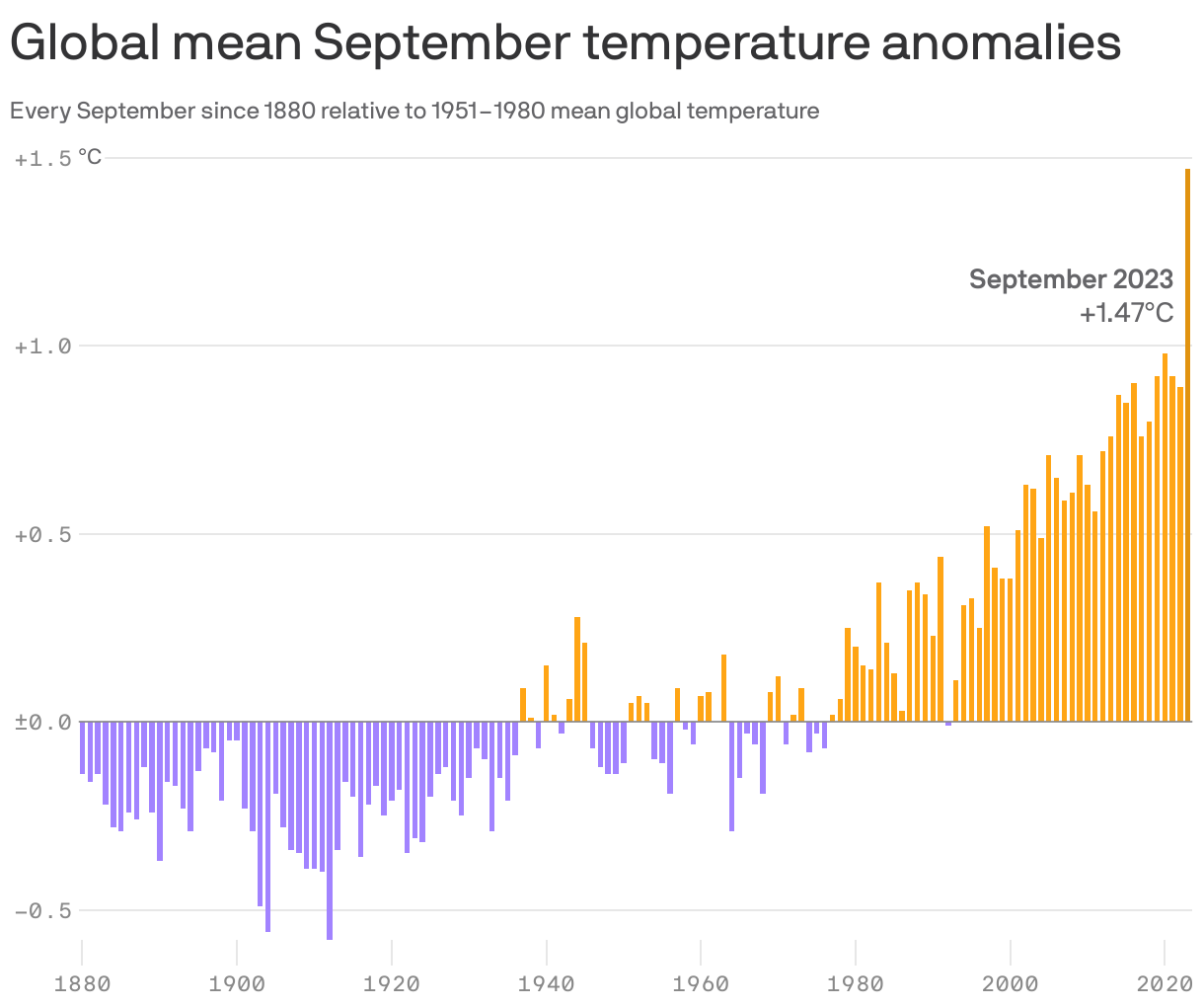
Sweltering temperatures baking the globe this year, both on land and sea, have amplified the odds of the Earth setting an inauspicious record.
Driving the news: Months of hotter-than-normal weather have made the planet go from a 46.8% chance of having the warmest year on record at the end of July, to a greater than 99% chance of this outcome now, according to new data from NOAA.
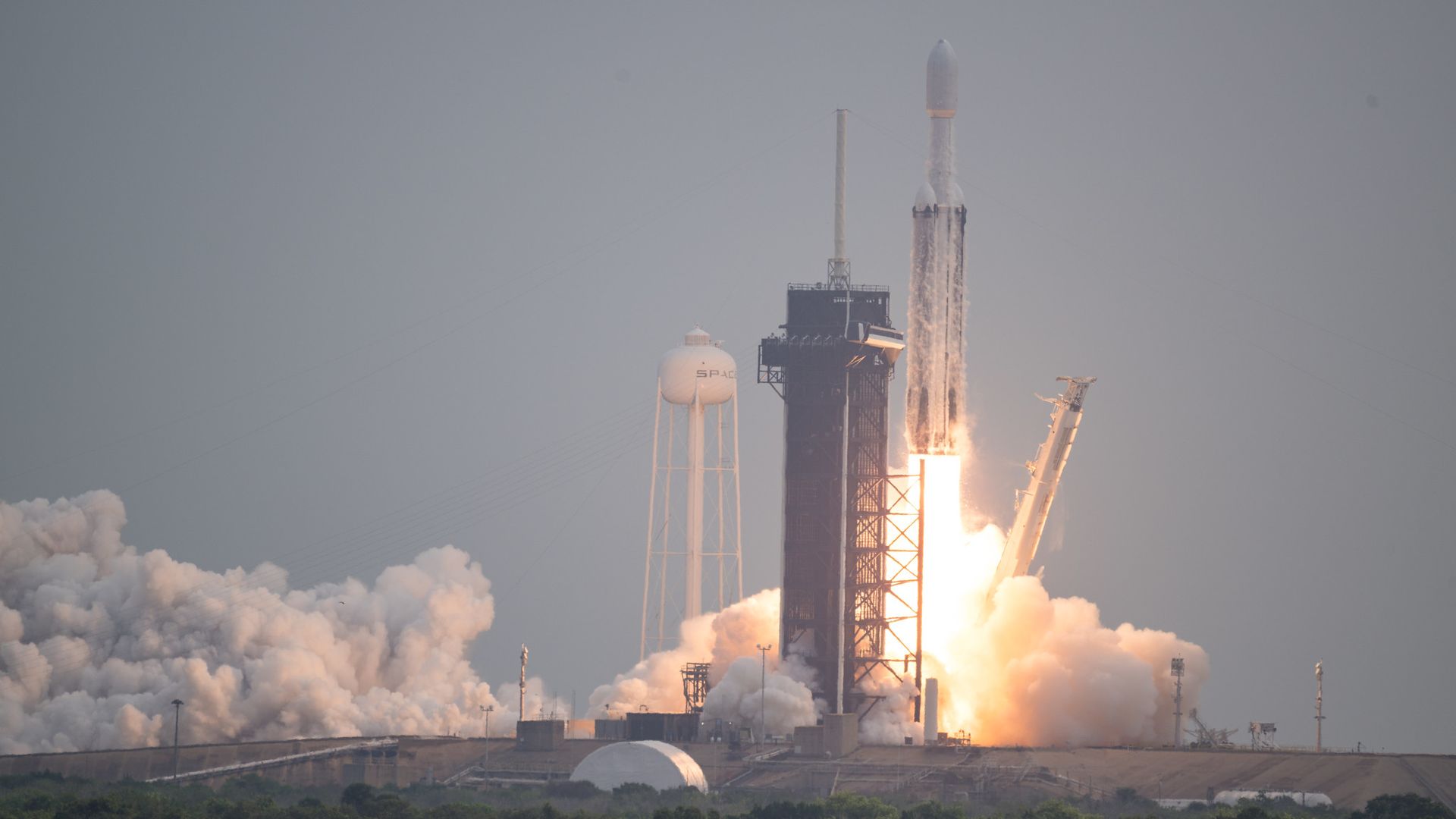
A NASA mission launched on its journey to explore an odd metallic asteroid on Friday morning.
Why it matters: Scientists think that the asteroid Psyche might be a fragment of a metallic core of a long-dead protoplanet that formed early in the solar system's history.