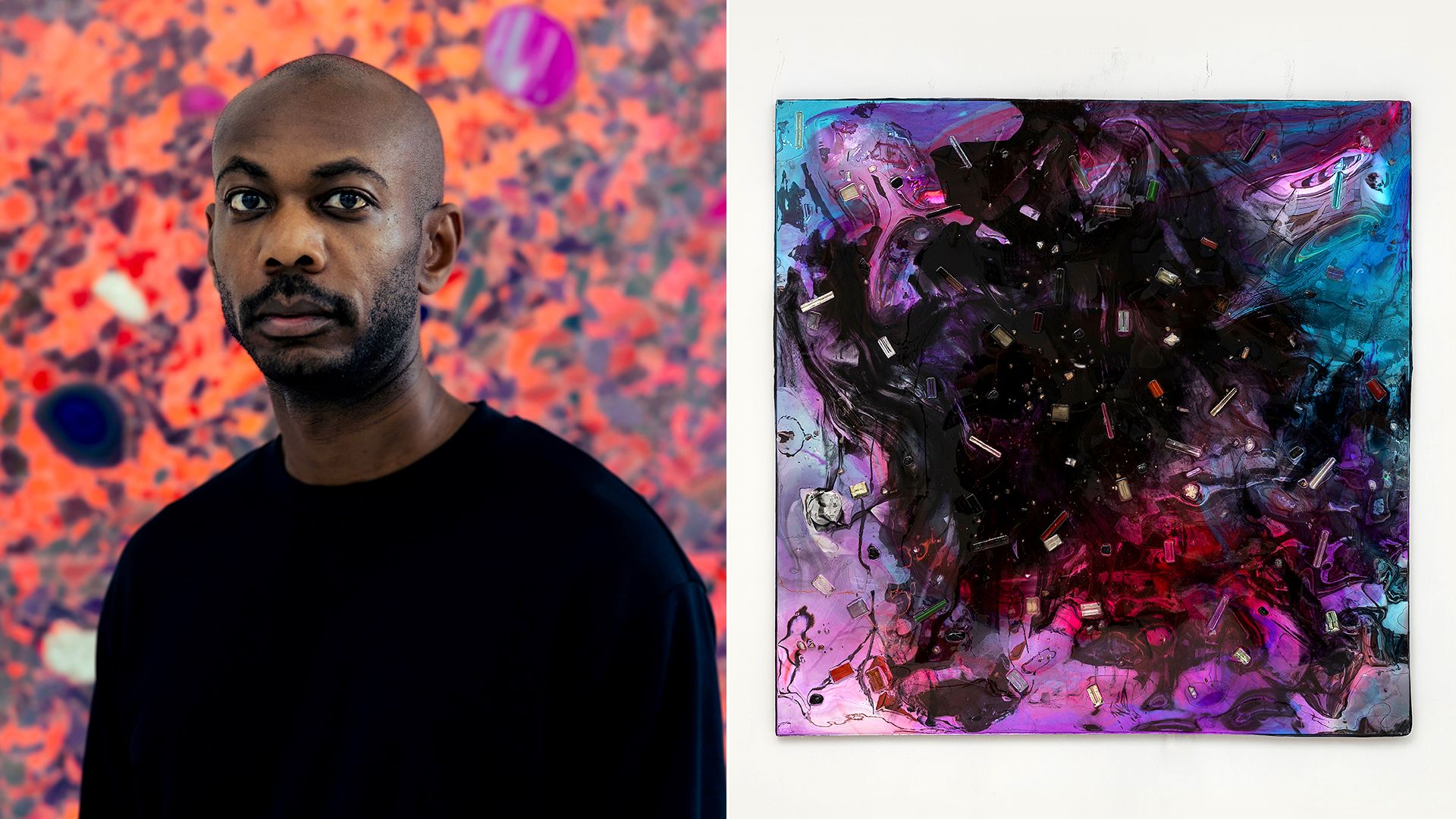
Isaac Newton used prisms to break down the components of light into the spectrum of colors we see. Those experiments inspire abstract artist Alteronce Gumby in his paintings, made with tiny shards of glass and gemstones, that are his own analysis of light and color.
The big picture: Color frames the world we see. Gumby — whose first solo show, The Color in Everything, is currently up at the Nicola Vassell Gallery in New York City — seeks to redefine color, for the eye and for our society.
Science was front and center in Chinese President Xi Jinping's address to the Communist Party Congress on Sunday, reiterating the country's aspirations and potential paths to becoming a global science and tech powerhouse.
The big picture: "Science and tech is the most important aspect of China’s overall desire to be self-reliant," says Kit Conklin, a senior fellow at the Atlantic Council's GeoTech Center. "It fuels everything."
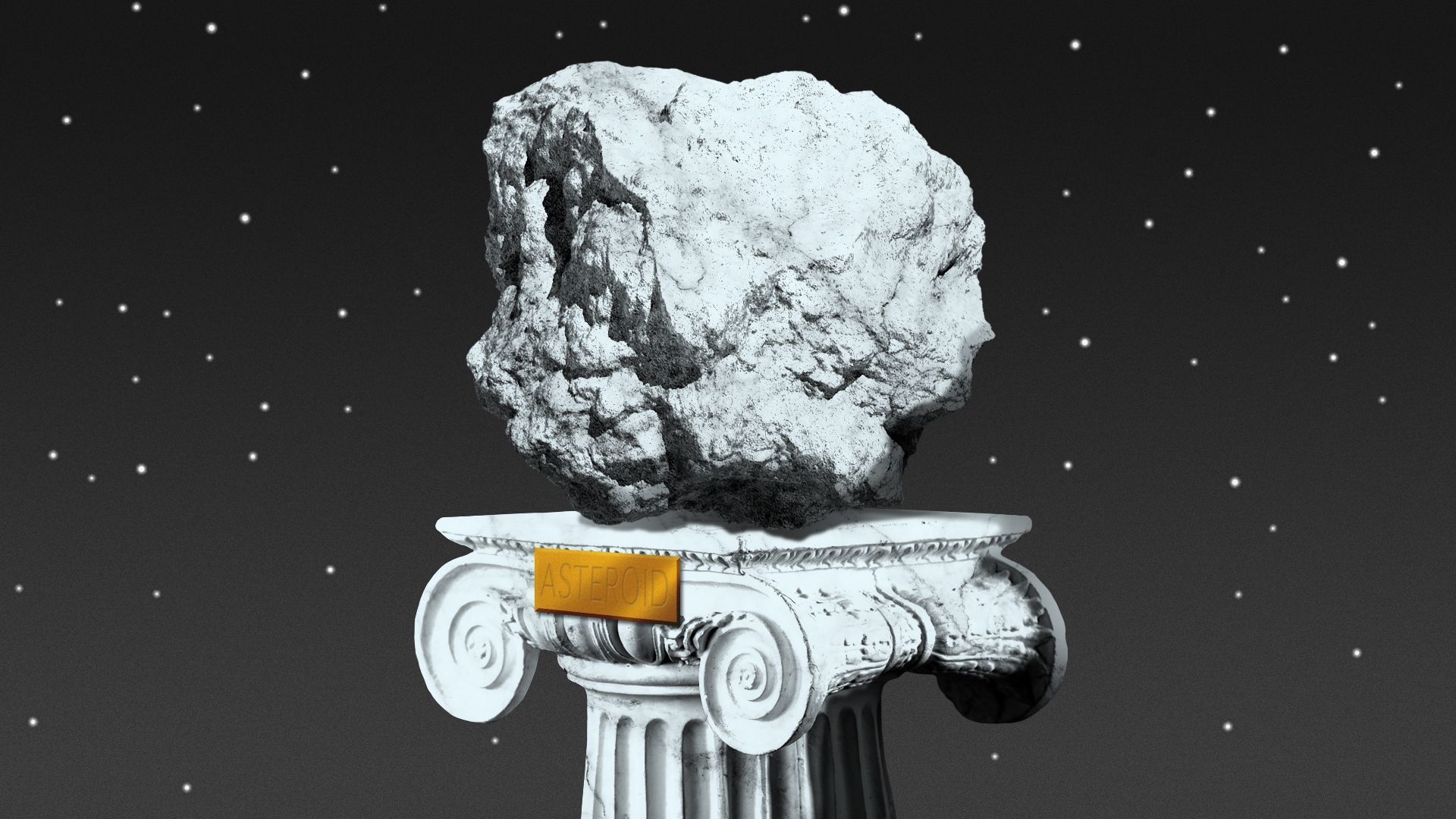
New studies, missions and rich data about asteroids are giving scientists a sharper picture of the solar system's history.
Why it matters: Asteroids are leftovers from the dawn of the solar system that carry a record of the materials that built planets. They could help piece together how the solar system formed — and how life-generating water arrived on Earth.
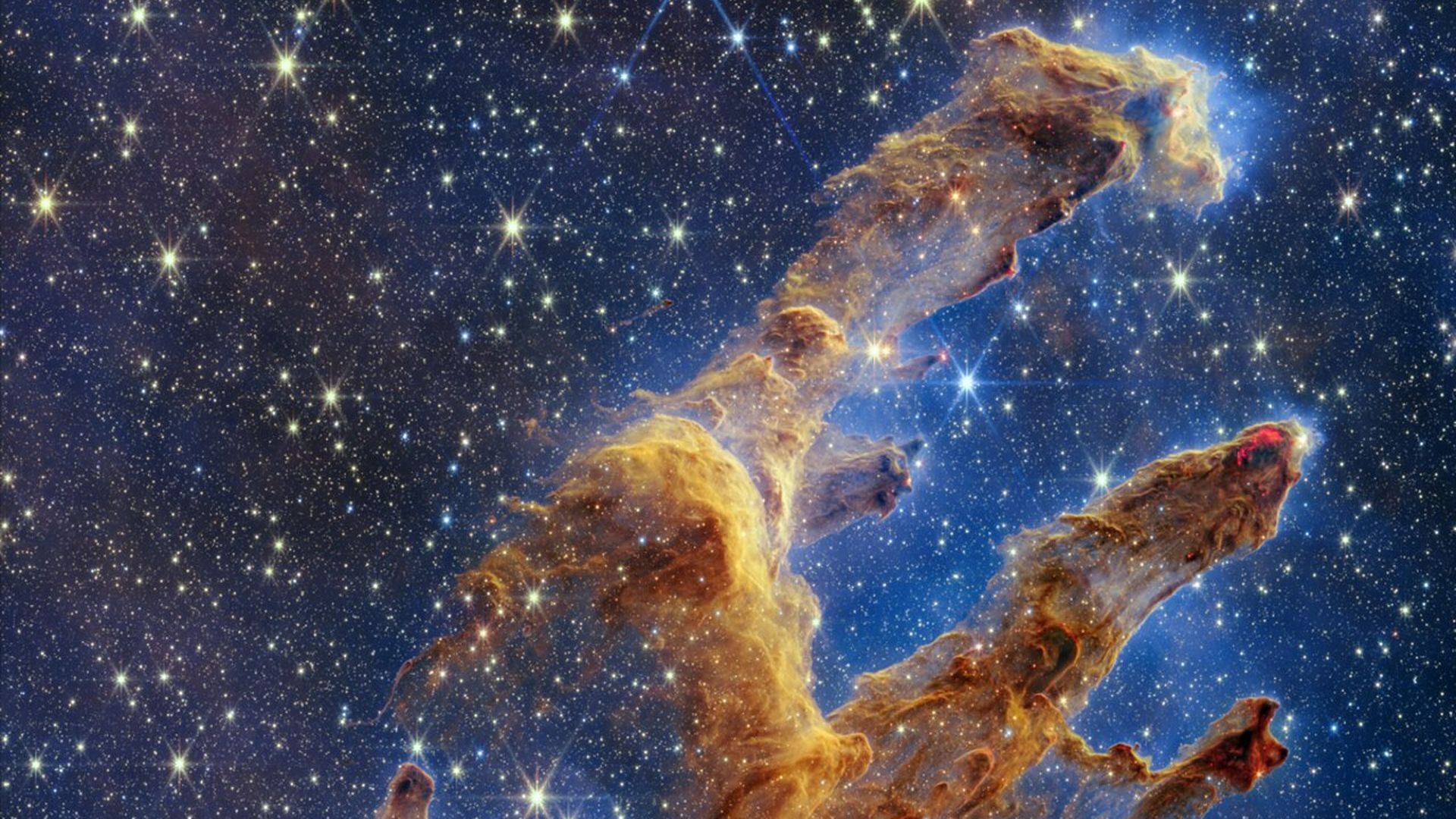
Towers of dust stand out against a background of baby stars in a new, instant classic photo taken by the James Webb Space Telescope.
Why it matters: The photo revisits the Pillars of Creation, a part of space made famous by the Hubble Space Telescope. It also lays the groundwork for scientists to improve their understanding of this region and others like it.
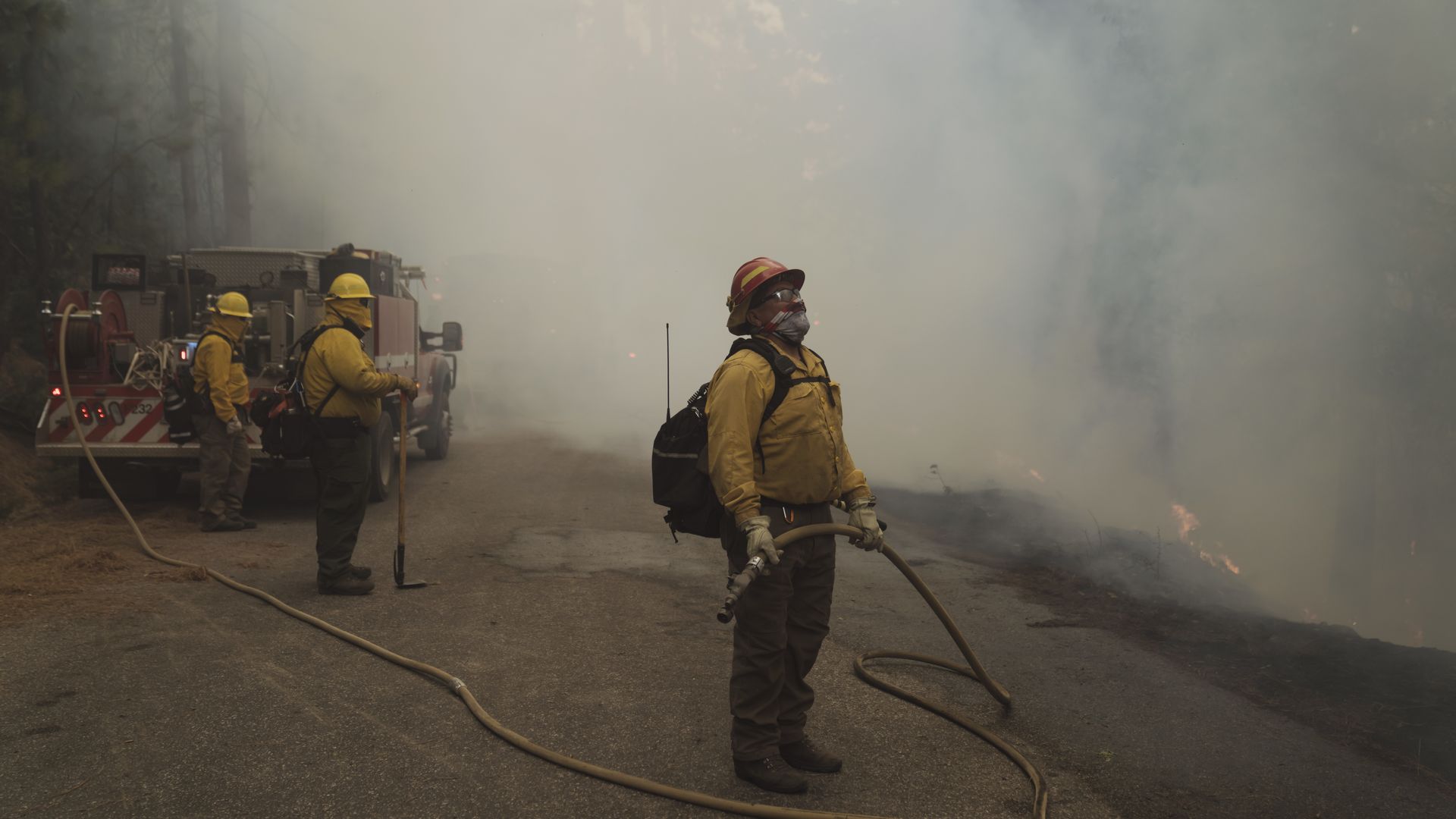
Evacuation orders remained for thousands in southwest Washington state on Tuesday due to a wind-driven wildfire in southwest Washington state that exploded to 2,000 acres over the weekend before diminishing slightly.
The latest: By Tuesday night, the Nakia Creek Fire was burning across nearly 1,800 acres and was 5% contained, according to Inciweb, an interagency website that tracks wildfires. Evacuation zones shrank further as "cooler temperatures and high relative humidity aided firefighters," per Inciweb.