About two-thirds of the world's population could starve to death if the United States and Russia engaged in nuclear war, according to a study published Monday.
The big picture: Soot and ash from nuclear weapon detonation would block the sun and cause disruptions to the Earth’s climate, causing a "catastrophic disruption of global food markets," researchers predicted in a peer-reviewed study led by Rutgers University.
Scientists are entering a new era of space science — one that will be defined by not simply searching for planets circling distant stars, but by figuring out whether any of them could support life.
Why it matters: For the past 30 years, researchers have focused on finding these worlds, collectively called exoplanets, discovering more than 5,000 of them since the first ones were detected in 1992.
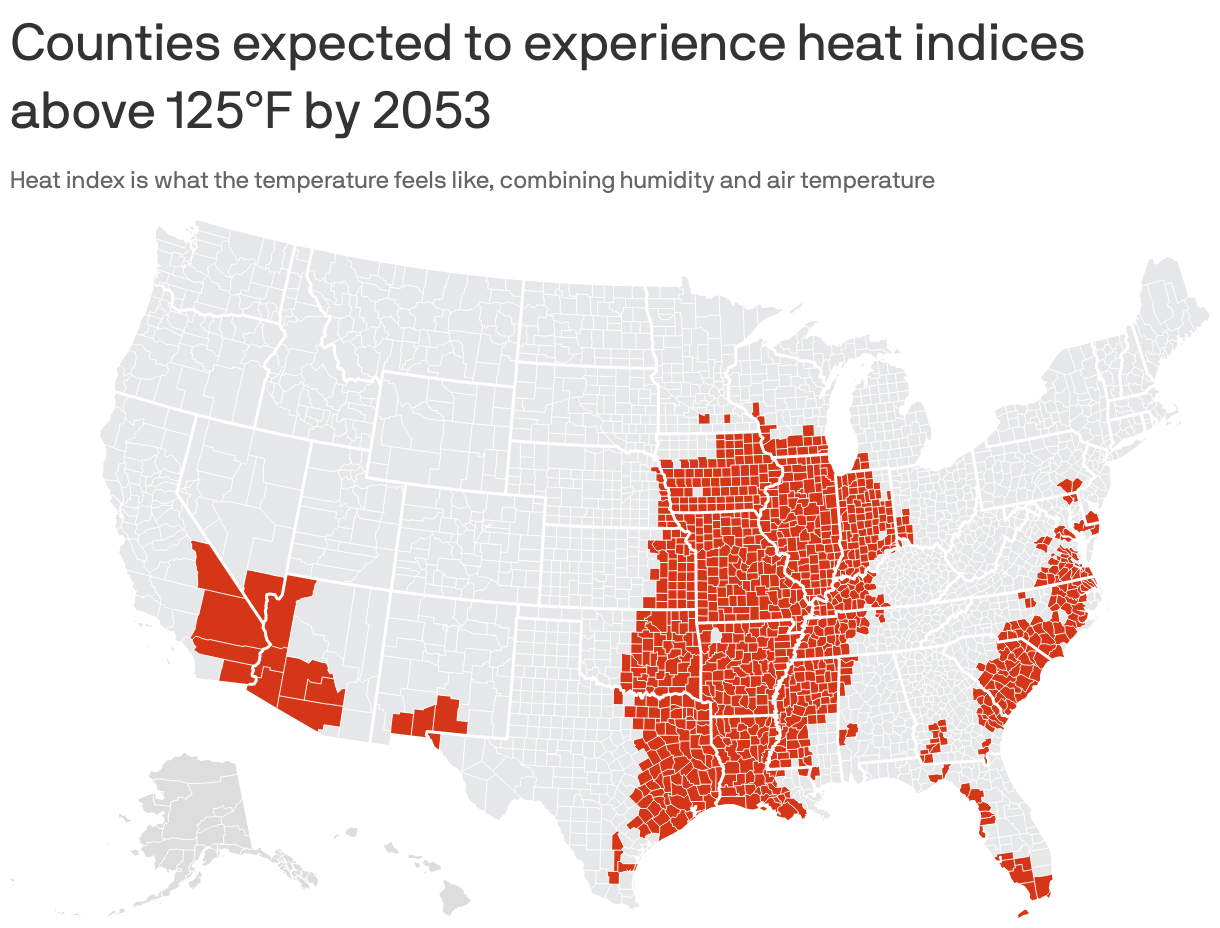
Note: Shaded counties are those that will, on average, have 0.5 days or more at or above a 125F° heat index in 2053; Data: First Street Foundation; Map: Axios Visuals
A new study reveals the emergence of an "extreme heat belt" from Texas to Illinois, where the heat index could reach 125°F at least one day a year by 2053.
The big picture: In just 30 years, climate change will cause the Lower 48 states to be a far hotter and more precarious place to be during the summer.
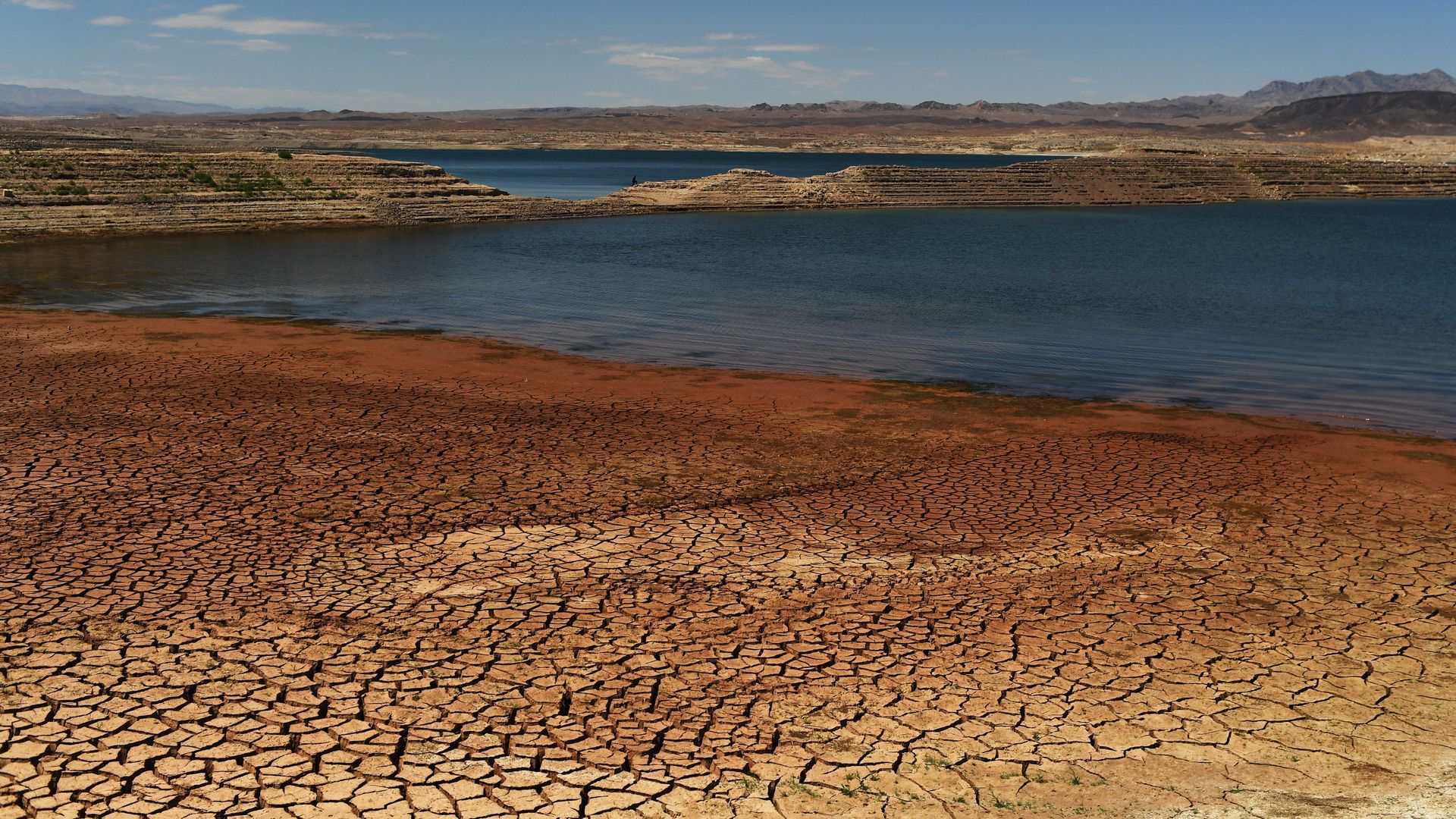
Officials warn a forecast downpour that has some 7 million people on flood watch won't be enough to stave off the need for drastic water cuts as the Colorado River's depleted reservoirs sink to near-crisis levels.
Driving the news: As the National Weather Service issued a flood watch for an area coveringfrom Arizona to Wyoming, the U.S. Bureau of Reclamation has given Western states that rely on the Colorado River Basin for water supplies until Tuesday to outline how they plan to make cuts.


/2022/08/15/1660595620709.gif?w=3840)