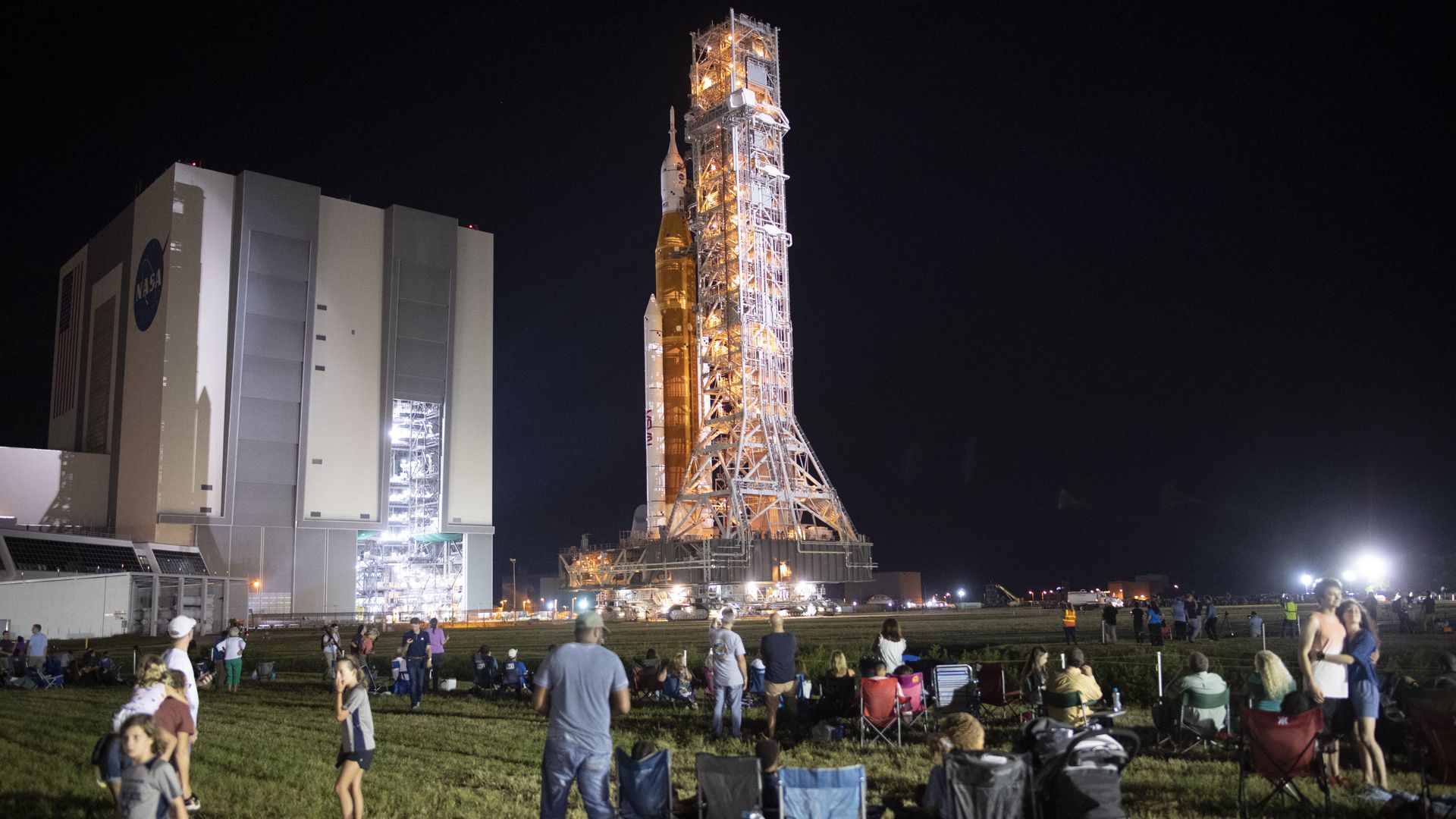
NASA's Space Launch System (SLS) rocket arrived at a launch pad at Kennedy Space Station on Wednesday, roughly two weeks before it's set to make a debut test launch.
Why it matters: The flight will mark the first mission in NASA's Artemis program, through which the space agency hopes to send astronauts back to the moon.
About two-thirds of the world's population could starve to death if the United States and Russia engaged in nuclear war, according to a study published Monday.
The big picture: Soot and ash from nuclear weapon detonation would block the sun and cause disruptions to the Earth’s climate, causing a "catastrophic disruption of global food markets," researchers predicted in a peer-reviewed study led by Rutgers University.
Scientists are entering a new era of space science — one that will be defined by not simply searching for planets circling distant stars, but by figuring out whether any of them could support life.
Why it matters: For the past 30 years, researchers have focused on finding these worlds, collectively called exoplanets, discovering more than 5,000 of them since the first ones were detected in 1992.



/2022/08/15/1660595620709.gif?w=3840)