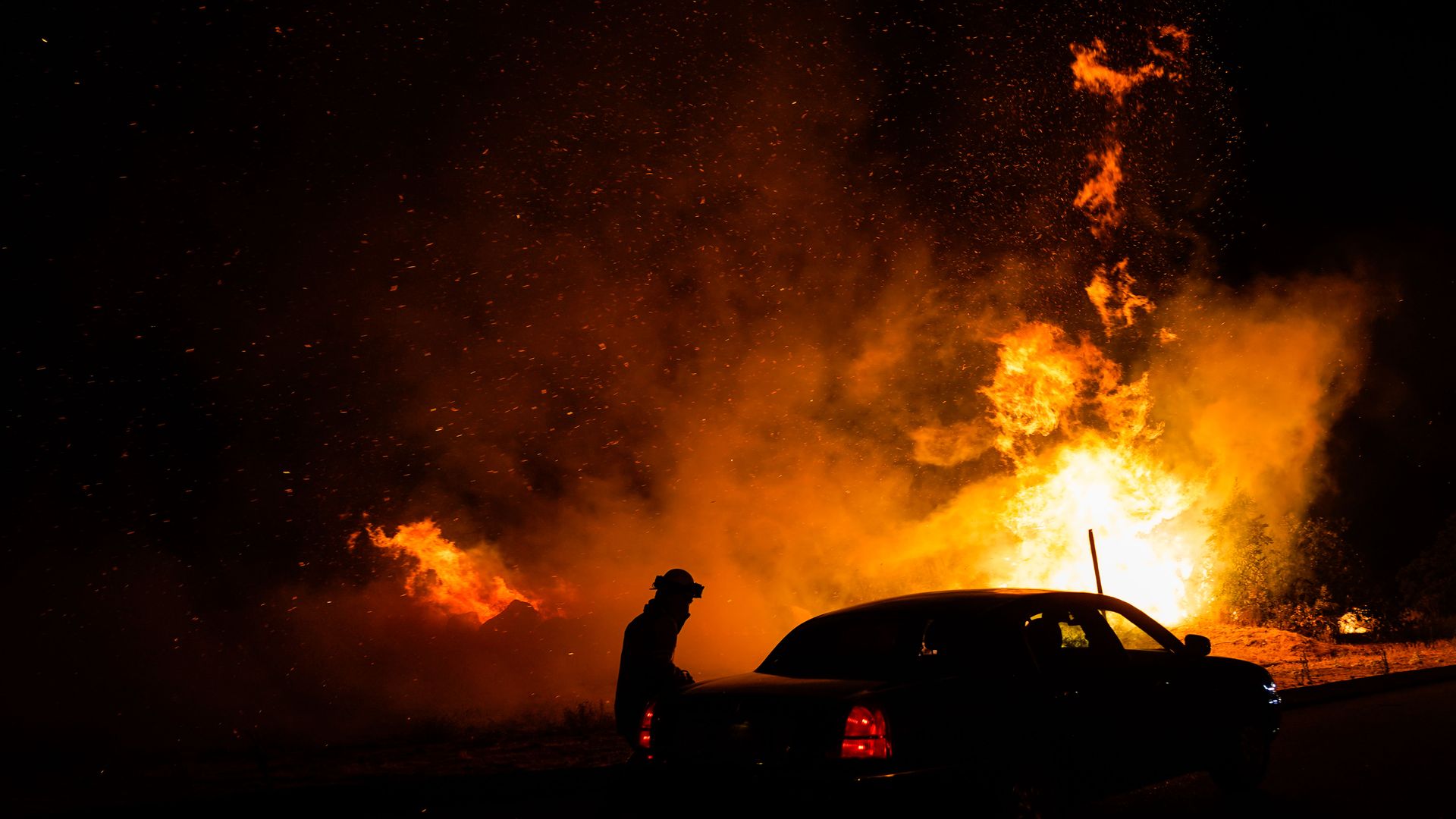
San Francisco's skies were thick with smoke from ongoing wildfires on Wednesday, largely blocking the sun from view amid hazardous air quality across the Bay Area.
The big picture: Roughly 14,000 firefighters are battling 28 major wildfires across California. There have been eight fatalities from wildfires this year and over 2.5 million acres have burned across the state, per Cal Fire.
Pilots wearing night-vision goggles landed helicopters in California's burning Sierra National Forest to save 164 people trapped by flames and were working to rescue 17 others, Gov. Gavin Newsom (D) said during a news conference Tuesday.
What's happening: Firefighters are battling more than two dozen major blazes, as PG&E cut power to 170,000 customers in a safety shutdown.
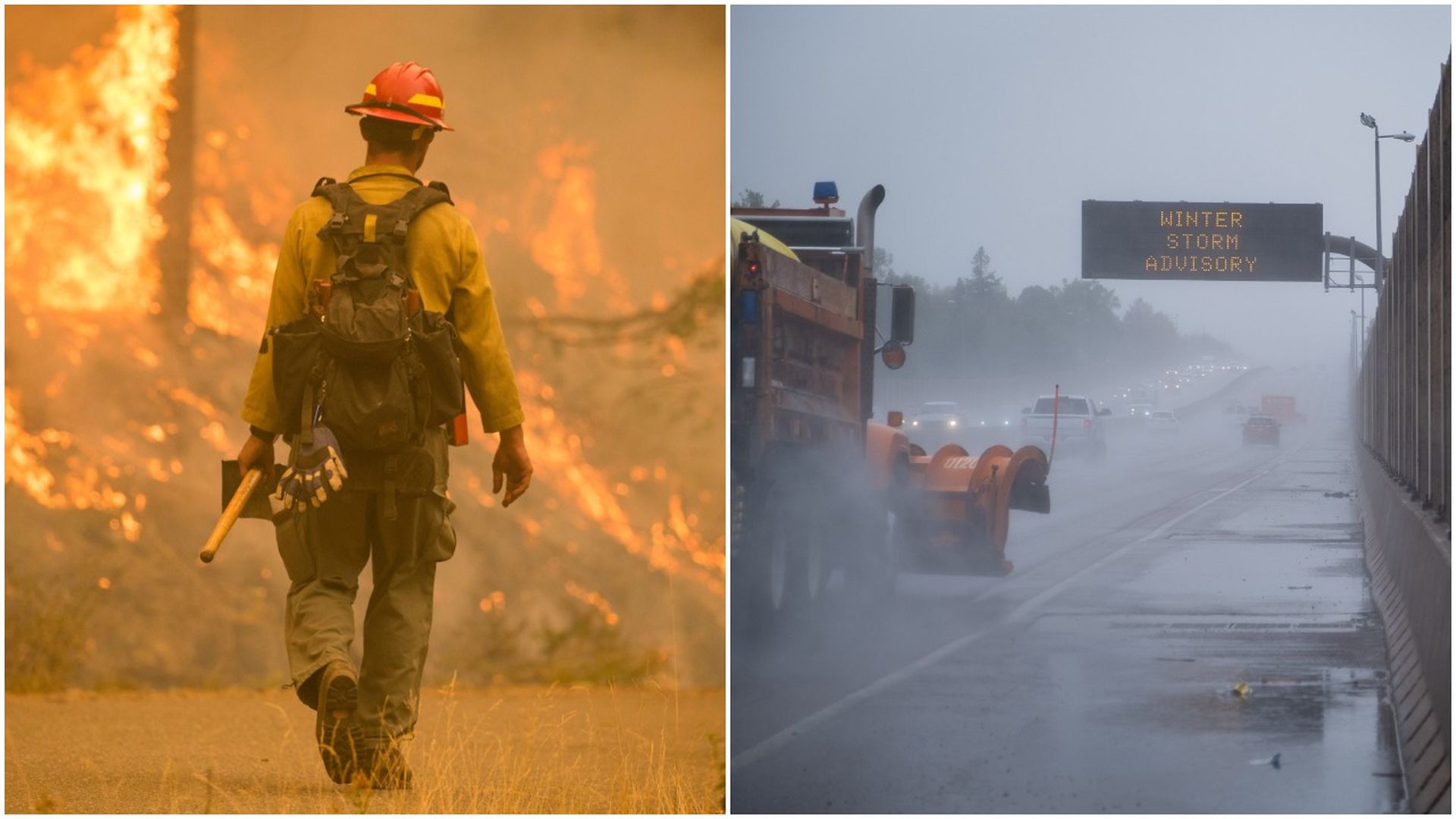
The Western U.S. is being hit by wildfires that have destroyed hundreds of thousands of acres along the Pacific Coast, while Colorado has seen records for both hot and cold temperatures within three days.
Driving the news: California fighters are battling more than two dozen major fires, as PG&E cut power to 170,000 customers in a safety shutdown. In Oregon, thousands were forced to evacuate as several large wildfires ravage the state. In Washington state, Gov. Jay Inslee (D) tweeted that 330,000 acres had burned in the state in a single day — "more than 12 of the last 18 entire fire seasons."
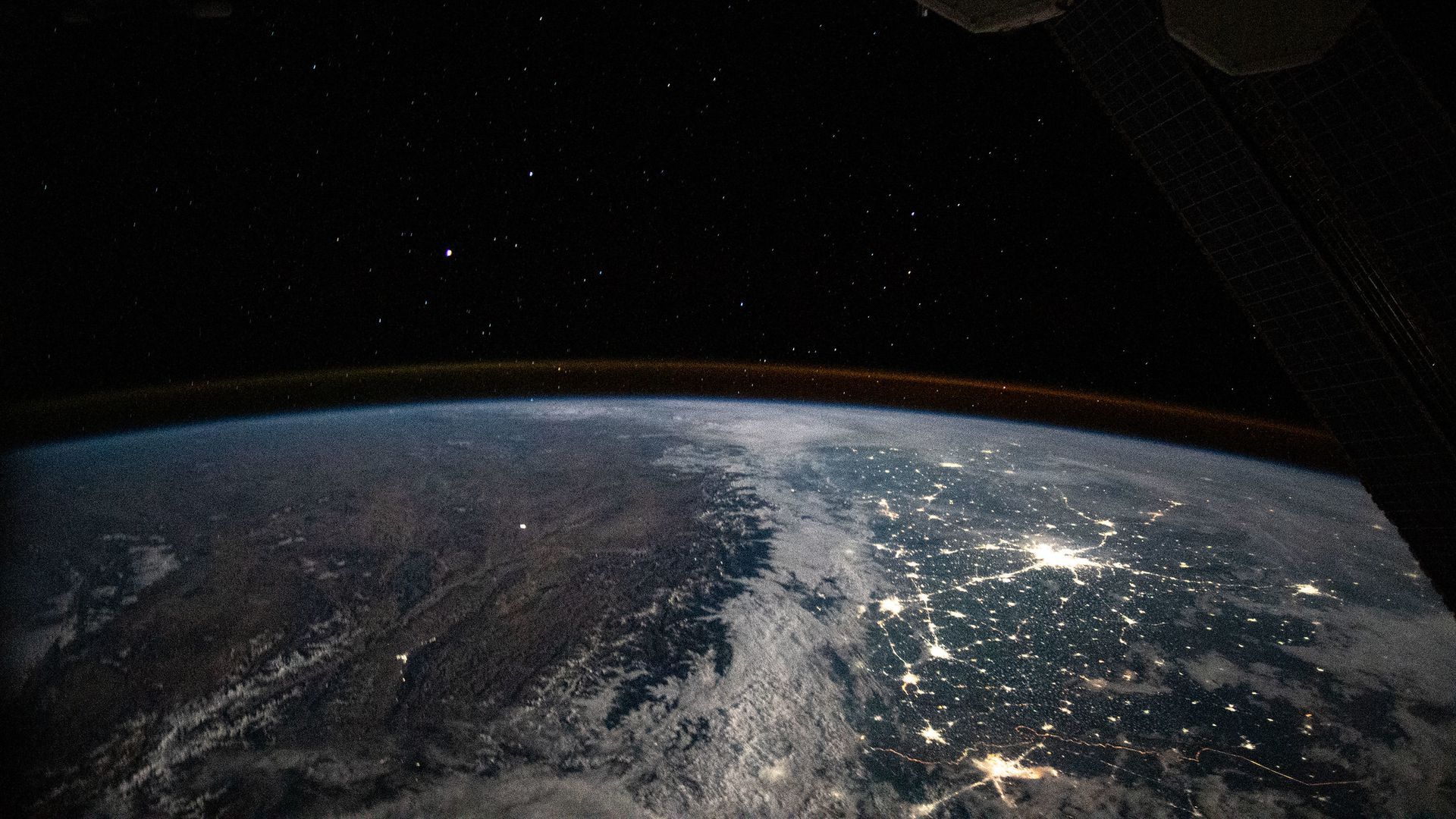
A new space policy directive issued by the Trump administration last week calls on the space industry to develop cybersecurity measures to protect essential satellites in orbit.
Why it matters: GPS, communications and other satellites are integral to U.S. national security. As other nations continue to develop their space capabilities, experts are warning that key U.S. assets in orbit could be vulnerable to attacks.
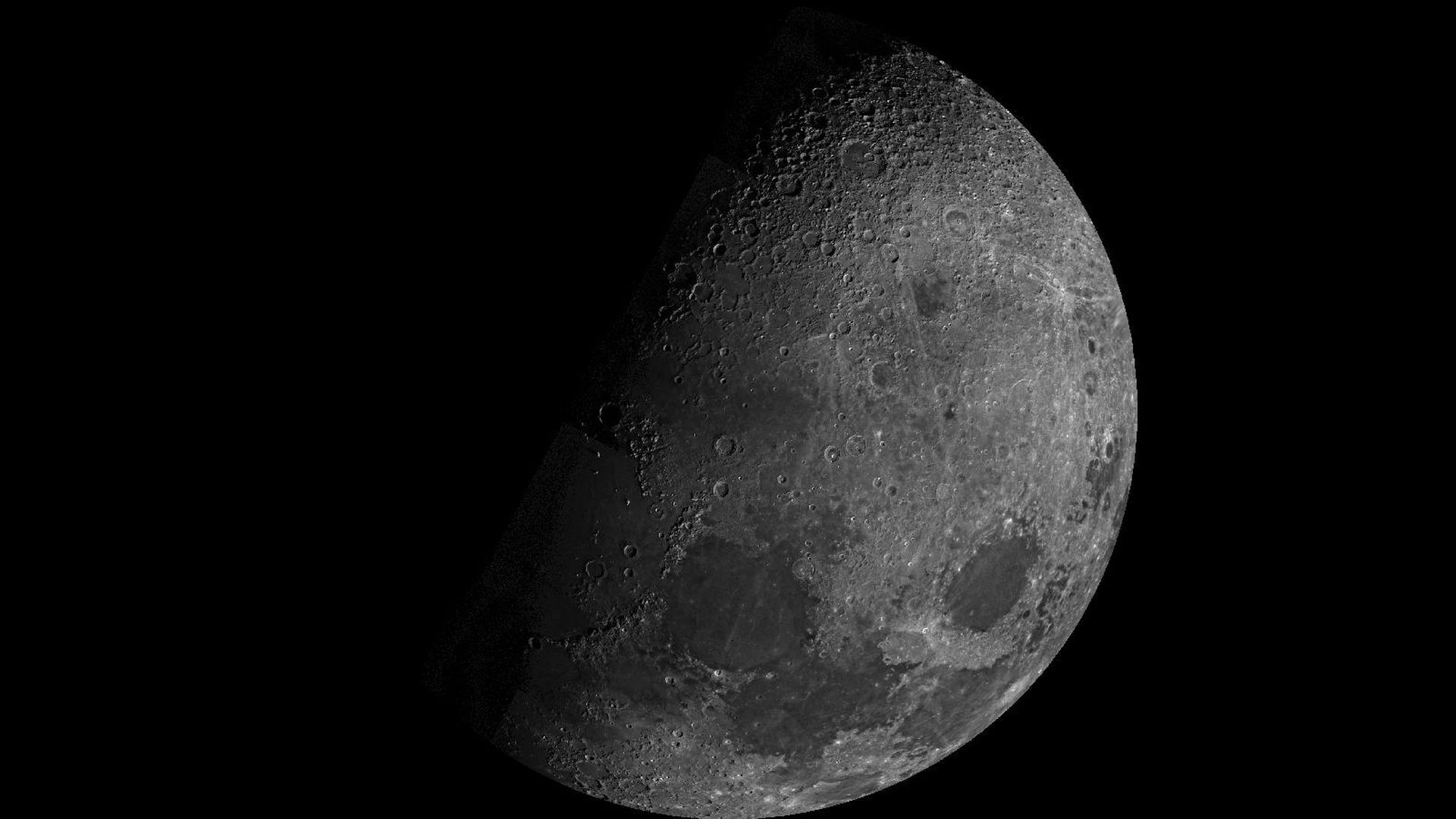
Researchers have found rust on the Moon, complicating our picture of how Earth's natural satellite has evolved over the course of billions of years.
Why it matters: Understanding the Moon and its composition is key not just for scientists working to learn more about how planetary systems form and change over time but for future explorers who hope to make use of lunar resources.
The hunt for dark matter — the mysterious substance that makes up the majority of matter in the universe but hasn't been directly observed — is turning to new places and looking for new candidates.
The big picture: Regular matter — the stuff that makes up you, me and everything we know and see out in the universe — is only 15% of the total matter in the universe.
Genetically enhanced mice retained or increased muscle mass after spending a month on the International Space Station.
Why it matters: The findings of the study, published Monday in the journal Proceedings of the National Academy of Sciences, suggest that muscle and bone loss could be mitigated for astronauts on space flights as well as for people on Earth who experience muscle degeneration.