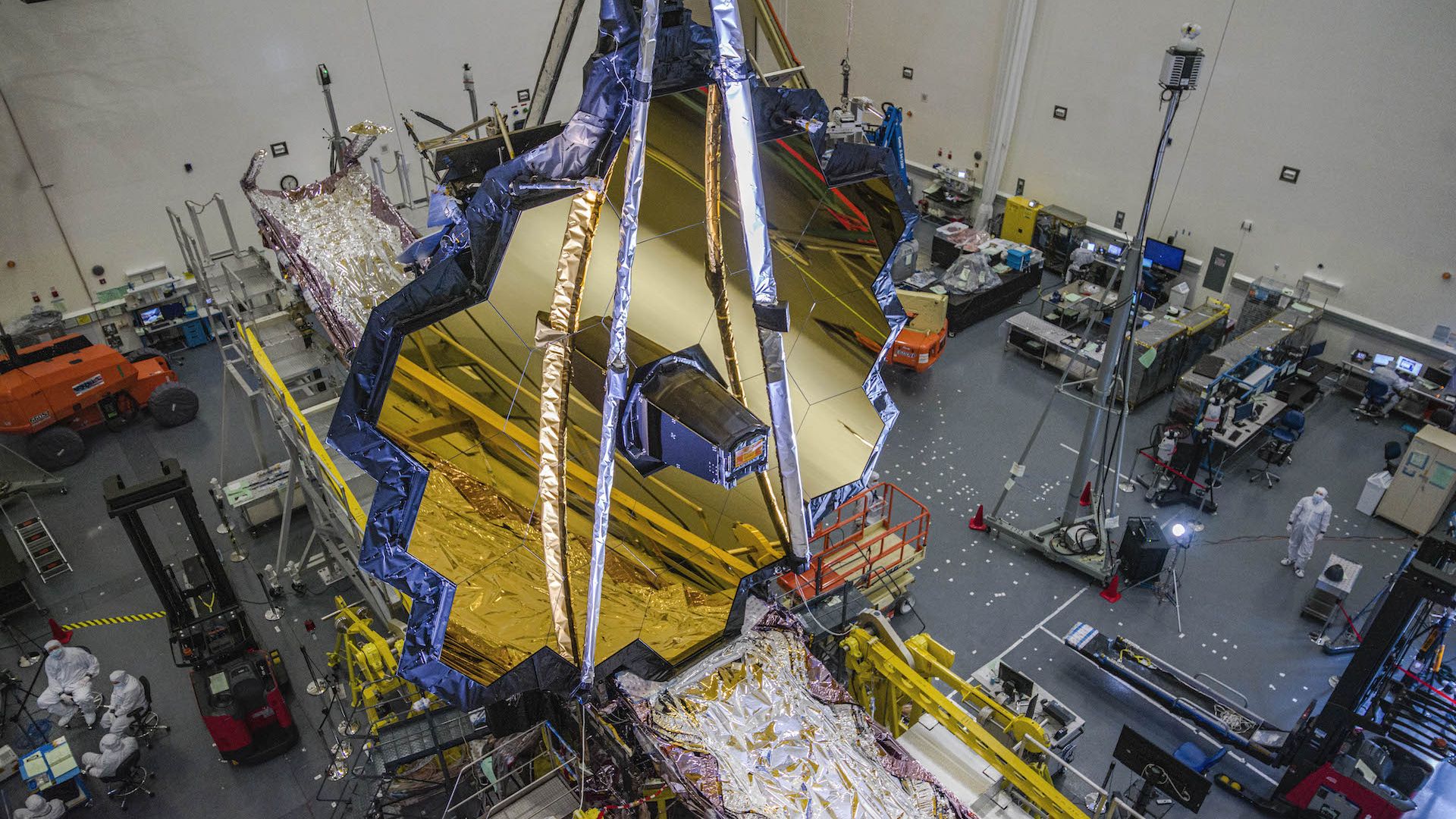
The launch of NASA's James Webb Space Telescope has been delayed from March to October 31, 2021, in part due to the coronavirus pandemic, the space agency announced Thursday.
Why it matters: The Webb is designed to be the space agency's successor to the Hubble Space Telescope as it nears the end of its operational life.
The plants we eat have a long history on Earth, steered in part by human behaviors and preferences for color, taste and size.
How it works: A pair of researchers in Belgium is combining art history and genetics to try to link genetic mutations in fruits, vegetables and other plants to changes in their appearance, or phenotype, over time.
A spacecraft on a mission to the Sun has beamed back new images that show never-before-seen features of our nearest star.
Why it matters: The Solar Orbiter, which launched to space in February, is designed to take close-up images of the star in order to help scientists better predict its behavior. These photos represent a step forward for that work.
The Trinity nuclear test 75 years ago represented our first reckoning with a technology that could potentially destroy us.
Why it matters: Nuclear weapons are still with us, even as we grapple with potentially dangerous and unpredictable new technologies like gene editing and artificial intelligence. How we handle the challenges they present will help decide what kind of future we have — and whether we have a future at all.
Boston Scientific (NYSE: BSX) is considering a sale process for its snake venom unit, which could fetch upwards of $1 billion, per multiple reports.
Why it matters: Because snake antivenom products, like Boston Scientific's CroFab, are the sort of niche things you never think about until that unfortunate moment when it's all you can think about.