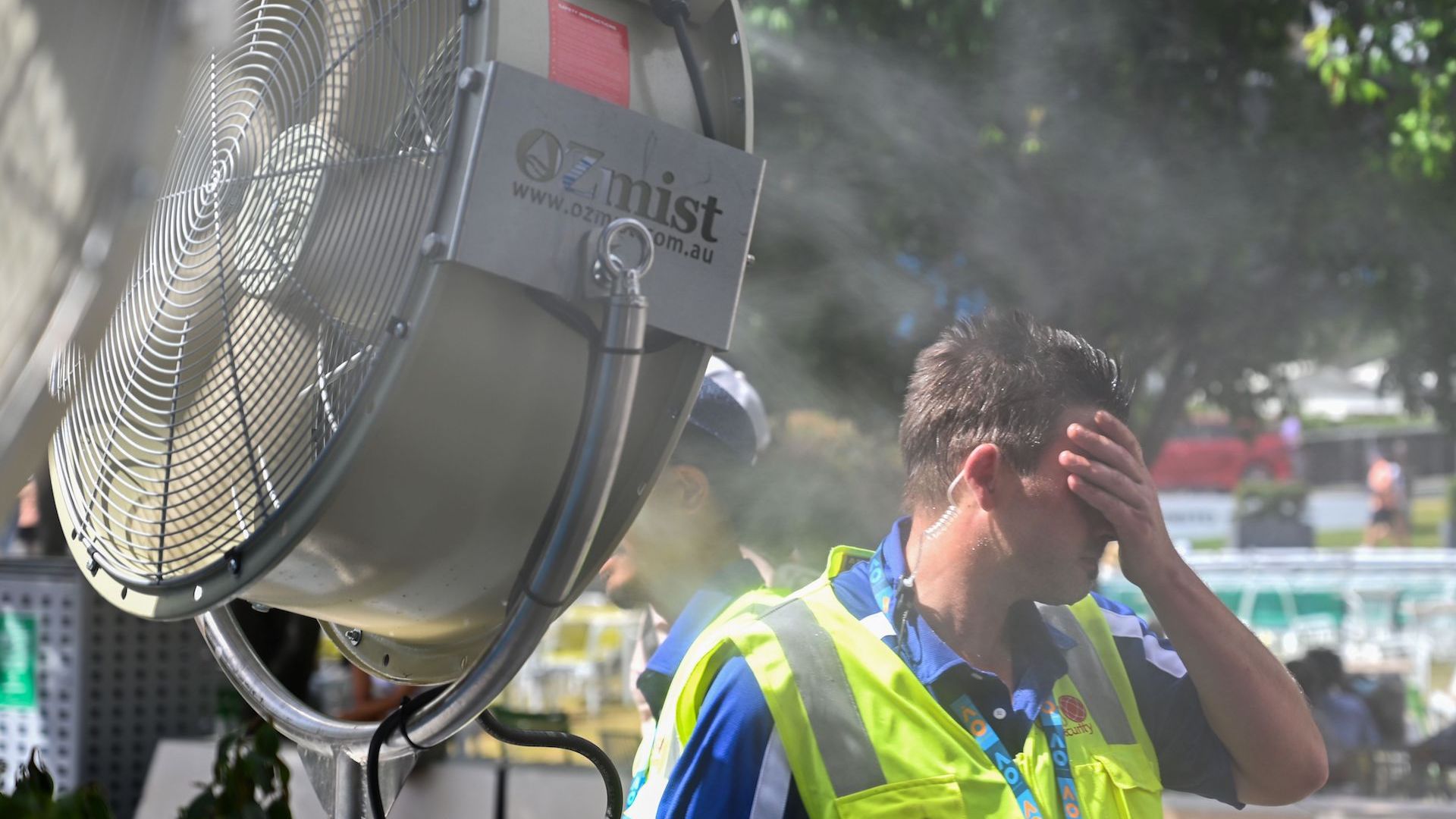
Australia is in the grips of what has become a historic, unrelenting series of extreme heat events that have broken all-time temperature records.
The big picture: The heat waves, which have touched every state and territory in the country, began in November and have extended through January. With temperatures exceeding 120°F (48.8°C) in some locations, this summer may go down in history as Australia's hottest on record. In addition, January is likely to be the nation's hottest month on record.
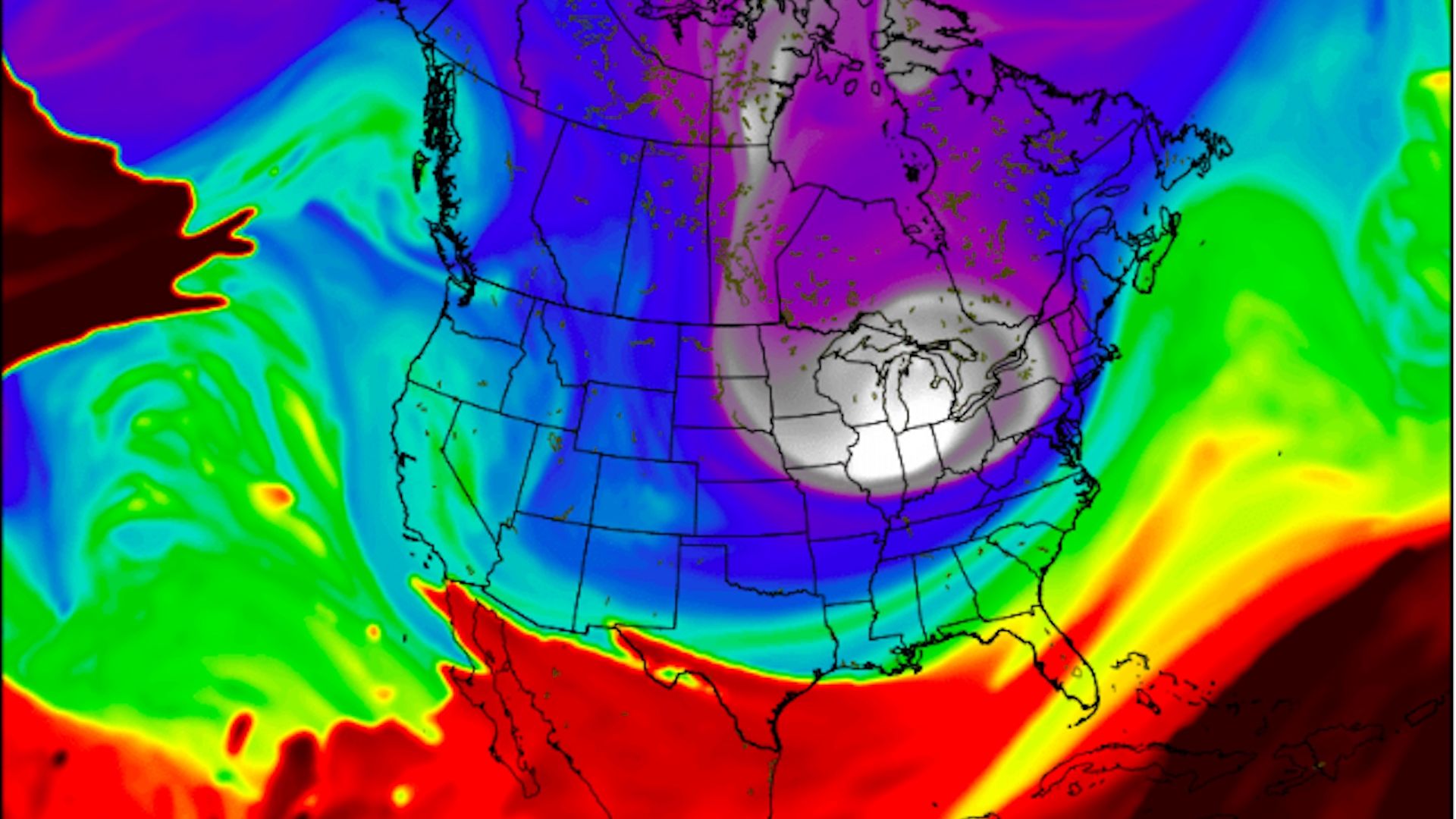
The coldest air of the season will roar into the Midwest and Ohio Valley next week as a lobe of the polar vortex comes south from the Arctic Ocean. The cold will eventually reach the Mid-Atlantic and Northeast.
Why it matters: The extreme cold outbreak may set daily temperature records, including records for the coldest high temperature on a particular date. It's also possible that an all-time cold record or two will be tied or broken. Temperatures hovering in the single digits or lower on Wednesday and Thursday in cities such as Minneapolis, Chicago, , Milwaukee and St. Louis, combined with the wind chill, will make it downright dangerous to be outside at times.
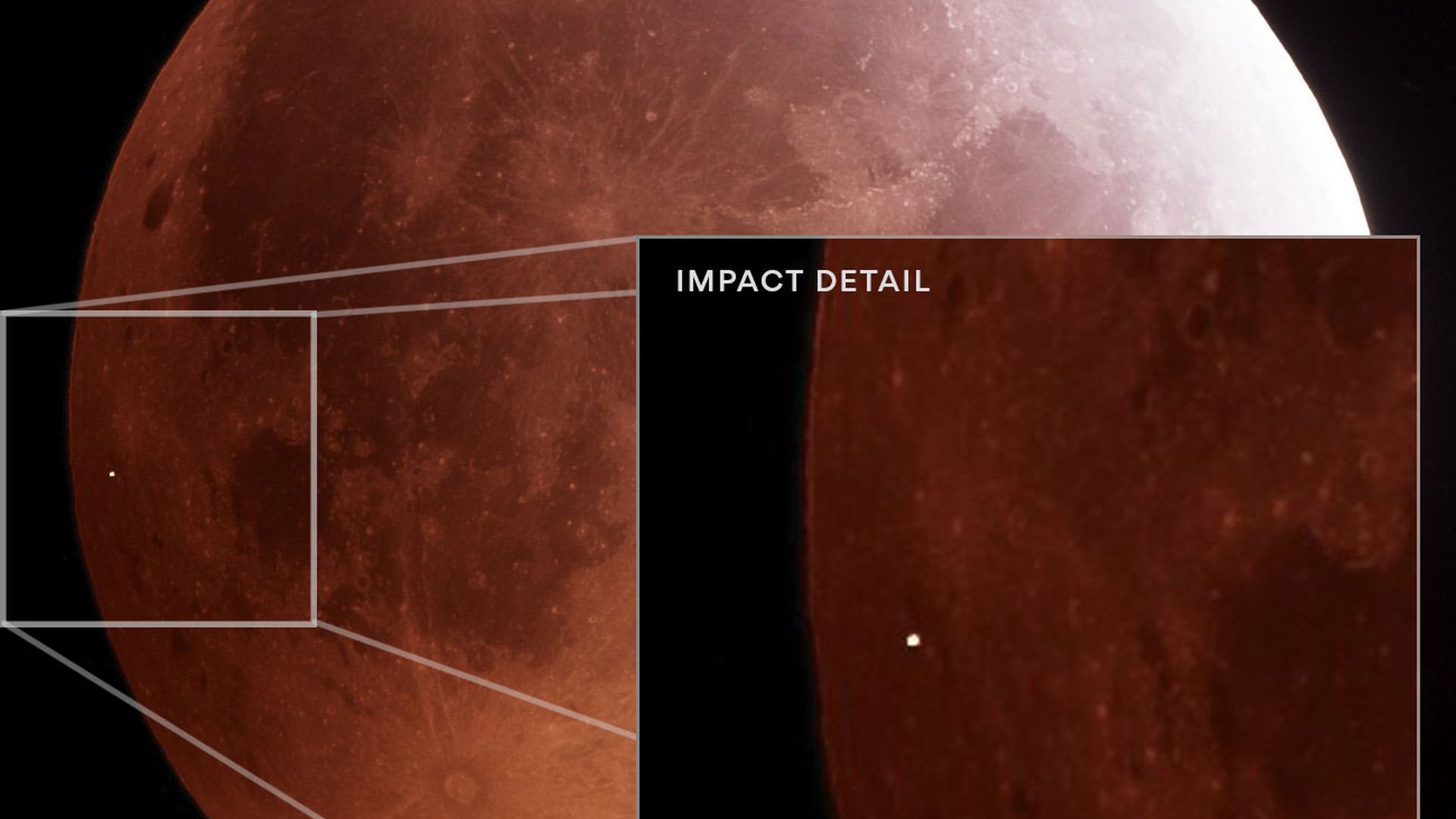
While many of you gazed at the total lunar eclipse on Jan. 20, you probably had no idea you were witnessing something unprecedented. Amateur astronomer Christian Fröschlin of the Netherlands peered up at the skies, and along with some others around the world, he caught a quick glimpse of a bright flash on a corner of the reddish-tinted moon.
Why it matters: While scientists have observed meteorite collisions on the moon before, this appears to be a first to be observed during a total lunar eclipse. According to Nadia Drake, reporting for Scientific American, the moon gets hit on a daily basis by what are typically small meteorites. (Unlike Earth, the moon lacks an atmosphere where such rocks can burn up before hitting the ground.)