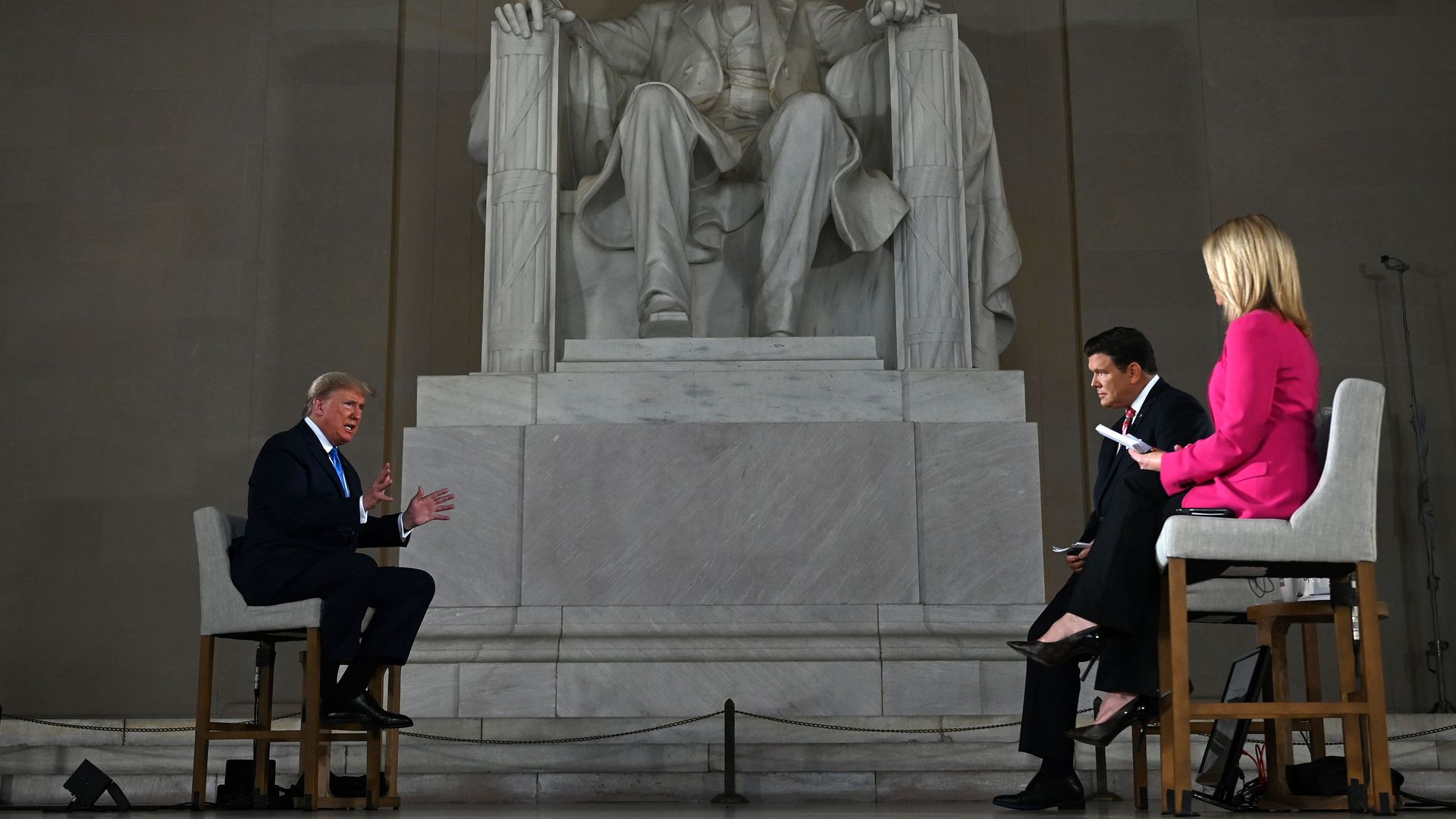
President Trump asserted during a Fox News town hall Sunday night that he's "very confident" the U.S. will produce a coronavirus vaccine by the end of the year.
Why it matters: Trump's timeline is much more optimistic than what most public health officials have predicted. Experts estimate a vaccine could take at least 12–18 months to become widely available.
Pete Gaynor, who runs the Federal Emergency Management Agency, is drafting a document whose title sounds like the stuff of horror movies: "COVID-19 Pandemic Operational Guidance for the 2020 Hurricane Season."
Driving the news: "We're doing a lot of things that are not necessarily in any playbook that has existed," Gaynor told me in an interview on Saturday. "In some cases, we write the playbook as we go."
Don't expect fast action on the next coronavirus stimulus package, known on Capitol Hill as "phase 4." Senior sources in the Republican Senate conference tell me that most GOP senators want to wait a bit before passing another big aid bill.
Between the lines: The two parties are miles apart ahead of the next stage of talks.
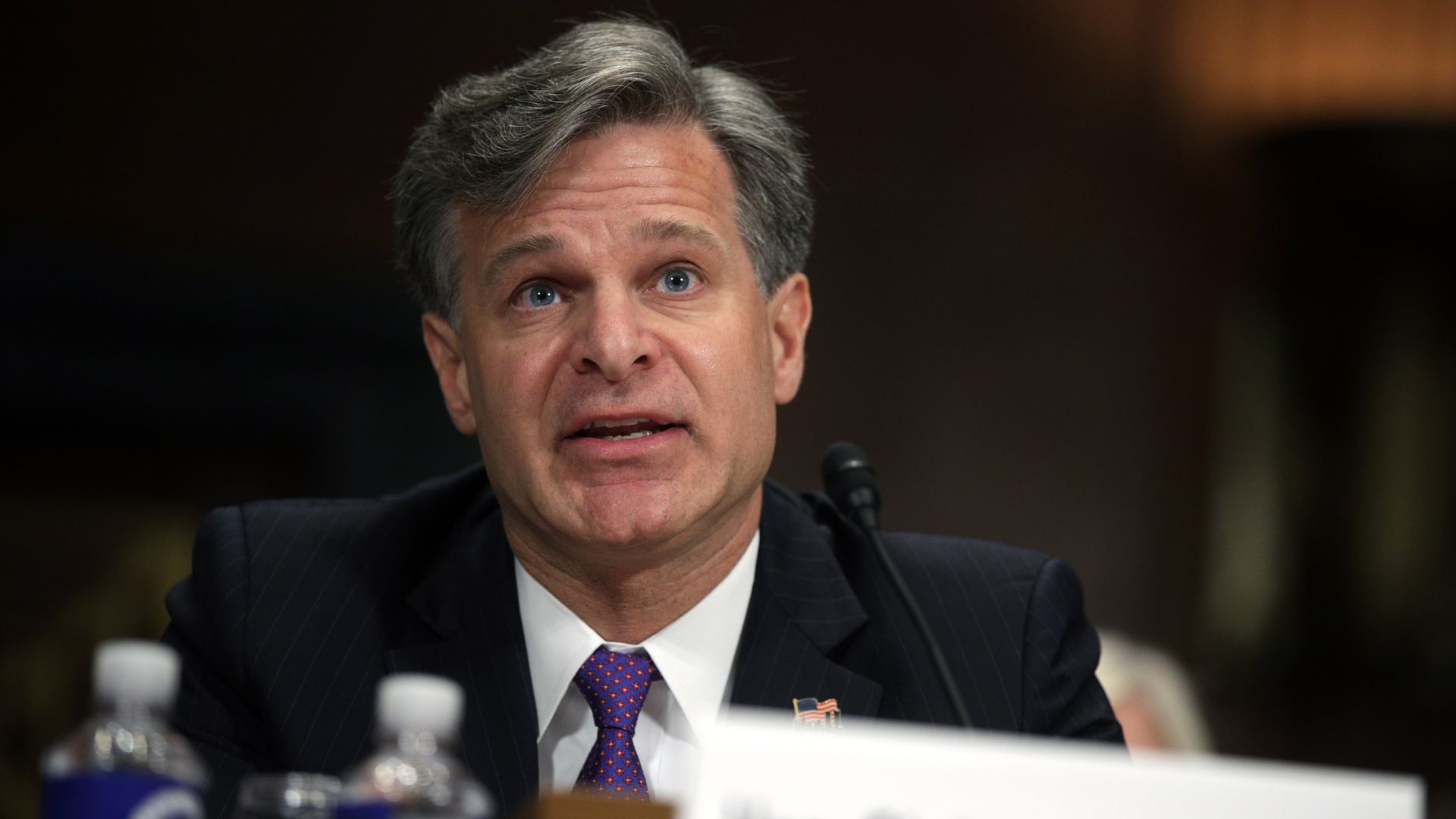
President Trump is not happy with FBI director Christopher Wray and would love to replace him, according to three sources who've discussed the matter with the president.
But Trump has been deferring to Attorney General Bill Barr and is unlikely to remove Wray before the election, these sources said.
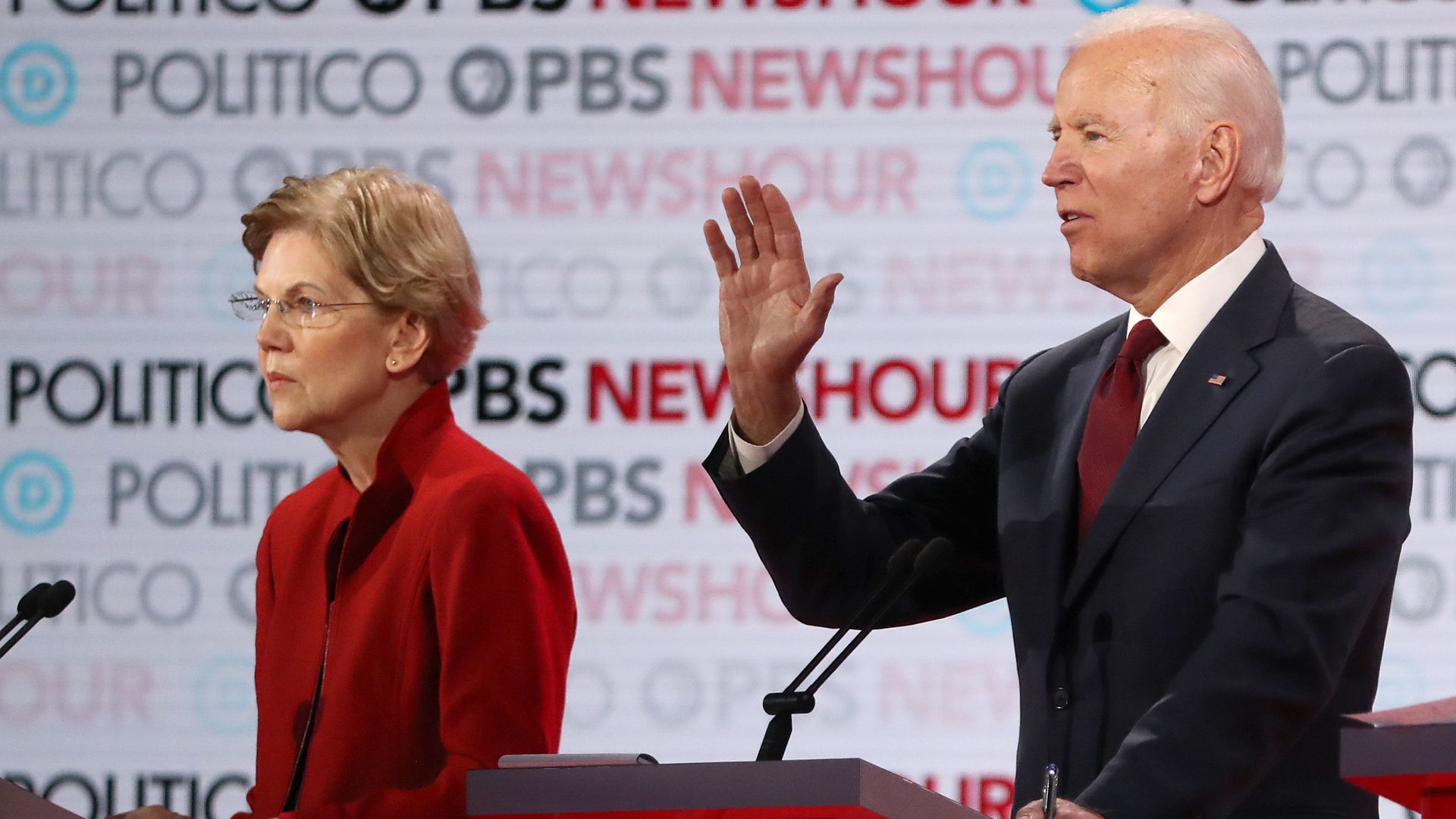
Presumptive Democratic nominee Joe Biden and Sen. Elizabeth Warren teamed up in a joint op-ed in McClatchy to call for better oversight of coronavirus relief funds.
Why it matters: A CBS News poll released Sunday showed Warren is Democrats' top preference for Biden's running mate with 36% of the vote, followed by Sen. Kamala Harris at 19%, Stacey Abrams at 14% and Sen. Amy Klobuchar at 13%.
Michigan Gov. Gretchen Whitmer (D) told CNN's "State of the Union" on Sunday that the protestors calling to reopen her state while bearing Nazi symbols and Confederate flags are "not representative of who we are in Michigan," denouncing them for celebrating "some of the worst racism and awful parts of our history in this country."
The big picture: The demonstrators largely began last month after President Trump tweeted "Liberate Michigan" and called for Whitmer to loosen the state's stay-at-home order. Last week, armed protestors breached the Michigan Capitol where lawmakers were voting on whether to extend the state's emergency declaration.
Fox News Channelgives Axios readers this look behind tonight's virtual town hall with President Trump, "America Together: Returning to Work" — 7–9pm ET from the Lincoln Memorial, with Trump answering viewer questions from 7:15 to 8:45.
What to expect: President Trump and the co-moderators, Martha MacCallum and Bret Baier, will be socially distanced, with a virtual audience. Fox says 1,000+viewer submissions have come in by email, Facebook, Instagram and Twitter.
Former FDA commissioner Scott Gottlieb told CBS News' "Face the Nation" on Sunday that despite widespread mitigation efforts, the coronavirus has exhibited "persistent spread" that could mean a "new normal" of 30,000 new cases and over 1,000 deaths a day through the summer.
Why it matters: While coronavirus cases are declining in New York — the hotspot of the virus in the U.S. — outbreaks are still growing in several states after nearly two months of social distancing. This comes as many states are beginning to reopen parts of their economy, risking a resurgence of the virus.
Democratic National Committee chair Tom Perez dismissed calls on ABC's "This Week" for Joe Biden to release his Senate records from the University of Delaware amid allegations of sexual assault by former staffer Tara Reade.
The big picture: Perez said he believes the former vice president's denial of the allegations against him, and he repeated Biden's defense that the Delaware records do not contain matters related to personnel. "This is like the Hillary e-mails," Perez said, arguing that the requests will be weaponized for political purposes.