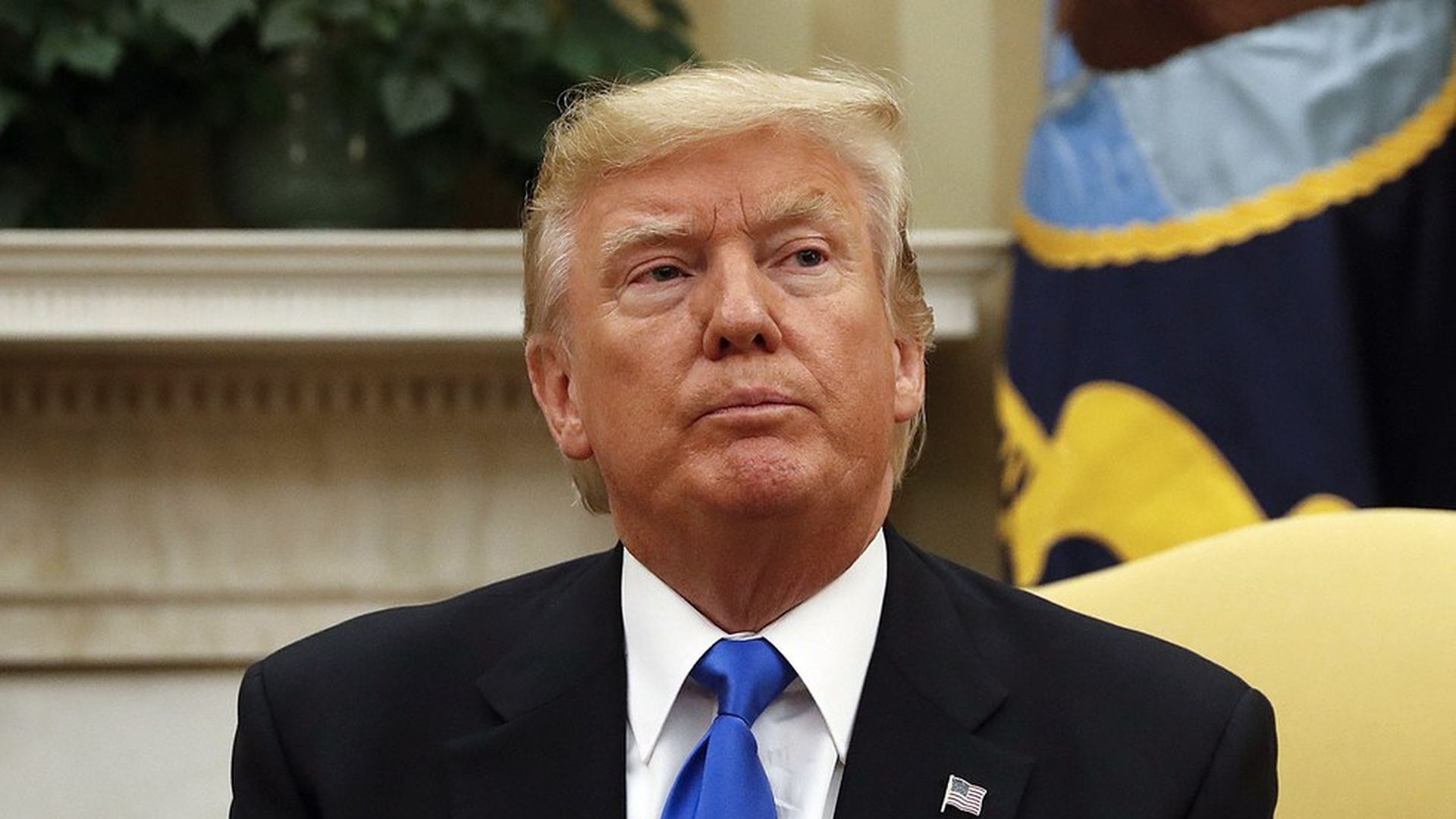
The following is a rare account of President Trump in a small Oval Office meeting, venting at senior staff for sometimes resisting his hawkish trade agenda.
This account — confirmed by sources with knowledge of the meeting and undisputed by the White House — hints at where Trump may be heading with his trade agenda. And it shows he believes some of his top economic advisors are resisting his agenda because they are "globalists."
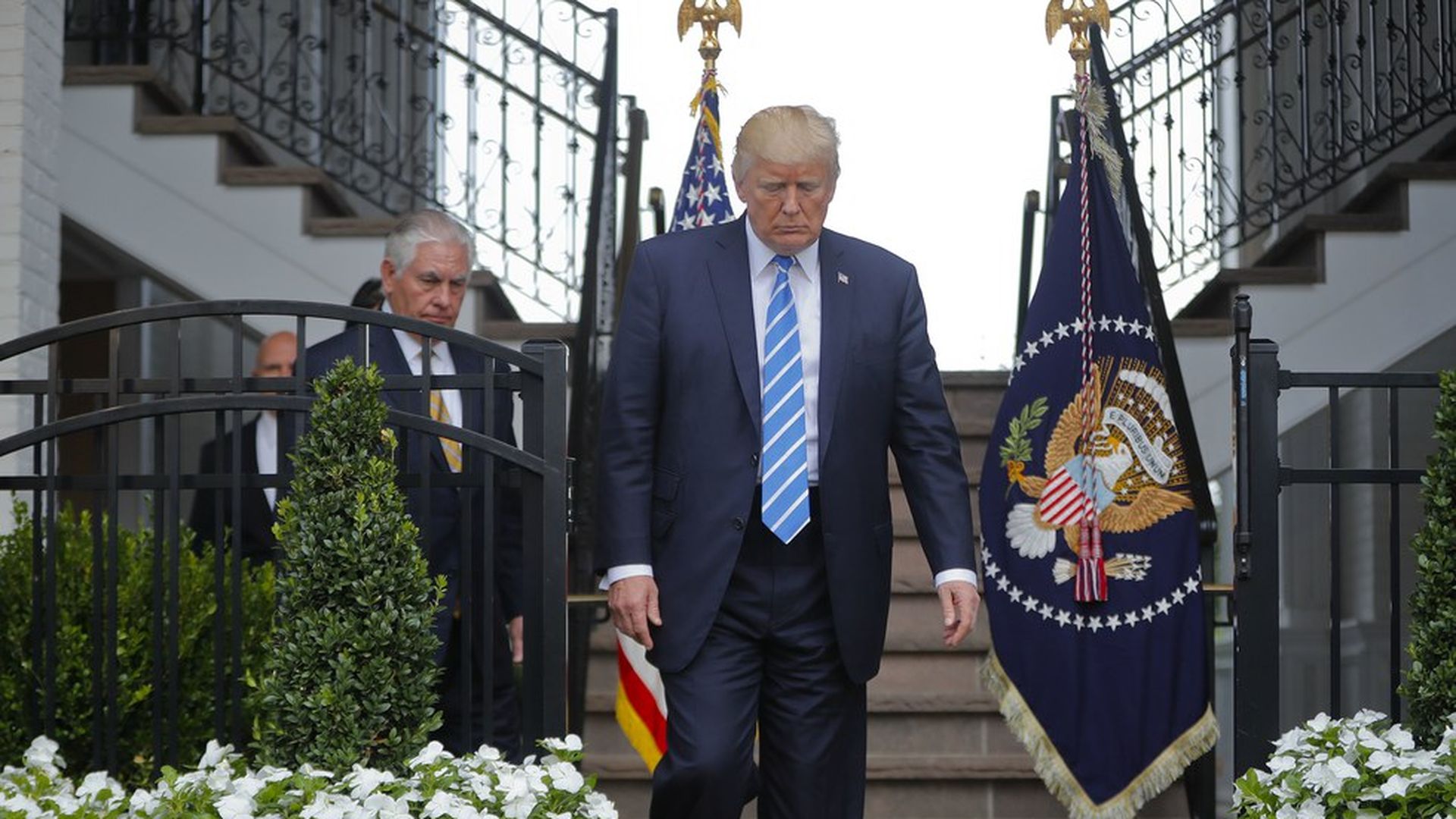
There's a ticking problem with Rex Tillerson, and it's growing louder by the day, according to officials inside and close to the White House. President Trump has been growing increasingly frustrated with his Secretary of State. One time recently, after Trump had returned from a meeting on Afghanistan, a source recalled Trump saying, "Rex just doesn't get it, he's totally establishment in his thinking."
Why this matters: We've been hearing for weeks, from sources who've spoken to the president, that Trump is getting more and more fed up with Tillerson, who has still yet to staff his agency.
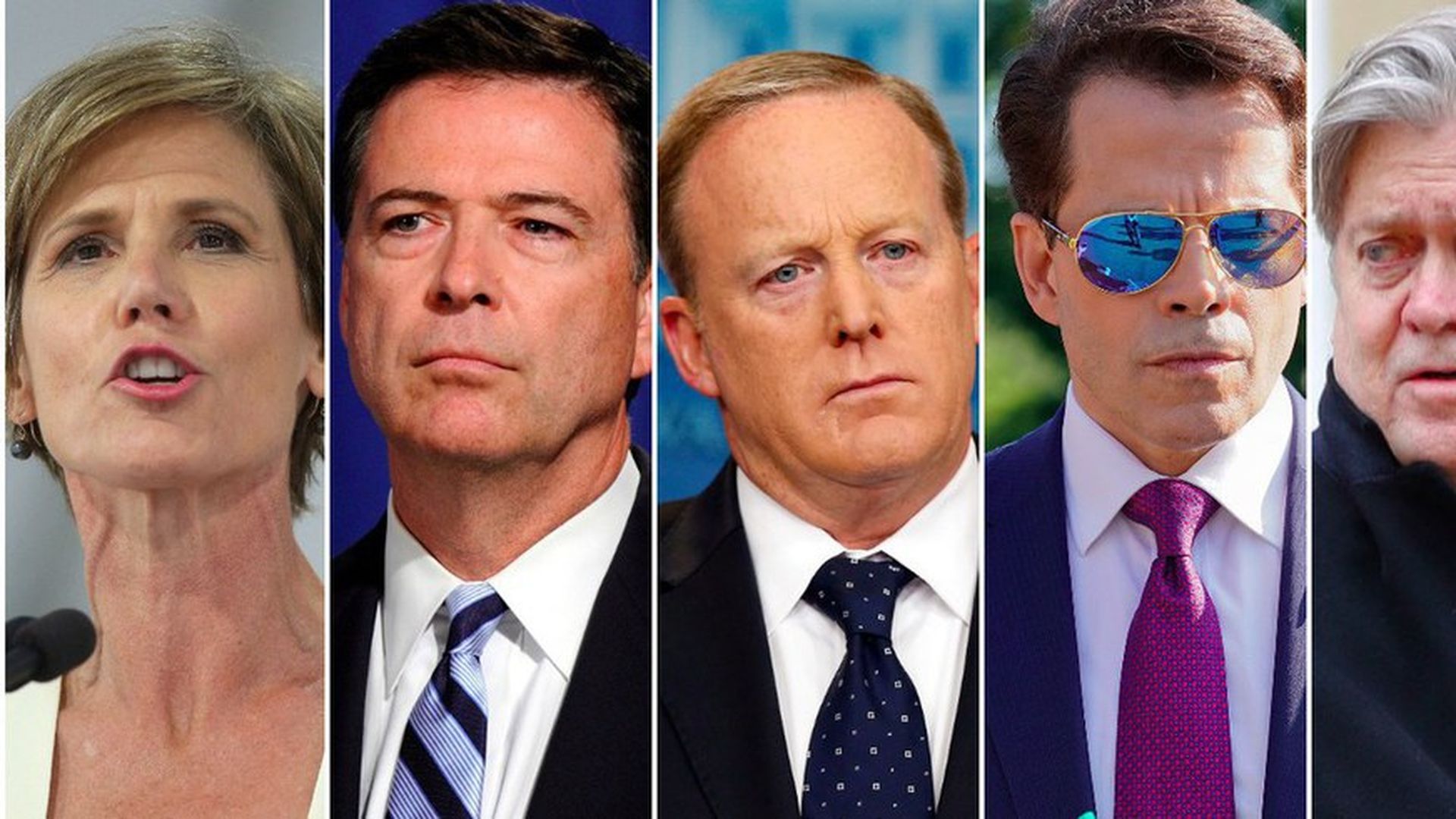
The first seven months of Donald Trump's presidency have been marked by a series of high-profile exits — from Michael Flynn and James Comey to Sean Spicer and Steve Bannon. Now that those officials have left their powerful Washington positions, many of them are mapping out the next steps in their careers.
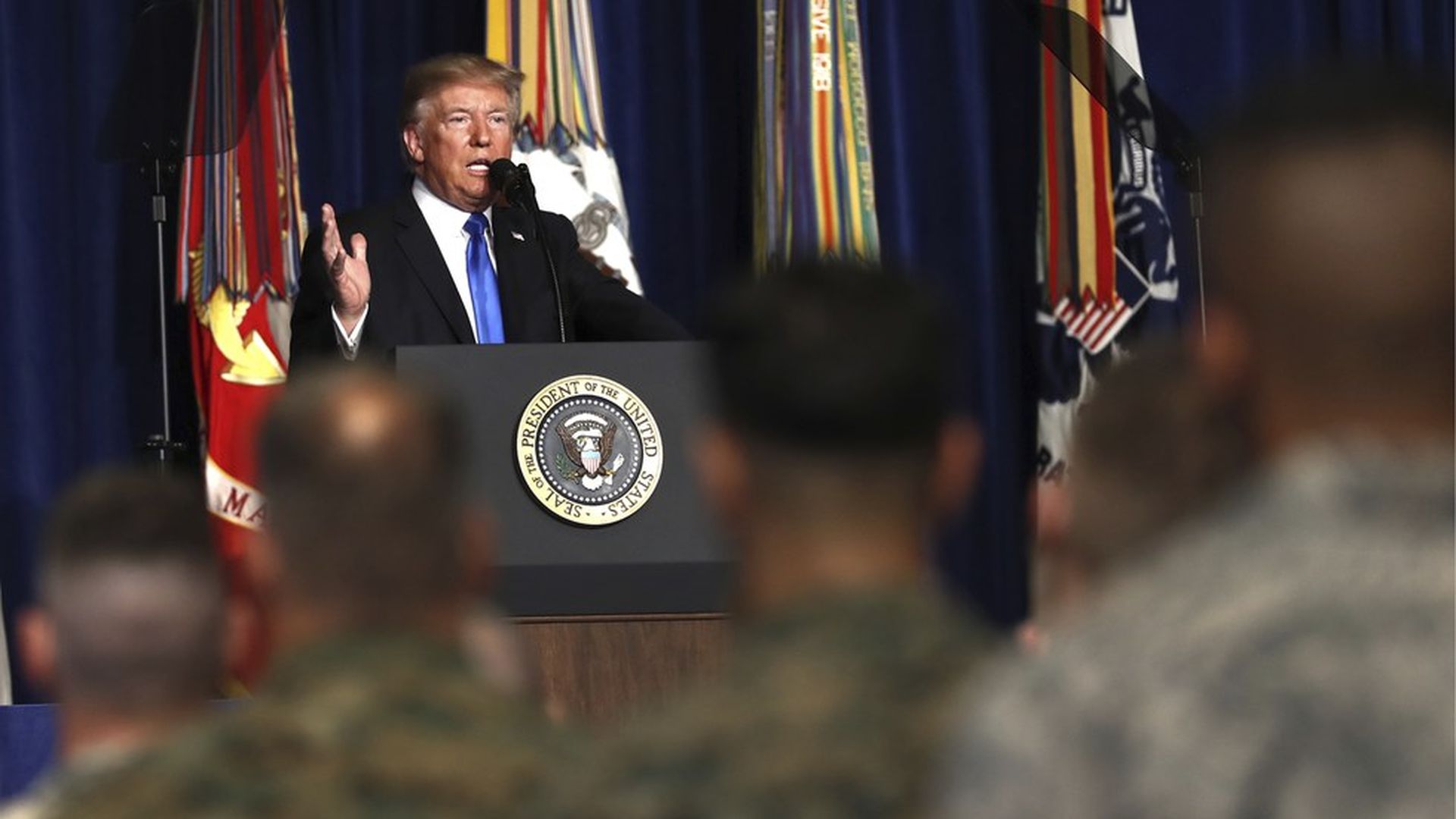
"Our troops will fight to win. We will fight to win," Trump said during his prime-time announcement on Afghanistan earlier this week, adding that troop levels would be determined by conditions on the ground, not a timetable.
What we're watching for is what those conditions are, and what Trump is signaling about the path forward:
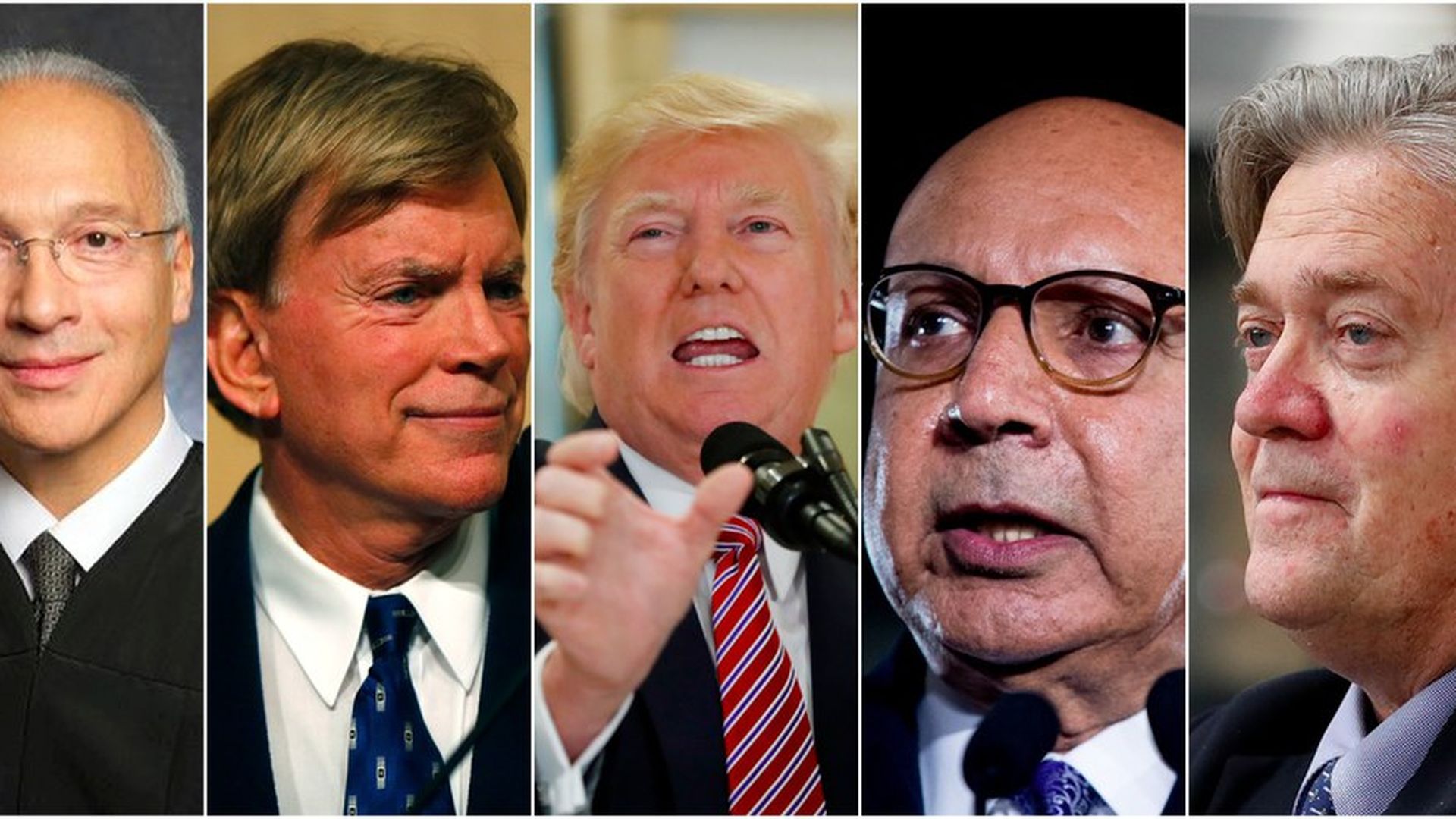
President Trump has stuck to blaming "both sides" for the violence in Charlottesville after a counter-protester was killed, allegedly by a white supremacist. That won him praise from former KKK leader David Duke, and criticism from others for not harshly condemning racism.
Why it matters:
This isn't the first time Trump (or his family) has faced criticism for comments or actions related to minority-groups.
The Trump administration piled on the news Friday night, with multiple major news releases coming as the nation focused on Hurricane Harvey.
Trump formally signed the memo banning transgender military recruits. It left those currently serving in limbo. More here.
Trump pardoned former Sheriff Joe Arpaio, who is known for disobeying a 2011 court order telling him to stop detaining people based on suspicion of being undocumented immigrants. More here.
Sebastian Gorka resigned from the White House. Gorka, a former Breitbart staffer and deputy assistant to Trump, said he can better serve America from the outside. More here.
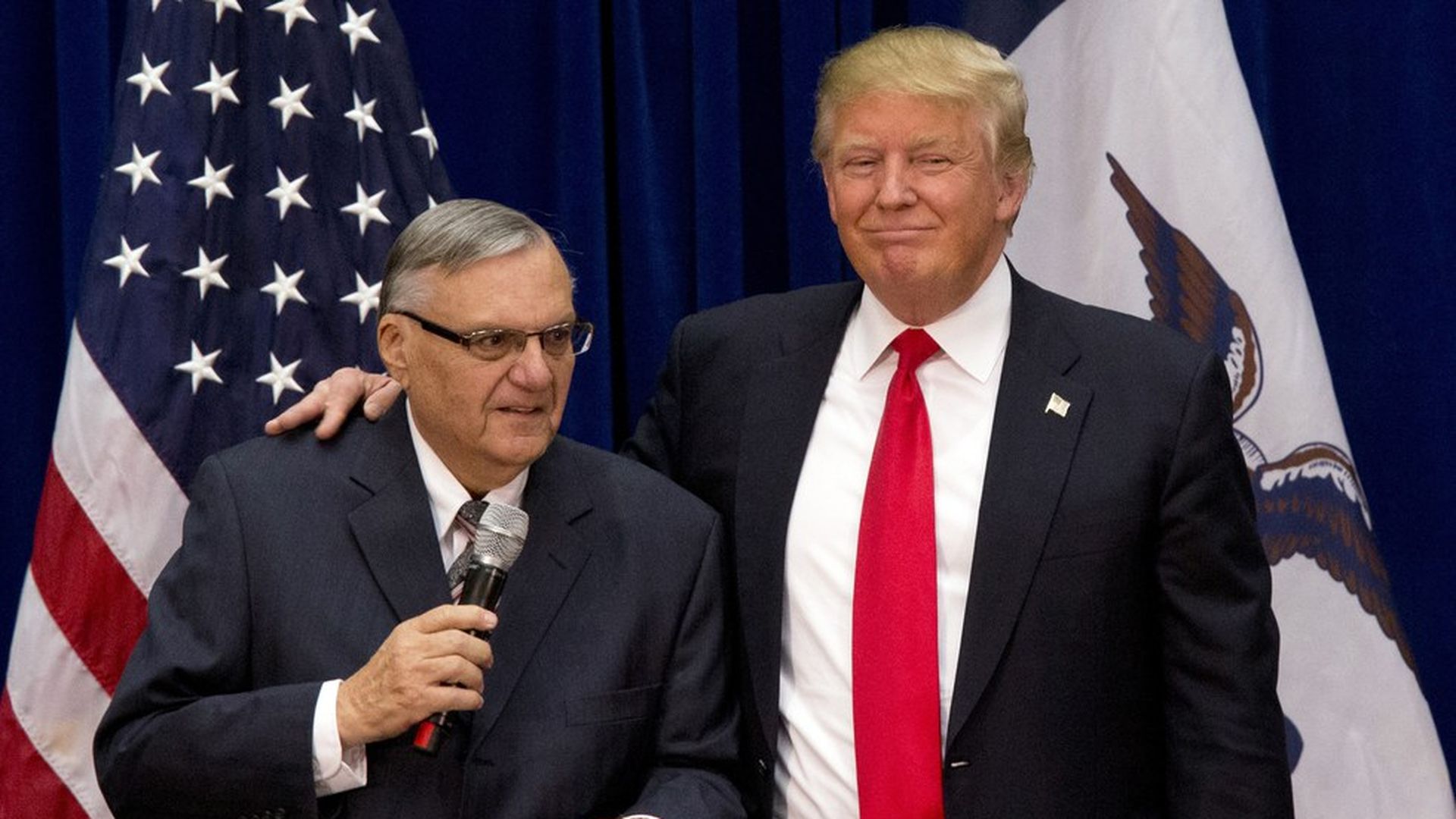
Trump has granted a presidential pardon to former Sheriff Joe Arpaio, of Maricopa County, Arizona. The memo mentions his "admirable" and "selfless public service."
Arpaio is being pardoned for criminal contempt charges for disobeying a 2011 court order that ordered him to stop detaining people based on his suspicions they were undocumented immigrants in what critics have called racist and discriminatory practices.
Arpaio served as a sheriff from 1993-2016 until he was defeated last year. He endorsed Trump's presidential candidacy in January 2016 and appeared with him at campaign events.
Why it matters: Choosing Arpaio as the first pardon will enrage half the country, but Trump won't care. The way Trump sees it, he genuinely believes an injustice was done to Arpaio and he sees this as helping somebody who was loyal to him throughout the campaign. Trump viewed Arpaio's support -- along with Jeff Sessions' -- as crucial to solidifying his credentials on being tough on the border.
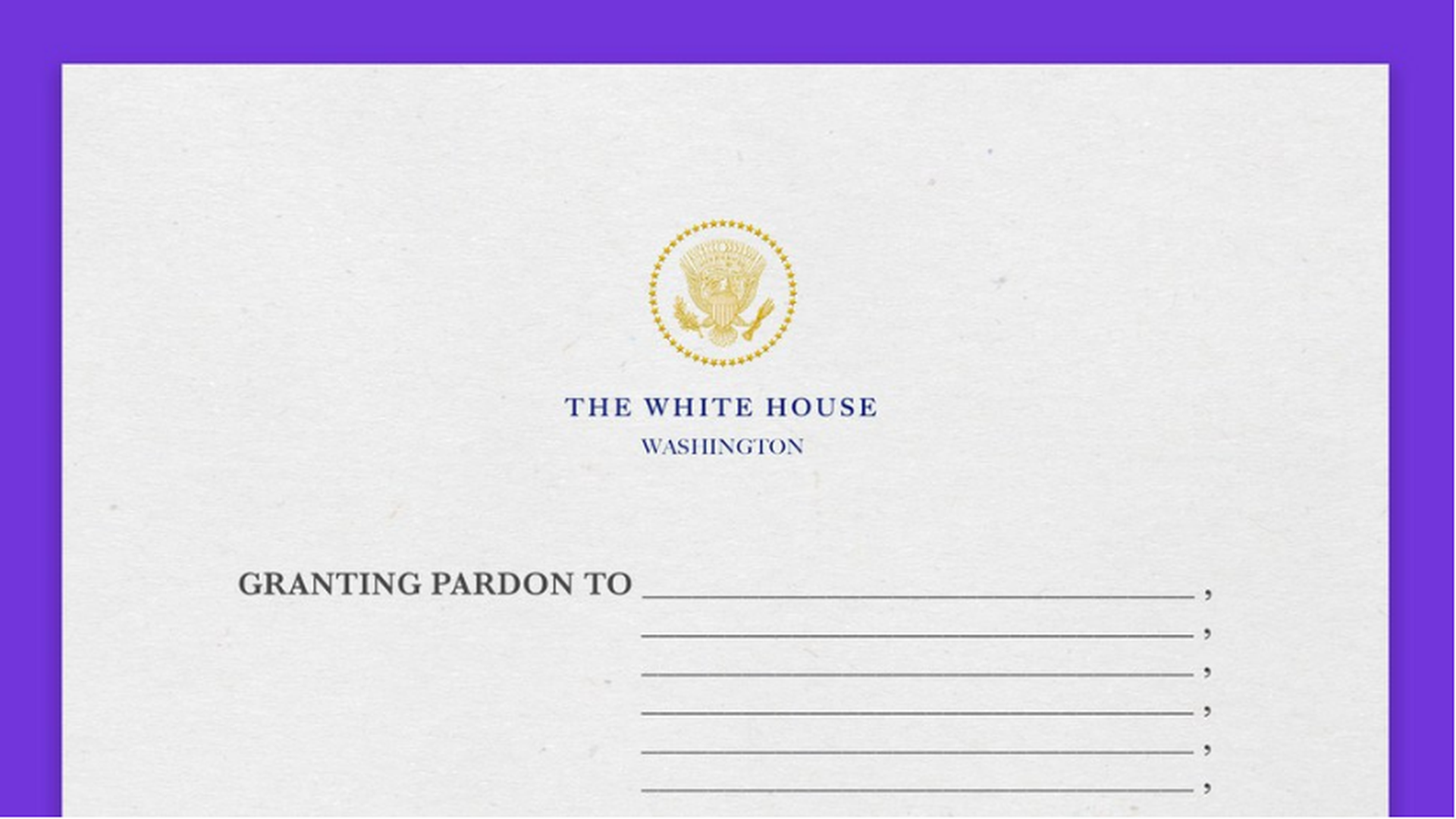
President Trump has pardoned former sheriff Joe Arpaio, noting his record of public service and calling him a "worthy candidate for a Presidential pardon."
Why it matters:
Granting pardons has historically been an unpopular move — it derailed Gerald Ford's reelection bid in 1976 — and it often opens the door for a president's motives to be called into question. But President Trump has spoken openly, and early on, about his power to grant pardons, seemingly without concern for whether it will damage his reputation. Last month, he reportedly asked his legal team whether he could pardon aides, family members, and even himself if implicated in Special Counsel Bob Mueller's Russian investigation; and now he's issued his first pardon, just 7 months into his presidency.